Landscaping Drawing Easy: A Step-by-Step Guide for 2026
You’re probably staring at your front yard, a notebook, and a phone full of saved ideas, wondering how to turn any of it into a plan that fits the space. That’s where most homeowners get stuck. The ideas are easy. The drawing is what feels hard.
The good news is that landscaping drawing easy doesn’t mean making a pretty sketch from memory. It means making a clear plan that helps you decide where things go, what will fit, and whether the result will work in real life. You do not need to draw like an artist. You need a process.
The old-school part still matters. Measuring the yard, blocking out use areas, and getting the layout onto paper will save you from a lot of regret. But there’s also a point where digital tools make more sense than forcing every revision through tracing paper and erasers. That isn’t cheating. It’s the same evolution every design trade goes through once speed, clarity, and better decisions matter.
The Foundation of Your Landscaping Drawing
Most bad outdoor space drawings fail before the first line hits the page. They fail because the person drawing skips the yard itself. They draw what they want, not what’s there.
A useful plan starts with observation, measurement, and proportion. Professional drawing practice relies on choosing a consistent unit of measurement and using it to keep the whole composition believable. One practical method is to pick a reference object, such as tree height or building width, and use it to judge the size and relationship of everything else, as described in this guide to landscape proportion and composition.

Start with what the yard is doing
Before you measure anything, spend time watching the space.
- Track sun and shade: Check morning, midday, and late afternoon. A corner that looks perfect at noon may be in deep shade by evening.
- Notice water movement: Watch where puddles form, where soil washes out, and where downspouts discharge.
- Mark fixed features: House corners, doors, windows, air units, utility boxes, driveways, large trees, fences, and existing steps all belong on your first rough sketch.
- Pay attention to use: Where do people already cut across the lawn? Which door do you usually use? Where do kids play, dogs run, or trash bins sit?
That last point matters more than most DIY plans admit. A drawing that ignores traffic patterns usually leads to awkward paths and beds that get trampled.
Practical rule: If you haven’t walked the yard with a tape measure and a pencil, you’re not designing yet. You’re decorating in your head.
Make a bubble diagram before a real plan
A bubble diagram is one of the easiest professional habits to borrow. Instead of drawing exact shapes, draw loose circles or blobs for functions. Patio. Grill zone. Play area. Vegetable bed. Screening shrubs. Trash storage.
Keep it rough. The point is adjacency, not beauty.
Here’s a simple order that works well:
- Put the fixed structures in place first.
- Add the activity zones next.
- Show the movement lines between them.
- Circle the areas that need privacy, shade, or drainage help.
This step prevents a common mistake. Homeowners often jump straight to plant placement, then realize the seating area doesn’t connect well to the door or the path cuts through the future planting bed.
A good bubble diagram also makes it easier to move into a more detailed concept later. If you want an example of how outdoor spaces get organized from the start, this guide on how to design a landscape is a useful companion.
Take measurements that matter
You don’t need survey-grade complexity for an early homeowner drawing. You do need clean dimensions.
Measure:
- Property edges you can confirm
- House footprint
- Distance from the house to key features
- Widths of paths and drives
- Diameter or canopy spread of existing trees
- Bed edges that are staying
Use one reference edge consistently. Usually that’s the back wall of the house or one side property line. If your measurements float from random points, your drawing will drift out of alignment fast.
Translating Your Yard to Paper with Scale
This is the part that scares people more than it should. Scale sounds technical, but at the kitchen table it’s just a simple agreement between the yard and the paper.
For garden projects, common professional scales include 1:100 and 1:50, and these are used because they fit standard paper sizes while staying readable, as explained in this overview of garden drawing scales. If metric scaling isn’t how you think, graph paper does the same job in a more familiar way. One square can stand in for one foot, two feet, or another unit you choose.

Pick a scale you can actually use
The wrong scale makes a drawing annoying. Too small, and every note overlaps. Too large, and the yard won’t fit on the page.
For a DIY plan, three options are practical:
| Drawing approach | Best use | What to watch |
|---|---|---|
| Graph paper with one square equals one foot | Small residential yards | Can get bulky for large lots |
| Graph paper with one square equals two feet | Medium yards | Small details may need a separate sketch |
| Metric scale such as 1:50 | More formal plans | Works better if you’re comfortable converting dimensions |
If you’re drawing a modest front yard, start with the simplest version. Don’t make scale harder than it needs to be.
Build the base map first
Your base map is the essential layer. It is the drawing of what already exists before you invent anything new.
Include these items:
- House outline
- Driveway and walks
- Existing trees you plan to keep
- Patio, porch, fence, gate, shed, or pool
- Utilities and service zones you know about
- Property lines if you have reliable dimensions
Leave out decorative planting ideas for now. This stage is about geometry.
A lot of homeowners want to jump ahead to shrubs and flowers because that part feels creative. Resist that urge. If the base map is wrong, every later decision gets worse. Patios end up too large, beds get squeezed, and paths don’t line up with doors.
Draw the space you have, not the space you wish you had. That’s how the plan starts helping instead of misleading.
A simple transfer method
Use this sequence and your drawing stays clean:
- Draw the house footprint first.
- Add the property or fence lines.
- Place the driveway and existing hard surfaces.
- Mark major trees and fixed site elements.
- Label dimensions lightly in pencil.
- Trace the final lines darker once everything checks out.
That order reduces erasing because the big anchors go in first. It also mirrors how professionals build clarity from structure outward.
If you want extra help with organizing beds, circulation, and outdoor zones once the base map is finished, this article on how to plan a garden layout is a solid next step.
What accuracy really means
Accuracy doesn’t mean drafting perfection. It means your drawing is reliable enough for decisions.
If a tree is in the wrong place on paper, the new path may conflict with its roots. If the front bed depth is guessed, you may buy too many plants or choose shrubs that crowd the windows. A scaled drawing protects you from those errors.
That’s why this is still worth doing even if you later switch to digital tools. The measurements teach you the site. The site is the job.
Sketching with Simple Landscape Symbols
Once the base map is done, the drawing gets more enjoyable. At this stage, many assume artistic skill is required. They don’t. A grounds plan uses visual shorthand, not fine art.
Professional plans combine planting, surfaces, and built features in one readable drawing. A complete design includes elements like walkways, stairs, and furniture in addition to plants, and plant keys should identify quantity and plant size because those details affect both cost and how full the designed area looks on day one, as outlined in this guide to landscape design drawings and plant keys.
Use symbols that stay readable
Good symbols are simple enough to repeat without fuss. If every tree takes two minutes to draw, you’ll stop using the plan.
Here’s a practical reference table.
| Element | Symbol Description |
|---|---|
| Tree canopy | Simple circle with a loose scalloped or cloud edge |
| Evergreen tree | Circle or cone form with denser interior marks |
| Shrub mass | Grouped rounded blobs, drawn as one shape instead of many separate plants |
| Groundcover | Light squiggle texture within a bed outline |
| Perennial area | Small repeated clumps or short radiating lines |
| Mulch bed | Clean bed outline with sparse stipple or light hatch |
| Gravel path | Narrow path outline with dotted texture |
| Paver patio | Rectangle or freeform outline with grid or running-joint lines |
| Lawn | Open area with minimal texture so it doesn’t overpower the plan |
| Fence | Double line or boundary line with gate breaks marked clearly |
| Steps | Parallel short lines showing treads |
| Outdoor furniture | Basic rectangles and circles sized to fit the space |
Draw plants at mature size
This is the part beginners often miss. They draw based on the pot they bought, not the size the plant will become.
If you draw five tiny circles for shrubs that will eventually merge into one mass, your plan will look neat on paper and crowded in the yard. A better approach is to show the expected spread of the plant, even if the installed specimen is much smaller.
That can feel strange at first because the paper plan looks more open than the installed garden will feel in year one. But that’s the honest version. It helps you avoid overplanting.
A clean plan usually looks a little sparse to beginners. In the ground, that same plan often fills in exactly the way you hoped.
Add a plant key and material notes
Even a homeowner sketch gets stronger when it includes a basic legend.
Try a short list like this:
- Name the plant type: Keep it simple if you’re early in the process.
- Mark quantity: Count how many of each item you need.
- Note size at purchase: Container size affects budget and immediate impact.
- Label materials: Mulch, gravel, pavers, turf, or steel edging should be called out.
This is also where your drawing shifts from an idea sheet to a usable planning tool. If you hand a contractor a plan with symbols but no key, they’ll spend time interpreting your intent. If you hand over a plan with labeled beds, quantities, and clear hardscape areas, the conversation gets faster and more productive.
Common Drawing Mistakes and How to Avoid Them
Most beginners assume the main challenge is drawing neatly. It isn’t. The primary problem is drawing in the wrong order.
Site architects use a layered, multi-pass workflow. The sequence matters. Streets and walkways first, planter extents next, and finer detail later. That big-to-small progression prevents the classic mistake of overworking one area before the overall layout is stable, as shown in this explanation of layer-based landscape drawing workflow.
The detail trap
A homeowner will often spend half an hour perfecting one front bed. Every shrub gets a lovely symbol. Every stone edge is traced carefully. Then the path doesn’t fit, the door alignment is off, and the whole thing has to be erased.
That isn’t a talent problem. It’s a sequence problem.
Work in layers, even on paper:
-
Hardscape first
Put in walks, patio edges, stairs, and major paved surfaces. -
Planting areas second
Draw the bed shapes and broad masses before individual plants. -
Details last
Add symbols, labels, furniture, lighting, and notes only after the layout holds together.
Mistakes that keep showing up
These are the ones I see most often in DIY sketches:
- Ignoring slope: A patio drawn flat on paper may need grading, steps, or retaining work in real life.
- Forgetting utility access: Meters, service boxes, and cleanouts still need room.
- Making paths too tight: A path that looks elegant in plan can feel cramped when two people try to pass.
- Planting for the photo, not the climate: A drawing can look beautiful and still fail if the plant palette doesn’t suit the site.
- Overfilling corners: People tend to stuff beds near fences and foundations because empty space feels unfinished on paper.
The fix is usually subtraction
When a plan feels messy, the common impulse is to add more information. Pros usually remove things first.
Try this cleanup method:
| If the drawing has this problem | Do this instead |
|---|---|
| Too many competing bed shapes | Reduce the number of curves and simplify edges |
| Plants look random | Group similar plants into masses |
| Walks feel awkward | Recheck alignment with doors and destination points |
| The page feels crowded | Move notes into a legend and keep the plan cleaner |
Paper tracing sheets help here, but so do tablet sketch apps with layers. Either way, the principle is the same. Don’t restart from zero every time you revise. Build in passes.
From Manual Sketch to Fast Digital Concepts
Hand drawing is still valuable. It teaches you how to read a yard, organize space, and think in plan view. But once revisions begin, paper slows down fast.

If you’ve ever redrawn the same front bed three times just to test one new path curve, you already know the limit. Manual sketches are good for structure. They’re weak at rapid comparison and even weaker at showing a non-designer what the finished result may look like from the street.
Where paper falls short
A 2D plan asks you to mentally translate circles, hatching, and symbols into a real yard. Some homeowners can do that. Many can’t, and that’s normal.
There’s another gap that old tutorials often leave untouched. Climate fit. According to this discussion of the issue in easy garden drawing content, searches for “landscaping plants by zone” are up 25% in 2025-2026, yet easy drawing tutorials rarely discuss hardiness zones. That’s a major reason DIY plans go wrong. The drawing may be clear, but the plant list may still be unrealistic.
Why digital concepting is a smart upgrade
Digital tools aren’t a replacement for thinking. They’re a faster way to test ideas.
Use them when you need to:
- Compare several styles quickly
- Show family members a realistic direction
- Revise bed lines without redrawing the whole yard
- Explore materials and planting character
- Check whether the concept feels balanced from the street view
For builders, agents, and homeowners trying to communicate a renovation before work starts, photo-based visuals can also help accelerate pre-sales with 3D rendering. The value isn’t just aesthetics. It’s shared understanding before money gets spent.
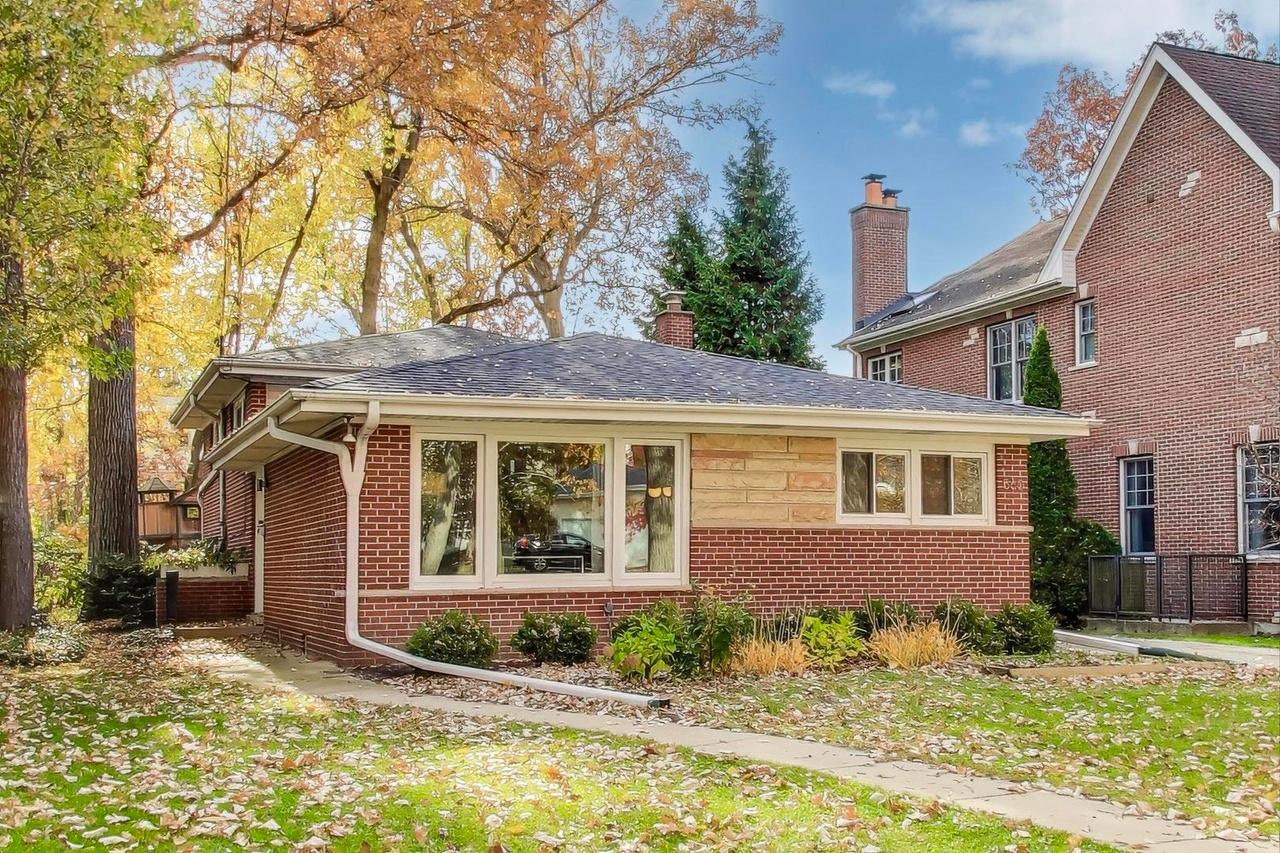
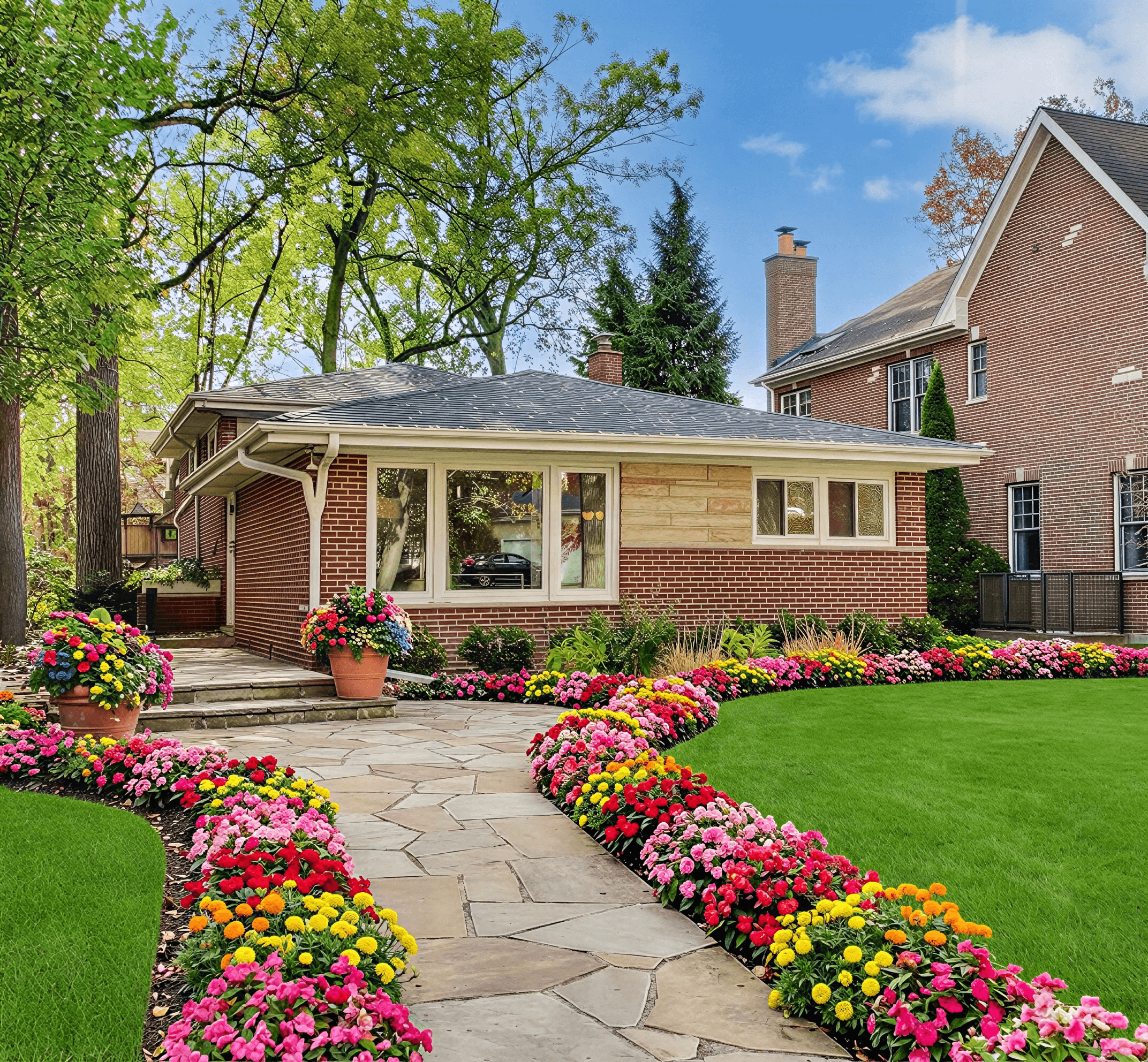
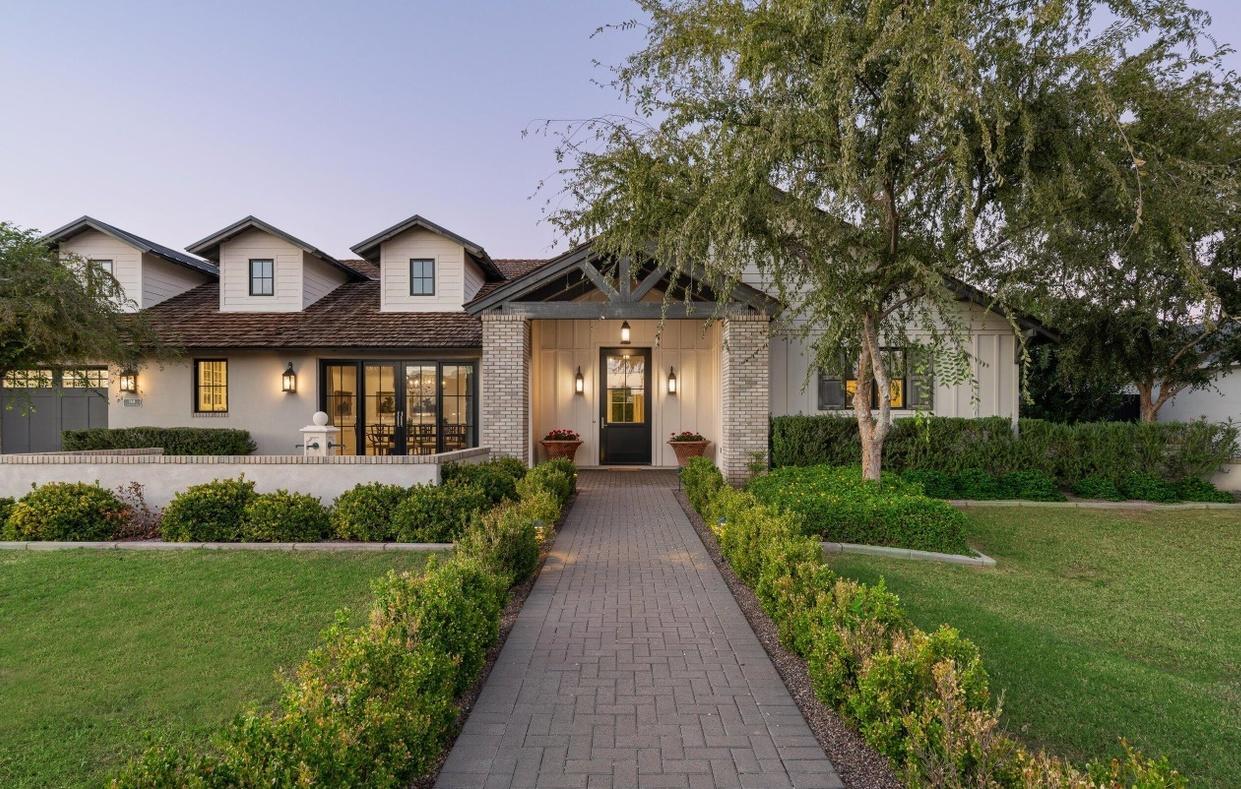
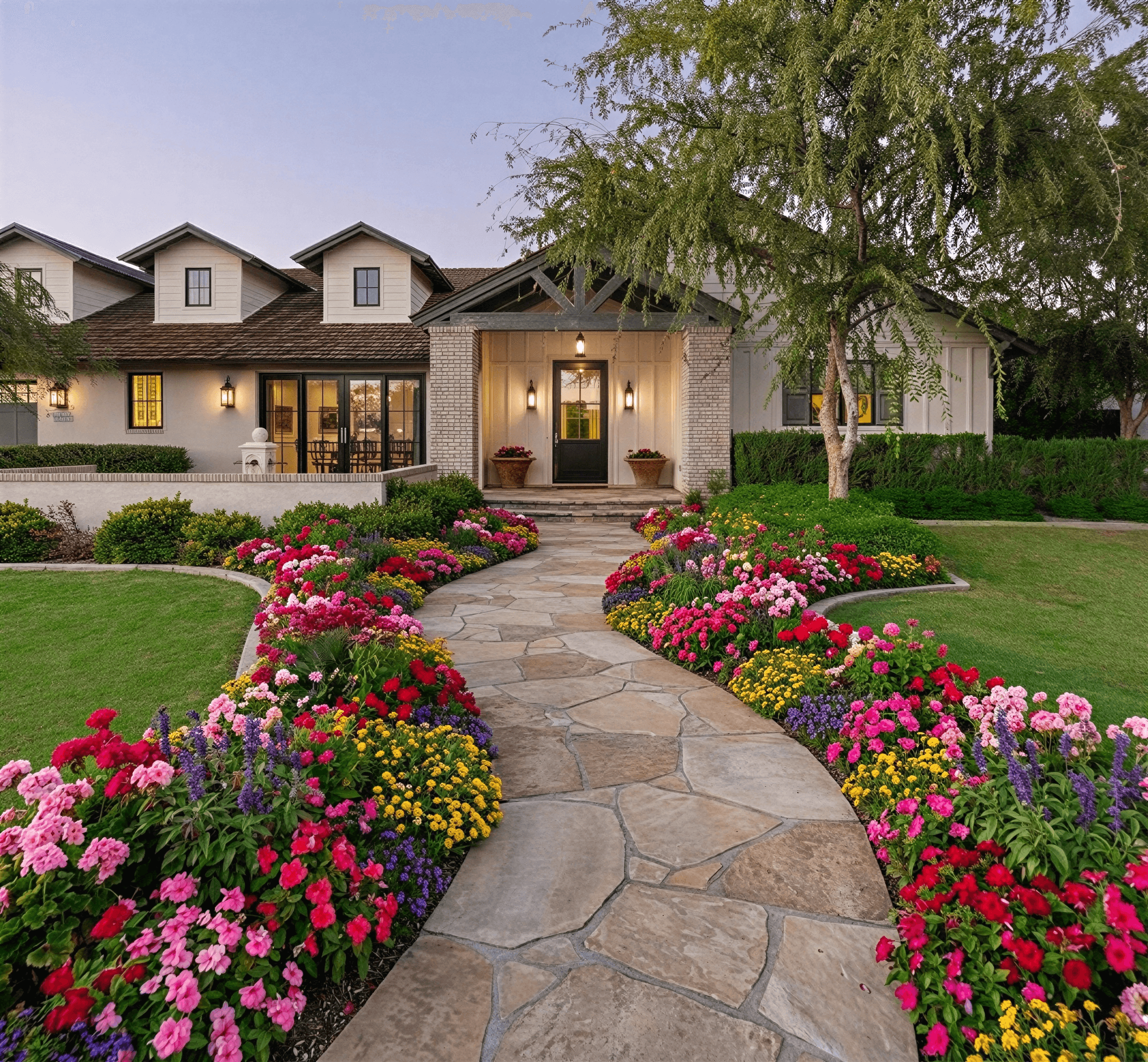
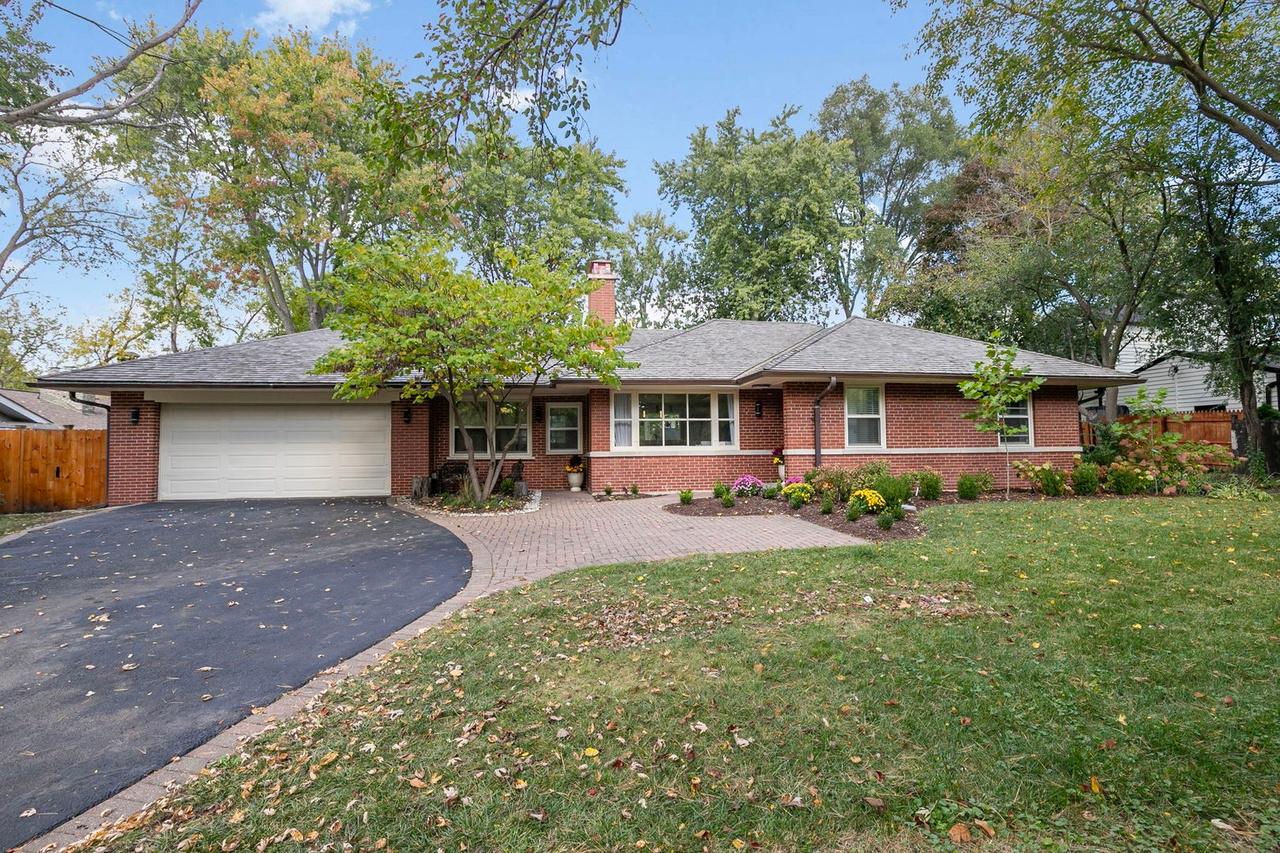
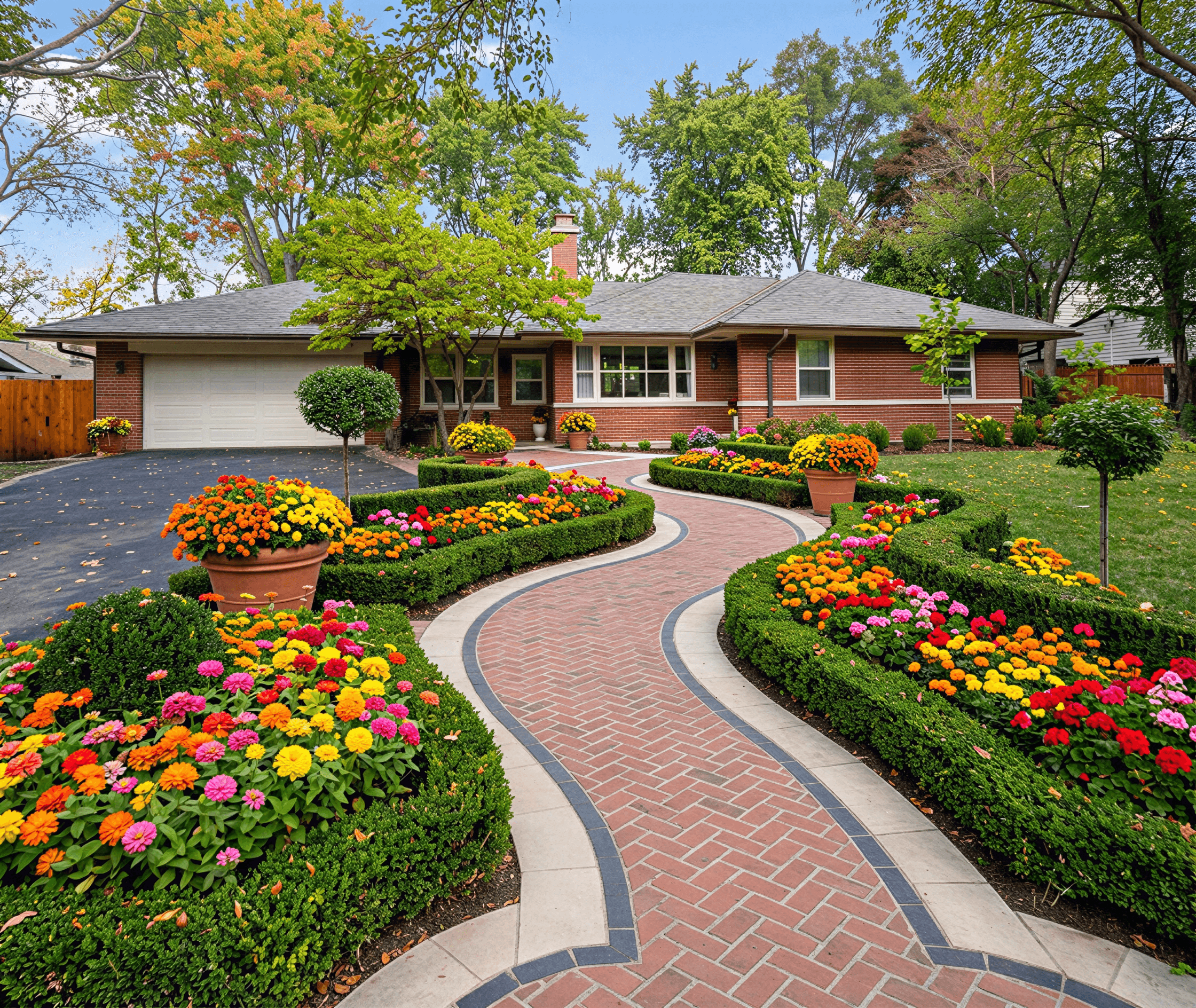
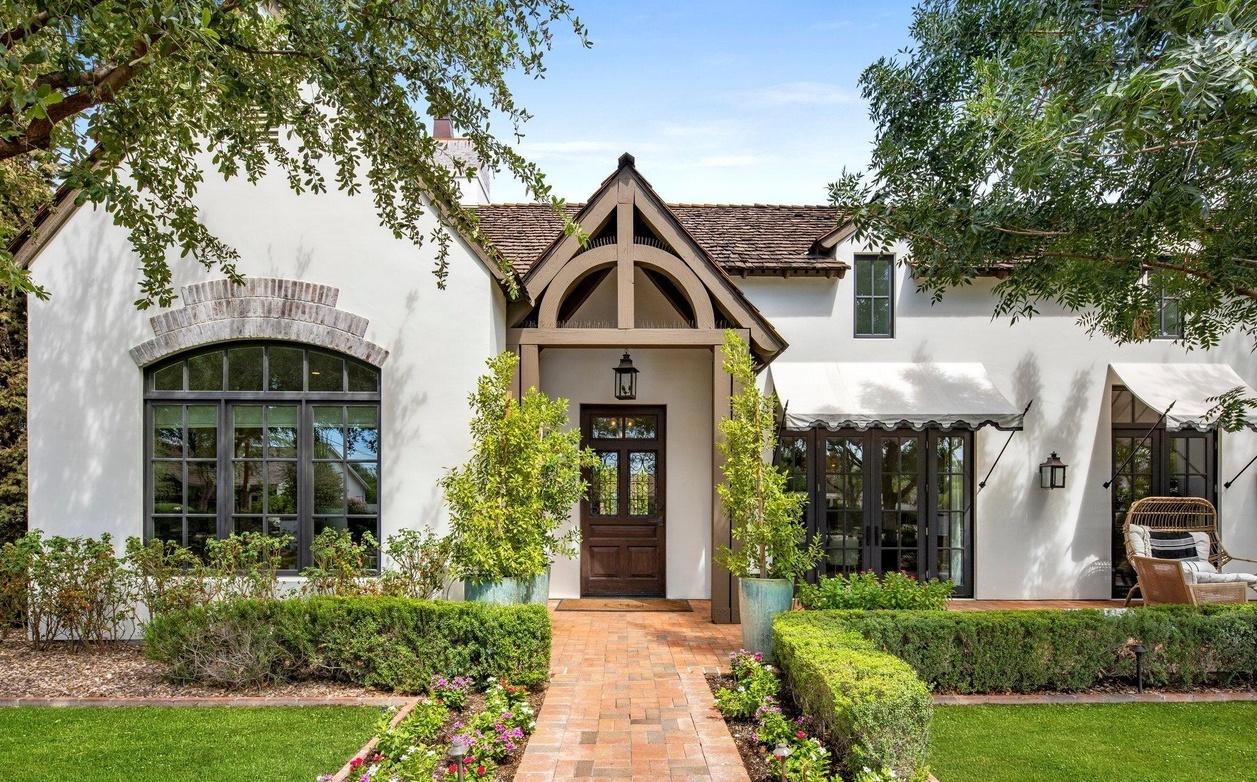
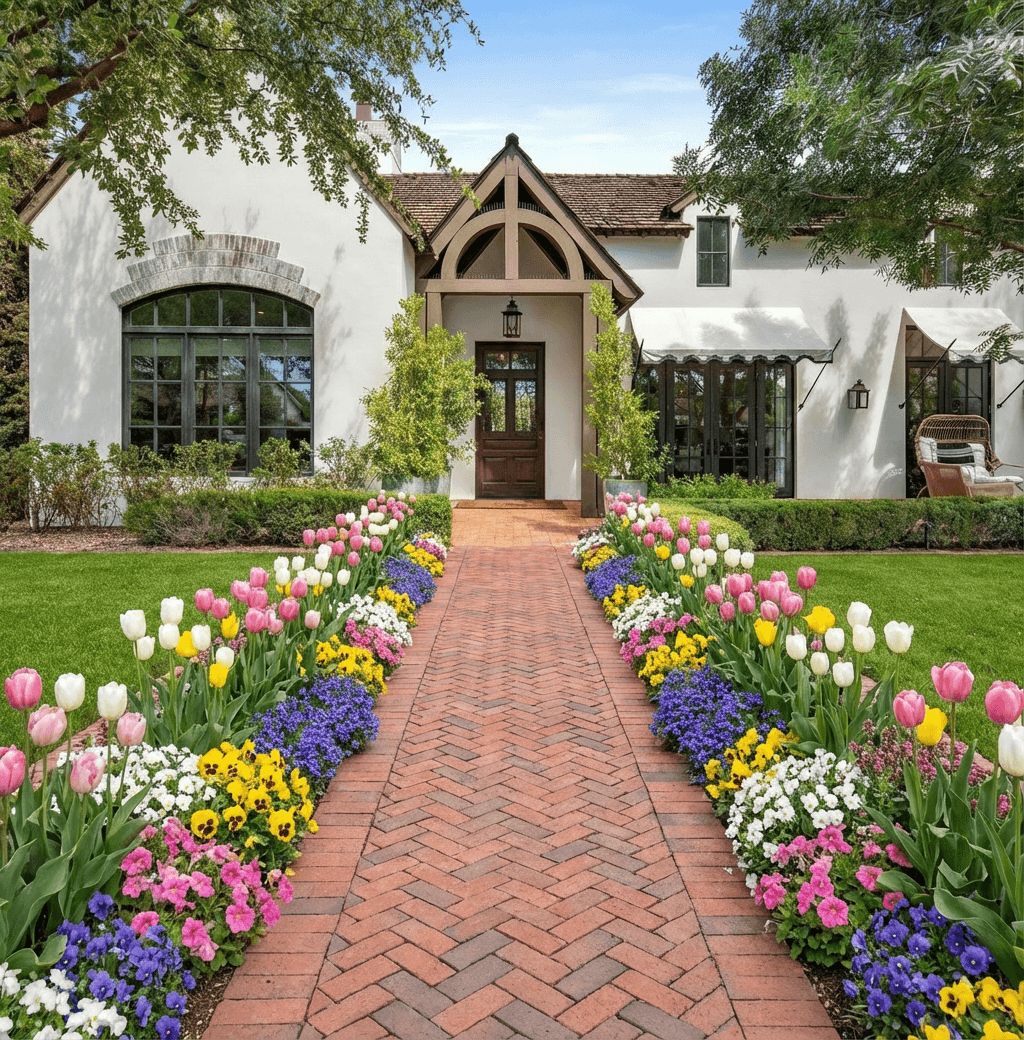
One practical option in this category is an app for landscape design that uses uploaded property photos to generate visual concepts. Curb Appeal AI, for example, creates photorealistic exterior design variations from a house photo and is positioned around local climate and hardiness-zone-aware recommendations. For homeowners who struggle to interpret line drawings, that kind of tool can shorten the gap between idea and decision.
A quick look at the digital workflow helps:
Use both methods when the project matters
The strongest workflow is often hybrid.
Start with a rough measured plan. Learn the site. Confirm circulation, bed areas, and fixed constraints. Then switch to digital concepts when you need speed, realism, or climate-aware visual testing.
That’s not cutting corners. It’s using the right tool at the right stage.
Frequently Asked Questions About Landscape Drawings
Do I need expensive drafting tools
No. A tape measure, graph paper, pencil, eraser, and straightedge are enough for a homeowner concept plan. If you want one upgrade, buy better graph paper before you buy fancy markers.
How detailed should my drawing be for a contractor
Detailed enough to show intent clearly. Contractors usually need the location and shape of beds, paths, patios, key dimensions, and a readable plant or material legend. They don’t need artistic rendering from a homeowner. They do need a plan they can interpret without guessing.
What if I can’t draw at all
You can still make a usable plan. Start with measurement, a base map, and simple symbols. Circles, lines, and labels are enough. If even that feels like a barrier, use a digital photo-based design tool after doing the site observation work.
Should I draw the front yard and backyard together
Only if the property is small enough to stay readable. Most homeowners do better with separate plans. One page for the front. One for the back. A third sheet for detail areas if needed.
When should I stop sketching and get help
Stop when the drawing begins to hide important site issues instead of clarifying them. Grade changes, drainage conflicts, complicated stairs, retaining walls, and major utility questions usually deserve a professional review.
Is an easy landscape drawing enough for planting
For simple bed renovations, yes, often it is. For larger projects with paving, structures, or elevation changes, treat your drawing as a concept plan rather than installation documents.
If you’ve got the ideas but don’t want to spend days redrawing beds and guessing how the result will look, Curb Appeal AI gives you a faster way to move from rough concept to realistic exterior visuals. Upload a photo, explore different exterior design directions, and use the result as a clearer starting point for your own planning or contractor conversations.