10 Landscaping a Front Yard Ideas for 2026
Your front yard usually starts as a low-stakes problem. A patchy lawn, a tired shrub by the porch, a walkway that feels more forgettable than welcoming. Then you notice how often you look at it. Every time you pull in after work. Every time a package gets dropped off. Every time guests walk up and get their first read on the house.
That’s why front yard design feels heavier than backyard design. The backyard is private. The front yard introduces the whole property.
It also carries more financial weight than people think. A 2023 survey by Thumbtack and Nextdoor found that 57% of homeowners believe beautiful yard design and exteriors can increase resale value by at least $20,000, and 16% believe the increase can exceed $50,000, while the National Association of REALTORS® 2023 outdoor Remodeling Impact Report estimates a thorough front yard upgrade can return 100% at resale according to the National Association of REALTORS® front yard landscape guidance.
The hard part isn’t knowing that curb appeal matters. It’s deciding what kind of yard fits your house, your climate, and your tolerance for upkeep. Inspiration photos rarely tell you what dies fast, what looks messy in six months, or what only works if you have a full-time gardener.
This guide fixes that. You’ll get 10 practical landscaping a front yard ideas, each with a different style, plus the trade-offs that matter in real life. If you live in a hot, dry region, it also helps to look at climate-specific exterior guidance like how to improve curb appeal for Arizona homes. The right choice isn’t the prettiest photo. It’s the design you can install, maintain, and still like three years from now.
1. Modern Minimalist Landscaping
Modern minimalist front yards work when the house already has strong architecture. Flat roofs, clean trim, big windows, smooth stucco, dark metal, simple brick. This style doesn’t hide the house. It frames it.
That’s the appeal and the risk.
If your layout is disciplined, minimalist design looks expensive even with a restrained plant palette. If your edges drift, the gravel weeds over, or one plant outgrows the composition, the whole yard looks neglected fast.

Where this style earns its keep
Use fewer plant varieties than you think you need. Repetition creates rhythm. A row of dwarf grasses, a cluster of agave or yucca, one specimen tree, and a strong walkway often read better than a mixed bed with a dozen unrelated plants.
Good materials matter more here than in almost any other style. A cheap paver, thin edging, or flimsy garden fabric is obvious because there’s nowhere for mistakes to hide.
A reliable minimalist composition often includes:
- Strong geometry: Rectilinear beds, square pads, straight runs of steel or stone edging.
- Textural contrast: Fine grasses against boulders, smooth concrete against decomposed granite, broad succulents against gravel.
- One focal specimen: Japanese maple in mild climates, olive in warm dry zones, sculptural cactus where appropriate.
Practical rule: If you can’t commit to crisp edging and routine cleanup, don’t choose minimalist landscaping. This style rewards discipline, not neglect.
What works and what doesn’t
What works: limited plants, clean path lighting, repeatable forms, and hardscape that ties directly to the architecture.
What doesn’t: random annual color, too many accent pots, mixed mulch colors, or oversized shrubs shoved under front windows.
If you want to test whether your home can carry this style, a visualization tool helps. A photo-based concept pass from a platform focused on landscape design can quickly show whether your facade wants a soft planting scheme or a stricter, more architectural one.
Real-world example: on a contemporary stucco home, I’d rather install three varieties well and leave negative space than fill every bed. Empty space is part of the design. In modern landscaping, restraint is the feature.
2. Cottage Garden Landscaping
Cottage gardens look effortless only after a lot of editing. That’s the secret most photos hide.
A good cottage front yard feels generous, loose, fragrant, and welcoming. A bad one feels floppy, crowded, and permanently one week past peak bloom. The line between the two is plant structure.
The real formula behind the charm
Start with a backbone. That might be a clipped hedge, a clean front walk, a low fence, or repeated shrubs that hold the design together when the flowers aren’t performing. Then layer in perennials, bulbs, and self-seeding annuals.
You want bloom succession, not one explosive month followed by mediocrity. Spring bulbs, early perennials, midsummer bloomers, and late-season asters or grasses keep the front yard from going flat.
The easiest mistake is planting by color alone. Plant by height, bloom timing, and water needs first. Then refine the palette.
A reliable cottage mix often includes:
- Early structure: Roses, salvia, catmint, alliums, or shrub forms that anchor the bed.
- Midseason abundance: Coneflowers, daisies, phlox, delphiniums, foxgloves, or hollyhocks depending on climate.
- Late-season finish: Asters, ornamental grasses, sedums, and seed heads that still look good in fall.
Where homeowners get into trouble
Cottage gardens need deadheading, seasonal cutback, and occasional dividing. If you want a zero-maintenance front yard, this isn’t it.
They also need discipline near sidewalks and entries. Flowers spilling over a garden edge look romantic. Flowers blocking the path to your front door look careless.
A cottage garden should feel full, not congested. Visitors should see the front door clearly and reach it without brushing through wet plants.
This style also benefits from seeing the massing before you plant. People often underestimate how quickly mixed borders fill in. If you’re comparing a looser flower-forward layout against something cleaner, it helps to preview examples built around cottage garden landscaping ideas and judge whether your home’s architecture wants romance or restraint.
Real-world example: cottage planting suits older homes, storybook facades, and cottages naturally. It can also soften a plain suburban elevation that feels too hard. But it rarely improves a very sleek modern facade unless you simplify the palette and keep the forms tighter.
3. Xeriscaping & Desert Landscaping
Xeriscaping is one of the most misunderstood front yard styles. People hear “low water” and picture a yard full of gravel with three cacti and no shade. Good xeriscaping is far more layered than that.
It’s a design method, not a visual shortcut.

Why it keeps gaining ground
General search interest in front yard landscaping ideas has been declining at a month-over-month rate of -2.07% over the past five years, while the category still draws about 49,500 monthly searches, and specialized interest has shifted toward xeriscaping, wildscaping, and “entangled design,” according to Treendly’s front yard landscaping trend summary. That tracks with what many designers see on the ground. Homeowners are moving away from generic lawn-first plans and toward climate-aware choices.
That doesn’t mean replacing every square foot with stone. It means giving lawn a job. If turf isn’t serving play, gathering, or a strong visual purpose, cut it back.
What makes a xeriscape look finished
The best drought-tolerant yards use contrast. Fine grasses against boulders. Upright forms against mounded shrubs. Gravel, decomposed granite, and larger stone in balanced proportions. One specimen plant near the entry. Maybe two, not ten.
Group plants by water use. Even drought-tolerant plants need establishment water. I see people lose good material because they assume “low water” means “never water.”
This is also where drip irrigation earns its place. You can target root zones, avoid waste, and keep foliage drier.
A strong xeriscape usually includes:
- A framework tree or large accent plant: Palo verde, olive, desert willow, or another climate-appropriate focal point.
- Mid-height texture: Sage, lavender, native grasses, hesperaloe, or compact shrubs.
- Ground plane control: Gravel, mulch, stone pathways, and enough plant spacing to prevent visual clutter.
To compare planting mixes before you buy anything, homeowners often benefit from seeing examples and layouts tied to drought-tolerant landscaping ideas.
A practical video can help if you're thinking through layout and material balance:
Real-world example: on a Southwestern home, I’d use fewer species with stronger forms, then let rock size, path shape, and spacing do the visual work. The mistake is treating xeriscaping like absence. Done right, it feels intentional, not empty.
4. Mediterranean-Inspired Landscaping
Mediterranean front yards sell warmth. Not just visually, but emotionally.
You walk up through gravel or stone, pass herbs that release scent in the sun, and see a palette that feels sun-washed rather than fussy. It’s one of the most forgiving styles for homes that need softness without becoming floral or overly dense.
Best fit for this look
This style works especially well with stucco, white-painted masonry, warm brick, clay roof tones, arched openings, and homes that can handle natural stone. If the house is very cold in tone, or very modern and sharp-edged, Mediterranean planting can still work, but it needs a cleaner edit.
Use warm hardscape first. Then layer in lavender, rosemary, santolina, thyme, cistus, agapanthus, or climate-appropriate analogs if your region isn’t Mediterranean. An olive tree or cypress-like vertical element can be powerful, but only if it suits the climate and scale.
What people usually get wrong
They overdecorate.
This style gets weaker when every corner has a pot, every bed has mixed flowering plants, and every pathway edge is crowded. Mediterranean outdoor areas need breathing room, just like minimalist yards do. The difference is that the texture is softer and the materials feel older and warmer.
A few useful design choices:
- Near the entry: Fragrant herbs where people brush past them.
- Near the facade: Controlled evergreen structure, not sprawling plants that trap moisture against the house.
- At focal points: Terra cotta, stone troughs, or a small bubbling fountain if maintenance is realistic.
Keep the color palette grounded. Silver foliage, warm stone, muted greens, and selective flower color usually look richer than a loud mix.
Real-world example: on a tan stucco house, a simple gravel courtyard with rosemary, lavender, clipped mounds, and one specimen olive can look more expensive than a crowded flower bed. The style isn’t about abundance. It’s about texture, fragrance, and sun-loving restraint.
5. Native Plant Landscaping
Native landscaping is one of the smartest long-term choices for a front yard, but it needs editing to look intentional from the street.
That’s the tension. Ecologically useful planting can drift toward “roadside ditch” if the layout has no structure. Good native design solves that by combining local plants with a legible framework.
Why native yards are getting more attention
Wildscaping has been gaining traction as homeowners look for front yards that support bees, birds, and small animals rather than just posing for listing photos. Native plants also make practical sense because they’re adapted to local patterns of rain, heat, cold, and seasonal dormancy.
The catch is plant selection. Regional adaptation matters. A native plant from one part of a state may still be wrong for your site if your soil drains differently or your yard gets reflected heat off pavement.
Residential users are projected to hold a 66.4% share of the landscaping tools market in 2026, according to Coherent Market Insights on landscaping tools. That matters here because native gardens often start as DIY projects. More homeowners now have the tools and confidence to shape beds, manage weeds, and maintain young plantings themselves.
How to keep native design from looking messy
Use cues of care. That can be a mown edge, a stone border, repeated drifts, or one clear path. These details tell people the yard is managed, even when the planting style is naturalistic.
I also like a simple three-part native framework:
- Keystone structure: A regionally appropriate tree or large shrub.
- Mid-layer habitat plants: Flowering perennials and grasses in repeating groups.
- Seasonal texture: Seed heads, fall color, and winter form left standing where appropriate.
What doesn’t work is buying one of everything labeled “native” and scattering it randomly.
Real-world example: a prairie-inspired front yard with switchgrass, coneflower, black-eyed Susan, and a well-defined walkway can look polished and alive. The same plants dropped into an undefined lawn edge can look accidental. Native landscaping succeeds when ecology and composition work together.
6. Tropical & Lush Landscaping
Tropical front yards are dramatic. They can also become high-maintenance fast.
This style leans on leaf size, layered canopies, and saturated greenery more than on constant flower color. That’s why the good versions feel immersive and expensive. The bad ones feel like a dense tangle pressing against the house.
Where it actually works
If you live in a frost-free or only lightly frosty climate, tropical planting can be a strong fit. Palms, bird of paradise, hibiscus, ginger, crotons, philodendron, elephant ears, and cannas can build a resort-like front entry. In cooler zones, you’ll need hardier stand-ins and a realistic plan for winter damage or replacement.
This is not the style for someone who wants to prune once a year and be done.
Broad-leaf plants get ragged. Fast growers swallow paths. Irrigation has to be consistent. Soil needs organic matter. Wind exposure matters more than people expect because torn foliage ruins the lush effect.
The structure that keeps it elegant
Tropical design works best in layers:
- Upper canopy: Palms or small trees that establish height.
- Middle mass: Shrubs and bold foliage plants that create fullness.
- Lower layer: Ferns, groundcovers, and controlled accents near walks.
Don’t rely only on flowers. If the flowers stop, the yard still needs to read as intentional. Foliage carries this style.
A few trade-offs worth being honest about:
- Pros: strong privacy effect, immediate visual richness, vacation feel.
- Cons: pruning load, irrigation demand, cold sensitivity, and bigger maintenance swings after storms.
In tropical design, spacing matters at installation because overcrowding arrives faster than most homeowners expect.
Real-world example: on a Florida or Gulf Coast property, I’d keep the front door visible and use bold foliage to frame, not engulf, the entrance. A tropical front yard should feel lush, not claustrophobic. If guests can’t read the path clearly, the planting has gone too far.
7. Japanese Garden Landscaping
Japanese-inspired front yards reward patience. They’re about placement, interval, and proportion more than plant variety.
That’s why they’re hard to fake.
People often copy visible elements like gravel, lanterns, or a maple, but the success of the style comes from restraint and composition. Every stone looks chosen. Every opening and framed view feels deliberate.
What creates the feeling
Asymmetry is part of the discipline. The yard shouldn’t look random, but it also shouldn’t look mirrored. A specimen tree, carefully placed stone, low evergreen mass, mossy or gravel ground plane, and a path that reveals the entry gradually can create a calm front approach.
This style doesn’t need a large lot. It needs control.
I usually recommend a narrow plant palette, often with one or two focal specimens doing most of the emotional work. Depending on climate, that might mean Japanese maple, pine, bamboo used carefully, mondo grass, azalea, or local substitutes that carry the same visual language.
What to avoid
Don’t stack symbols. A lantern, bridge, basin, maple, boulders, bamboo screen, and koi motif all in one small front yard usually feels theatrical.
Better to choose fewer moves and execute them well:
- Ground plane: Raked gravel, mossy texture, or understated mulch.
- Focal tree: One specimen with excellent branching.
- Stone placement: Functional stepping stones or compositional anchors, not decorative clutter.
Battery-powered landscaping tools are becoming more common, and the U.S. robotic lawn mower market is projected to grow from $351 million in 2021 to $704 million by 2027, according to LawnStarter’s lawn care and landscaping industry statistics. For Japanese-inspired yards, that broader shift toward quieter, battery-based maintenance is useful. These spaces benefit from low-noise upkeep and precise trimming, not heavy, disruptive maintenance routines.
Real-world example: a small front court with one beautifully shaped tree, dark gravel, and simple stepping stones can outperform a busier garden with more features. Japanese design doesn’t ask for more. It asks for better judgment.
8. Pollinator & Wildlife-Friendly Landscaping
A wildlife-friendly front yard should still look like a front yard.
That may sound obvious, but it’s where many good intentions go wrong. People hear “pollinator garden” and assume the best move is to let everything go loose. In reality, wildlife-supporting designs perform better visually and ecologically when they have pattern.
What pollinators respond to
Clusters matter more than isolated singles. Repeated drifts of flowering plants are easier for pollinators to find than one scattered specimen here and there. Bloom succession matters too. If your yard peaks in June and offers little after that, you’ve created a seasonal display, not a lasting habitat.
I like front yards that mix nectar plants, host plants, seed-bearing grasses, and a shallow water source if maintenance is realistic.
A practical pollinator framework:
- Spring support: early bloomers that wake up the yard and feed early insects.
- Summer continuity: coneflowers, salvias, bee balm, milkweed, or regional equivalents.
- Fall value: asters, goldenrods, grasses, and seed heads left standing.
The maintenance reality
Wildlife-friendly doesn’t mean maintenance-free. You’ll still weed, edit, and occasionally thin aggressive growers. You’ll also need to accept a different visual standard. Seed heads, hollow stems, and leaf litter can all be useful habitat.
Some of the most ecologically valuable front yards look slightly less polished in late season. The trick is to frame that looseness with paths, edging, or repeated masses so it reads as intentional.
This style is especially strong for homeowners who want their front yard to do more than decorate. It can also soften a suburban lot that feels generic.
Real-world example: a narrow front bed planted in repeating drifts of native flowers with one clear mulch path can attract birds and beneficial insects while still looking cared for. A random mix of “pollinator plants” bought on impulse usually won’t. Habitat needs design just as much as any formal style.
9. Formal & Symmetrical Landscaping
Formal landscaping is one of the clearest ways to make a home look established. It’s also one of the easiest styles to cheapen if the materials or maintenance don’t hold up.
This approach relies on alignment. Beds mirror each other. A central walk organizes the composition. The front door, a specimen plant, urn, or fountain often becomes the visual anchor.
When symmetry is the right move
Formal layouts suit Colonial, Georgian, traditional brick, estate-style, and many symmetrical facades naturally. They can also rescue a front elevation that feels visually weak by creating order around it.
The style asks for a short plant list. Repetition matters more than variety. Think clipped evergreens, matching containers, balanced path lights, and one or two controlled accents.
A strong formal setup often uses:
- A central axis: straight walk, aligned steps, direct connection to the front door.
- Mirrored plantings: same shrub mass or flower grouping on each side.
- Controlled edges: crisp lawn lines, hedge faces, and clean bed geometry.
What the photos don’t tell you
Formal yards demand upkeep. The more clipped the hedge, the more often someone has to touch it. Miss one pruning cycle during the growing season and the symmetry gets fuzzy.
This is also not the style for highly casual planting. Loose ornamental grasses and self-seeding perennials fight the architecture unless they’re used very carefully.
A practical warning: don’t force symmetry onto an obviously asymmetrical house. If the windows, porch massing, or garage placement are unbalanced, a rigid mirrored design can make the mismatch more obvious.
Real-world example: a brick home with centered steps and a strong door can carry matching boxwood-like masses, low seasonal color, and a straight bluestone walk beautifully. The same layout on a ranch house with an off-center garage can feel stiff and awkward. Formal design works best when the house already speaks the language.
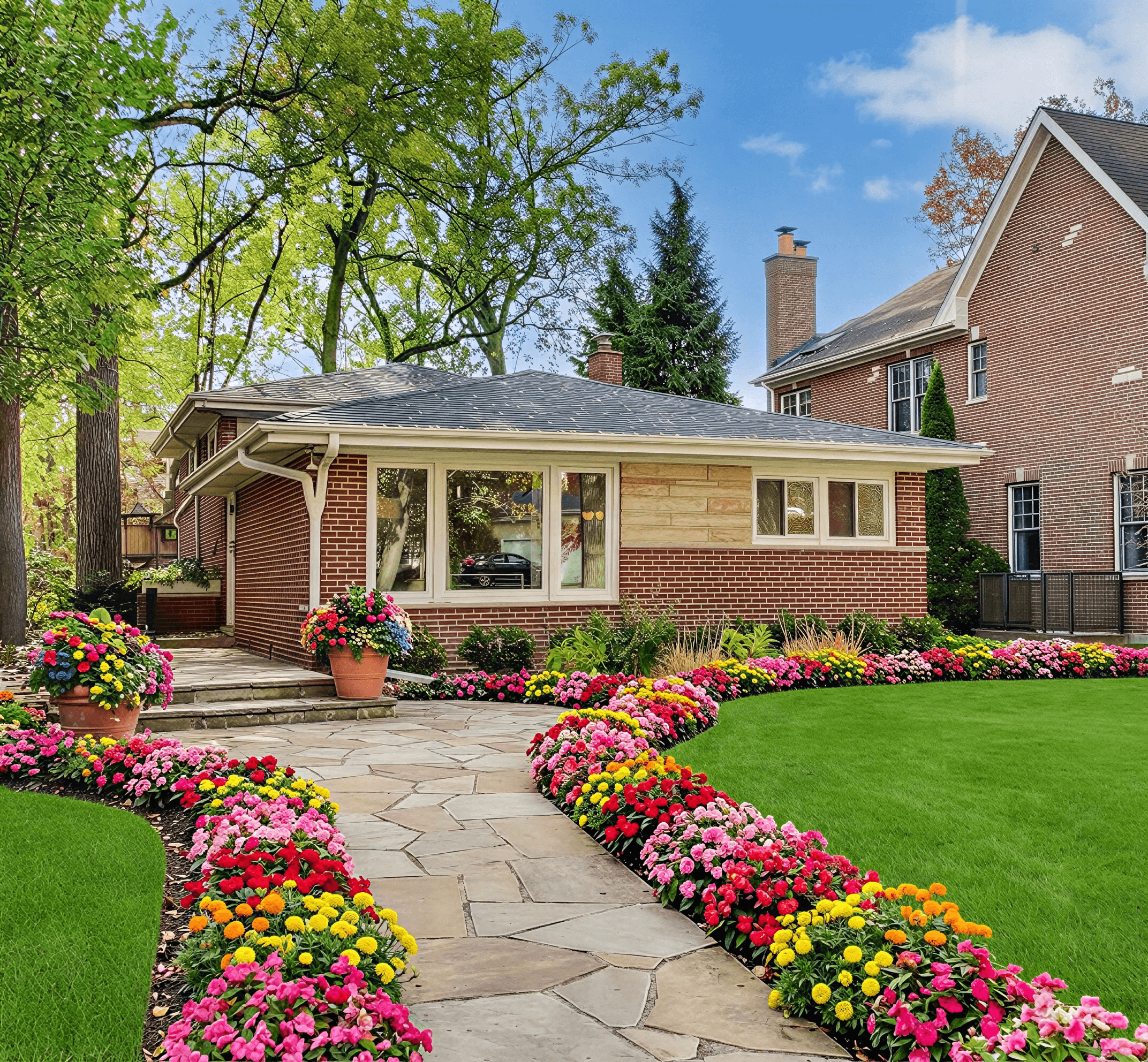
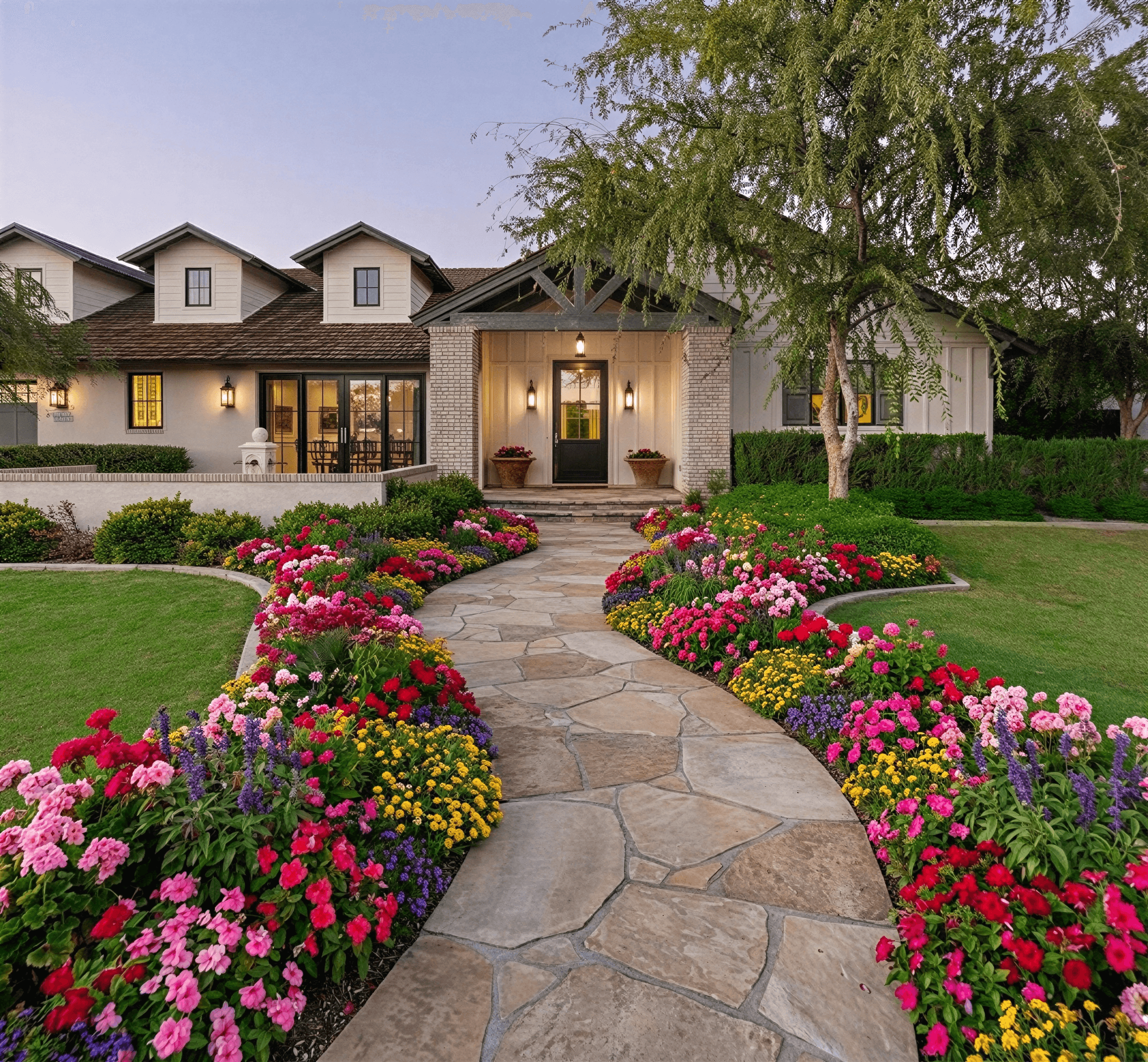
10. Colorful Flower Bed & Annual Landscaping
If you want instant impact, annuals still beat almost everything else.
They deliver color fast, they let you change the look season to season, and they can make a simple house feel lively. But they also ask for the most active gardening. This is front-yard landscaping for people who enjoy tending, swapping, deadheading, and refreshing.

Where annual beds shine
They’re excellent near entries, mailboxes, porch steps, and focal corners where visitors naturally look. They also work well when the permanent structure of the yard is plain and needs a seasonal lift.
The key is not treating them like random color dumps. Good annual design still needs hierarchy. Taller plants in back, medium in the middle, low edging in front. Repeated color bands usually look stronger than a mixed confetti effect.
I’d rather see two or three coordinated colors used well than every bright bloom from the garden center packed into one bed.
The practical trade-offs
Annual beds need soil prep, feeding, irrigation consistency, and regular cleanup. If they dry out, they decline fast. If they aren’t deadheaded, many lose visual power quickly.
This style works best when paired with permanent structure such as shrubs, edging, or hardscape. That way the yard still looks composed between seasonal changes.
Some combinations that usually read well:
- Bold contrast: purple and yellow, blue and orange, deep green with white.
- Soft harmony: blush, lavender, silver foliage, and pale blue.
- Heat-tolerant punch: vivid pink, coral, orange, and lime foliage in sunny climates.
Real-world example: on a modest suburban lot, a front foundation bed with permanent evergreen anchors and rotating annual color near the walk often gives the best of both worlds. You get strong curb appeal without rebuilding the whole yard every season. If you love gardening, annuals are fun. If you travel often or want low maintenance, they become a chore quickly.
Top 10 Front Yard Landscaping Styles Comparison
A front yard can look great in a photo and still be the wrong choice for your house, budget, or climate. This side by side view helps narrow the field before you buy stone, plants, or irrigation parts.
Use it as a decision tool, not a style ranking. The right fit usually comes down to three things. How much structure your house already has, how much upkeep you will do, and whether your climate supports the look without constant intervention.
| Style | Implementation Complexity 🔄 | Resource Requirements ⚡ | Expected Outcomes 📊⭐ | Ideal Use Cases 💡 | Key Advantages ⭐ |
|---|---|---|---|---|---|
| Modern Minimalist Landscaping | Moderate. Simple layouts are harder to execute well because spacing, grading, and material quality show everything 🔄 | Low ongoing maintenance, moderate to high upfront hardscape cost ⚡ | Clean, polished curb appeal with strong year-round structure 📊⭐ | Contemporary homes, narrow lots, owners who want order without heavy garden work 💡 | Low upkeep after installation, scales well, stays relevant for years ⭐ |
| Cottage Garden Landscaping | Moderate. Planting feels loose, but it still needs editing, layering, and regular care to avoid looking messy 🔄 | Moderate ongoing labor and steady plant replacement or division over time ⚡ | Full, inviting charm with long bloom periods and a softer street presence 📊⭐ | Older homes, cottage or bungalow architecture, hands-on gardeners 💡 | Strong seasonal character, good pollinator value, forgiving to build in phases ⭐ |
| Xeriscaping & Desert Landscaping | Moderate. Success depends on plant grouping, drainage, and restrained material choices 🔄 | Low water use, moderate upfront cost for gravel, boulders, edging, and irrigation setup ⚡ | Water-saving front yard with crisp structure and low routine maintenance 📊⭐ | Dry climates, water restrictions, hot exposures, owners reducing turf 💡 | Cuts irrigation demand, holds up well in heat, often qualifies for local rebate programs ⭐ |
| Mediterranean-Inspired Landscaping | Moderate-High. Materials and plant choices matter, but upkeep is usually manageable once established 🔄 | Higher upfront cost for masonry, gravel, pots, and specimen plants. Moderate water use depending on region ⚡ | Warm, relaxed, refined curb appeal with good texture and outdoor-living character 📊⭐ | Warm or dry climates, stucco homes, courtyards, owners who want evergreen structure with color accents 💡 | Strong architectural presence, edible and fragrant plant options, less fussy than it looks ⭐ |
| Native Plant Landscaping | Moderate. The design work is in choosing the right plant community, not just buying local species 🔄 | Low long-term inputs, moderate establishment care during the first seasons ⚡ | Durable, regionally grounded yard that supports birds, pollinators, and soil health 📊⭐ | Homeowners prioritizing ecology, sites near natural areas, climates with weather swings 💡 | Lower long-term maintenance, better habitat value, strong climate fit when planned well ⭐ |
| Tropical & Lush Landscaping | High. Layering, frost protection, irrigation, and microclimate control all matter 🔄 | High water use, frequent grooming, and higher plant costs, especially outside truly warm zones ⚡ | Dense, dramatic front yard with a resort feel and bold foliage impact 📊⭐ | Tropical and subtropical areas, protected courtyards, owners willing to maintain a high-input garden 💡 | Fast visual impact, rich texture, strong screening potential in suitable climates ⭐ |
| Japanese Garden Landscaping | High. Restraint is part of the skill, and mistakes stand out quickly in small compositions 🔄 | Moderate to high cost for stone, specimen plants, pruning, and possible water elements ⚡ | Calm, highly intentional setting with year-round form and a strong sense of balance 📊⭐ | Owners who value quiet detail, smaller front yards, homes with simple architecture 💡 | Reduced lawn area, four-season interest, elegant structure without relying on flowers ⭐ |
| Pollinator & Wildlife-Friendly Landscaping | Moderate. Good results come from bloom timing, habitat layering, and accepting a looser look in some areas 🔄 | Low to moderate inputs, fewer chemicals, seasonal cutback and cleanup required ⚡ | Active, changing front yard with visible habitat value and long seasonal interest 📊⭐ | Eco-focused households, schools, community-facing homes, suburban lots with room to naturalize 💡 | Supports bees, butterflies, and birds while still offering curb appeal when edited well ⭐ |
| Formal & Symmetrical Landscaping | High. Geometry, spacing, and pruning have to stay consistent 🔄 | High installation cost and steady maintenance for clipping, feeding, and replacement ⚡ | Controlled, dignified frontage with a strong architectural connection to the house 📊⭐ | Colonial, Georgian, and other traditional homes, entry-focused designs, neighborhoods with manicured standards 💡 | Clear visual order, strong resale appeal in the right setting, works well with classic architecture ⭐ |
| Colorful Flower Bed & Annual Landscaping | Moderate. The design can be simple, but the upkeep is constant through the season 🔄 | High seasonal labor, frequent watering, feeding, and recurring plant purchases ⚡ | Fast, bright curb appeal with easy seasonal change-ups 📊⭐ | Entry beds, foundation plantings, homes being staged, gardeners who enjoy frequent refreshes 💡 | Maximum color impact and flexibility without a full front yard rebuild ⭐ |
Two patterns matter here. Styles with the strongest structure, such as minimalist, formal, and Japanese, usually cost more upfront but ask less from you in seasonal reworking. Styles driven by bloom and abundance, such as cottage, pollinator-focused, and annual beds, can start cheaper but demand more editing, cleanup, and replacement over time.
That trade-off is where many front yard plans go off course. Homeowners often choose by appearance first, then get surprised by irrigation needs, pruning cycles, or the way a style fits, or fights, the house. A table like this cannot design the yard for you, but it can eliminate the wrong direction early, which usually saves money.
Visualize Your Vision Before You Dig
Most front yard mistakes don’t happen because people have bad taste. They happen because scale is hard to judge from the ground, and inspiration photos rarely match your house, your light, your lot width, or your climate. A Mediterranean courtyard can look perfect in one setting and completely wrong in another. A cottage garden can feel inviting on a bungalow and chaotic on a sharp-lined modern facade. A minimalist xeriscape can look elegant in one front yard and barren in the next.
That’s why the smartest step often comes before buying plants, edging, gravel, or pavers. You need to see the composition on your own house.
This matters even more now because homeowners are getting more specific about what they want. Interest has shifted away from one-size-fits-all front yard ideas toward specialized styles like xeriscaping, wildscaping, and mixed hardscape planting approaches. That’s a good change, but it also raises the cost of getting the design wrong. The more style-specific your yard becomes, the less room you have for random decisions.
Climate should drive those decisions. A front yard that looks great on a screen but ignores your local heat, winter exposure, or water reality usually turns into a replacement project. That’s especially true when homeowners choose plants by appearance instead of growth habit, mature size, and regional fit. In practice, the biggest design wins often come from the least glamorous choices. The right walkway width. The right amount of lawn to keep. The right spacing between shrubs. The right material underfoot near the entry. The right simplification of the plant palette.
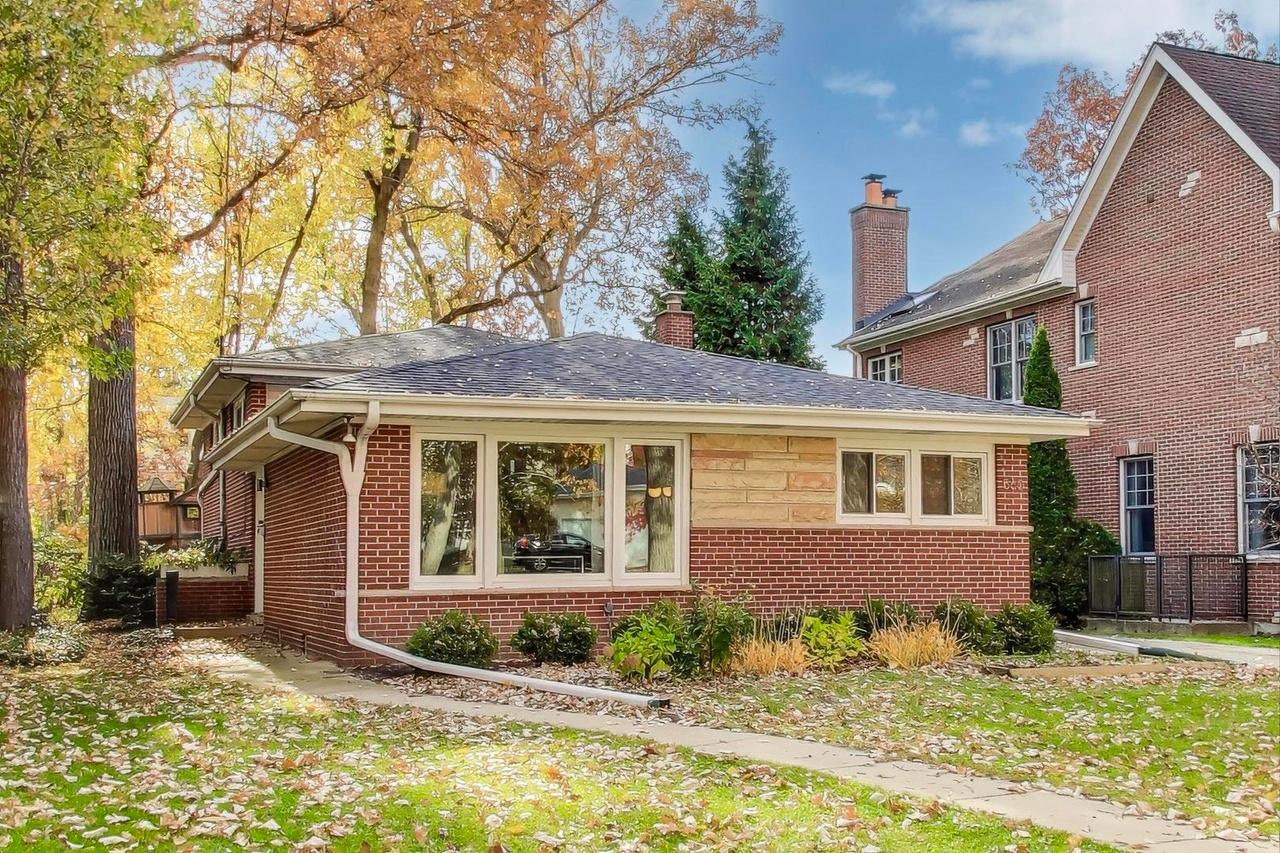
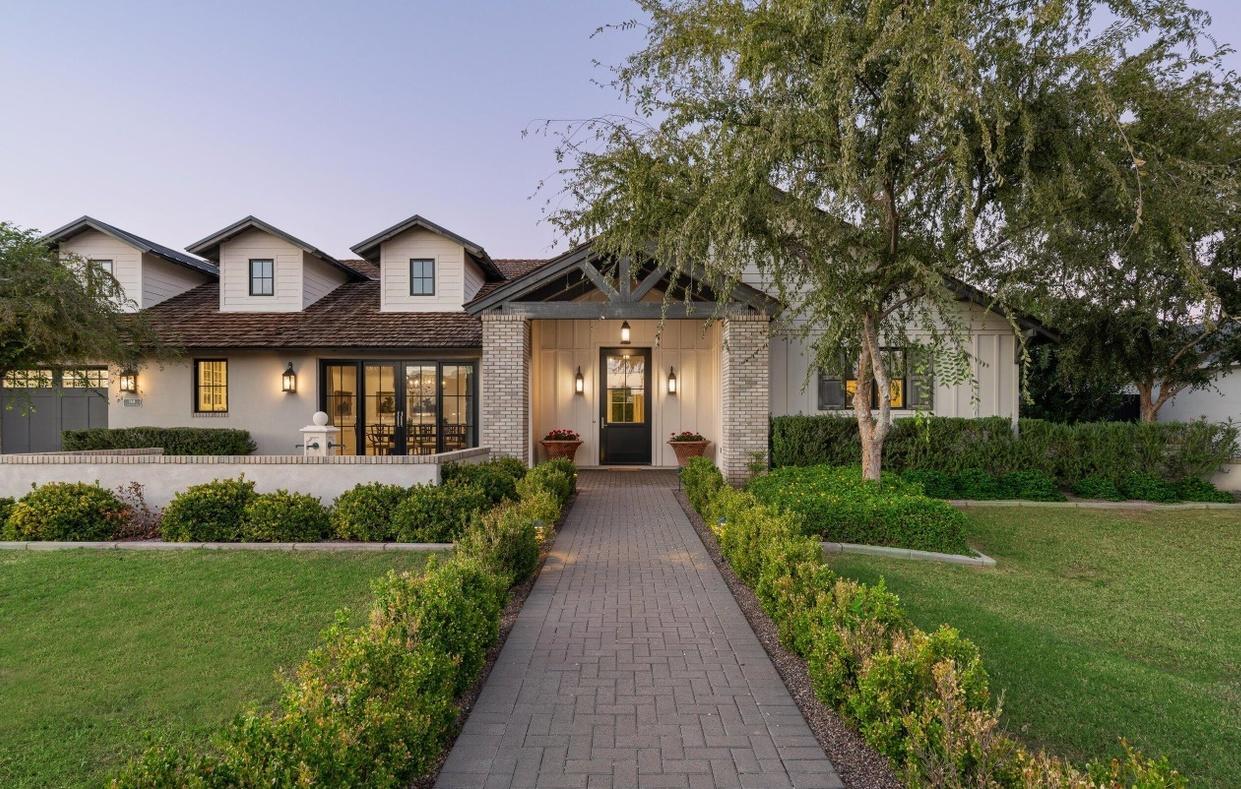
Visualization tools can save real frustration. If you can upload a photo of your front yard and test a modern minimalist layout, a cottage border, a native meadow-inspired scheme, or a Mediterranean planting concept before any digging starts, your decision gets easier. You stop designing in the abstract. You start reacting to what fits the architecture.
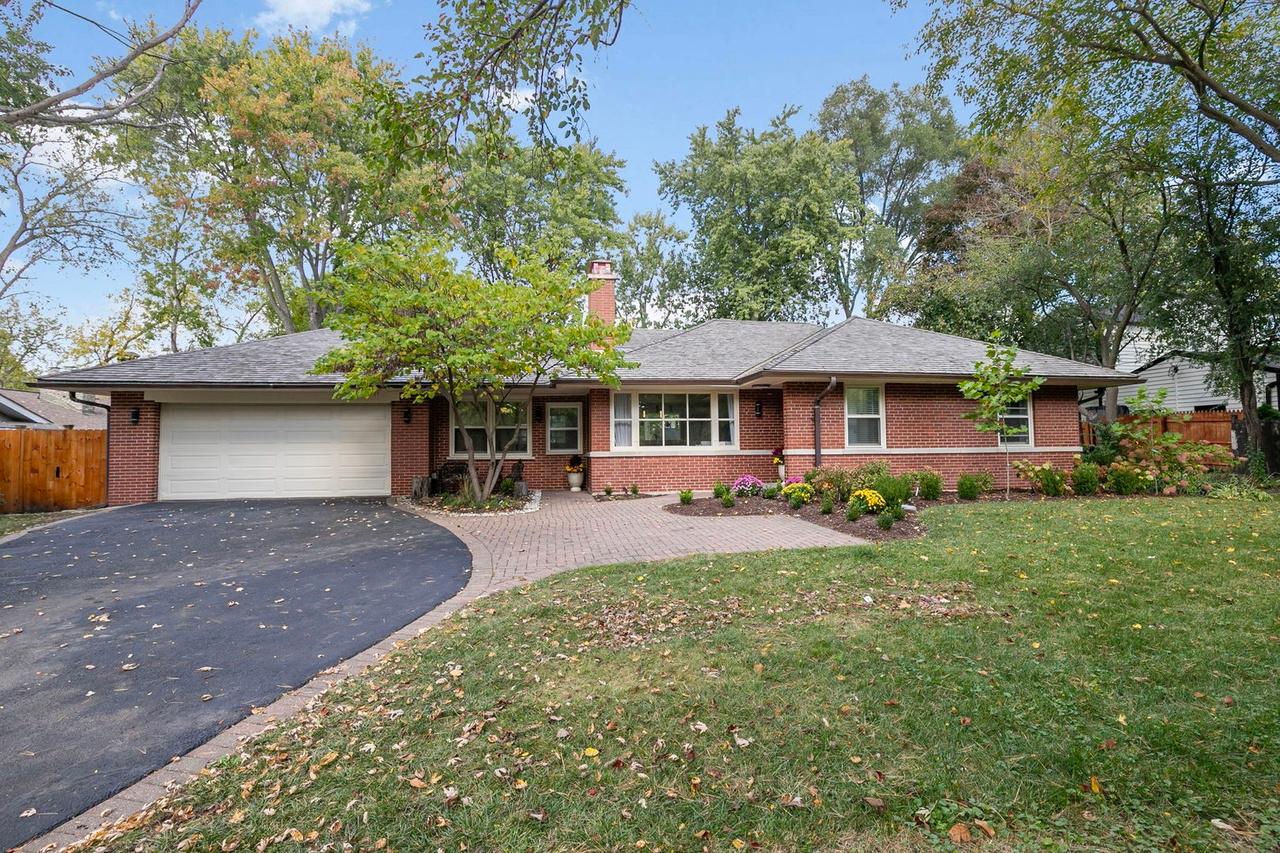
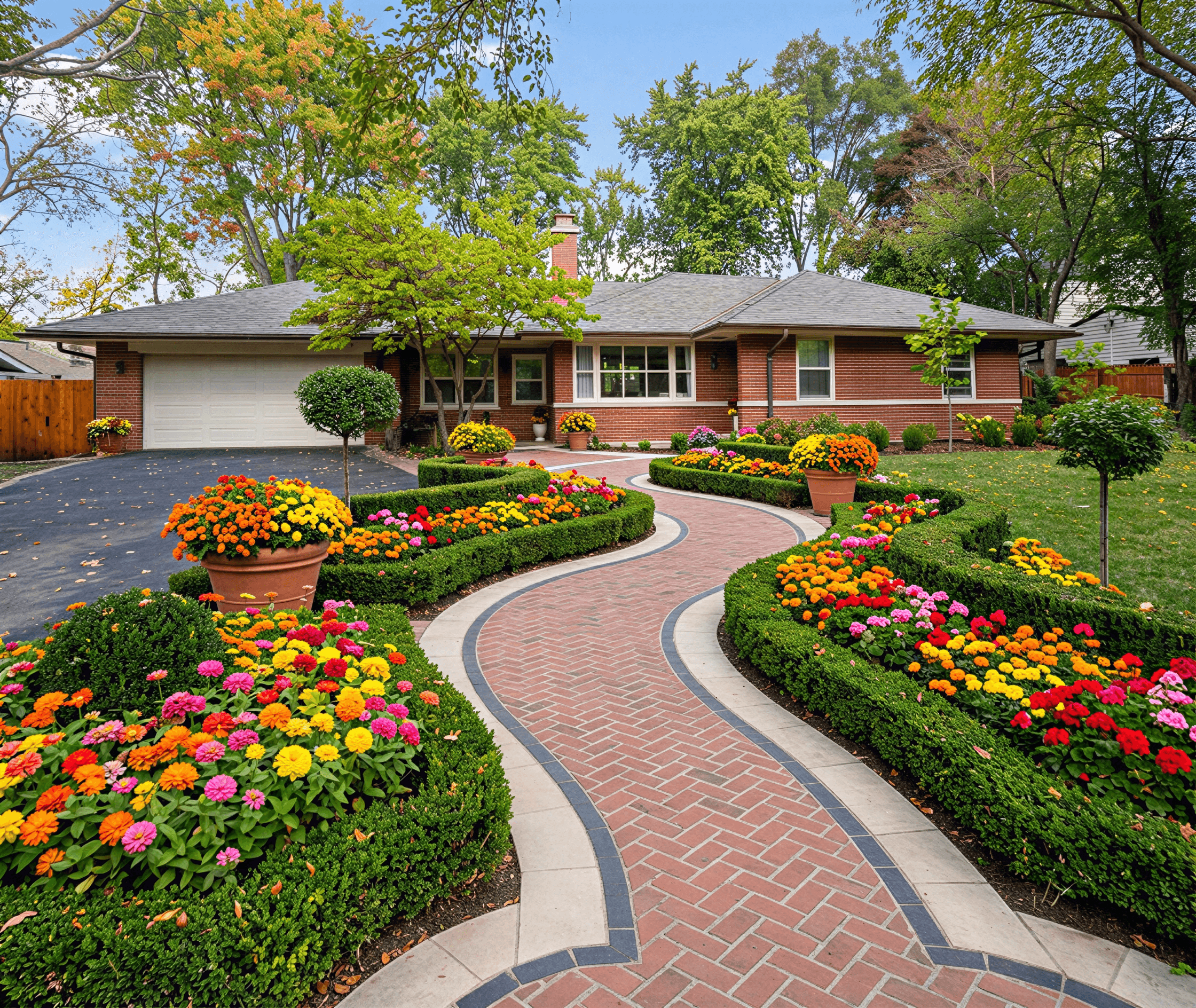
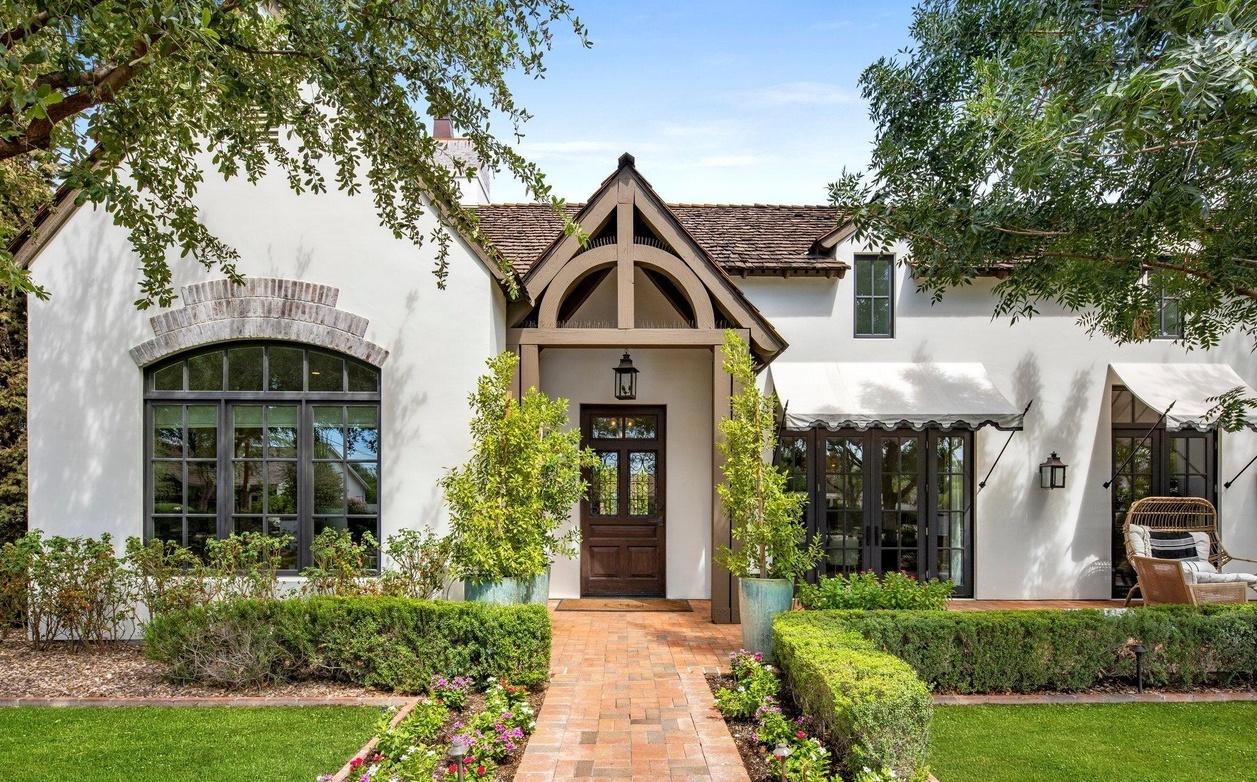
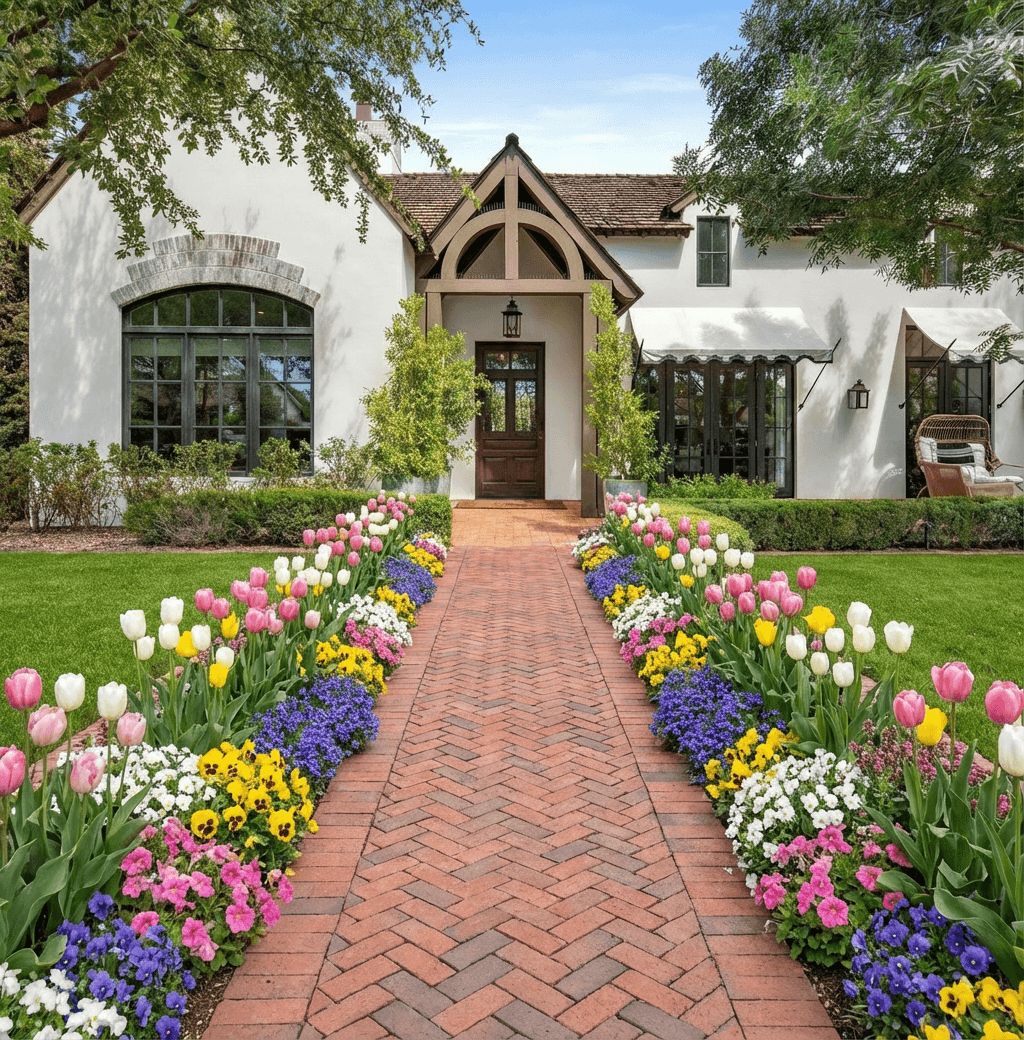
Curb Appeal AI is one option for doing that. It lets users apply different exterior and landscaping styles to a photo of their own home, generate photorealistic concepts, and compare how plantings, materials, and layout changes might look before committing. For homeowners, that helps narrow the style choice. For contractors and agents, it helps communicate a direction clearly. For DIY projects, it reduces the common problem of piecing together unrelated ideas from five different inspiration images.
The practical advantage isn’t just aesthetics. It’s confidence. You can test whether your home wants a clipped formal axis or a looser native planting. You can see whether reducing lawn improves the facade or leaves the yard feeling empty. You can compare warm gravel against dark mulch, or broad foundation planting against open negative space, without buying materials first.
The best landscaping a front yard ideas don’t start with trends. They start with fit. Fit for the house. Fit for the climate. Fit for your maintenance threshold. Fit for the way you want to feel when you pull into the driveway. Once you know the right style, the plant list and hardscape decisions get much easier.
If you want to test these front yard styles on your own home before making expensive changes, Curb Appeal AI can help you visualize different layouts, planting styles, and material directions from a photo of your property.