10 Large Front Yard Landscaping Ideas to Transform Your Curb Appeal in 2026
Your front yard is more than just the space between your home and the street; it's the first chapter of your home's story and a critical component of its curb appeal. A large front yard presents a unique opportunity, a blank canvas to create a stunning landscape that reflects your personal style, boosts property value, and even supports local ecosystems. However, the sheer scale can feel daunting. The challenge is to fill an expansive area purposefully, avoiding a design that feels empty, disjointed, or overwhelming to maintain.
This guide provides a curated collection of large front yard landscaping ideas to transform that open space into a compelling and cohesive design. We move beyond generic advice to deliver actionable strategies tailored for various aesthetic preferences, from the structured elegance of a formal garden to the rugged, low-water beauty of xeriscaping. Each concept is presented with practical guidance to help you make informed decisions.
Inside, you will find a gallery of distinct styles, including:
- Design implementation tips for translating inspiration into a workable plan.
- Climate-appropriate plant palettes to ensure your landscape thrives.
- Layout and scale considerations to create balance and visual interest.
- Budget and maintenance insights for realistic planning and upkeep.
Whether you're a DIY renovator planning a complete overhaul or a homeowner seeking a phased upgrade, these ideas will provide the framework for designing a welcoming, beautiful, and functional landscape. This is your resource for making a powerful first impression that begins the moment someone sees your home.
1. Native & Pollinator Gardens
A native and pollinator garden is a dynamic, living ecosystem that transforms a large front yard from a monoculture lawn into a thriving habitat. This landscaping approach uses plants indigenous to your specific region, which are naturally adapted to the local climate, soil, and rainfall. By focusing on these species, you create a low-maintenance, water-wise landscape that provides essential resources for bees, butterflies, hummingbirds, and other beneficial wildlife.
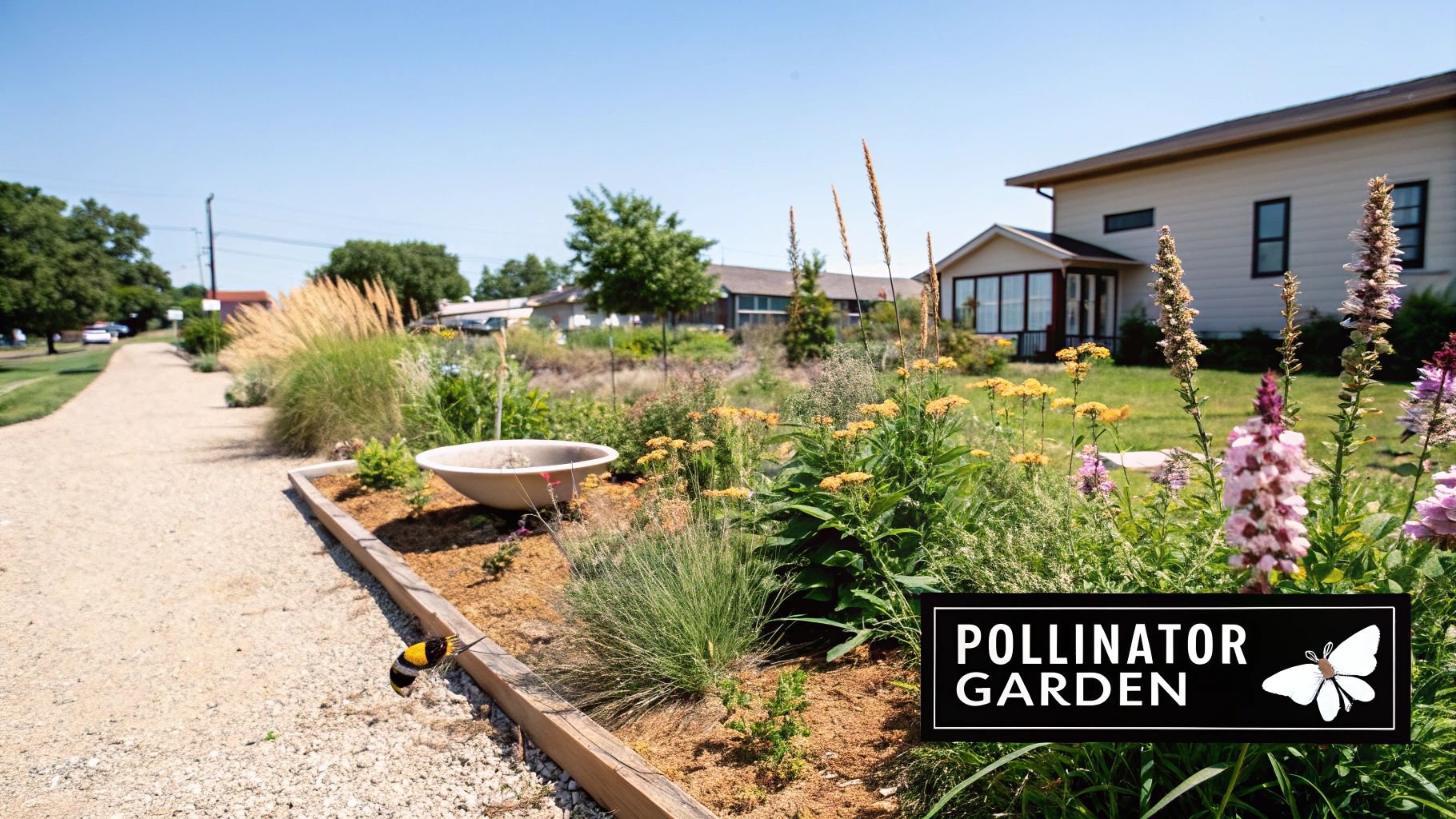
The result is a beautiful, sustainable front yard that offers four seasons of visual interest, from spring blooms to winter seed heads that feed birds. Instead of a static green space, you get a garden buzzing with life and color. This is one of the most impactful large front yard landscaping ideas for homeowners seeking ecological benefits alongside aesthetic appeal.
How to Implement a Native Pollinator Garden
Creating a successful native garden requires thoughtful planning and a shift away from traditional landscaping methods.
- Regional Plant Selection: Research your specific ecoregion to identify plants that truly belong. A Texas garden might feature Blackfoot Daisy and esperanza, while a Northeast yard could use Joe Pye Weed and New England Aster. Local native plant nurseries and Audubon society chapters are excellent resources.
- Layer for Diversity: Plant in layers to mimic a natural habitat. Use groundcovers, perennials of varying heights, shrubs, and native trees. This provides shelter and food sources at different levels for a wider range of wildlife.
- Provide Key Resources: A true pollinator garden offers more than just nectar. Include host plants like milkweed for monarch caterpillars, a shallow water source with landing spots (pebbles or stones), and areas of bare ground for nesting native bees.
- Embrace Imperfection: Leave seed heads on plants like coneflowers and black-eyed Susans through the winter. They provide crucial food for birds and shelter for insects. A small pile of branches or a log can serve as valuable habitat.
Properly designing a front yard landscape that incorporates these elements is key to its success. You can visualize how different native plant combinations will look using digital tools before you start digging, ensuring the layout meets both your aesthetic goals and the needs of local pollinators.
2. Modern Minimalist Design
Modern minimalist design transforms a large front yard into a sophisticated, uncluttered space defined by clean lines, geometric shapes, and a restrained material palette. This approach values form and structure over ornamentation, creating a landscape that feels intentional and calm. It relies on a strong interplay between hardscaping elements like concrete pavers or steel edging and a limited selection of architectural plants.
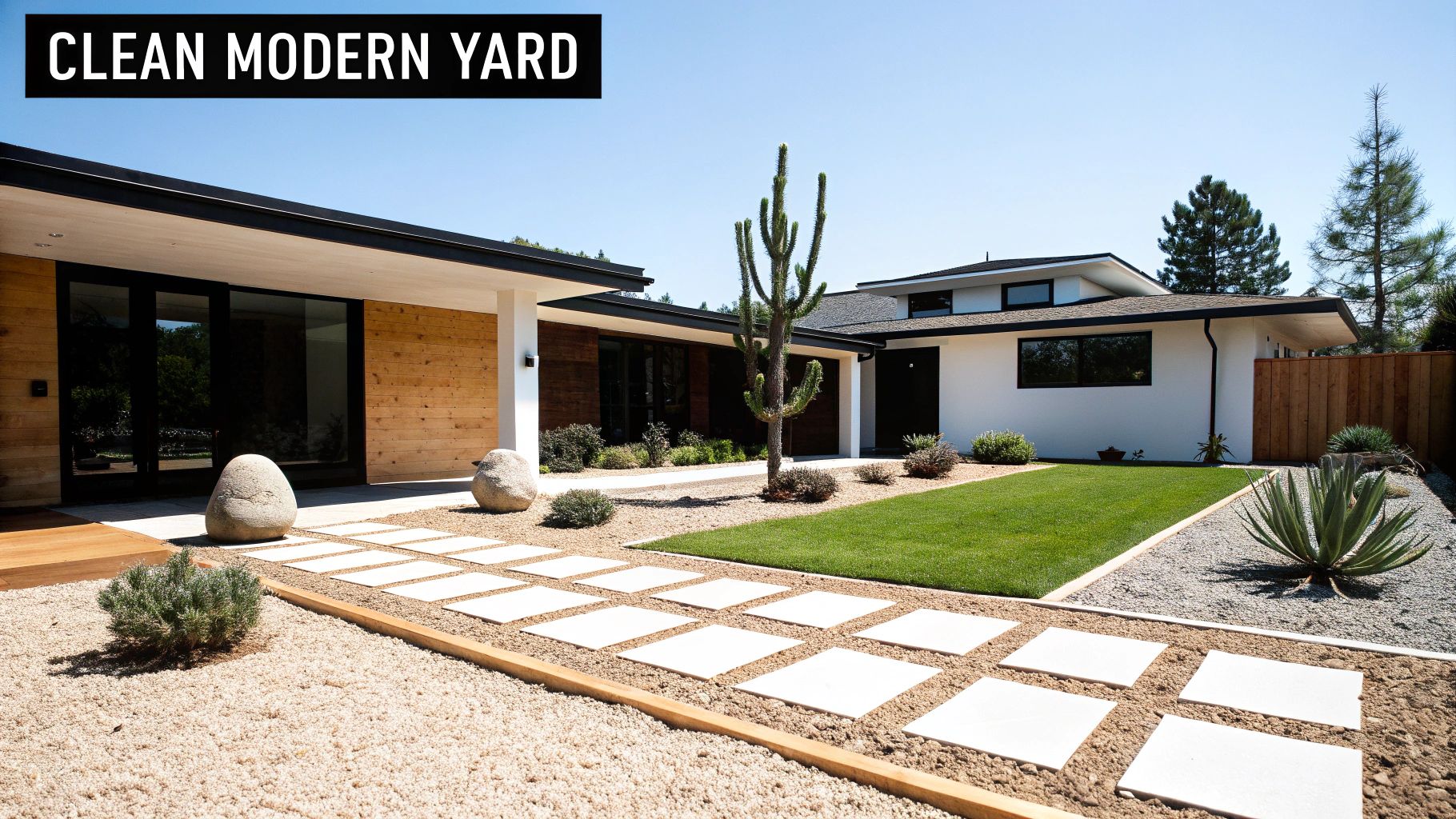
The result is a visually powerful landscape that complements contemporary, mid-century modern, or urban architecture. This style proves that less is often more, turning vast open space into a deliberate and impactful statement. For homeowners seeking a high-end, low-clutter aesthetic, this is one of the most effective large front yard landscaping ideas to achieve a polished look.
How to Implement a Modern Minimalist Design
Achieving a successful minimalist landscape requires discipline and a focus on high-quality materials and precise execution. The principles can be adapted even if you have a smaller space, as many of these concepts are also relevant to small front yard landscaping ideas.
- Restrict Your Plant Palette: Select a maximum of 3 to 5 plant varieties and repeat them in organized groups or linear arrangements. This repetition creates a strong sense of rhythm and cohesion. Focus on plants with interesting foliage, texture, or form, such as horsetail reed, boxwoods, or ornamental grasses, rather than abundant flowers.
- Prioritize High-Quality Hardscaping: The hardscape is the backbone of minimalist design. Invest in premium materials like large-format concrete pavers, COR-TEN steel for edging or retaining walls, and dark gravel or river stones. The precise lines and geometric shapes of these elements define the space.
- Create Depth with Layers: Despite its simplicity, a minimalist design shouldn't feel flat. Create visual interest by layering elements: a ground plane of gravel or a low groundcover, a mid-layer of structural shrubs or grasses, and a vertical layer with a single specimen tree like a Japanese maple or birch.
- Integrate Strategic Lighting: Use outdoor lighting to accentuate the design's geometric forms after dark. Uplighting a feature tree, washing a textured wall with light, or embedding linear LEDs along pathways can highlight the clean lines and architectural quality of the landscape.
3. Mediterranean-Inspired Landscapes
A Mediterranean-inspired landscape brings the sun-drenched, rustic charm of coastal Europe to your home, creating a relaxed and water-wise front yard. This style is defined by drought-tolerant plants, warm terracotta tones, gravel paths, and the use of natural stone. It evokes a sense of timeless elegance and is particularly well-suited for warm, dry climates, but its principles can be adapted to transitional zones with proper plant selection.
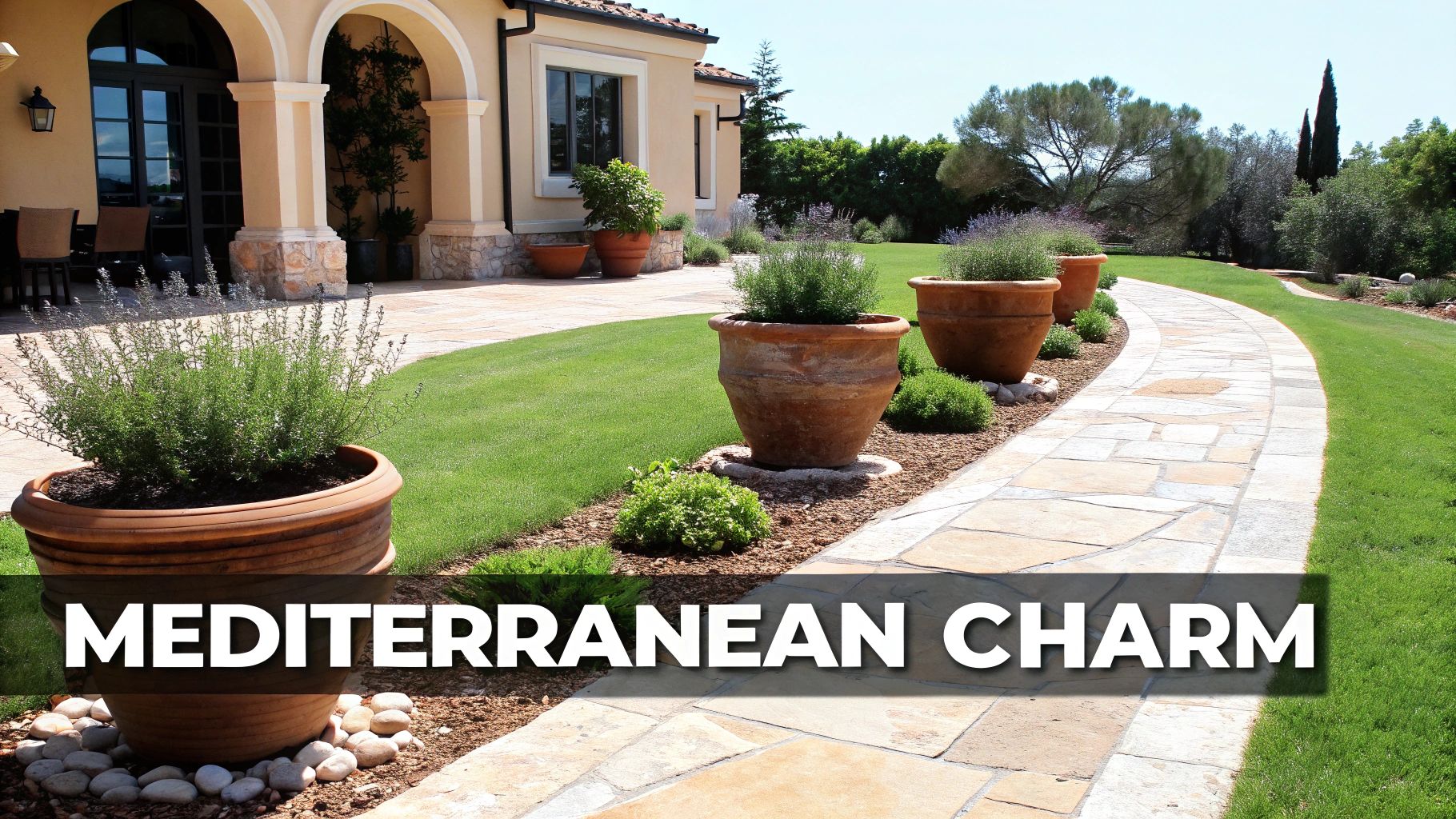
The result is a sophisticated yet informal garden that prioritizes texture, fragrance, and structure over a vast, thirsty lawn. This approach transforms a large front yard into a series of inviting spaces, perfect for a leisurely stroll or a quiet seating area. For those seeking large front yard landscaping ideas that combine beauty with resilience, the Mediterranean aesthetic offers a compelling and sustainable solution.
How to Implement a Mediterranean Landscape
Creating an authentic Mediterranean feel involves a focus on materials, plant selection, and thoughtful layout to handle heat and conserve water.
- Choose a Climate-Appropriate Palette: Select drought-tolerant plants like olive trees, lavender, rosemary, bougainvillea, and cypress. In hybrid zones, you can blend native species with Mediterranean staples. For example, a Texas Hill Country garden might mix agave with Italian cypress.
- Incorporate Hardscaping: Use warm-toned materials to define the space. Winding gravel or flagstone pathways, low stone retaining walls, and terracotta pots are hallmarks of this style. These elements provide structure and reduce the amount of planted area that needs irrigation.
- Create Focal Points: A large urn, a simple water feature like a tiered fountain, or a rustic wooden bench can serve as a stunning focal point. Position these elements where they can be enjoyed from the street or from inside your home.
- Use Gravel as Mulch: Instead of wood chips, use pea gravel or decomposed granite as mulch. This practice not only reinforces the aesthetic but also helps retain soil moisture, suppress weeds, and reflect heat away from plant roots.
Designing these elements to work together is crucial. You can use landscape design software to visualize how different stone, plant, and container combinations will look against your home's exterior, ensuring the final result is both cohesive and climate-compatible.
4. Xeriscaping (Desert & Drought-Tolerant Landscapes)
Xeriscaping is a water-wise landscaping philosophy that creates a stunning, resilient yard by minimizing the need for supplemental irrigation. Originally developed for arid climates like the American Southwest, its principles are now widely adopted wherever water conservation is a priority. This approach uses a combination of drought-tolerant plants, efficient irrigation methods, and smart use of materials like gravel, mulch, and hardscaping to create a beautiful, low-maintenance outdoor space.
The result is a visually striking landscape that celebrates texture, form, and subtle color palettes, from the silvery foliage of sage to the architectural shapes of agaves and yuccas. By trading a thirsty lawn for a thoughtfully designed xeriscape, you get a front yard that is both environmentally responsible and uniquely beautiful. This is one of the most practical large front yard landscaping ideas for homeowners in dry regions or those looking to drastically reduce water bills and maintenance.
How to Implement a Xeriscape Design
Creating a successful xeriscape garden involves strategic planning that goes beyond just picking drought-tolerant plants.
- Group Plants by Water Needs: This is a core principle of xeriscaping. Create "hydrozones" by grouping plants with similar water requirements together. This allows you to irrigate efficiently, providing water only where and when it's needed most, rather than watering the entire yard on one schedule.
- Utilize Mulch and Hardscapes: Apply a 2 to 3-inch layer of organic mulch (like wood chips) or inorganic mulch (like decomposed granite or river rock) over the soil. This helps retain moisture, suppress weeds, and regulate soil temperature. Integrate pathways, patios, and rock features to reduce the amount of planted area that needs water.
- Choose Adapted Plants: Select plants known for their drought tolerance. For a classic desert look, consider agave, yucca, and ornamental grasses. In other regions, plants like lavender, sedum, and Russian sage thrive with minimal water once established. Plants with gray or fine foliage often indicate low water needs.
- Plan for Efficient Irrigation: If you do need to irrigate, use a drip system or soaker hoses, which deliver water directly to the plant's root zone, minimizing evaporation. Water deeply but infrequently to encourage deep root growth, making plants more resilient during dry spells.
Properly designing a xeriscape is essential to avoid a sparse or barren look. Exploring various drought-tolerant landscaping ideas can help you visualize a lush and appealing design that conserves water.
5. Cottage Garden Style
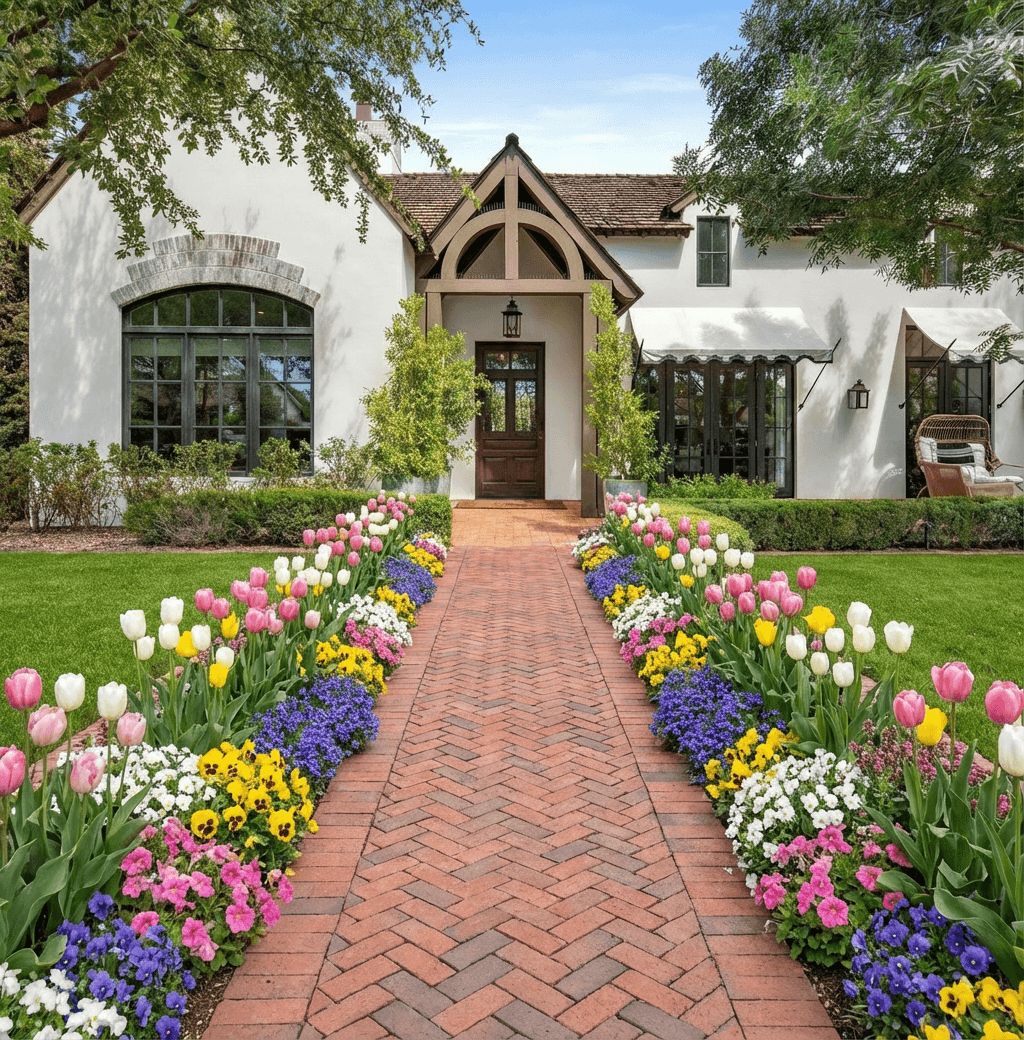
A cottage garden transforms a large front yard into a charming, romantic landscape overflowing with life. This style rejects rigid formality, instead embracing dense, informal plantings of perennials, annuals, shrubs, and climbing vines. It prioritizes a symphony of color, texture, and fragrance, creating a welcoming and slightly untamed aesthetic that feels both personal and timeless.
The result is a dynamic, multi-sensory experience that evolves throughout the seasons. Unlike a manicured lawn, a cottage garden is a bustling ecosystem that supports biodiversity while offering a picturesque view. This approach is one of the most enchanting large front yard landscaping ideas for homeowners who want to create a space with personality, warmth, and abundant floral beauty.
How to Implement a Cottage Garden Style
Creating the signature look of a cottage garden involves strategic plant selection and a relaxed approach to design, focusing on abundance and harmony.
- Layer Plant Heights: Create visual depth by placing tall plants like delphiniums, foxgloves, and hollyhocks at the back of borders. Use mid-layer plants such as roses, coreopsis, and shasta daisies in the middle, and finish with low-growing groundcovers like creeping thyme or sweet alyssum in the foreground.
- Plan for Continuous Blooms: Select a variety of plants with staggered bloom times to ensure your garden remains colorful from spring through fall. For example, pair spring-blooming peonies and irises with summer-blooming coneflowers and black-eyed Susans, and fall-blooming asters.
- Create Cohesion with Color: While the look is informal, a cohesive color palette prevents it from looking chaotic. Stick to a theme of three to five complementary colors, such as a classic mix of pink, blue, and white, or a warmer palette of yellow, orange, and red.
- Incorporate Structures: Add charm and vertical interest with elements like a white picket fence, a rustic arbor for climbing roses, or a winding stone path. These structures provide a framework for the abundant plantings and guide the eye through the space.
6. Contemporary Hardscape-Forward Design
A contemporary hardscape-forward design prioritizes architectural elements like patios, walkways, and built-in features, using plants as deliberate, often minimalist, accents. This approach transforms a large front yard into a structured, functional outdoor living space ideal for entertaining or creating a strong architectural statement. It emphasizes clean lines, geometric shapes, and high-quality materials like concrete, stone, and wood to craft a sophisticated and durable landscape.
The result is an extension of the home's architecture, a highly intentional landscape that is both low-maintenance and visually impactful. Instead of a soft, plant-dominated space, you get a clean, modern aesthetic where form and function are paramount. This is one of the best large front yard landscaping ideas for homeowners who value a sleek, organized look and wish to reduce lawn care.
How to Implement a Hardscape-Forward Design
Creating an effective hardscape-forward yard requires a focus on material quality, proper installation, and strategic plant placement to soften the architectural elements.
- Prioritize High-Quality Materials: The success of this style hinges on the materials. Choose premium pavers, natural stone, or architectural concrete that complements your home's exterior. Inferior materials can stain, crack, or degrade quickly, undermining the entire design.
- Integrate Functional Features: Go beyond simple pathways. Incorporate elements like built-in seating benches made from concrete or ipe wood, geometric raised garden beds, or a modern water feature. These additions maximize usability and add layers of visual interest.
- Ensure Proper Drainage: With large non-porous surfaces, drainage is critical. Patios and walkways should be sloped at least 1-2% away from the house foundation to prevent water issues. Consider using permeable pavers or gravel channels to help manage stormwater runoff effectively.
- Use Plants as Sculptural Elements: Plants are not the main event but serve as crucial accents. Use grasses, agaves, or clipped boxwoods in organized rows or containers to add texture and color without overwhelming the clean lines of the hardscape. This creates a powerful contrast between the built and natural environments.
7. Tropical & Lush Plantings
A tropical landscape transforms a large front yard into a verdant, exotic escape, characterized by bold foliage, vibrant flowers, and densely layered plantings. This approach evokes the feel of a rainforest or a resort-like oasis, relying on plants with oversized leaves, dramatic shapes, and intense colors. It is an excellent choice for warmer climates where these species can thrive year-round, creating a stunning and immersive environment.
The result is a dynamic, high-impact front yard that feels both private and luxurious. Instead of a simple lawn, you get a multi-sensory experience with rich textures, fragrant blooms, and the gentle rustle of palm fronds. This is one of the most effective large front yard landscaping ideas for homeowners wanting to create a dramatic, vacation-like atmosphere right at their doorstep.
How to Implement a Tropical & Lush Landscape
Creating an authentic tropical garden requires a focus on layering, moisture management, and selecting the right plants to achieve that dense, jungle-like effect.
- Create Dense Layers: A successful tropical design mimics the structure of a rainforest. Start with a tall canopy layer of palms (like Foxtail or Christmas palms) or shade trees. Add a mid-story of shrubs with bold leaves like Elephant Ears or philodendrons, and fill in the understory with dense groundcovers, ferns, and colorful caladiums.
- Prioritize Bold Foliage: The essence of a tropical look is dramatic foliage. Use plants with massive, interesting leaves as focal points. Think Bird of Paradise, Monstera, and Alocasia. Repeat these statement plants throughout the design for a cohesive, powerful look.
- Ensure Consistent Moisture: Tropical plants are often native to humid, rainy climates and thrive with consistent moisture. Install a drip irrigation system or soaker hoses to deliver water directly to the root zone efficiently. A thick, 3- to 4-inch layer of organic mulch is crucial for retaining soil moisture and keeping roots cool.
- Select for Climate Compatibility: Choose plants from similar climate regions to ensure they have compatible needs for water, sun, and soil. For those in cooler zones, you can achieve a tropical feel with hardy look-alikes like Japanese Fiber Banana (Musa basjoo) and Canna Lilies, treating them as annuals or protecting them over winter.
8. Raised Beds & Productive Kitchen Gardens
Transforming a large front yard into a productive kitchen garden, often called a "potager," merges beauty with utility. This approach uses raised beds, edible flowers, herbs, and fruit-bearing plants to create a landscape that is both ornamental and a source of fresh produce. Instead of a purely decorative space, you get a functional, edible garden that enhances your home's curb appeal while providing food for your table.
A well-designed productive garden is a feast for the eyes and the palate. The structured look of raised beds provides clean lines and architectural interest, while the mix of vegetables, herbs, and flowers creates rich textures and colors. This is one of the most rewarding large front yard landscaping ideas for those who value sustainability, self-sufficiency, and a direct connection to their food.
How to Implement a Productive Kitchen Garden
Creating a successful front yard kitchen garden requires a focus on both aesthetics and agricultural best practices to ensure it remains an asset to your property.
- Choose Durable Materials: Construct raised beds from materials that complement your home’s exterior. Options like untreated cedar, composite decking, or galvanized steel offer longevity and a polished look. Aim for beds 12–18 inches deep for deep-rooted vegetables and 6–8 inches for herbs.
- Optimize Soil and Irrigation: Fill beds with a high-quality mix of approximately 80% garden soil and 20% compost. This blend ensures excellent drainage and fertility. Installing a drip irrigation system on a timer provides consistent moisture directly to the plant roots, improving efficiency and reducing water waste.
- Practice Smart Planting: Use companion planting techniques, such as pairing tomatoes with basil or carrots with rosemary, to naturally deter pests and improve growth. Plan for vertical space by installing trellises or cages for vining plants like cucumbers and beans early in the season.
- Maintain Soil Health: To prevent soil depletion and manage pests, practice crop rotation annually. Avoid planting the same crop family in the same bed for consecutive years. This simple step is crucial for long-term garden productivity.
9. Formal & Structured Design
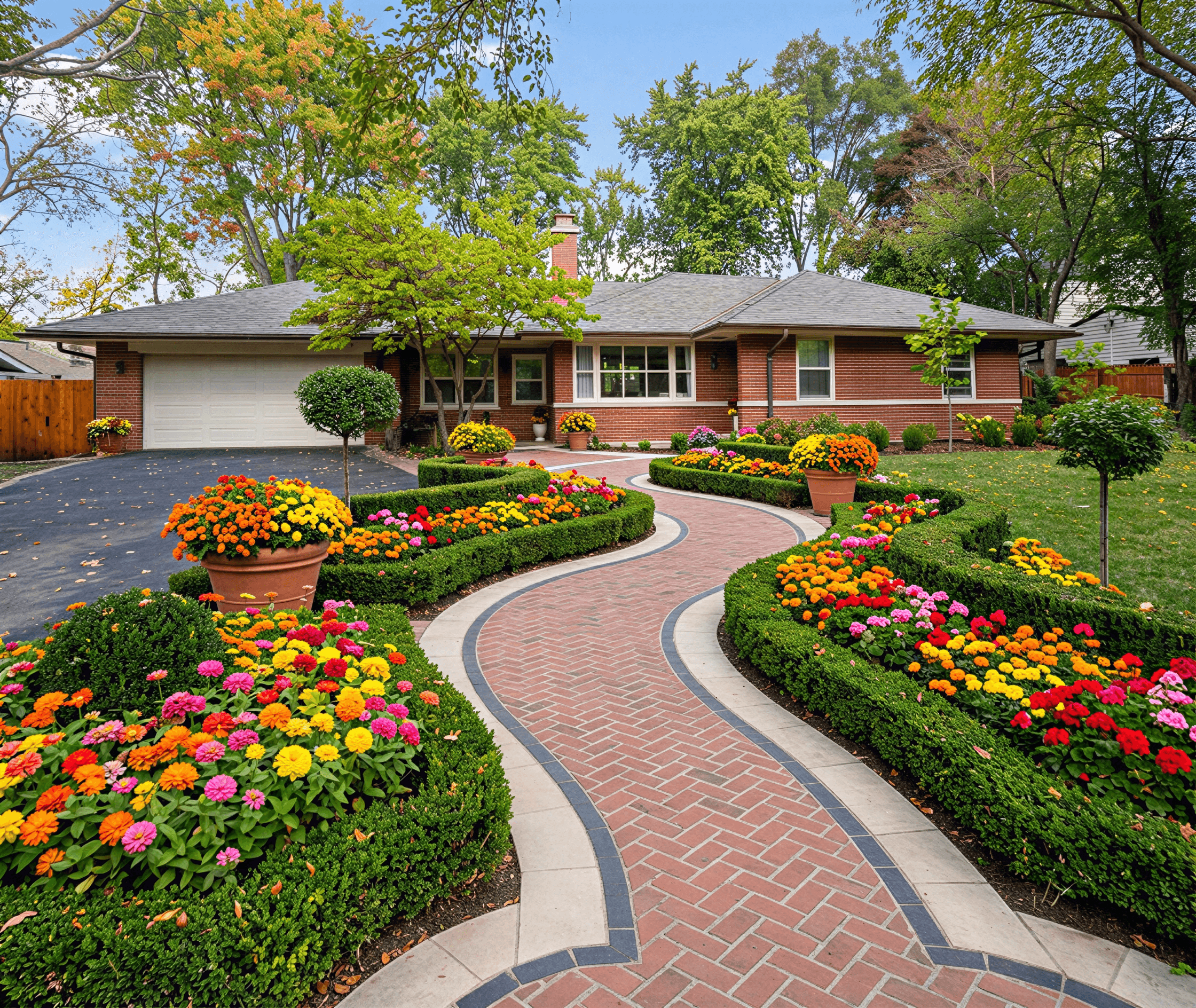
A formal and structured design brings a sense of order, elegance, and timeless grandeur to a large front yard. This landscaping approach is defined by its emphasis on symmetry, clean geometric lines, and meticulously controlled plant forms. By using elements like clipped hedges, topiaries, and strong axial sightlines, it creates a powerful statement of intentionality and sophistication that complements traditional, colonial, or luxury architectural styles.
The result is a highly polished and impressive landscape that feels both stately and serene. Instead of the wild, naturalistic feel of a cottage garden, a formal design conveys control and artistry, turning the front yard into an extension of the home's architecture. This is one of the most classic large front yard landscaping ideas for homeowners aiming for a prestigious and organized curb appeal.
How to Implement a Formal & Structured Design
Creating a successful formal landscape requires precision, planning, and a commitment to regular maintenance.
- Establish a Central Axis: The foundation of formal design is a strong central axis, often aligned with the front door or a prominent window. This line dictates the layout, with paths, beds, and features mirrored on either side to create perfect bilateral symmetry.
- Use Geometric Shapes: Define garden beds with clear geometric shapes like squares, rectangles, or circles. Use hardscaping materials like brick, stone pavers, or gravel to reinforce these lines and create crisp, clean edges.
- Select Appropriate Plants: Choose plants that respond well to regular pruning and shaping. Slow-growing evergreens like Boxwood (Buxus), Yew (Taxus), and Privet (Ligustrum) are ideal for creating neat hedges and topiaries. Limit the plant palette to a few repeating species to enhance the sense of order.
- Incorporate a Focal Point: Every formal garden needs a central focal point to anchor the design. This could be a classical fountain, an elegant urn, a tiered planter, or a specimen tree. This feature should be placed along the central axis to draw the eye and create a sense of destination.
10. Japanese-Inspired Gardens
A Japanese-inspired garden transforms a large front yard into a serene, meditative space that emphasizes harmony, balance, and contemplation. This landscape style uses natural materials like stone, weathered wood, and water, combined with carefully pruned plants and asymmetrical layouts to create a tranquil scene. Rather than a burst of color, the focus is on form, texture, sightlines, and an awareness of the changing seasons.
The result is a sophisticated and artful front yard that feels like a private sanctuary. It encourages a slower pace and offers a profound sense of peace. This is one of the most elegant large front yard landscaping ideas for homeowners who value minimalist beauty, symbolism, and a deep connection to nature.
How to Implement a Japanese-Inspired Garden
Creating a successful Japanese garden involves more than just placing elements; it requires understanding core principles to achieve authenticity and tranquility.
- Embrace Asymmetry and Restraint: Avoid symmetrical layouts. Instead, arrange elements like rocks, plants, and lanterns in balanced, natural-feeling compositions. Choose only a few high-quality specimen plants, like a Japanese Maple or a sculpted pine, and let them be the focus rather than filling the space with many different varieties.
- Incorporate Natural Materials: Use stone, gravel, and weathered wood to create an authentic feel. Raked gravel can symbolize water in a dry Zen garden (karesansui), while large, moss-covered boulders can represent mountains. Stepping stone paths (tobi-ishi) guide movement and encourage mindful walking.
- Add Water (or its Illusion): Water is a central element, representing life and purification. This can be a small koi pond, a simple bamboo fountain (shishi-odoshi), or a stone basin (tsukubai). Even the illusion of water through raked gravel provides this essential component.
- Frame the View: Use plants, fences, or a gate to create intentional sightlines, a principle known as "borrowed scenery" (shakkei). This technique frames desirable views, hides undesirable ones, and makes the garden feel larger and more integrated with its surroundings.
Properly balancing these elements with your home's architecture is crucial. Using a design tool to visualize the placement of rocks, paths, and specimen trees can help ensure the final composition achieves the desired sense of harmony and peace before you begin.
10-Style Front Yard Landscaping Comparison
| Style | Implementation Complexity 🔄 | Resource Requirements ⚡ | Expected Outcomes ⭐📊 | Ideal Use Cases | Key Advantages 💡 |
|---|---|---|---|---|---|
| Native & Pollinator Gardens | Moderate 🔄 — species knowledge; 1–2 yr establishment | Low–Moderate ⚡ — low water/fertilizer; initial planting effort | High ⭐📊 — increased biodiversity, visible pollinator activity | Suburban/residential, community corridors, educational spaces | Supports pollinators; low ongoing maintenance; water-wise; seasonal interest |
| Modern Minimalist Design | Moderate–High 🔄 — precise layout and material detailing | High upfront ⚡ — costly hardscape; low plant variety | High ⭐📊 — strong architectural curb appeal, low plant upkeep | Modern, mid-century, contemporary homes; real-estate staging | Clean, timeless aesthetic; low plant maintenance; photogenic |
| Mediterranean-Inspired Landscapes | Moderate 🔄 — drainage and plant selection attention | Moderate ⚡ — drought-tolerant plant costs; stone/terracotta investment | High ⭐📊 — warm, fragrant, water-efficient look | Warm/dry climates; transitional zones; Mediterranean-style homes | Drought-tolerant; fragrant culinary herbs; quick maturity |
| Xeriscaping (Desert & Drought-Tolerant) | Moderate 🔄 — correct plant grouping and soil prep | Low long-term ⚡ — reduced water use; moderate upfront amendments | Very high ⭐📊 — 50–80% water reduction; low maintenance long-term | Arid regions, areas with water restrictions, sustainable retrofits | Major water savings; compliant with restrictions; low maintenance once established |
| Cottage Garden Style | Moderate 🔄 — plant combinations and seasonal management | Moderate–High ⚡ — ongoing pruning, deadheading, soil care | High ⭐📊 — continuous color, biodiversity, pollinator support | Traditional, farmhouse, Victorian, cottage-style homes | Abundant color and fragrance; flexible design; pollinator-friendly |
| Contemporary Hardscape-Forward Design | High 🔄 — construction complexity; drainage and engineering | High ⚡ — large upfront construction and material costs | High ⭐📊 — maximizes outdoor living; durable and low plant dependency | Entertainment-focused households, urban modern properties | Maximizes usable space; low seasonal plant care; photogenic |
| Tropical & Lush Plantings | High 🔄 — microclimate management and pest control | High ⚡ — heavy water and maintenance needs; specimen costs | High ⭐📊 — dramatic, resort-like visuals and privacy | Warm USDA zones (9–11); resort-style or statement properties | High visual impact; year-round lushness; strong privacy and sound dampening |
| Raised Beds & Productive Kitchen Gardens | Moderate 🔄 — soil build, irrigation, crop planning | Moderate ⚡ — material and soil investment; frequent watering | High ⭐📊 — edible yields plus ornamental value | Sustainability-minded homes, urban plots, families wanting produce | Combines food production with curb appeal; accessible gardening; better soil control |
| Formal & Structured Design | High 🔄 — exacting geometry and frequent upkeep | High ⚡ — ongoing pruning and specialized materials | High ⭐📊 — prestigious, timeless curb appeal and strong sight lines | Luxury estates, traditional/Federal/Georgian architecture | Elegant, disciplined appearance; strong architectural presence |
| Japanese-Inspired Gardens | High 🔄 — specialized design principles and pruning | Moderate ⚡ — quality stone/water features; targeted plant choices | High ⭐📊 — serene, contemplative spaces with year-round structure | Small to medium yards, contemplative or minimalist settings | Tranquil aesthetic; low plant count with strong form; adaptable to many homes |
From Inspiration to Implementation: Your Next Steps
Transforming an expansive front yard from a blank canvas into a stunning, functional landscape is a significant undertaking, but it's also one of the most rewarding home improvement projects you can pursue. We’ve journeyed through a diverse gallery of large front yard landscaping ideas, from the structured elegance of formal designs to the wild, pollinator-friendly beauty of native gardens. Each style, whether it’s the sun-drenched tranquility of a Mediterranean retreat or the clean, bold lines of contemporary hardscaping, offers a unique aesthetic and a different way to interact with your outdoor space.
The central theme connecting all these concepts is intentionality. A successful landscape is never an accident; it's the result of thoughtful planning that harmonizes your personal taste with your home’s architectural character and the realities of your local climate. The most impactful designs are those that feel like a natural extension of the home itself, creating a cohesive and welcoming first impression.
Key Takeaways for Your Landscaping Journey
As you move from inspiration to action, remember these core principles that underpin a successful project. Mastering these concepts will ensure your investment of time, effort, and money yields a landscape that not only looks beautiful but also thrives for years to come.
- Cohesion is Crucial: The most effective large front yard landscaping ideas are those that complement the existing architecture. A Japanese-inspired garden might clash with a Victorian-style home, while a minimalist design could feel out of place against a rustic farmhouse. Always use your home's style as the primary anchor for your design choices.
- Embrace Your Climate, Don't Fight It: Choosing plants that are native or well-adapted to your region is the single most important factor for long-term success and lower maintenance. A lush, tropical paradise is a beautiful goal, but it will be a constant, costly battle in a dry, arid climate. Leaning into xeriscaping or Mediterranean styles in such areas will create a landscape that is both stunning and sustainable.
- Function Before Form: Before you fall in love with a specific aesthetic, consider how you need your front yard to function. Do you need clear, well-lit pathways for safety? Do you want to screen a view of the street for more privacy? Perhaps you dream of a productive kitchen garden with raised beds. Your functional needs should guide the layout and structure of the design.
- Scale and Proportion Matter: A large front yard demands a bold approach. Small, timid flower beds or a single undersized tree will get lost in the vastness of the space. Think in terms of large, sweeping garden beds, clusters of trees, and substantial hardscape elements like wide walkways or a prominent water feature. Layering plants of varying heights creates depth and visual interest that prevents the yard from feeling flat and empty.
Your Actionable Next Steps
Feeling inspired is the first step, but creating a concrete plan is what turns a dream into reality. Avoid the common pitfall of starting to dig and plant without a clear vision.
- Define Your Goals: Write down your top three priorities. Is it boosting curb appeal, creating a low-maintenance space, or adding a functional element like a seating area?
- Assess Your Site: Take note of sun exposure, soil type, and existing features you want to keep or remove. This practical assessment will narrow down your plant and style choices significantly.
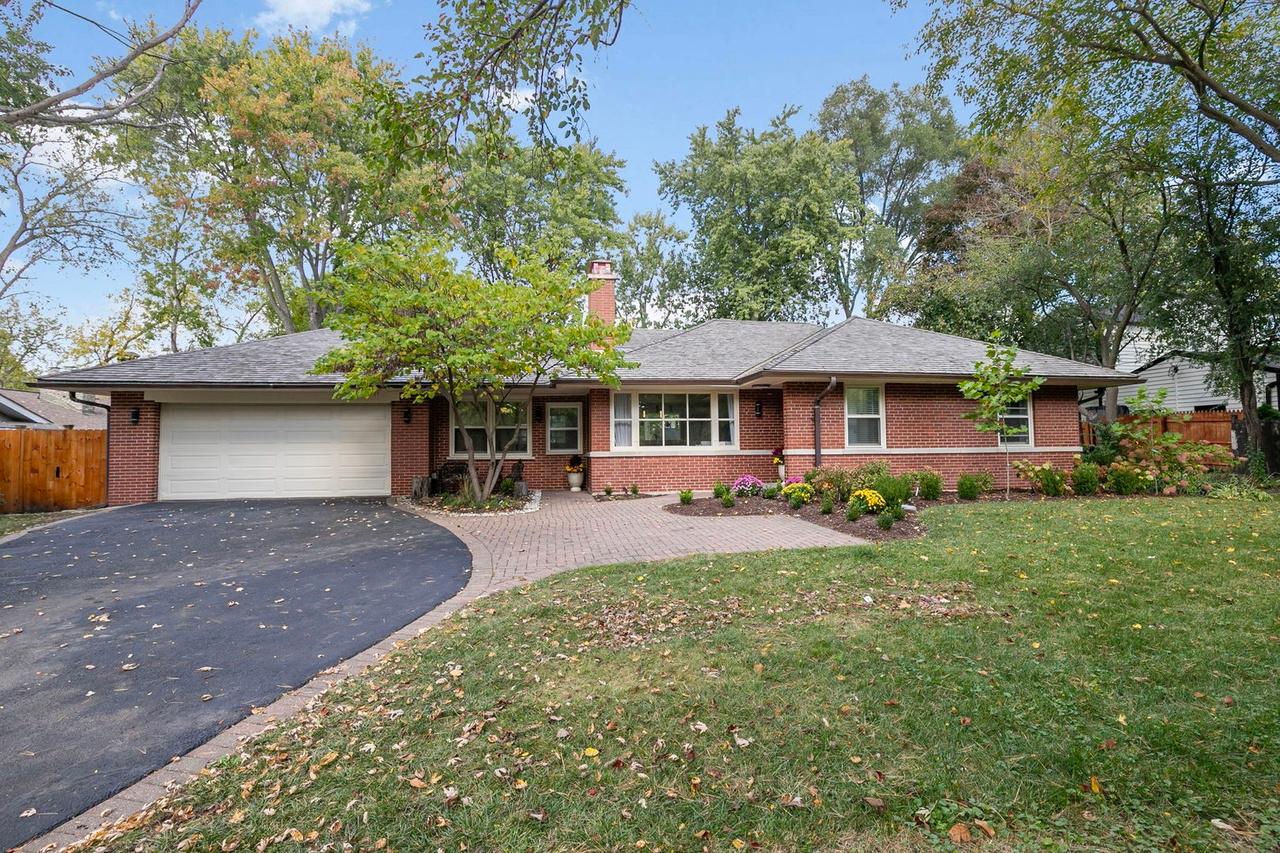
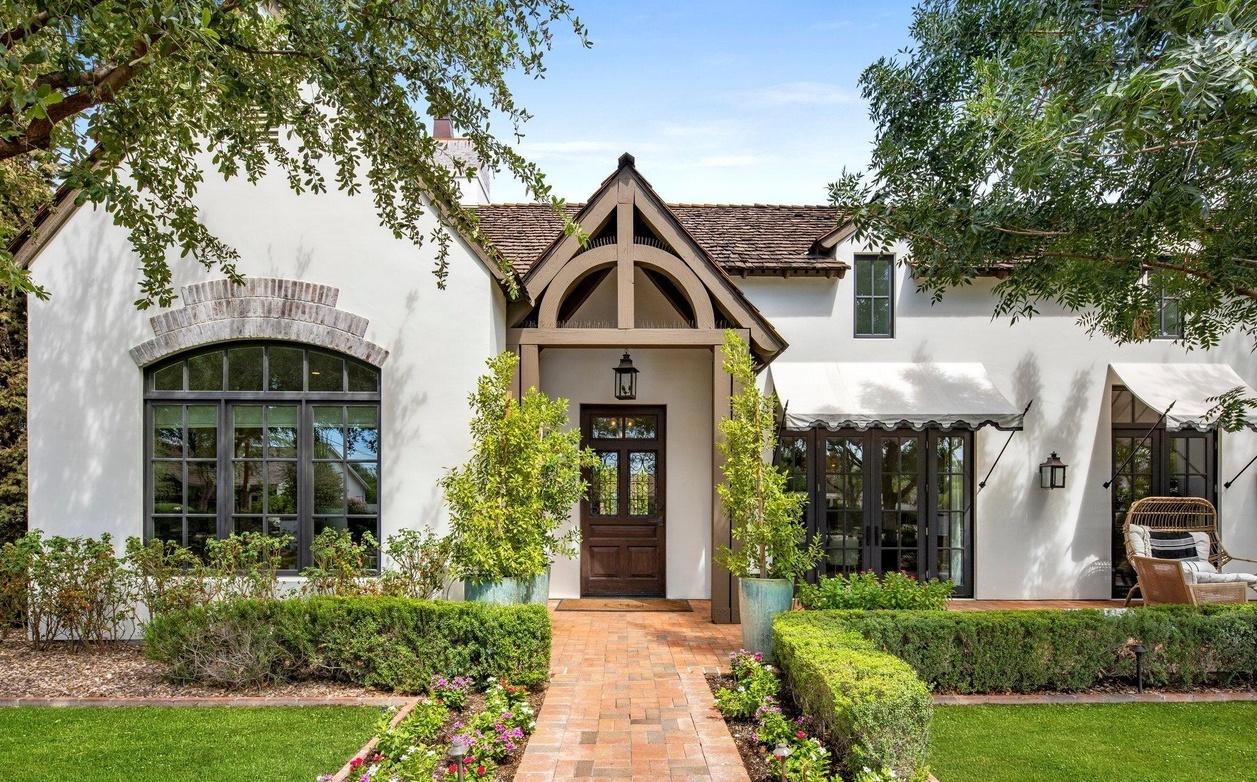
- Visualize the Possibilities: This is the most critical and often overlooked step. Before committing to expensive materials or mature plants, you must see how your chosen ideas will look on your property. Abstract sketches and mood boards are helpful, but photorealistic rendering is a game-changer. It allows you to test different large front yard landscaping ideas, compare styles, and refine your design with confidence, eliminating costly mistakes and ensuring the final result matches your vision.
By blending creative inspiration with this structured, practical approach, you can craft a breathtaking front yard that enhances your home’s value, reflects your personal style, and brings you joy every time you pull into the driveway.
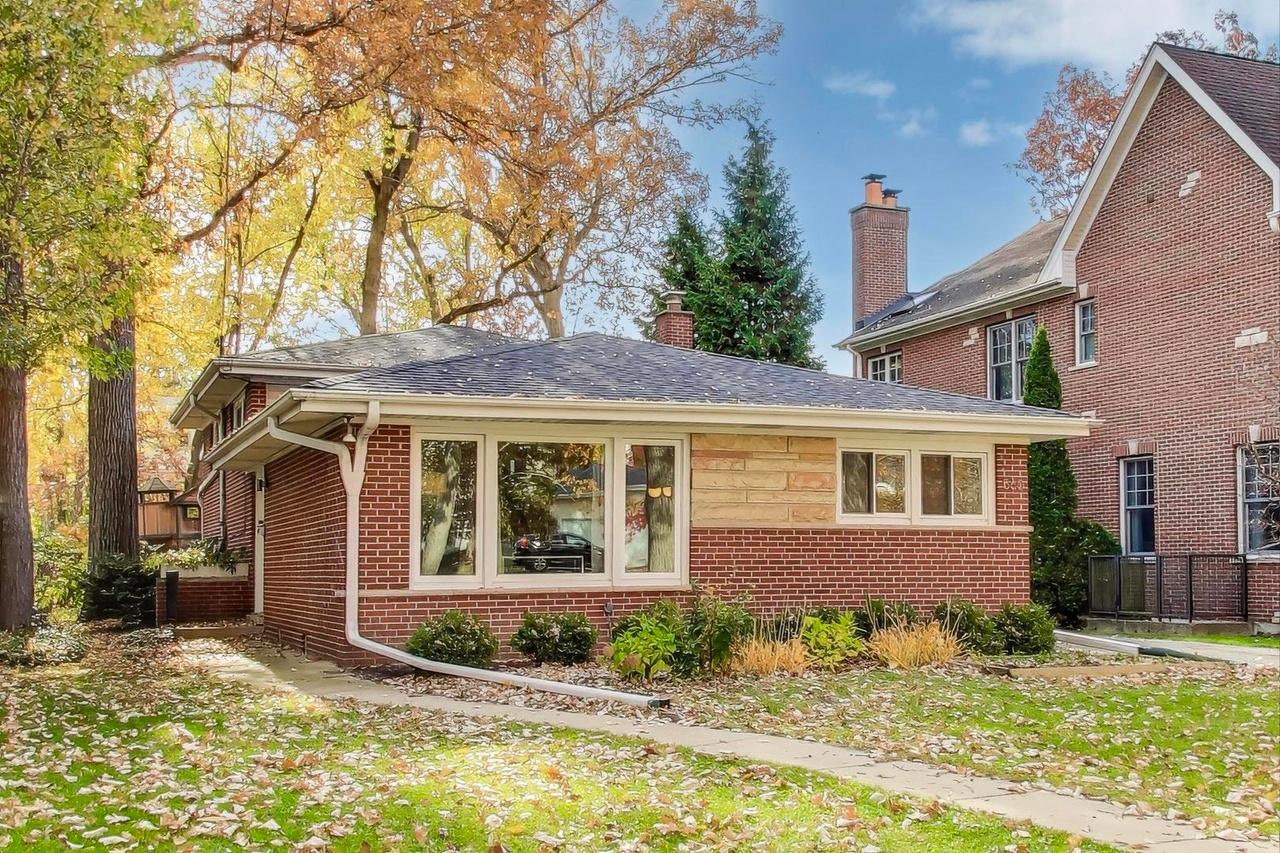
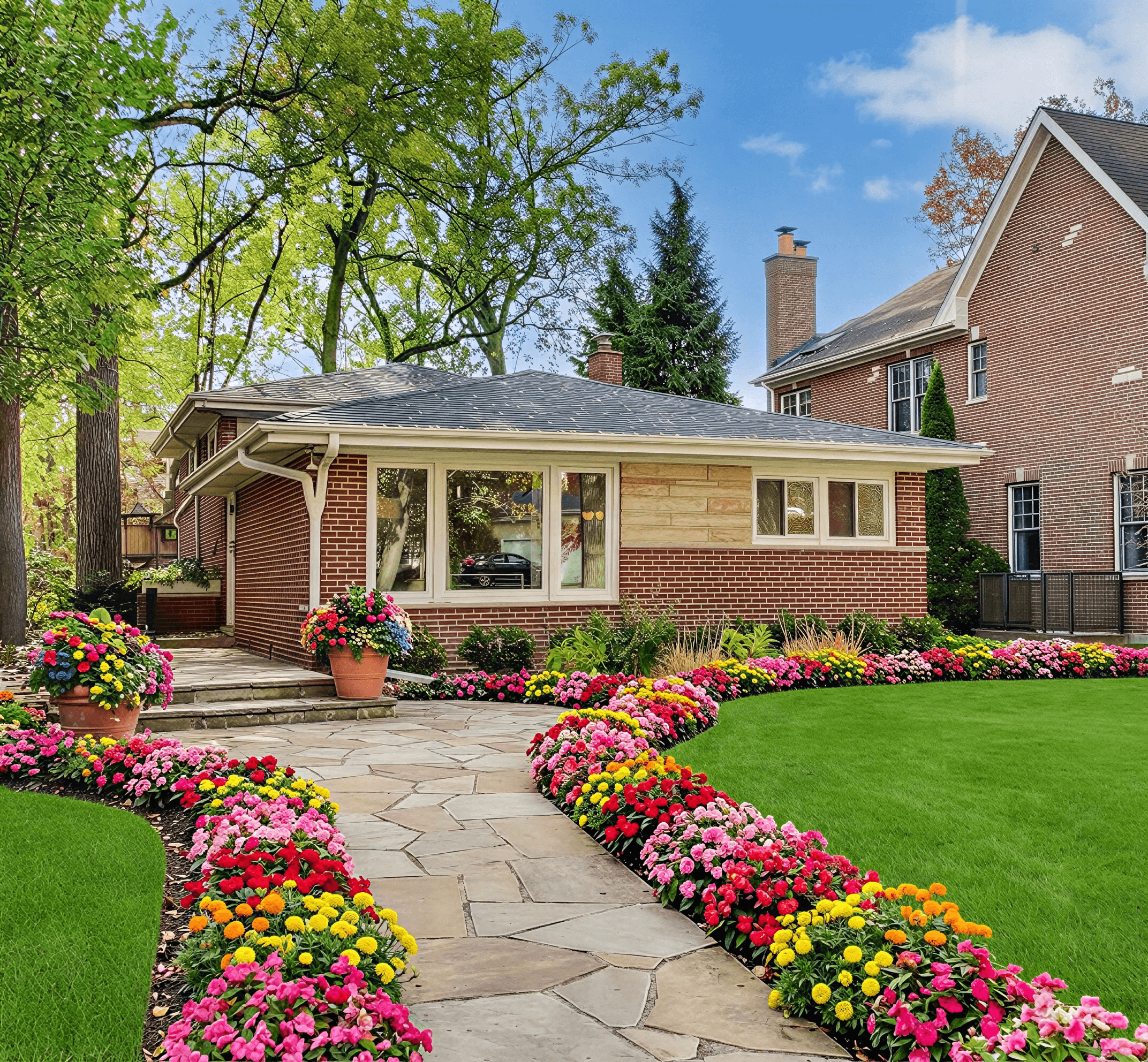
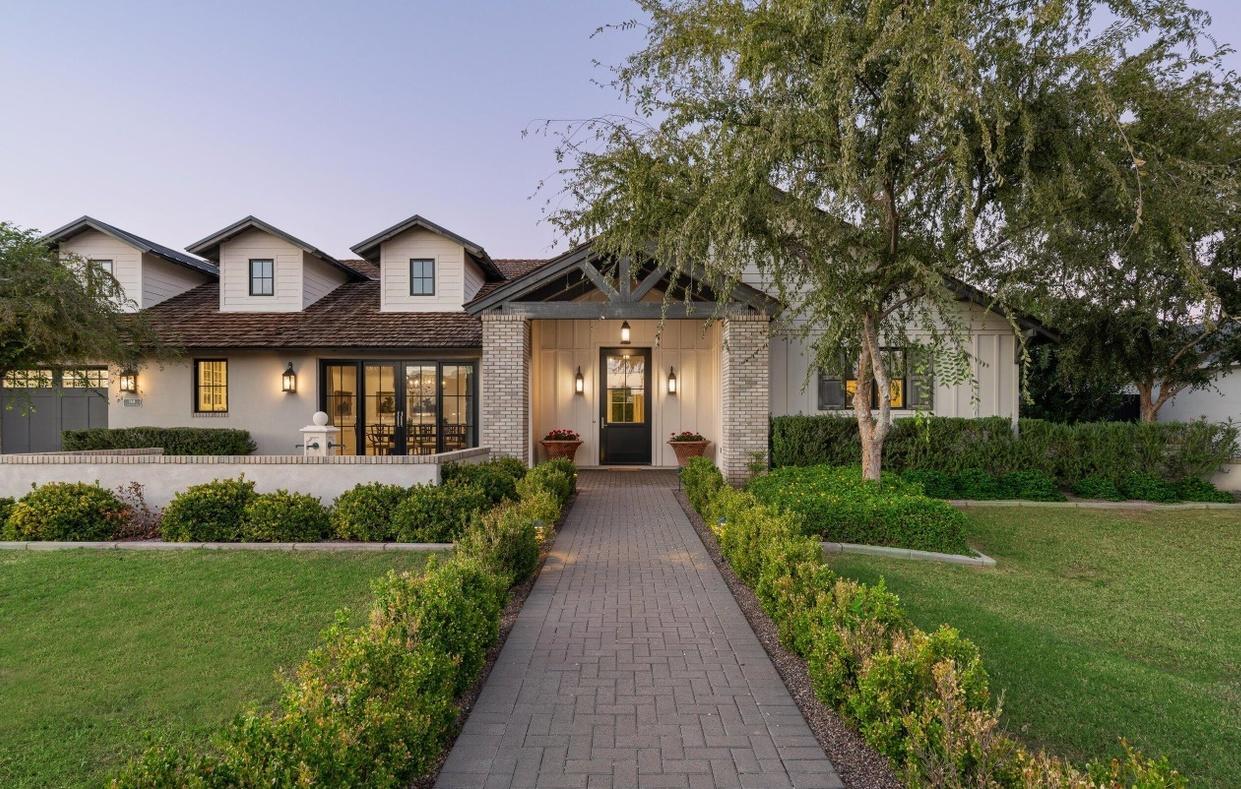
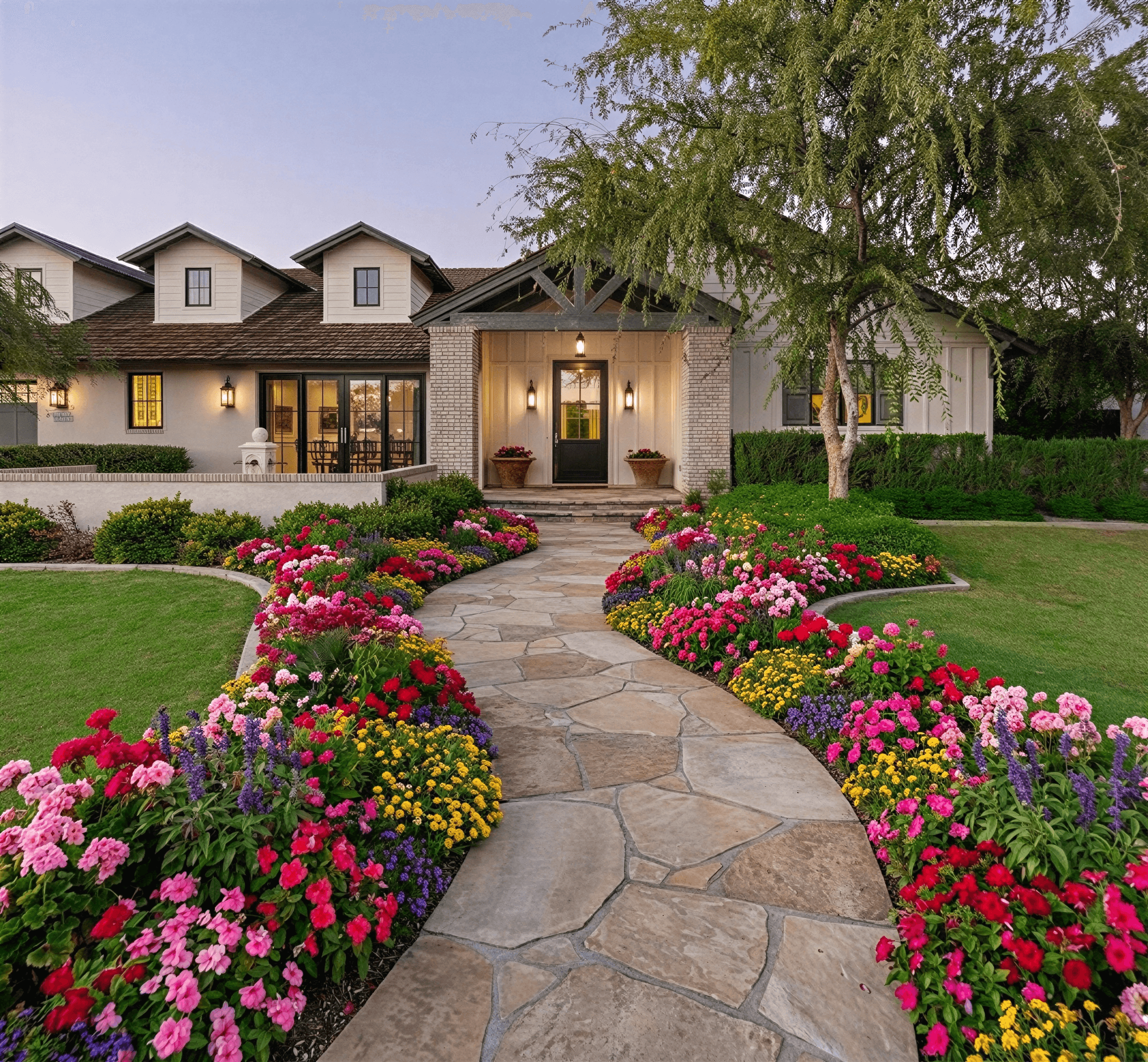
Ready to stop guessing and start visualizing? See exactly how these different styles will look on your own home. Curb Appeal AI uses advanced technology to instantly transform a photo of your property into a photorealistic rendering of your dream landscape. Try Curb Appeal AI today and move from inspiration to a confident, actionable plan in minutes.