A Front Yard Landscaping Planner for Your 2026 Redesign
Think of a front yard landscaping planner as your project’s blueprint. It’s what separates a yard you love from one filled with expensive mistakes. I've seen it countless times: people dive in headfirst, only to end up with a hodgepodge of plants and a budget that's completely blown. A little strategic thinking upfront saves so much headache later.
Why Planning Your Front Yard Is Worth the Effort

Winging it on a front yard makeover is a recipe for disaster. You might fall in love with plants at the nursery that are doomed in your climate, or choose pavers that clash horribly with your home's brick. A good plan is your best defense against these common pitfalls.
But this is about more than just avoiding frustration; it's a serious investment in your home’s value. The global landscaping market is enormous—projected to reach $741.53 billion by 2026—and curb appeal is a massive piece of that puzzle. A well-designed front yard can increase a home's value by as much as 11%. Plus, real estate pros will tell you that properties with stunning exteriors tend to sell about 13 days faster. You can dig deeper into these global landscaping market trends and see the data for yourself.
From Overwhelming Task to Exciting Process
Not long ago, getting a professional-grade plan meant hiring a landscape architect. That process can be slow and pricey, which was a major roadblock for a lot of homeowners. It left them stuck between trying a complex DIY job with no guidance or just giving up on their vision entirely.
Thankfully, modern tools have completely changed the game. An AI-powered front yard landscaping planner, like Curb Appeal AI, puts professional design tools right in your hands. It transforms what felt like a daunting chore into a genuinely fun and creative experience.
Key Takeaway: A solid plan is the single most important investment you can make in your front yard project. It ensures a cohesive look, prevents budget overruns, and adds tangible value to your home.
The Power of a Digital Planner
Using a digital tool gives you some incredible advantages over scribbling on a piece of paper or just trying to imagine the final look. For instance, you can:
- Visualize the final result: See a photorealistic render of your yard with different plants, lighting, and hardscaping before you spend a dime.
- Iterate without risk: Want to see what a Cottage garden looks like versus a Modern one? You can experiment with dozens of styles and swap out individual elements with just a few clicks.
- Get intelligent recommendations: Good platforms use your climate data to suggest plants that will actually thrive where you live, taking the guesswork out of your selections.
- Simplify contractor communication: Showing up with a high-quality visual of exactly what you want makes getting accurate quotes so much easier. It ensures you and your contractor are on the same page from day one.
Getting to Know Your Canvas: Site Prep and Analysis
Before you even think about picking plants or laying pavers, every great landscape design starts with a solid understanding of what you’re working with. You need to get your hands dirty, figuratively at least, and really analyze your front yard. This initial homework is what makes the difference between a design that looks good on paper and one that truly thrives in reality.
Think of yourself as a detective for your own property. You're gathering the essential clues—photos, measurements, and a feel for the environment—that will shape every decision you make with a front yard landscaping planner. Skip this, and you're just guessing.
Snap the Perfect "Before" Shot
The quality of your "before" picture has a huge impact on the designs an AI planner can spit back at you. A dark, crooked photo taken on a whim won't do you any favors. You want to give the software the best possible canvas to work from.
Here’s how to get a photo that works:
- Shoot on an overcast day. Forget bright, sunny afternoons. The harsh shadows they create will hide the very details you need, like window trim and existing textures. Soft, even light is your best friend.
- Go wide. Stand back from the curb—way back. You need to capture the entire front of your house, from the peak of the roof down to the grass, and from one side of your property to the other.
- Stay straight. Position yourself directly in front of the house, not off to one side. This straight-on angle gives the AI a clear, accurate base to build upon.
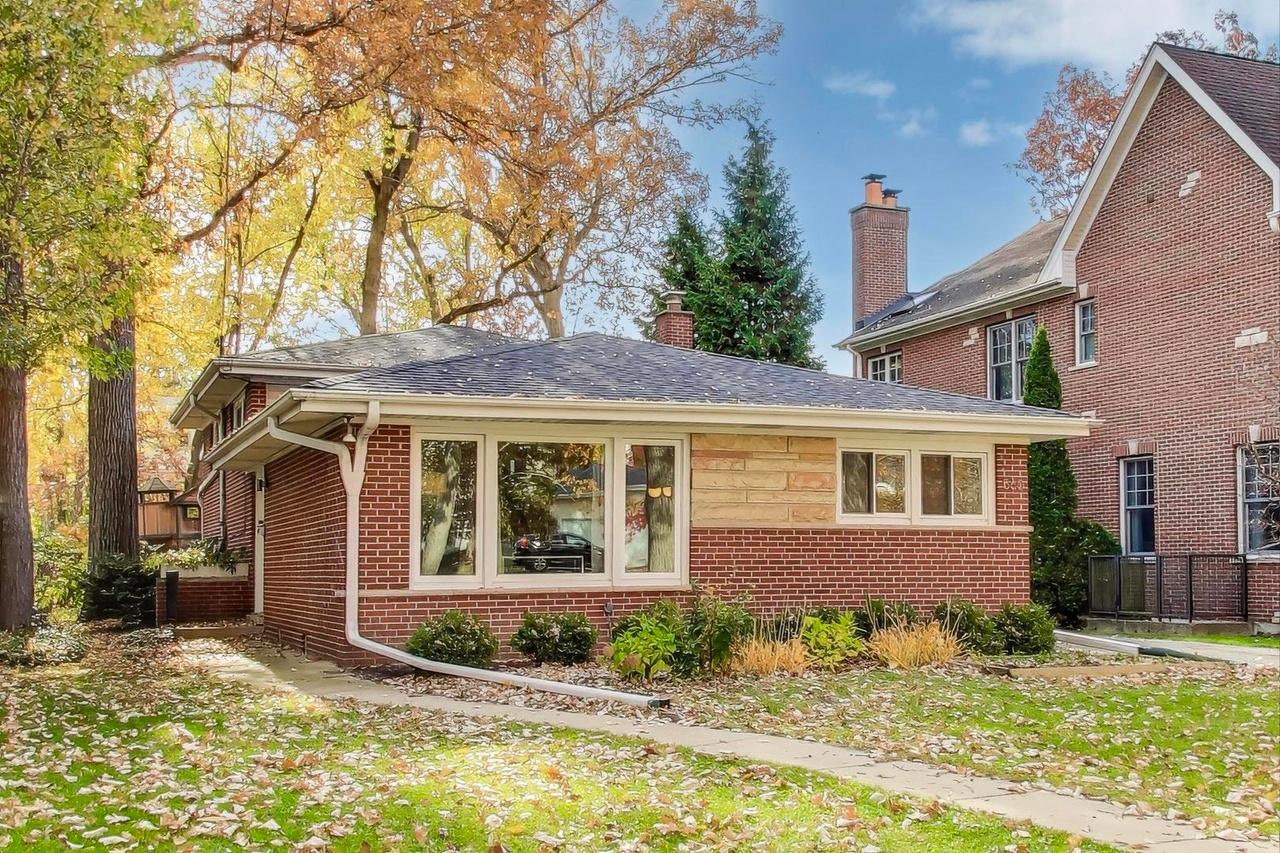
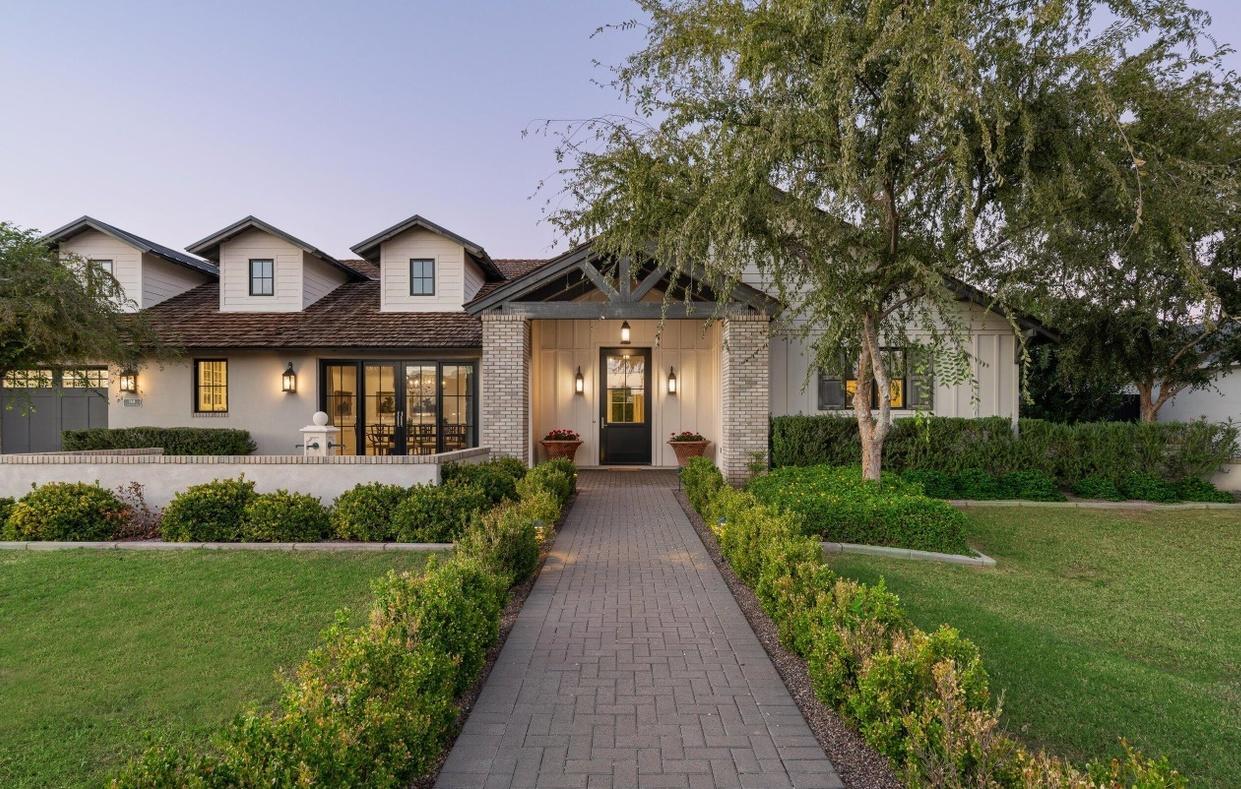
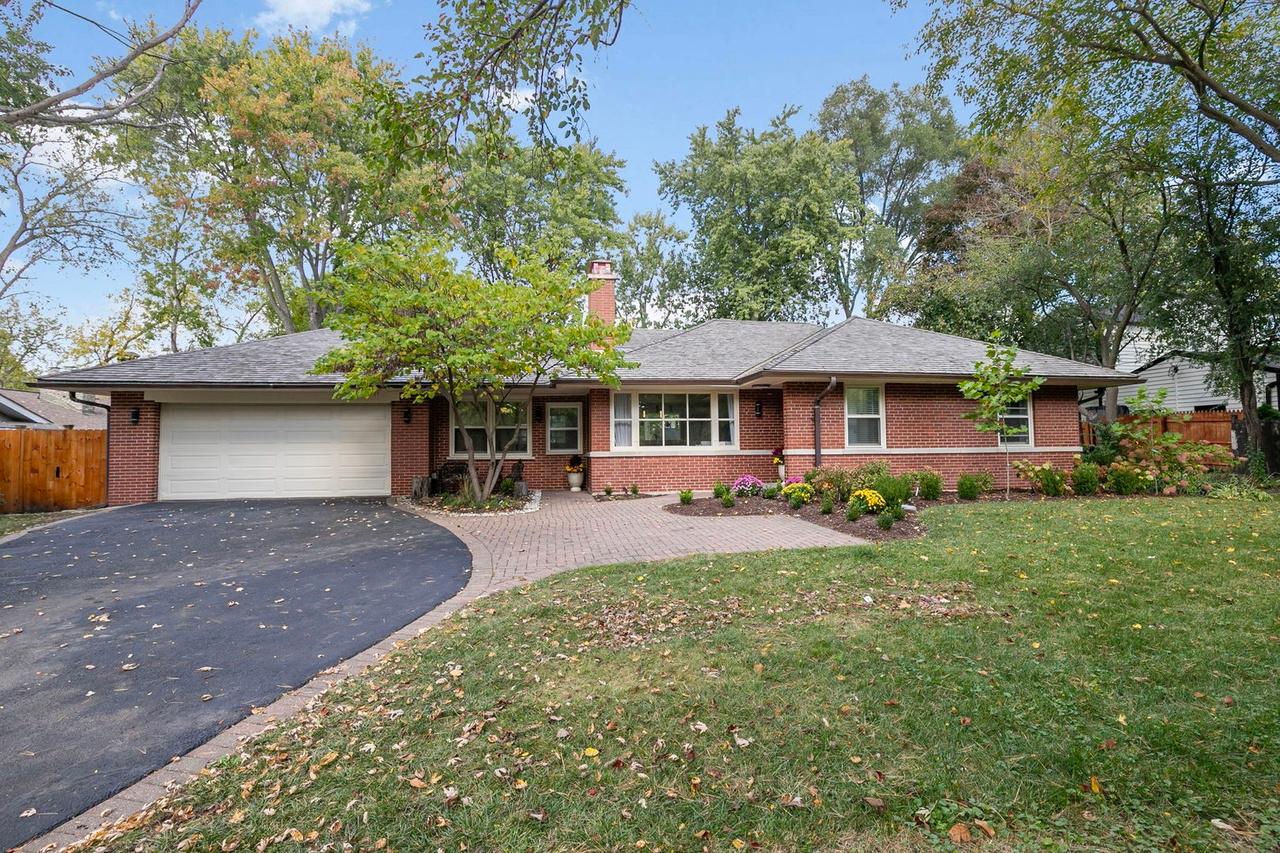
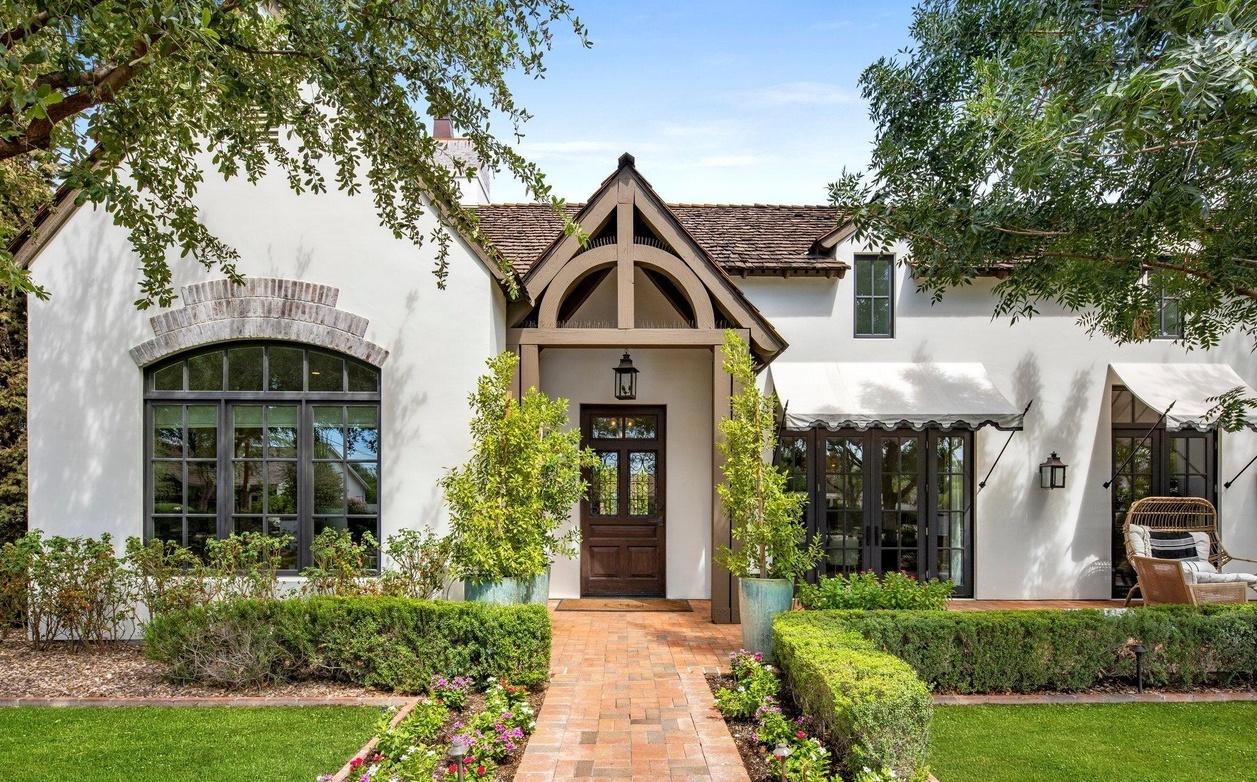
This is the kind of shot you're aiming for. It shows everything: the full architecture, existing paths, and the entire yard.

With a photo like this, you're setting your project up for success.
Break Out the Tape Measure
Next up, it's time for some numbers. You don’t need a professional survey, but a few key measurements are absolutely critical for a plan that actually fits your space. Grab a good old-fashioned tape measure.
Jot down the basic dimensions of your yard’s perimeter. Measure the distance from your front door to the street. Note the size and location of permanent features like your driveway, windows, doors, and any existing walkways. These figures are the backbone of a balanced and functional design. For a deeper dive on what to measure, check out our guide on how to design a landscape for your front yard.
Read the Environment
Finally, take some time to just observe. Where does the sun fall in the morning? What about that hot afternoon sun? Are there areas that stay shady all day long? Knowing your yard’s unique light conditions is crucial for choosing plants that will actually flourish.
It’s also smart to think bigger. As you observe your yard, consider how new weather patterns are changing site planning forever. Thinking about water drainage and heat tolerance now will save you headaches down the road.
Pro Tip: Grab a simple soil test kit from a local garden center. Knowing whether you have sand, clay, or loam will tell you exactly what will grow well. You also need to know your USDA Plant Hardiness Zone—it’s the single most important piece of info for ensuring your plants survive the winter. With these details in hand, you're finally ready to start designing.
Find Your Style and Pick the Right Plants and Materials
Now that you have your measurements and photos ready, we get to the fun part: dreaming up the look and feel of your new front yard. This is where you get to be creative and define your home’s personality.
The best place to start is with your home’s architecture. Is it a modern build with clean lines? That might call for a more minimalist design with structured garden beds and simple hardscaping. If you have a classic Craftsman or a cozy cottage, a more informal, rambling garden filled with flowers might feel just right.
Think about the vibe you're going for. Do you want a quiet, green retreat that feels peaceful the moment you pull into the driveway? Or are you picturing a riot of color that changes with the seasons? Your answers will be the compass that guides every single decision from here on out.
Bringing Your Vision to Life with Plants and Materials
This is where the rubber meets the road—or, more accurately, where the plants meet the soil. Choosing your plants and hardscape materials is how you translate that vision in your head into a real, tangible design. It’s about more than just grabbing what looks good at the garden center; you're building a cohesive, living space.
A great design plays with texture and color. Imagine the soft, airy fronds of an ornamental grass swaying next to the solid, earthy feel of a bluestone patio. The contrast is what makes each element pop. Hardscape features, like walkways and fences, are the skeleton of your design. For example, exploring different ornamental fence styles can help you add structure and a distinct character to your yard before a single plant goes in the ground.
This is where a good planning tool becomes invaluable. Using a tool like Curb Appeal AI, you can instantly see how a rustic flagstone path looks next to sleek concrete pavers, all against the backdrop of your actual home. No more guesswork.
Why Sustainable Choices Matter (More Than Ever)
Thinking about sustainability isn't just a trend; it's smart landscaping. We’re seeing a massive shift in the industry, and for good reason. It's predicted that over 60% of new residential landscape projects will soon incorporate native and climate-appropriate plants.
Why the change? Because this approach can slash your outdoor water consumption by up to 50% and save you a surprising amount of money on bills and upkeep each year. It’s a practical, eco-friendly move that pays dividends.
Here's a piece of advice I always give my clients: Never forget about a plant's mature size. That adorable little shrub might look perfect today, but in five years, it could be blocking your front window or cracking your walkway. Always research the final size and shape of your plants. It’s a non-negotiable step for a design that lasts.
A Practical Comparison of Plant Choices
Your plant palette will have the single biggest impact on your yard’s future maintenance needs. To make a smart choice, it helps to see a direct comparison. We've also put together a detailed guide on the best plants for your front yard that you can dig into for specific ideas.
To illustrate the difference, let’s compare two common approaches.
Plant Selection Comparison High-Maintenance vs. Sustainable Choices
| Attribute | Traditional Landscaping (e.g., Manicured Lawn, Exotic Flowers) | Sustainable Landscaping (e.g., Native Plants, Xeriscaping) |
|---|---|---|
| Water Needs | Often high; requires frequent, regular irrigation to keep turf green and non-native flowers blooming. | Low to moderate; native plants are adapted to local rainfall, drastically reducing supplemental water needs. |
| Maintenance | High; involves regular mowing, fertilizing, pruning, and pest control to maintain a pristine look. | Low; requires minimal pruning once established and naturally resists local pests and diseases. |
| Wildlife Support | Limited; manicured lawns and non-native plants offer little food or shelter for local pollinators and birds. | High; native flowers, grasses, and shrubs provide essential food sources and habitats for local wildlife. |
Ultimately, choosing a sustainable path doesn't mean sacrificing beauty. In my experience, a yard filled with plants that are meant to be there often looks far more lush and vibrant than a garden that's constantly fighting its natural environment.
Turning Ideas Into Reality with an AI Planner
Okay, you've done the prep work. You have your site measurements and that perfect, wide-angle photo of your house. Now for the fun part—bringing your vision to life using a modern front yard landscaping planner. This is where we move from scribbled notes and wishful thinking to seeing exactly what's possible, often in just a few minutes.
Forget spending hours sketching or trying to picture how things might look. With a tool like Curb Appeal AI, you simply upload your photo. The platform immediately gets to work, generating a whole range of unique design concepts tailored to your home. It’s a huge time-saver.
Get a Fresh Perspective on Your Home
So, what's actually happening when you click "generate"? The AI isn't just randomly throwing plants at your house. It’s intelligently analyzing your home's architecture—identifying if it's a Modern, Colonial, or Craftsman-style build—and then cross-referencing that with your climate’s hardiness zone.
This is a massive advantage. The software suggests plants and materials that are not only a great stylistic match but are also proven to thrive where you live. This single feature helps you sidestep one of the most common and expensive landscaping mistakes: choosing plants that are destined to fail. You’re no longer left guessing if a delicate Japanese Maple can handle your winters; the planner already knows.
This diagram gives you a simple look at the creative process you'll be guided through.

Essentially, you’ll be cycling through different styles, plants, and materials, with the AI helping you see how each combination works together.
Experiment and Refine Your Design
Those first designs are fantastic starting points, but the real power of an AI planner is how easy it makes iterating. Don’t love the boxwoods it suggested? Swap them for some breezy ornamental grasses with a single click. Wondering if a bluestone walkway would look better than brick pavers? You can test that idea instantly.
You can play around with all sorts of professionally curated styles to see what clicks:
- Modern: Think clean lines, minimalist plantings, and bold geometric hardscaping.
- Cottage: A charming, informal jumble of colorful perennials and climbing roses.
- Xeriscaping: Smart, water-wise designs that use succulents, river rock, and tough native grasses.
- Traditional: Classic, symmetrical layouts featuring evergreen shrubs and formal hedges.
Being able to experiment without any risk is a huge confidence booster. You can tweak every last detail until the render on your screen perfectly matches the vision in your head. We explore this concept more in our guide to landscape design software for homeowners.
A Personal Tip: From my own experience, the best projects often come from having an open mind. Let the AI generate a few "wildcard" styles you wouldn't normally pick. You might be surprised to discover a plant combination or a hardscape material you absolutely love, which you can then pull into your final design.
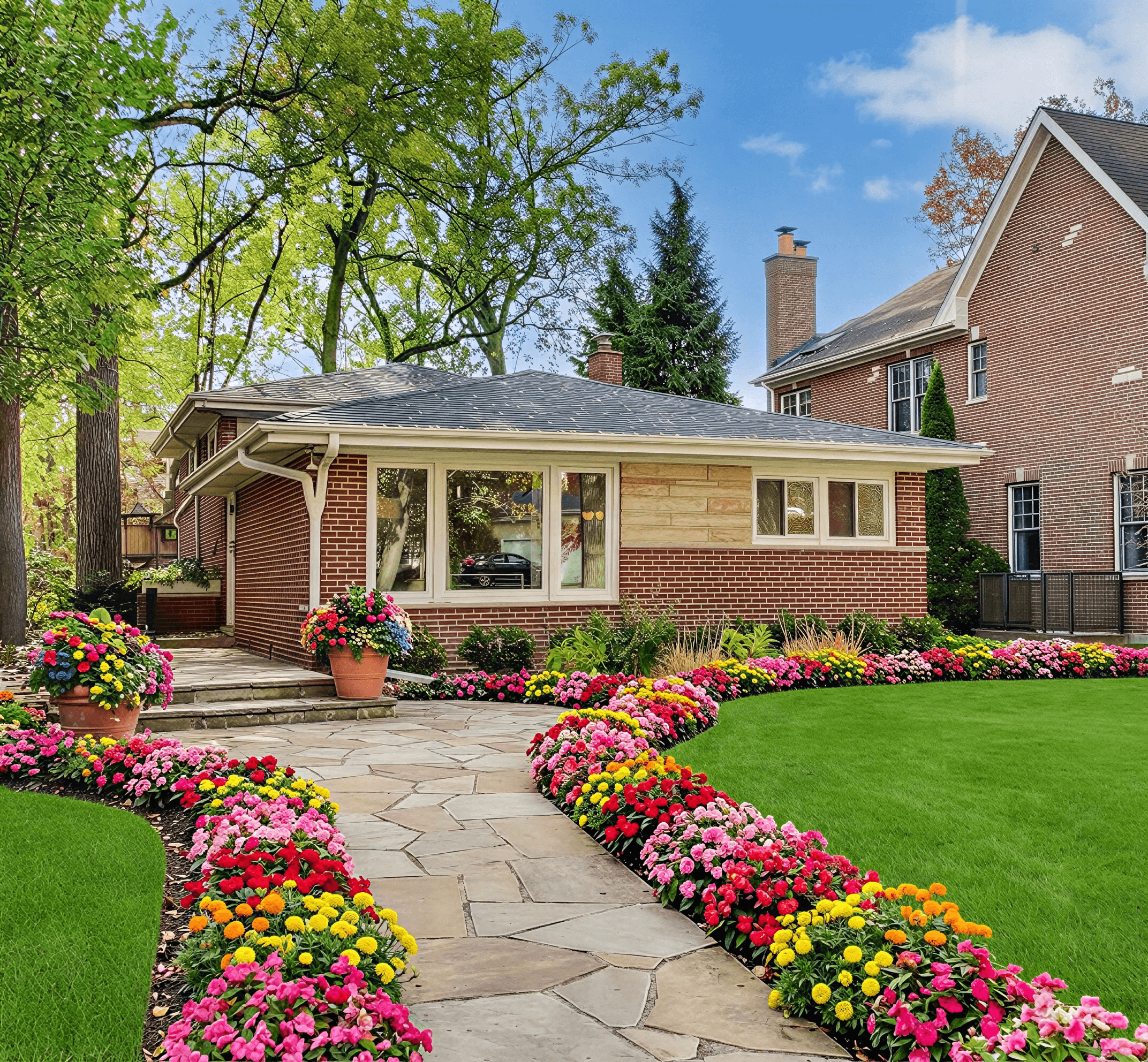
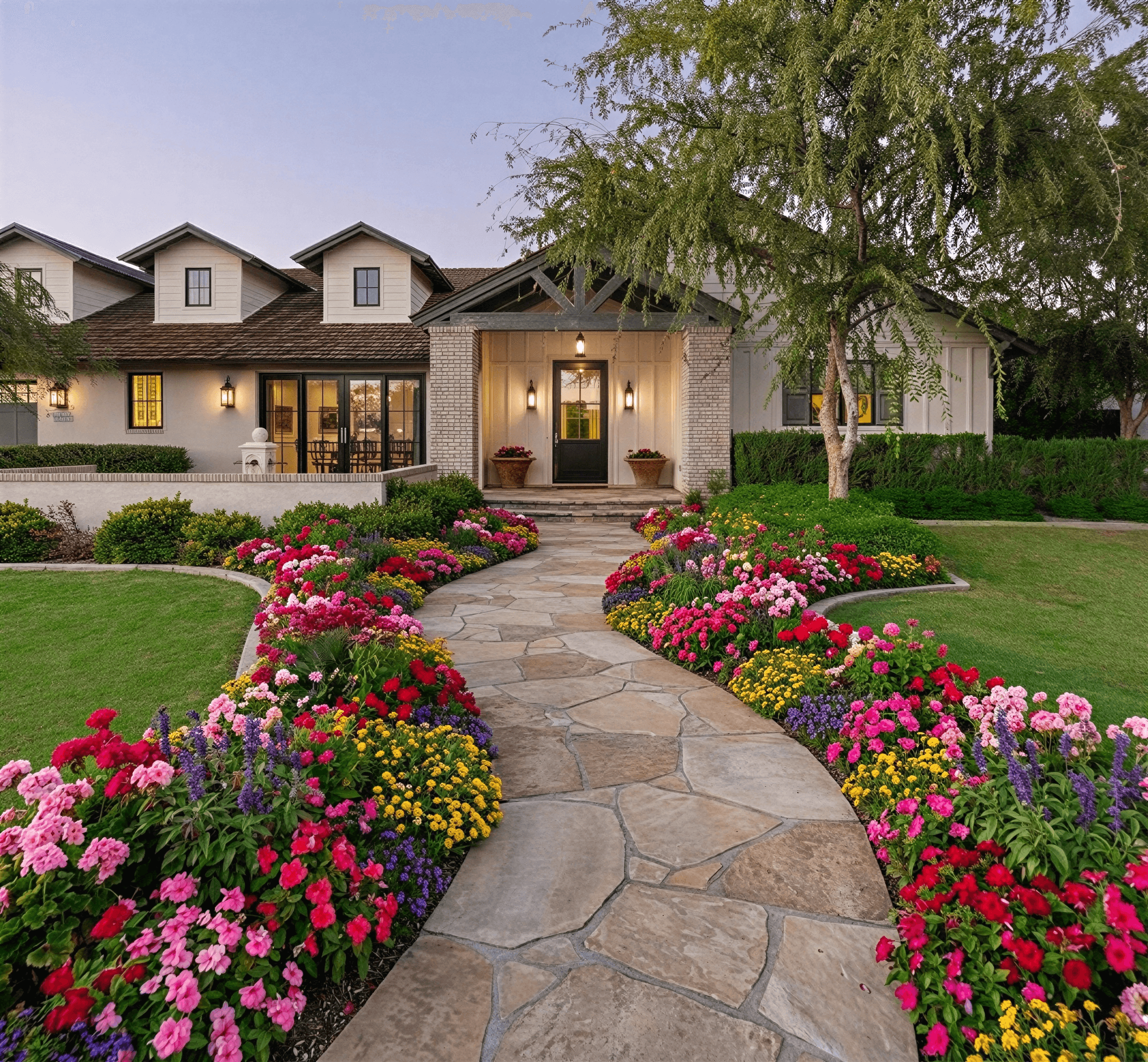
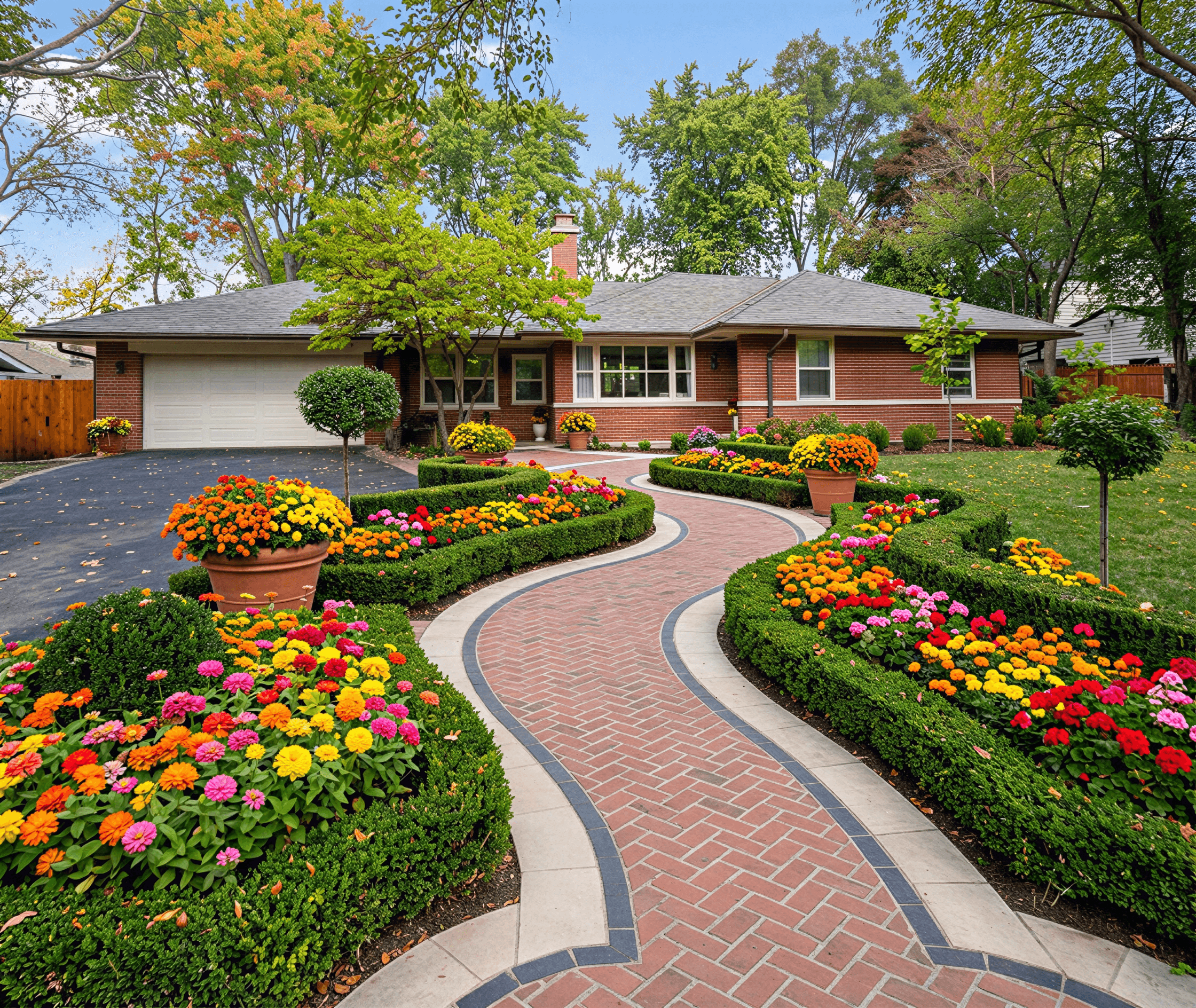
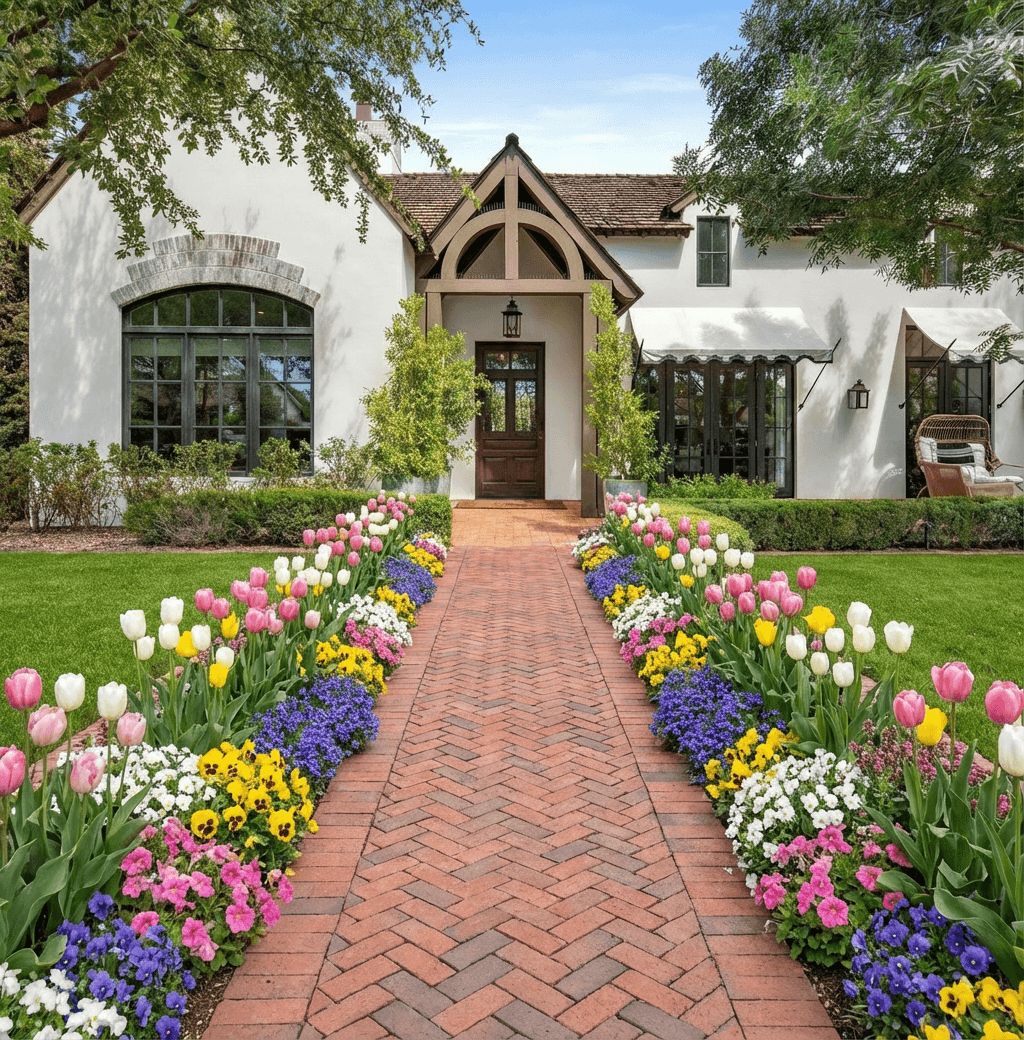
These high-definition renders are far more than just pretty pictures—they become your project's blueprint. They give you the clarity and confidence to move forward, knowing exactly what the end result will look like before a single shovel hits the dirt. It’s the best way to make sure your time, money, and effort create a front yard you’ll be proud of for years to come.
From Digital Dream to Dirt-Under-Your-Fingernails Reality
Getting that stunning, photorealistic render of your new front yard is a huge milestone. It’s easy to feel like you've crossed the finish line, but really, you’ve just been handed the map. Now it's time to translate that beautiful picture into a real-world plan of attack.
This is the point where a lot of projects stall out. The good news? That design you created in the front yard landscaping planner gives you a powerful head start. You're not working off a fuzzy idea anymore; you have a clear, visual reference for every plant, path, and paver.
Building Your Project Blueprint
The first, most practical step is to break down that perfect render into a master shopping list. This isn't glamorous, but it's the foundation of a successful project. Go through your design and catalog every single item.
- Plants: Make a list of every plant species you see. Note the quantity and, just as importantly, think about the size you'll buy. Are you planting small saplings that will mature over years, or investing in larger, more established trees? Will 1-gallon shrubs do the trick, or do you need the instant impact of 5-gallon plants?
- Hardscape Materials: Identify the exact pavers for your walkway, the type of gravel for a new path, or the stone for that retaining wall. Don't forget the little things like edging materials that give it a clean, professional finish.
- Soil and Amendments: You'll almost certainly need topsoil, compost, and mulch. As a good rule of thumb, plan for a 3-inch layer of mulch across all your new garden beds to retain moisture and suppress weeds.
- Finishing Touches: Finally, list out any landscape lighting, planters, benches, or other decorative elements that pull the whole look together.
Once you have this detailed list, you can start pricing everything out and building a budget that reflects reality. This simple exercise is your best defense against the dreaded mid-project sticker shock that can derail even the best-laid plans.
It's an investment that pays off. Thoughtfully planned front yards are a powerhouse for real estate value. Data consistently shows that great curb appeal can increase a home's value by 5-20%. What's more, Zillow research found that homes with standout front landscaping get 61% more online views. You can see more data on how standout curb appeal impacts real estate value.
Prepping for a DIY Build or Hiring a Pro
With your blueprint in hand, it's time to decide how this will all get done.
Are you tackling this yourself? Use your list to break the project into manageable phases. Don't try to do it all in one go. Maybe Weekend 1 is all about site clearing and prep. Weekend 2 could be focused on installing the hardscaping, and Week 3 is finally for planting.
If you’re hiring professionals, your main job is to communicate your vision so clearly there's no room for error. From my experience, an incomplete or vague brief is the number one cause of getting quotes that are all over the map and, worse, a final result that doesn't match what you had in mind.
Assemble a complete "contractor package" that leaves nothing to guesswork. It should include:
- The 4K Render: Your final, high-resolution design is the star of the show.
- The Plant & Materials List: The detailed shopping list you already created.
- Site Measurements & Photos: All that initial prep work you did, including the "before" photo and key dimensions of your yard.
When you give every contractor this exact same packet, you ensure they are all bidding on the exact same project. This leads to more accurate quotes, a smoother process, and a finished landscape that perfectly matches the vision you worked so hard to create.
Your Top Questions About Front Yard Planners, Answered
Jumping into a front yard redesign is exciting, but it almost always comes with a lot of questions. Especially when you're using a new tool like an AI-powered front yard landscaping planner, you want to be sure you're getting it right. Let's tackle some of the most common things homeowners ask, so you can move forward with your project feeling totally prepared.
How Much Does a Front Yard Landscaping Planner Cost?
This is where you'll see a huge difference depending on the route you take. If you go the traditional route and hire a landscape designer, you can expect to pay anywhere from $5,000 to $15,000—and that’s often just for the plan on paper, not a single plant or stone.
On the other hand, a modern AI tool like Curb Appeal AI is a completely different ballgame. With options that start free and paid plans for high-resolution images coming in under $100, professional-grade design is suddenly within reach for just about everyone. It’s a way to get a fantastic visual plan without eating up the budget you’ve set aside for the actual work.
Can I Really Use This with Zero Design Experience?
Yes, absolutely. In fact, you're exactly who these tools were designed for. A platform like Curb Appeal AI isn't built for landscape architects; it's made for homeowners who know what they like but aren't sure how to create it. You don't need to be an expert in color theory or know which plants look good together.
It really just boils down to a few simple inputs from you:
- You start by uploading a good, clear photo of your home.
- Then, you choose a general style you're drawn to, like 'Modern' or 'Cottage.'
- From there, the AI generates a whole host of ideas for you to explore.
The software does the heavy lifting, putting together plant combinations and layouts that work with your home's look and your local climate. It's a fantastic, low-pressure way to find a design you'll love.
"I had a general idea of where I wanted my front yard Design to go, but I needed help figuring out where to start... The experience truly felt collaborative — I felt listened to and appreciated being able to lean on a seasoned professional’s expertise to develop a design that perfectly fits my space and preferences."
How Accurate Are the AI Plant Recommendations?
You'd be surprised how spot-on they are. A good front yard landscaping planner doesn't just guess; it uses real-world horticultural data. When you input your location, the tool automatically cross-references its plant library with USDA Hardiness Zones.
This is a true game-changer. It prevents one of the most common and heartbreaking mistakes in landscaping: falling for a plant that simply can't survive where you live. By sticking to these climate-aware suggestions, you give your new landscape the best possible chance to not just survive, but truly thrive for years to come.
I Have My Design. What's the Next Step?
Think of that final AI-generated render as your project's North Star. It's the blueprint that guides everything else. Your immediate next step is to turn that visual into a concrete shopping list. Go through the design and write down every plant, paver, mulch type, and decorative rock you see.
Once you have your list, you can start getting a realistic idea of the cost. If you're going the DIY route, you can use that list to break the project into manageable weekend chunks (Week 1: Tear-out and prep, Week 2: Build the patio, etc.). If you’re hiring out, that high-resolution image, your material list, and your site measurements are exactly what a contractor needs to give you an accurate quote and bring your vision to life perfectly.
Ready to stop guessing and start visualizing? With Curb Appeal AI, you can transform a photo of your home into dozens of beautiful, realistic landscape designs in seconds. Try Curb Appeal AI for free and see your home's potential today!