How to Design for Front Yard Landscape: A Pro's Guide
You pull into the driveway, glance at the house, and feel the mismatch immediately. The architecture may be solid. The front yard still looks unresolved.
That’s where most projects begin. Not with a grand vision, but with a vague sense that the yard isn’t doing its job.
A good front yard design doesn’t start at the nursery and it doesn’t start with impulse buys. It starts with reading the site, deciding how the yard needs to function, and building a layout that looks right from the street and works when you live with it every day. The old manual process still matters. The difference now is that you can test ideas visually before a shovel hits the ground.
Your Front Yard Is More Than Just Grass
A front yard usually fails in quiet ways. The walkway feels disconnected from the door. The foundation shrubs are too small to frame the house or too large for the windows. One side of the yard carries all the visual weight while the other side disappears into open lawn.
That’s why I don’t look at a front yard as “planting around the house.” I look at it as the home’s first usable outdoor space. It shapes arrival, frames architecture, manages views, and sets expectations before anyone reaches the porch.

Why the front yard feels harder than the backyard
Backyards tolerate experimentation. Front yards don’t.
Every choice is visible from the street. If the scale is off, everyone sees it. If the path is awkward, every guest walks it. If the planting bed is too narrow, the house looks stiff and underplanted no matter how nice the flowers are.
The upside is that front yards respond well to clear design moves. A better walkway alignment, stronger bed lines, and the right plant massing can change the entire property.
Front yard design isn’t about adding more. It’s about making the house and site read as one composition.
What a good plan gives you
Most homeowners get stuck because they’re trying to solve style, layout, plants, drainage, and budget all at once. Professionals separate those decisions.
A solid process gives you:
- A readable layout that tells you where paths, beds, lawn, and focal points belong
- Plant choices with a reason based on sun, drainage, climate, and mature size
- Better spending decisions because permanent items get resolved before decorative ones
- Confidence that the finished yard will look intentional rather than pieced together
That shift matters. Once the site is mapped and the priorities are clear, the project stops feeling overwhelming and starts feeling buildable.
Start by Mapping Your Canvas
The most expensive front yard mistakes happen before installation. They happen when people skip observation and jump straight to materials or plants.
The professional process is more disciplined than that. A structured five-step design process formalized through the University of Florida IFAS program starts with site inventory, then moves through needs, diagrams, concepts, and final detailing. It includes practical dimensions such as pathways at 3 to 5 feet wide for access and starts with core site conditions like soil, drainage, and sun/shade, as outlined in the IFAS design process.ifas.ufl.edu/publication/EP375).

Make a base map first
You don’t need drafting software to start. A measured sketch on graph paper is enough if it’s accurate.
Put these on the plan:
- House footprint including porches, steps, door swings, and garage edge
- Fixed elements such as the driveway, existing walk, meters, utility boxes, hose bibs, and large trees
- Windows and sightlines because planting near windows affects scale, safety, and interior light
- Property edges and any obvious easements or setback constraints you already know about
If you prefer digital planning, a dedicated front yard landscaping planner can help organize measurements, layout ideas, and visual references before you finalize a buildable plan.
Track sun, shade, and microclimate
Plant failure is often a location problem, not a plant problem.
Watch the yard at several times during the day. Morning shade and afternoon shade are not the same. A south or west facing foundation bed can be much hotter than the rest of the lot because the house wall reflects heat. A bed near a driveway may dry out faster than one just a few feet away.
Note what changes after rain too. Water tells the truth about a site quickly.
Check these conditions carefully
- Where water stands after a storm
- Where runoff moves across paving or down slopes
- Which areas bake from reflected heat
- Which corners stay cool and sheltered
- Where winter wind hits hardest
- Which zones dry first after irrigation or rainfall
Practical rule: If you haven’t watched the front yard in sun and after rain, you’re not ready to choose plants.
Write the needs list before drawing ideas
Homeowners often say they want “curb appeal.” That’s too vague to design from.
A better list sounds like this:
- Create a direct, comfortable walk from the driveway to the front door.
- Screen the view to a utility area.
- Make the entry visible from the street.
- Keep sightlines open for pulling out of the driveway.
- Reduce maintenance along the foundation.
Those priorities guide every later decision. If circulation is the priority, path alignment comes first. If privacy is the priority, the planting structure changes. If maintenance is the priority, the plant palette and edging details need to support that goal from day one.
Mark what stays and what goes
Most front yards include at least one thing that should remain, even in a major redesign. It may be a mature tree, decent paving, or a hedge that anchors the lot.
Be selective. Don’t keep weak elements just because they’re there.
A useful test is simple:
| Decision point | Keep it if | Remove it if |
|---|---|---|
| Existing tree | It’s healthy and well placed | It blocks key circulation or is declining |
| Foundation shrub | It fits the scale and species use | It crowds windows or needs constant pruning |
| Walkway | It aligns with actual foot traffic | It forces awkward movement |
| Lawn area | It has a purpose | It’s just leftover space |
The goal isn’t to document everything. The goal is to know the site well enough that later choices feel obvious instead of random.
From Blank Space to Balanced Design
Once the map is done, the yard stops being a mystery. Now it becomes a composition problem.
Most strong front yards do three things at the same time. They fit the architecture, they guide movement clearly, and they create balance without feeling rigid. That balance can be formal and symmetrical, or looser and asymmetrical. Both can work if the proportions are right.

Match the style to the house first
A front yard doesn’t need to mimic the house exactly, but it should speak the same language.
A modern home usually wants cleaner bed lines, restrained plant groupings, and fewer materials. A cottage style house can carry layered planting, softer edges, and a more informal entry sequence. Xeric and Mediterranean-inspired yards often look best when the hardscape and plant forms do more of the visual work than flower color.
The mistake is mixing signals. Formal architecture with loose, chaotic planting usually looks accidental. A casual bungalow with hard geometric beds can feel severe unless something softens the layout.
Use circulation to organize the whole yard
A path isn’t just access. It’s one of the strongest visual lines in the composition.
If guests naturally cut across the lawn, the plan is wrong. If the walk reaches the entry without any sense of arrival, the plan is underdeveloped. Good circulation should feel direct, readable, and scaled to the house.
That often means deciding between:
- A straight walk, which feels formal and efficient
- A gently curved walk, which slows movement and softens a broad or angular yard
- A branching walk, useful when driveway access and front-door access both matter
Beds should support the path, not compete with it. The walk leads. The planting frames.
The proportion rule that fixes many layouts
One of the most useful design tools is the Golden Rectangle ratio of about 1 to 1.6. In practical terms, it helps you shape spaces that feel naturally balanced. For example, in a 16-foot-long space, a width of about 9 to 10 feet fits that proportion well, according to Easton Outdoors’ principles of proportion. The same source notes that well-proportioned exteriors can increase perceived home value by up to 7 to 10%.
That ratio is useful for more than patios. I use it when evaluating lawn panels, terrace dimensions, and the size of major planting beds relative to open space.
Where proportion helps most
- Front lawn panels that otherwise look too skinny or too wide
- Foundation bed depth so shrubs don’t look pasted onto the house
- Patio and terrace geometry near entries
- Focal areas where one feature needs enough space around it to matter
A proportion rule won’t design the yard for you. It will keep the layout from drifting into awkward shapes.
A yard can be simple and still feel rich. It just has to be proportioned well.
Odd lots need a different kind of balance
Irregular front yards throw people off because they can’t rely on symmetry. Triangular lots, angled setbacks, and pie-shaped frontages need visual correction more than strict mirroring.
On those sites, curved bed lines often work better than trying to force right angles everywhere. Curves can widen a narrow-looking corner, redirect attention away from a harsh property angle, and make circulation feel intentional instead of compromised.
The trick is restraint. Too many curves create confusion. One or two strong sweeps usually work better than a wavy outline around every planting bed.
Material choice can help here too. If you’re shaping a path, porch extension, or low wall, this roundup of outdoor stone ideas for California living is useful for seeing how stone character affects the mood of a front yard without overwhelming the architecture.
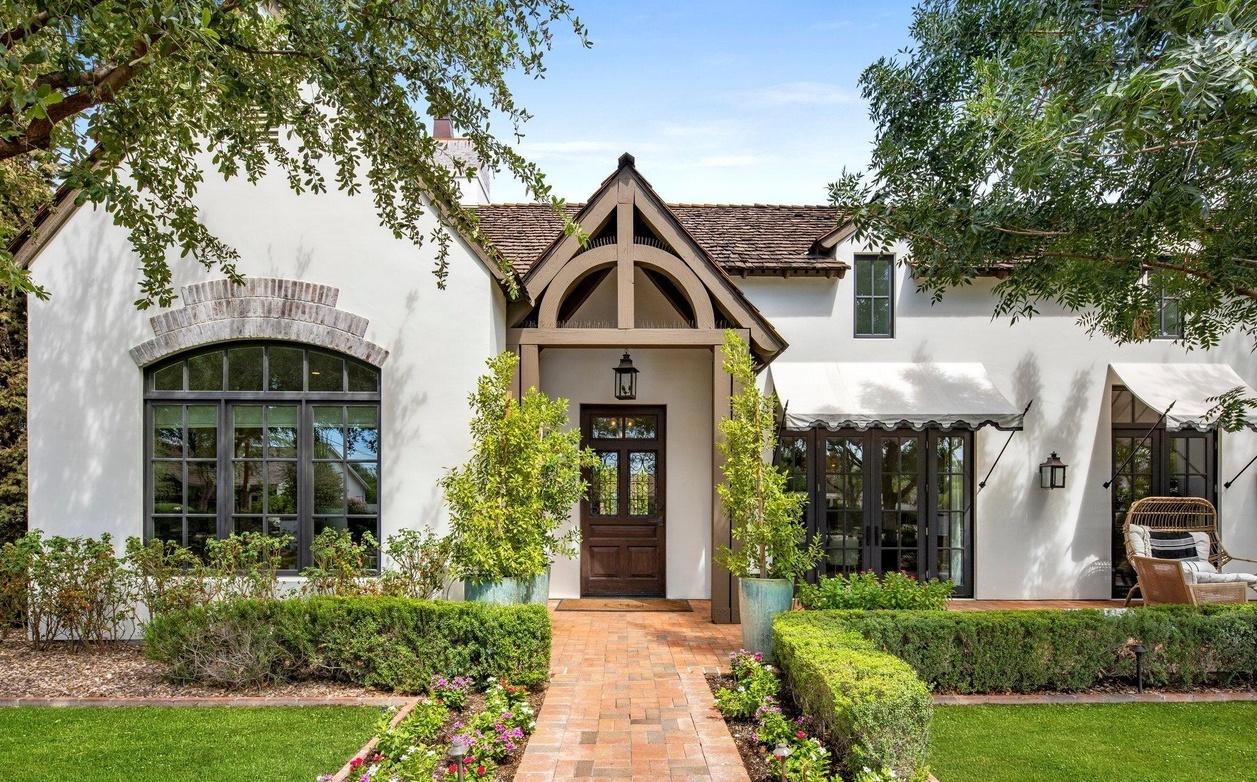
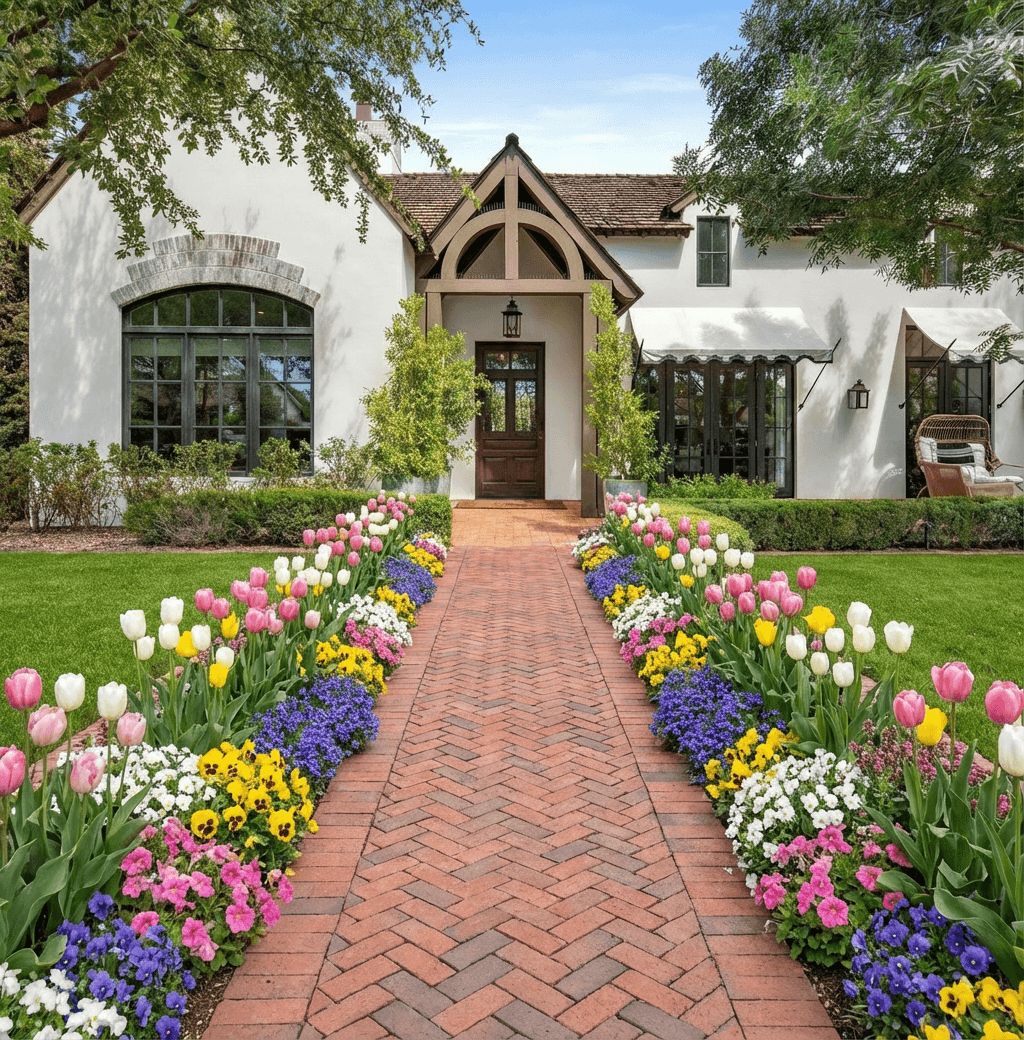
A quick visual example helps when clients are weighing formal versus softer layouts:
Focal points work best when there’s only one primary one
Many front yards don’t need more interest. They need a clear center of attention.
That focal point might be:
- A specimen tree near but not on the entry axis
- A widened landing with distinctive paving
- A large planter at the porch
- A sculptural plant mass with strong form
Everything else should support that move. If the eye lands on three different objects at once, none of them wins.
Selecting Plants That Will Actually Thrive
A front yard usually fails at the plant stage for one simple reason. People shop by appearance before they study the site.
The order needs to be reversed. Check sun exposure at different times of day, note where water sits after rain, and pay attention to reflected heat from pavement, walls, and driveways. AI visualization tools help here more than many homeowners expect. They let you test plant massing, compare mature sizes, and show how a sparse young planting will read in three to five years, which makes budget decisions and contractor conversations much clearer.
Start with structure, not flowers
The plants that matter most are the ones that still do their job in the off-season. I usually choose those first, because they set scale, guide the eye, and keep the yard from feeling empty when nothing is blooming.
Work in layers:
- Trees give the entry sequence scale, shade, and long-term presence.
- Shrubs hold space, frame views, and create year-round weight.
- Perennials and grasses add seasonal color and movement.
- Groundcovers cover bare soil and reduce the amount of mulch that needs refreshing.
The trade-off is straightforward. Showy plants create quick excitement, but structure keeps the yard design coherent for years.
Put each plant where it can succeed
"Right plant, right place" gets repeated because replacing failed plants is expensive.
A shrub that needs dry roots will struggle near a downspout. A plant labeled full sun may still burn along a west-facing wall that throws heat back at it all afternoon. A compact variety on a nursery tag can grow much larger with regular irrigation and rich soil. Those details matter more than the bloom photo.
If you need help narrowing choices by climate, sun, and maintenance level, this guide to best plants for front yard is a useful starting point.
Build a plant palette around jobs
Good garden planning is easier when every plant has a role. That keeps the selection process from turning into a cart full of unrelated impulse buys.
| Plant role | What it does | Common mistake |
|---|---|---|
| Anchor tree | Sets scale and gives the yard a lasting focal point | Planting too close to the house or front walk |
| Structural shrub | Frames the entry and gives beds shape | Choosing varieties that need constant shearing |
| Seasonal accent | Adds color or movement at key moments | Depending on bloom alone for interest |
| Groundcover | Softens edges and suppresses weeds | Using aggressive spreaders in small beds |
This is also where AI mockups earn their keep. A rendered concept can show whether a plant mix reads calm and intentional from the street or busy and scattered. That is hard to judge from nursery pots alone.
Repeat plants in groups
Street-facing planting needs clarity. One each of ten different plants may look interesting up close, but from the curb it usually reads as clutter.
Repeating fewer varieties in deliberate groupings gives the yard design rhythm and makes it easier to maintain. It also simplifies purchasing. Contractors can price grouped quantities more accurately, and substitutions are easier if a grower is out of stock.
Planting advice: If every plant demands attention, none of them anchors the composition.
Plan for mature size now
Many first projects go off track at this stage. Small nursery plants make beds look neat on install day, then two or three growing seasons later they block windows, crowd paths, and force constant pruning.
Leave room. A planting that looks a little open at first usually ages better than one packed for instant fullness. I would rather see mulch for a season than watch a client pay to remove overgrown shrubs they bought too close together.
If you are incorporating raised garden beds near the porch or along a side approach, this spacing rule matters there too. Beds dry out faster, roots heat up more, and overcrowding shows up sooner.
Choose plants that still look good in ordinary months
Front yards are viewed in winter, during heat waves, and on rushed weekday mornings. That changes what deserves priority.
Focus on plants with reliable form, strong foliage, and a habit that stays tidy without constant correction. Evergreen structure, clear contrast in leaf size, and a few bold shapes usually carry the composition better than a long list of short-lived bloom moments.
Flower is welcome. Lasting structure is what makes the planting hold together.
Building the Bones of Your Landscape
A front yard usually succeeds or fails on the pieces you install first. The walk that puddles. The step that feels too narrow when you carry groceries. The bed edge that looked crisp on day one and starts drifting into the lawn by midsummer. Plants soften all of that, but the built framework decides whether the space works every day.
That framework is expensive to revise later, so I usually direct budget here before adding more varieties of plants. A restrained planting plan over well-built paths, drainage, lighting, and irrigation is the safer investment.
Choose hardscape for climate, traffic, and maintenance tolerance
Material choice starts with architecture, but it should end with performance. A stone that suits the house can still be the wrong pick if it turns slick in shade, shifts under foot traffic, or blows the budget before the entry walk is finished.
Here is a practical comparison.
| Material | Pros | Cons | Avg. Cost/Sq. Ft. |
|---|---|---|---|
| Natural stone | Distinct character, durable, fits many house styles | Higher material and installation cost, layout takes more skill | Varies by region and stone type |
| Concrete pavers | Consistent sizing, broad color range, easier to repair in sections | Can feel generic without a good pattern or border detail | Varies by product and region |
| Decomposed granite | Informal appearance, useful in some dry-climate yards, permeable feel | Can migrate, rut, or wash out without proper edging and base prep | Varies by region and installation method |
I also look at how a material ages. Concrete pavers are often the easier choice for a first major project because repairs are straightforward and pricing is easier to control. Natural stone usually looks better with age, but only when the installer knows how to handle grade changes, joint spacing, and stone selection. Decomposed granite works well on the right property, though I avoid it near main entries where rain, strollers, bikes, or repeated foot traffic will constantly disturb the surface.
If you are adding edible planting or a structured side bed near the entry, these practical notes on raised garden beds help clarify how height, reach, and soil control affect daily use.
Lighting should fix hazards before it creates mood
Good front-yard lighting is quiet. You notice that the walk feels safe, the steps read clearly, and the entry is easy to find.
Start with three jobs:
- Task lighting for steps, path turns, and the route to the door
- Ambient lighting for general evening visibility
- Accent lighting for a tree, textured wall, specimen pot, or other focal point
Even spacing is a common mistake. It creates a runway effect and makes the whole yard feel flat. Better results come from layering light where people move, then adding a small number of accents where you want the eye to pause.
Irrigation and drainage belong in the plan, not the punch list
Irrigation is easiest to design before paving, planting, and lighting go in. The same goes for drainage. If runoff crosses the walk, if downspouts empty into planting beds, or if one low spot stays saturated, fix those issues before the finish materials arrive.
Zone irrigation by plant need and exposure. Turf, shrubs, trees, and dry beds should not run on the same schedule. Drip irrigation is often the best fit for mixed planting areas because it waters roots directly and keeps overspray off paving, siding, and windows. Smart controllers help, especially when you are testing scenarios in renders and cost planning with tools such as Curb Appeal AI, but no controller can correct poor zoning or bad grading.
Before you finalize materials, it helps to review what front yard project costs typically include. That makes it easier to separate must-build infrastructure from upgrades you can phase in later.
Visualize Budget and Build Your Dream Yard
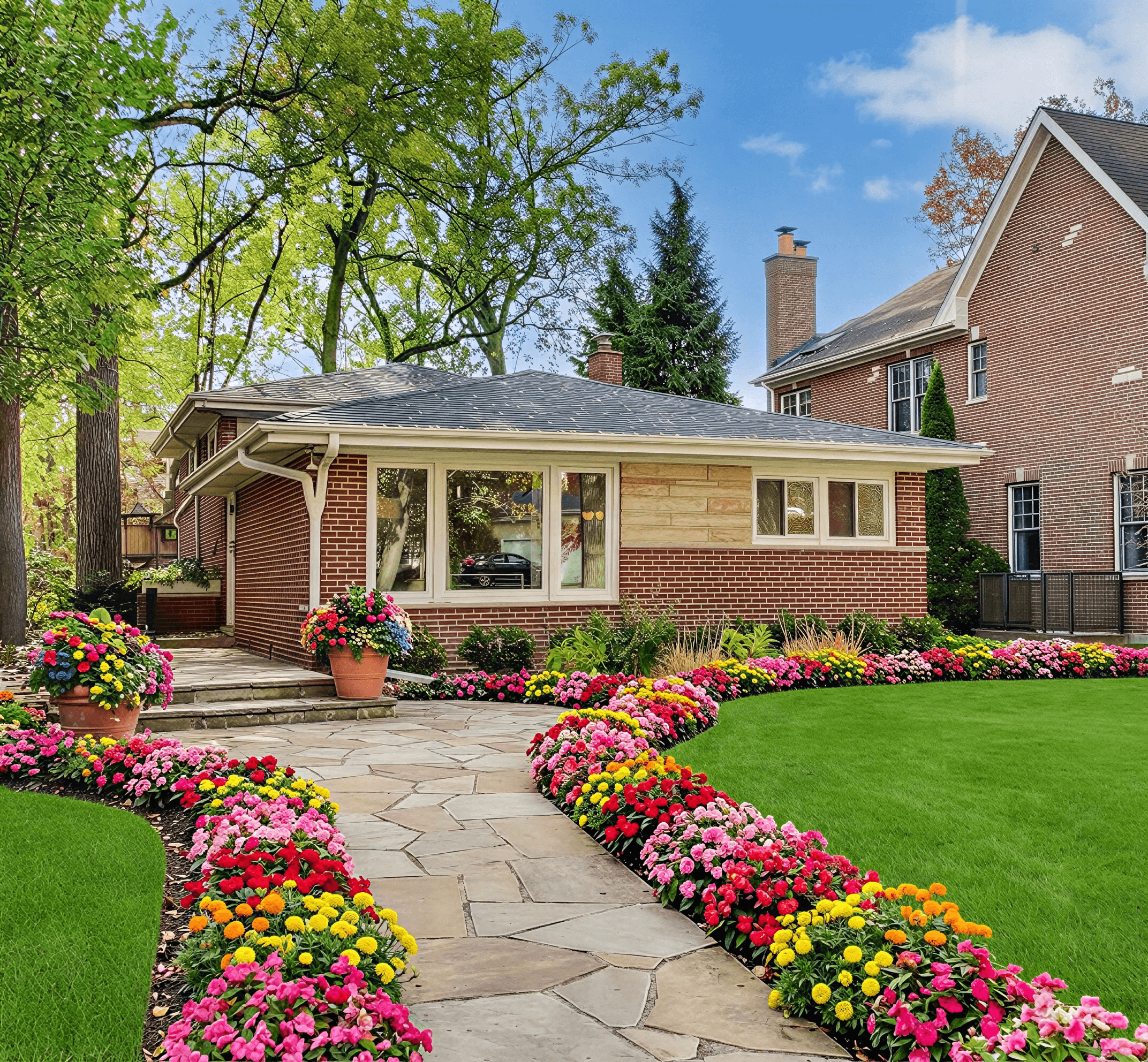
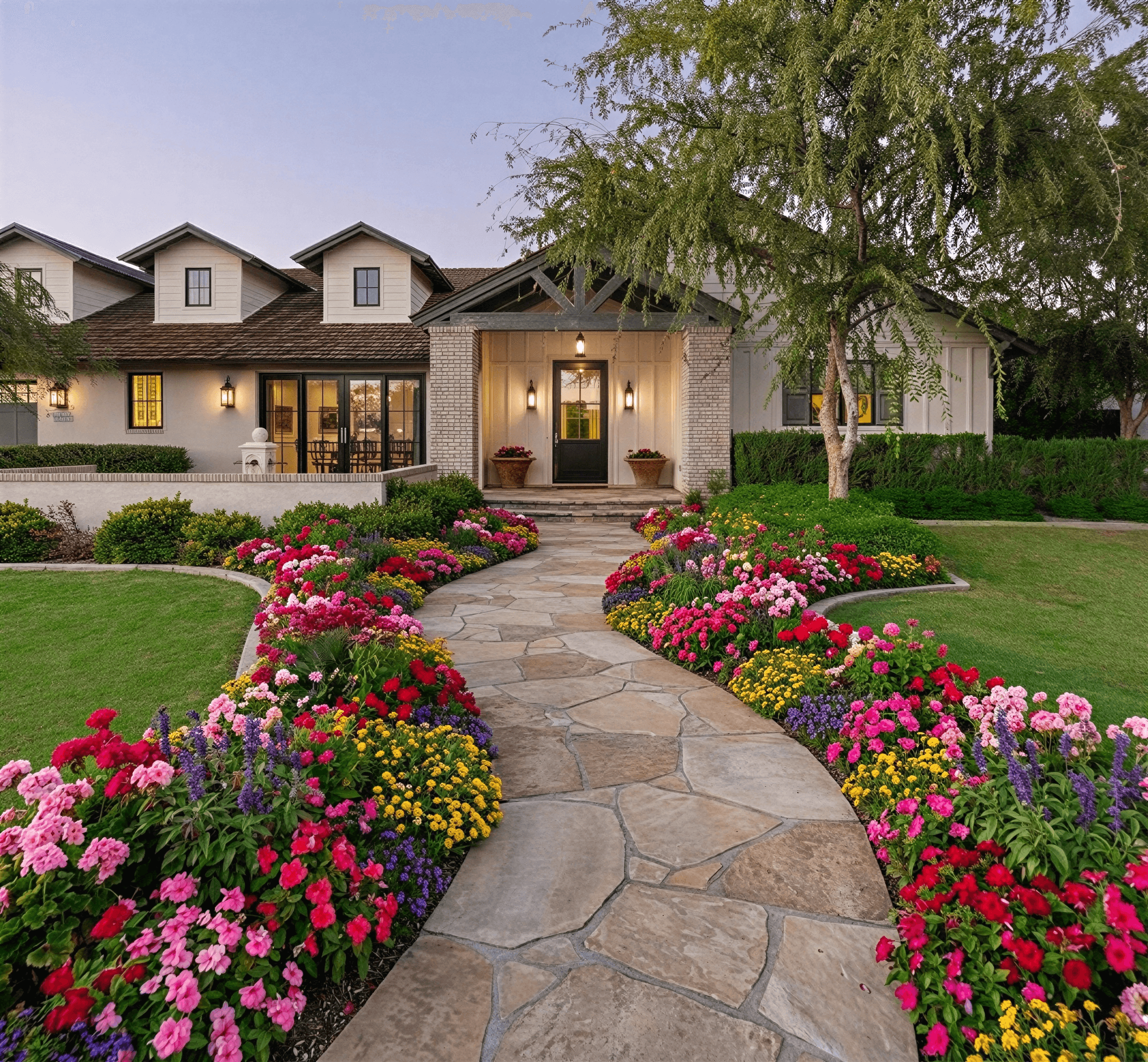
A scaled plan is useful. A realistic image of your own house with a proposed yard is even more useful.
That’s because most homeowners can read dimensions only so far. They struggle with proportion, material contrast, and plant mass when those ideas live only in plan view. Visualization closes that gap.

Why renders change decision-making
A rendering won’t replace site judgment. It will help you catch weak ideas early.
You can test whether a path feels too dominant, whether the foundation planting is too fussy for the architecture, or whether a low-water palette still looks full enough from the street. That’s far better than discovering those problems after installation.
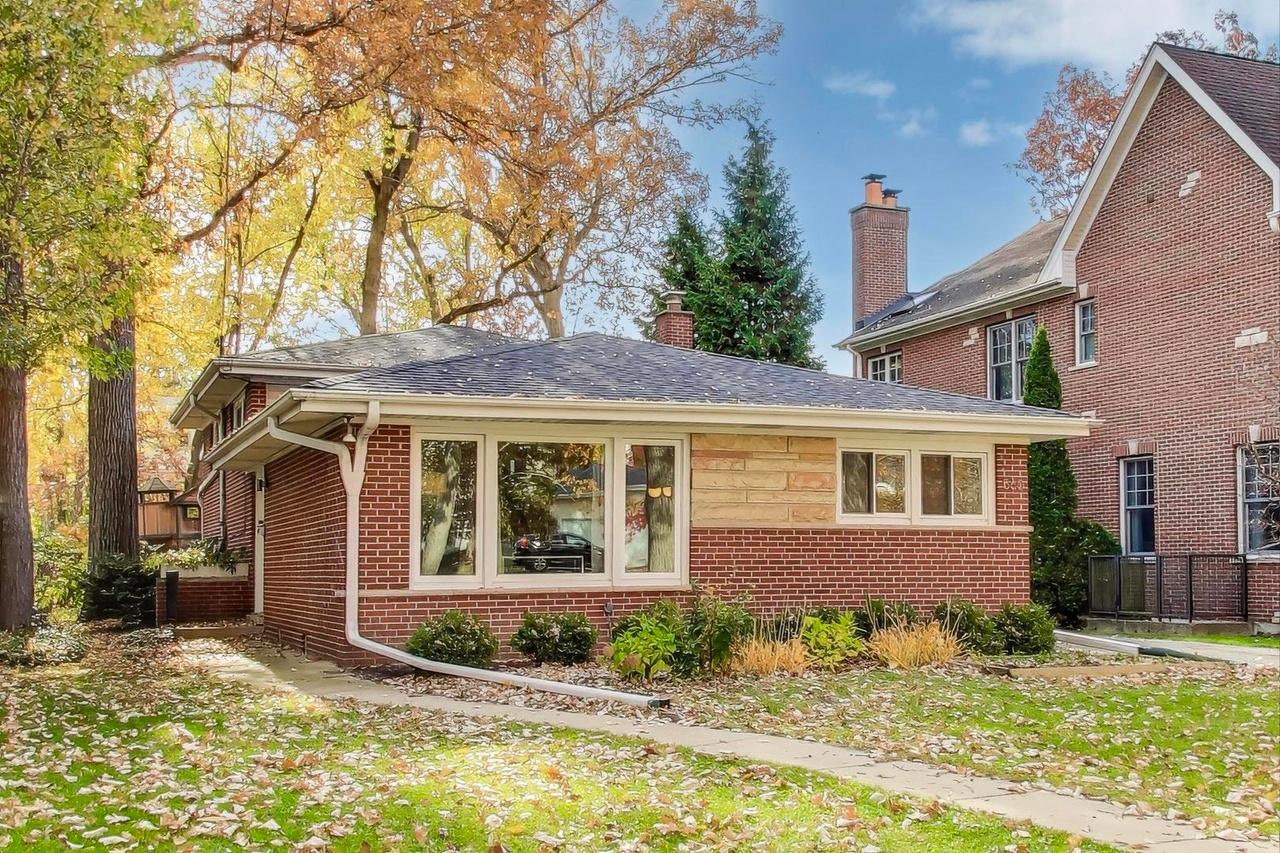
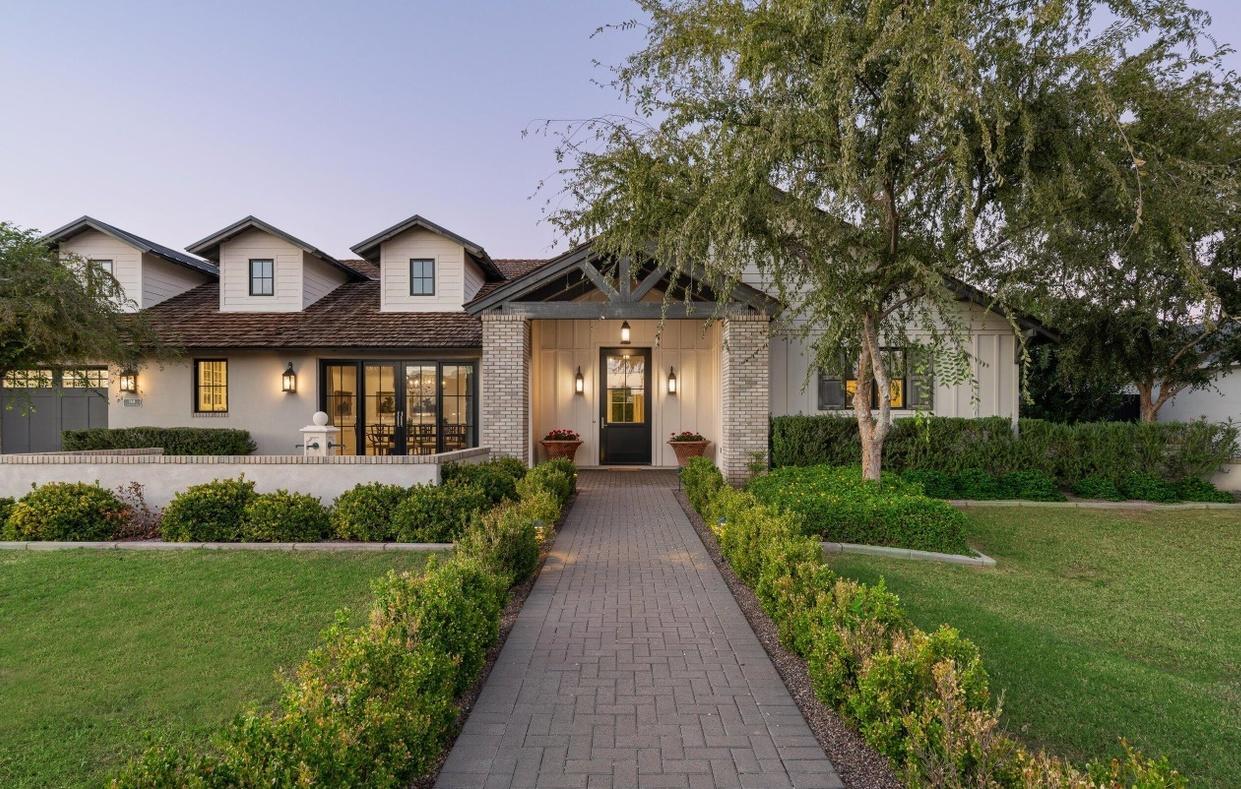
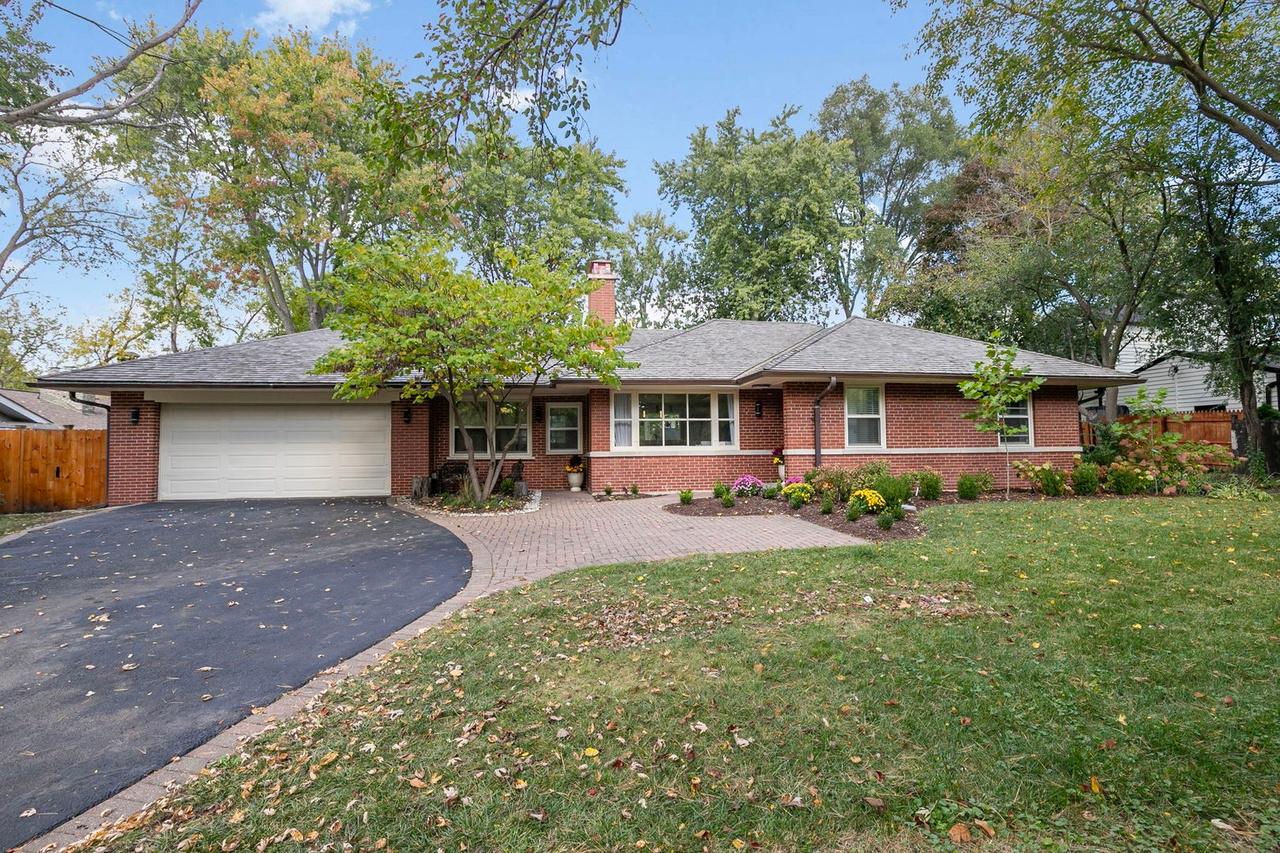
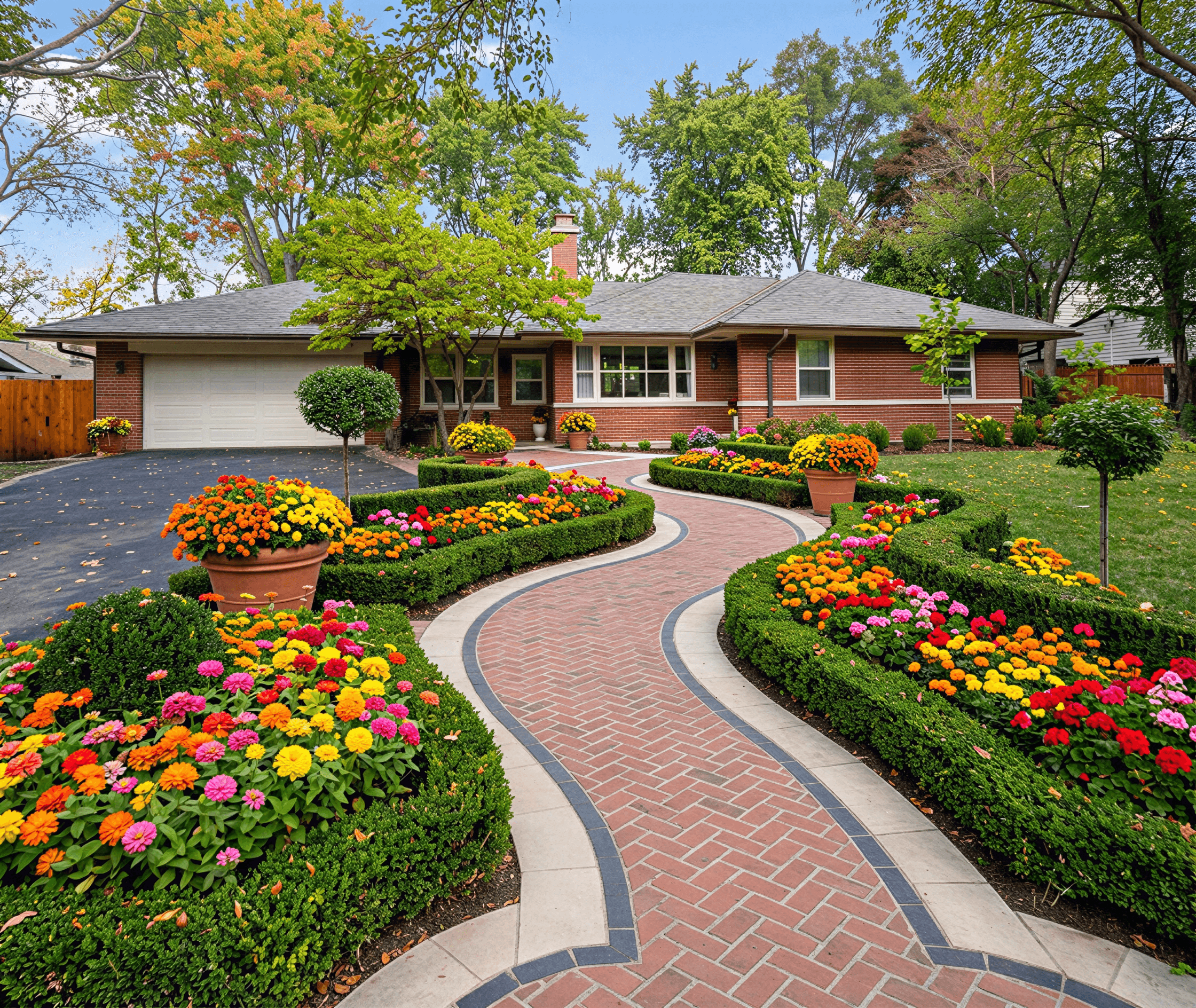
One option is Curb Appeal AI, which lets users upload a home photo and generate front-yard concepts in multiple styles for early-stage planning and communication.
Budget by phases, not fantasies
The cleanest way to budget a front yard is to separate the work into layers of permanence.
Start with these categories:
- Site prep and infrastructure such as grading, drainage corrections, demolition, and irrigation.
- Hardscape including walks, steps, edging, walls, and lighting sleeves or wiring.
- Structural planting such as trees and major shrubs.
- Finish planting and detail work including perennials, groundcovers, mulch, and containers.
That order matters because the first two categories are hardest to change later. If money gets tight, phase decorative layers, not drainage or circulation.
If you need help organizing rough project expectations, this overview of how much yard project costs is a practical place to start before requesting bids.
Contractors build better when the brief is clear
Most job-site friction comes from vague instructions.
A contractor needs more than “modern but warm” or “lush but low maintenance.” They need a site plan, material direction, key dimensions, and a visual target. Even if you’re doing part of the installation yourself, the clearer the brief, the fewer mid-project changes you’ll make.
Bring these to every estimate meeting:
- A measured base plan
- A concept plan with bed lines and circulation
- A plant intent list
- Material preferences
- A render or reference image set
- A phased priority list
That package changes the conversation. It keeps pricing tighter, reduces assumptions, and gives everyone a common reference when questions come up.
Your Front Yard Landscape Questions Answered
How do I handle HOA rules without killing the design
A front yard plan can fall apart fast if the HOA review happens after the design work is done.
Start with the rules, not the plant palette. Check limits on turf removal, fencing, tree work, edging, lighting, and anything visible from the street. Then build a yard plan that fits those boundaries from day one.
The approval package matters too. Boards respond better to a clean submission with labeled materials, a simple planting plan, and one or two reference images than a vague note about wanting something “updated.” If a rule reads loosely, get clarification in writing before ordering stone, plants, or metal edging. That step can save weeks.
What works on a sloped front yard
Slope changes more than appearance. It affects drainage, footing, maintenance, and how people approach the house.
On a mild grade, curved beds, deeper root systems, and a walk aligned with natural travel patterns may solve most of the problem. On a steeper site, the design usually needs terracing, properly sized steps, and restrained planting groups so the yard looks settled instead of chopped up.
I see one mistake often. Homeowners try to force a flat-site plan onto a sloped property because they like the look of a photo they saved. The better move is to let the grade drive the layout. The yard will function better, and the build cost stays more predictable.
How do I make the yard safer for pets
Pet-friendly design starts with habits.
Toxic plants matter, but so do thorns near walkways, foxtail-style seed heads, cocoa mulch, loose gravel, and paving that gets too hot in summer. If a dog rushes the street, focus on gate location and clear sightlines from the front door to the sidewalk. If digging is the issue, dense groundcovers and chunkier mulch usually hold up better than finely shredded bark.
A good pet-safe yard still needs to work for people. That trade-off is where many plans fail. Soft materials feel better under paws, but they may scatter onto paths or hold moisture against the house if they are used in the wrong spot.
When should I start a major front yard project
Start earlier than you think you need to.
Good work takes time to measure, sketch, price, revise, and approve. Specialty trees, stone, lighting, and custom details can stretch the schedule, especially during peak season. The best projects usually begin well before the ideal planting window, while there is still room to compare bids and make smart changes on paper.
That is also the right time to use AI visualization. A photo-based concept study helps homeowners test style directions, compare material choices, and spot budget creep before the crew is on site. It is faster to adjust a concept than to rebuild a walkway or replace the wrong tree after installation.
A strong front yard project needs a plan people can price and a visual target people can follow. If you want to test ideas on your own home before committing to materials, plants, or contractor bids, Curb Appeal AI can help you generate front-yard concepts from a photo so you can compare styles, pressure-test budget choices, and communicate your direction with fewer surprises.