Foundation Plants Front of House: A Homeowner's Guide to Curb Appeal
Foundation plants are the unsung heroes of curb appeal. These are the shrubs, small trees, and flowers you plant right up against your house, and they do more than just look pretty. They anchor your home to the landscape, soften hard architectural edges, and create a warm, inviting path from the street to your front door.
When chosen well, they frame your home perfectly through every season.
Choosing the Right Foundation Plants
Getting your foundation planting right is the first real step toward a front yard that turns heads. This is where art meets science. It's less about grabbing whatever's in bloom at the garden center and more about creating a living frame that’s perfectly suited to your home and climate.
The process starts long before you ever pick up a shovel. It begins with learning to read your own landscape like a pro.
Assess Your Home's Unique Conditions
First things first: your climate. You absolutely have to know your USDA Hardiness Zone. This isn't just gardening jargon; it's the single most important piece of information that tells you which plants will survive the winter in your specific area. Getting this right from the start saves you from the frustration and expense of planting something that's doomed by the first frost.
Next, become a sun-tracker. Does the front of your house get blasted by the sun all day, or is it tucked away in the shade of a big maple tree? A sun-loving plant that needs six hours of direct light will wither in a shady spot, and a shade plant will scorch in the afternoon sun. Spend a day observing the light to really understand what you’re working with.
Don't ignore the soil, either. The dirt right next to your foundation is often a world away from the rest of your yard. It’s frequently compacted from construction or has a funky pH from concrete leaching. A simple, inexpensive soil test kit will tell you everything you need to know—if it's sandy, heavy clay, or just right, and what nutrients it's craving.
I've seen this mistake a hundred times: A homeowner underestimates a plant's mature size. That adorable little shrub you bring home can quickly explode in size, blocking windows, crowding walkways, and overpowering your home's facade. Always, always check the plant tag for its final height and spread.
Understanding Plant Roles and Categories
A truly great foundation planting scheme is a team effort, with different plants playing different roles. Your goal is a layered look with a mix of structure, color, and texture that provides interest all year long.
To help you visualize this, here's a quick breakdown of the main players you'll be working with. Think about how each category can contribute to your overall design.
Quick Guide to Foundation Plant Types
| Plant Type | Primary Role | Key Benefits | Examples |
|---|---|---|---|
| Evergreens | Structure & Backbone | Year-round color, low maintenance, creates a solid "frame" for the house. | Boxwood, Holly, Arborvitae, Dwarf Spruce |
| Deciduous Shrubs | Seasonal Interest | Provide stunning flowers, vibrant fall color, and interesting branch structure in winter. | Hydrangea, Dogwood, Lilac, Weigela |
| Perennials | Color & Texture | Add soft layers, fill gaps, and offer a changing display of color from spring to fall. | Hosta, Coneflower, Daylily, Salvia |
| Grasses | Movement & Softness | Introduce fine textures and graceful movement that contrasts with woody shrubs. | Feather Reed Grass, Little Bluestem, Japanese Forest Grass |
Using a mix of these types ensures your landscape never has an "off-season." Evergreens provide the bones, while the other plants bring the personality.
The demand for plants is huge, with planting materials making up 67-68% of the $88.64 billion global landscaping products market. But with 40% of the market now being DIY gardeners, a shocking 75% end up regretting their plant choices, mostly due to climate mismatches. As noted by Grand View Research, this is a common and costly problem. Getting your plant selection right from the start is critical.
For some fantastic, climate-appropriate ideas, check out our guide on the best plants for your front yard.
Designing a Cohesive Planting Layout
Alright, you’ve picked out your plants. Now for the fun part: arranging them into a design that looks intentional, beautiful, and truly feels like part of your home. This is where you get to be an artist, moving beyond just gardening to compose a living frame for your house. The secret to a professional-looking layout almost always comes down to one key principle: layering.
Think of it as creating depth. Your tallest plants, usually evergreens or larger shrubs, form the back layer right up against the house. These are the anchors of your design, the structural backbone that softens the hard, flat lines of the foundation and provides a consistent green backdrop all year long.
Next, you bring in the middle layer. This is where you can really start to play with texture, color, and seasonal interest. These mid-sized shrubs, like hydrangeas, dogwoods, or roses, fill the space between the tall background plants and the low border, creating a lush, full look. They’re the real stars of the show during their peak season.
Finally, you have the front layer. This is all about softening the edges. Low-growing perennials, ornamental grasses, or creeping groundcovers are perfect here. You want them to spill just over the edge of the bed, blurring the line between the garden and your lawn or walkway.

As this quick guide shows, a great design always starts with understanding your space before you even think about putting a plant in the ground.
Creating Unity and Focus
A design that feels cohesive and polished relies on rhythm and repetition. Rather than planting one of every kind of flower you like (the "collector's garden" look), it's far more effective to repeat key plants in odd-numbered groups, like 3s or 5s. This repetition creates a visual rhythm that guides the eye smoothly across the landscape, making it feel unified and intentional.
Your front door is the ultimate focal point. A smart planting design will naturally lead the eye right to it. You can create a formal, symmetrical look by flanking the entrance with two identical specimen plants, like spiral arborvitae or cone-shaped boxwoods. For a more relaxed feel, use brighter flower colors or finer textures to draw attention toward the walkway and entrance.
One of the most common mistakes I see is planting too close to the foundation. You have to account for the plant's mature size, not the size it is in the pot. A good rule of thumb: a shrub that will grow 6 feet wide needs to be planted at least 3 feet away from the wall. This gives it room to grow and ensures proper air circulation, which helps prevent moisture and mildew problems for both the plant and your house.
Matching Layouts to Home Styles
Your home’s architectural style gives you fantastic clues for what kind of planting layout will look best.
- Symmetrical Homes (Colonial, Georgian): These classic, formal houses practically beg for a balanced design. Think mirror-image plantings on either side of the front door. Clean lines, geometric shapes, and a sense of order are your goals here.
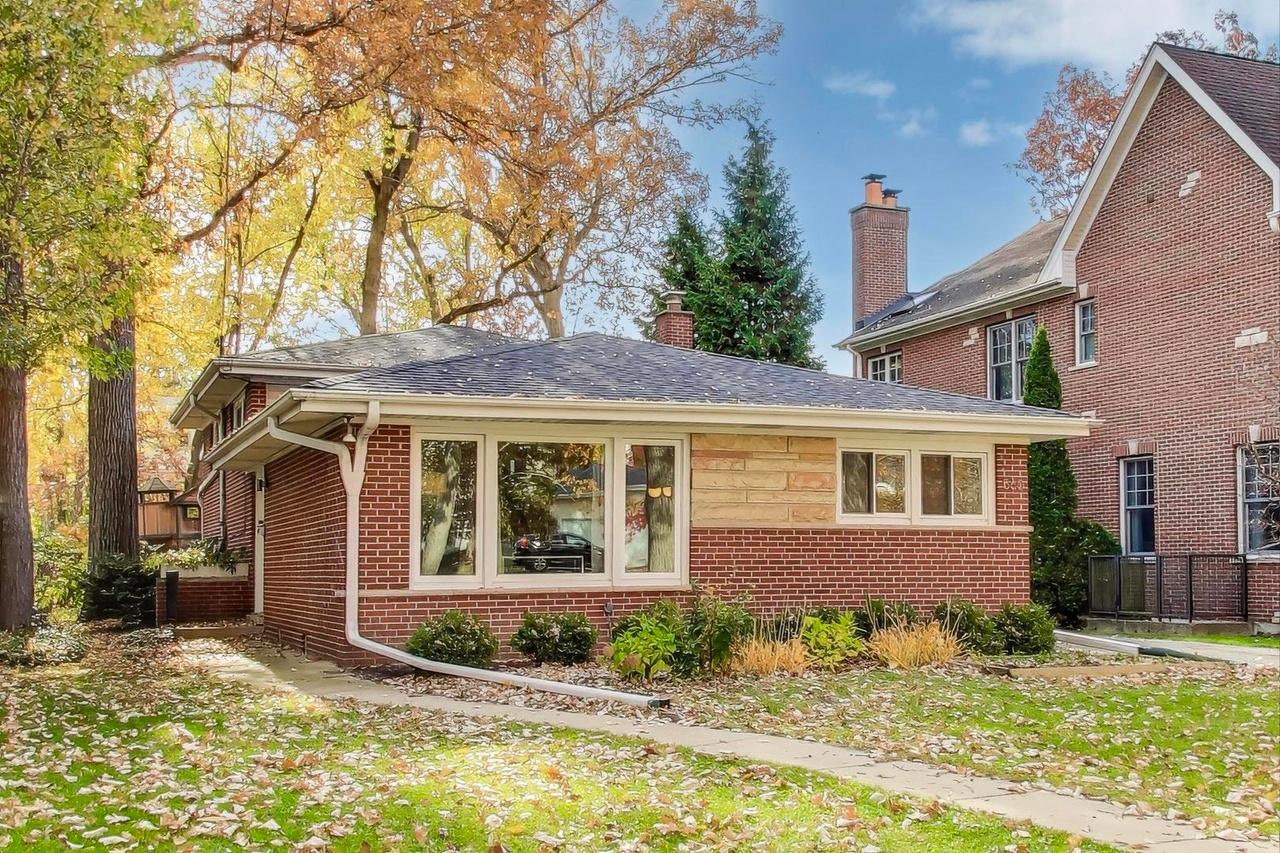
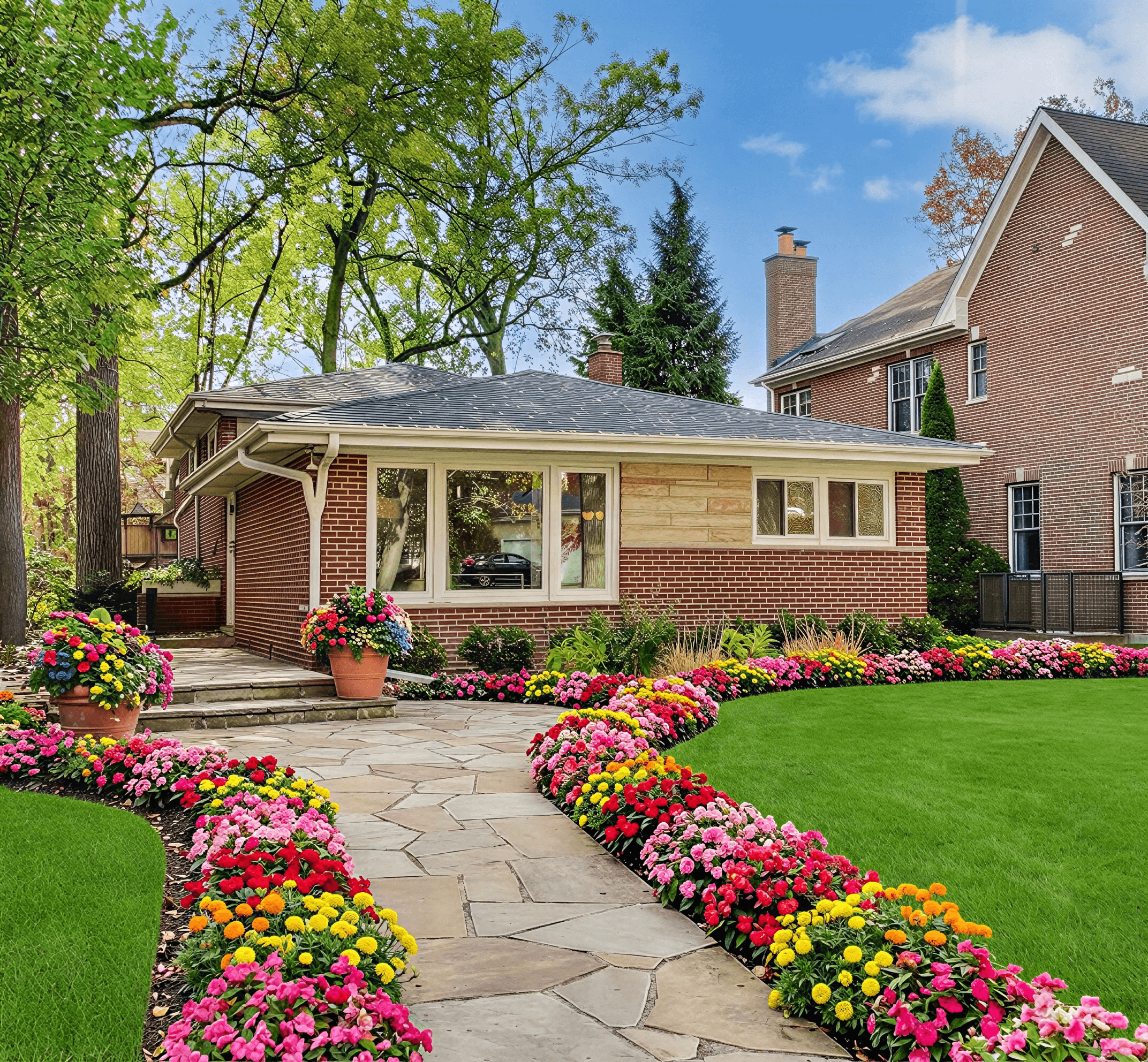
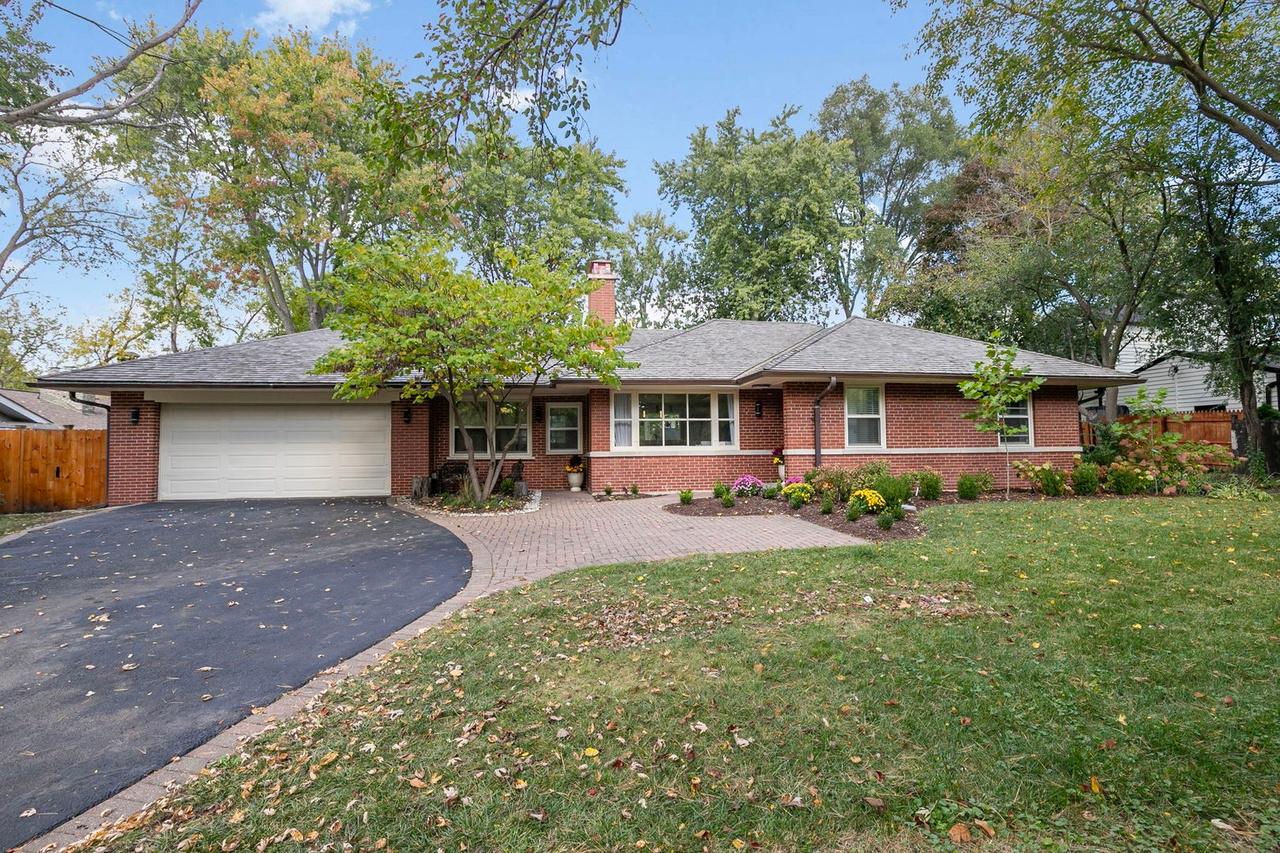
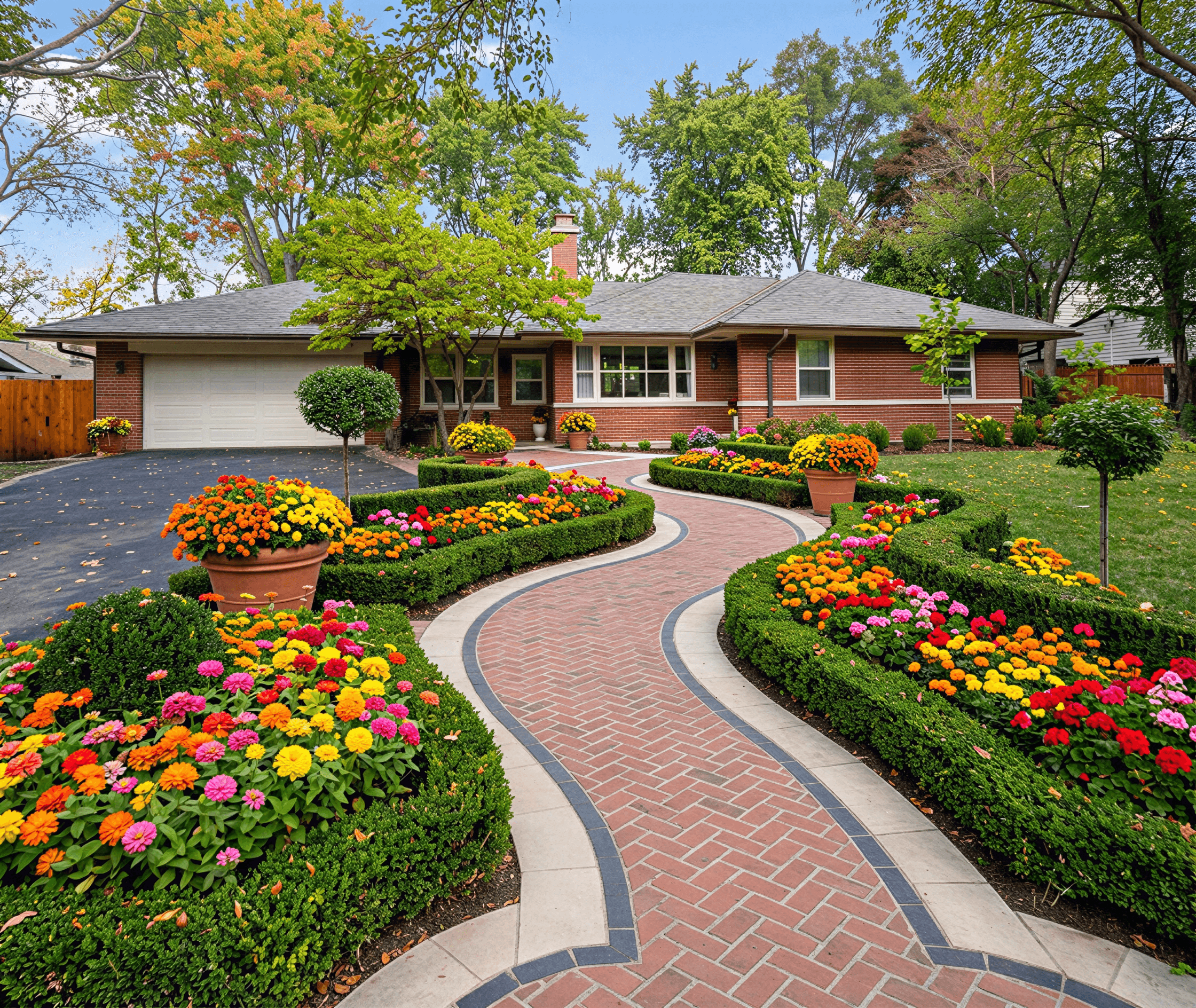
- Asymmetrical Homes (Craftsman, Ranch): With these styles, you have more freedom. A relaxed, more naturalistic layout often works best. Use gentle curves for your bed lines and arrange plants in informal drifts and clusters to complement the home’s less rigid structure.
Ultimately, your foundation beds are just one part of the bigger picture. Creating a truly stunning front yard involves tying everything together. High-quality structural landscaping is what connects the "soft" elements like plants with the "hard" ones like walkways and patios. For a deeper dive into making all these pieces work together, our complete guide on how to design a front yard landscape provides more detailed strategies.
Matching Plants to Your Home's Architectural Style
Think of your house as the main character and your foundation plants as the supporting cast. The right plants don't just sit there—they enhance your home's unique personality, making it feel complete and grounded in its surroundings.
Your home's architectural style gives you a fantastic head start, providing a natural blueprint for your landscape design. A well-chosen plant palette can draw the eye to beautiful details, soften imposing lines, and create a welcoming transition from the structure to the yard. It's about making the garden feel like it truly belongs to the house.

This isn't just about aesthetics; it’s about smart investment. Great curb appeal is a major selling point for over 70% of home buyers in the U.S. Yet, it’s a common and costly mistake to get this part wrong. Residential projects make up a huge slice of the landscaping services market—between 55-60%—but an estimated 40% of new plantings fail within just three years because of poor planning. The industry is always evolving to solve this, and if you're curious about the business side of things, you can explore these industry insights to see how technology is tackling the challenge.
For now, let's focus on the design. Here’s how to pair plants with some common architectural styles.
Modern and Contemporary Homes
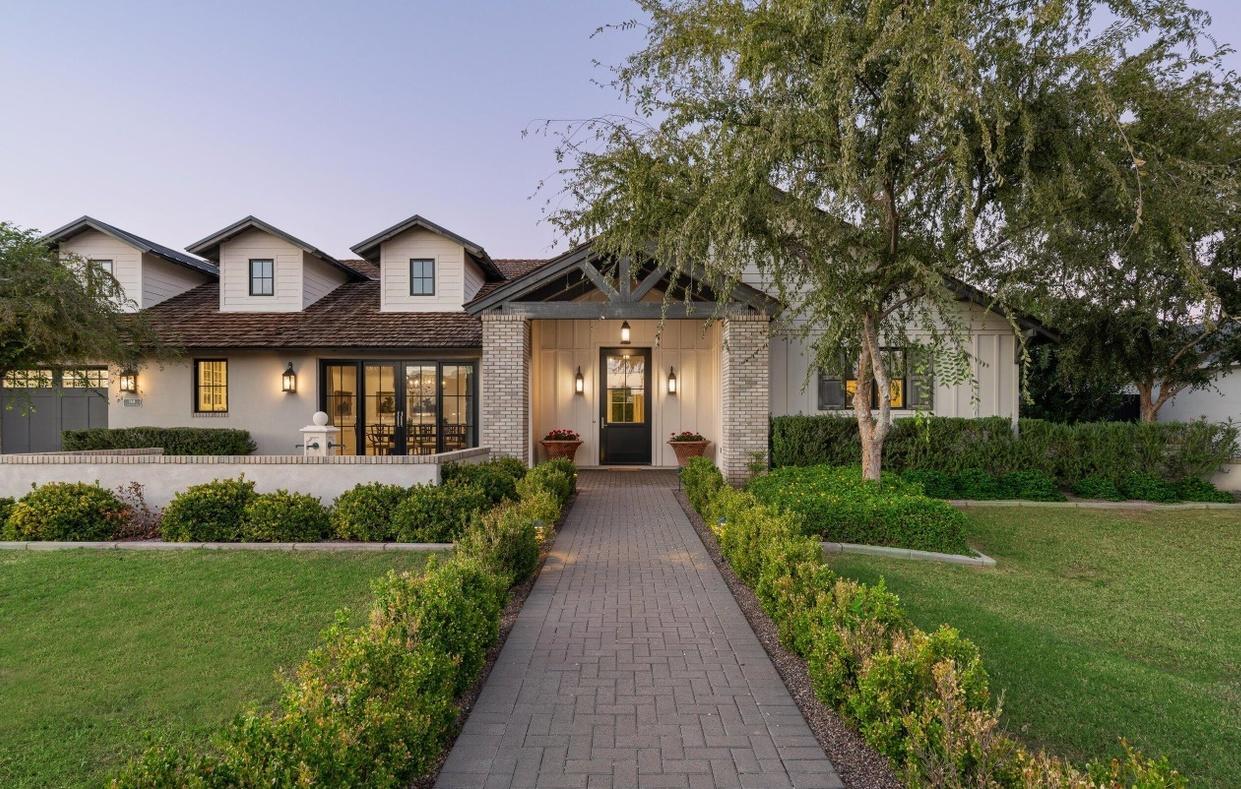
Modern homes are all about clean lines, bold geometric forms, and a "less is more" philosophy. Your landscaping should echo that. The goal here is structure and simplicity, not a riot of color.
- Ornamental Grasses: Plants like Feather Reed Grass or Blue Fescue are perfect. They bring in soft texture and movement that contrasts beautifully with hard architectural surfaces.
- Simple Shrubs: Think of shrubs as green building blocks. Tightly clipped Boxwoods or low-slung Junipers can create crisp, defined edges and add year-round structure.
- Statement Plants: Use a single, dramatic plant as a living sculpture. A Japanese Maple with a striking form or a bold cluster of Agave works wonders against a simple, clean facade.
Cottage and Farmhouse Charm
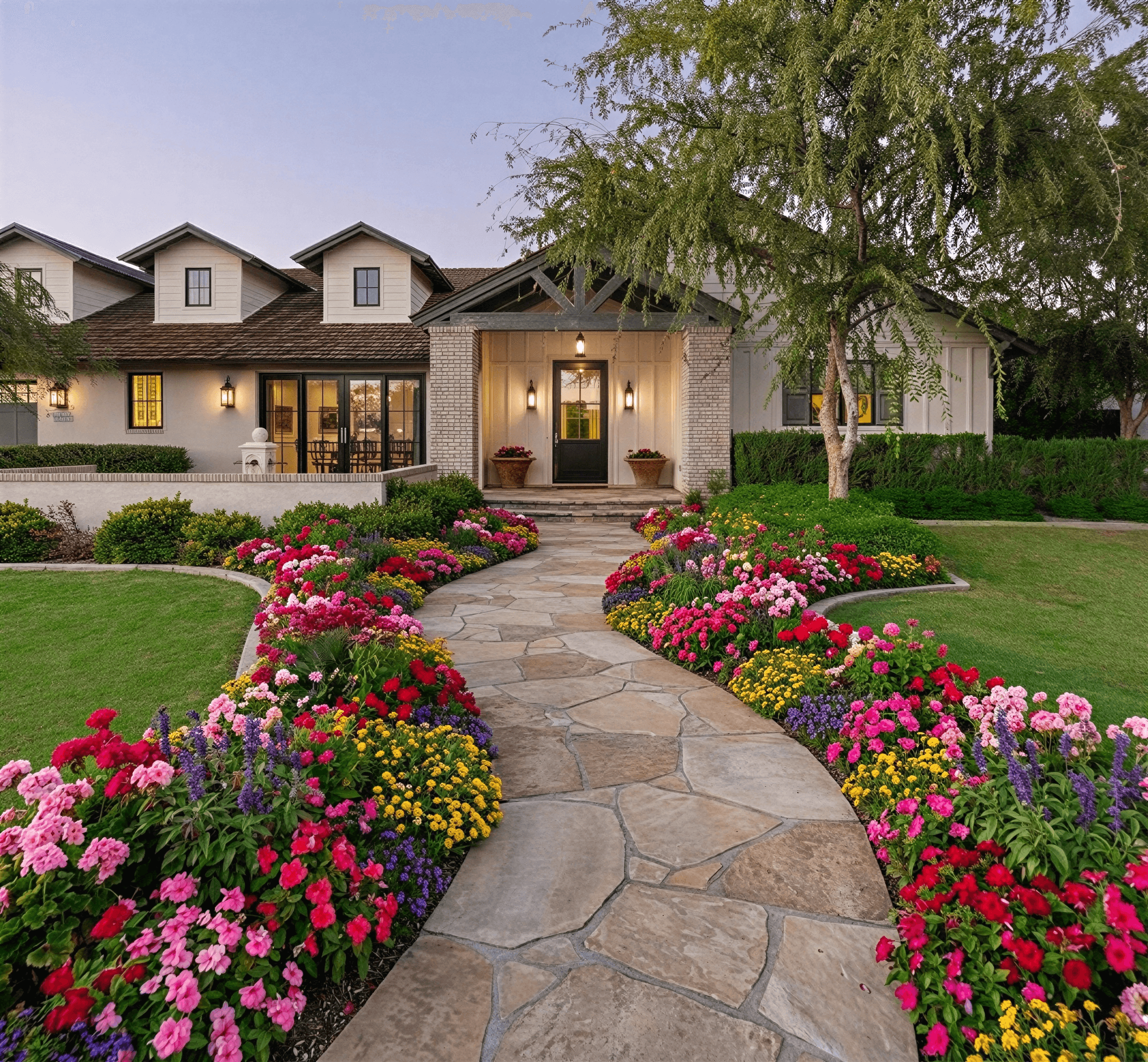
For the relaxed, romantic feel of a Cottage or modern Farmhouse, you want your garden to feel generous, welcoming, and maybe just a little untamed. The look is lush and full, as if it has been lovingly tended for generations.
The key is to create soft, overflowing beds that blur the hard edge of the foundation. Go for a joyful mix of textures, colors, and forms. This is the perfect setting for classic flowering shrubs like billowy hydrangeas and fragrant climbing roses. From there, weave in perennials like Lavender, Catmint, and Coneflowers to fill in the gaps and create a layered look that spills over onto your walkways.
Don't be afraid to let plants mingle and overlap. A cottage garden's beauty comes from its fullness and sense of informal grace, a stark contrast to the rigid lines of more formal styles.
Traditional Tudor and Colonial Designs
Tudor and Colonial homes carry a sense of history and formality. They have a stately, often symmetrical, presence that your landscape should honor. Here, order and balance are your best friends.
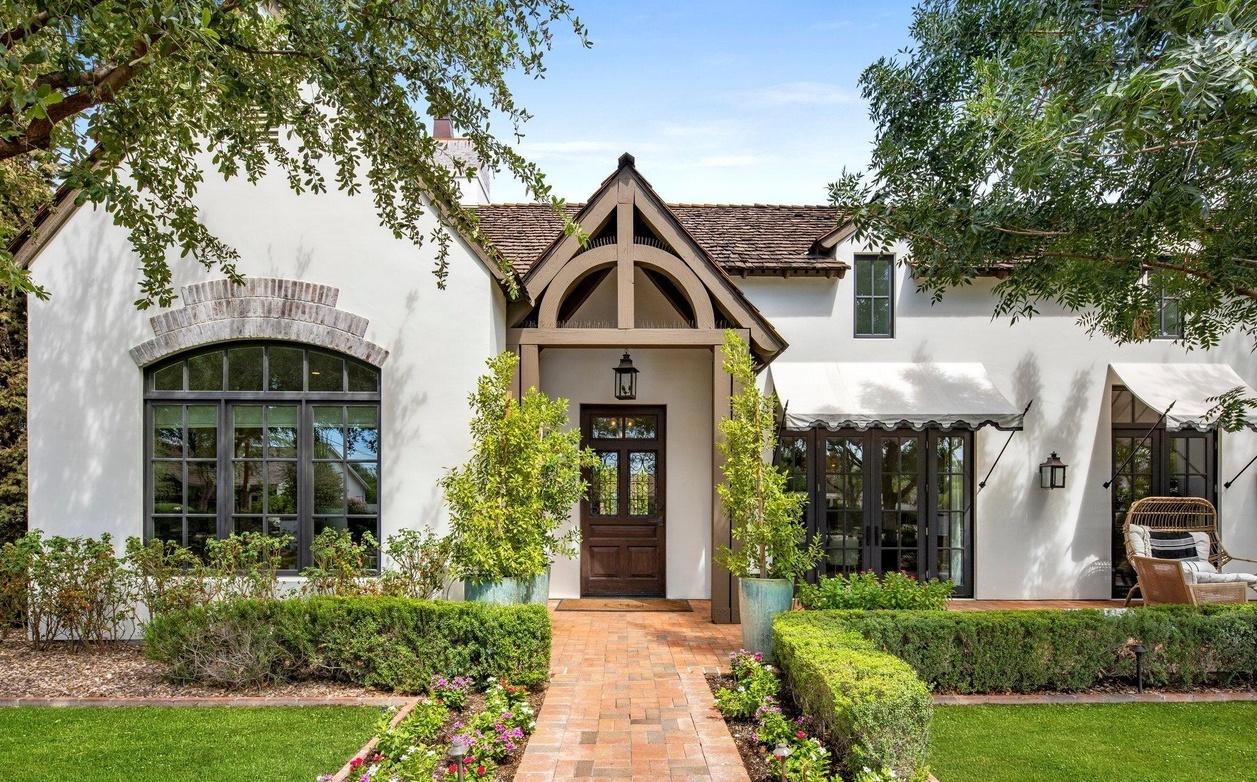
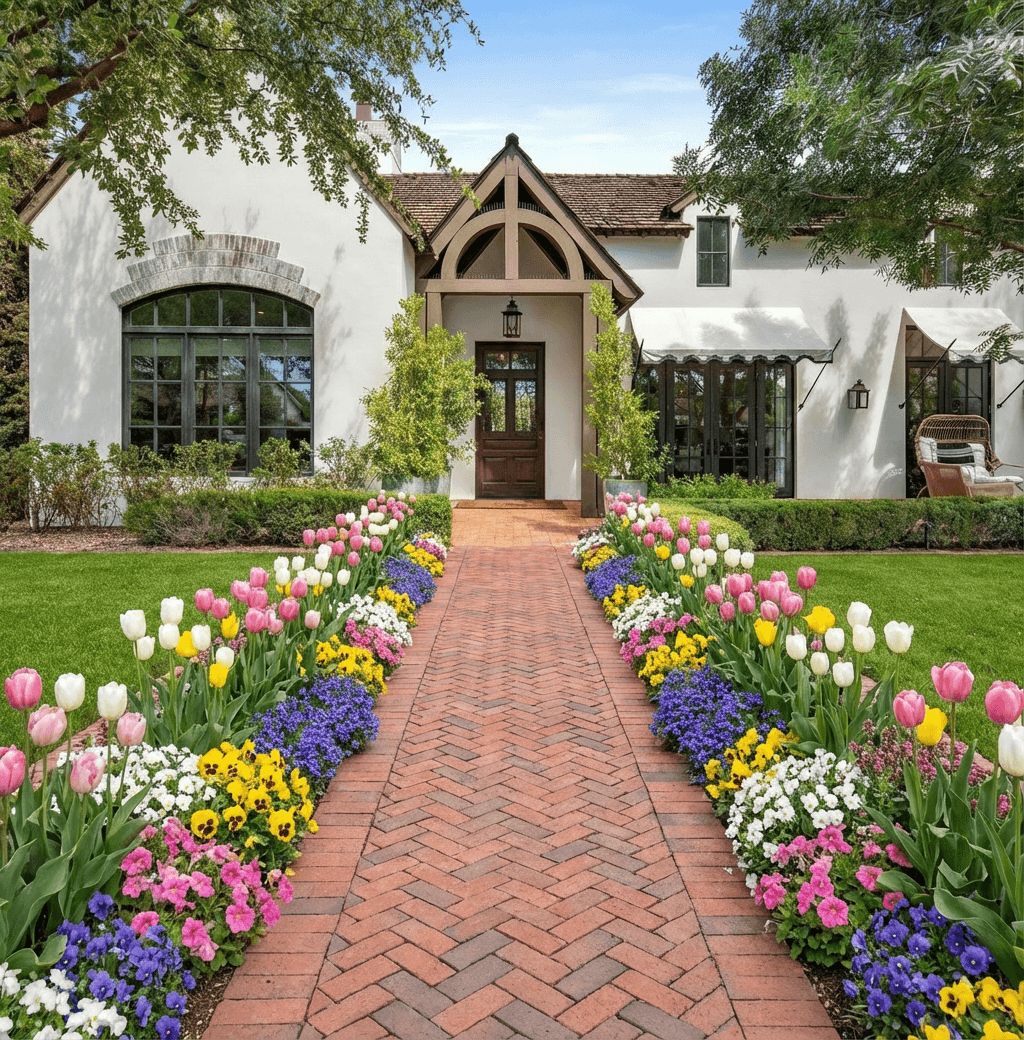
Think in pairs. Use classic evergreens like sculpted Yews, Holly, or Arborvitae to flank the front door and anchor the corners of the house, creating a strong, balanced frame. Plantings should feel deliberate and tidy, often arranged in neat, geometric beds. When it comes to color, a more refined palette works best—think classic Peonies, Irises, and timeless red or white roses that complement the home's historic character.
Planting and Caring for a Thriving Garden
Alright, the planning is done and you’ve picked out the perfect plants. Now for the fun part: getting your hands dirty and bringing that vision to life. This is where your careful design work pays off, setting the stage for a healthy, beautiful garden that will frame your home for years to come.

Putting in the effort now is what separates a struggling garden from a stunning one. Getting your foundation plants front of house off to a great start means less work for you later and way more curb appeal.
Prepping the Perfect Garden Bed
Before a single plant goes in the ground, you need to prepare its new home. Start by clearing out the entire area. Get rid of every last bit of grass, weeds, and any other debris. You want your new plants to have zero competition for water and nutrients from day one.
Next up is the soil, and this is a big one. The soil right next to a house foundation is almost always compacted, heavy, and lacking in nutrients. To remedy this, spread a thick 3 to 4-inch layer of quality compost across the entire bed. Then, using a garden fork or a tiller, work that compost into the top 6 to 8 inches of existing soil. Trust me, this single step does wonders for drainage, aeration, and giving your plants the food they need.
A well-landscaped home can command a higher sale price of up to 15-20%. With home gardening interest spiking globally, a smart investment in strategic foundation plants can yield a significant property value uplift. As noted in market analysis, this increased focus on curb appeal is more relevant than ever.
The Art of Planting
With your garden bed properly prepped, it's planting time. Following a few key steps here will help your plants settle in quickly and avoid transplant shock.
- Dig the Right Hole: Your hole should be twice as wide as the plant's root ball, but no deeper. This gives the roots room to spread out and establish themselves.
- Handle with Care: Gently ease the plant out of its pot. If you see a tight, circling mass of roots (what we call root-bound), don't be afraid to gently tease them apart with your fingers. This encourages them to grow outward instead of continuing to circle.
- Position and Backfill: Set the plant in the middle of the hole. You want the top of its root ball to be level with or just slightly above the ground around it. Fill the hole back in with your amended soil, tamping it down lightly to get rid of any big air pockets.
As soon as the plant is in, give it a good, deep watering right at its base. This helps settle the soil around the roots and provides that crucial first drink of water. For a full rundown on watering new plants, our guide on effective watering schedules for your plants has you covered.
Seasonal Care for Lasting Beauty
Planting day isn't the finish line; it’s the starting point. Consistent, simple care is what keeps a foundation garden looking its best all year long. A day or two after planting, add a 2 to 3-inch layer of good mulch, like shredded bark or pine straw. Just be sure to keep it a few inches away from the plant stems to prevent rot. Mulch is a gardener's best friend—it holds in moisture, keeps weeds down, and helps regulate soil temperature.
Pruning is the other key task. Proper trimming bushes and shrubs isn't just about looks; it improves air circulation and lets you remove any dead or weak branches. As a rule of thumb, it’s best to give most shrubs a light trim right after they're done flowering for the season.
Common Foundation Planting Mistakes to Avoid
When it comes to landscaping, some of the most common mistakes are also the easiest to avoid. I’ve seen countless promising designs fall flat because of a few simple missteps right at the start. Getting your foundation planting right from the beginning saves you from future headaches, unhealthy plants, and even potential damage to your home.
Let's walk through the pitfalls I see most often so you can make sure your foundation plants front of house not only survive but truly thrive.
Planting Too Close to the Foundation
This is, without a doubt, the number one error I see homeowners make. It’s so tempting to place that small, new shrub just a foot or so from the wall. It looks right for the moment, but it’s a short-term illusion.
Plants grow. That tiny shrub will reach its mature size in a few years, and if it's too close, it will press right up against your siding. This traps moisture, invites pests, and can create a perfect breeding ground for mold and mildew. On top of that, you’ll be forced into constant pruning that butchers the plant's natural form.
The golden rule is simple: always plant for mature size. Check the plant tag for its mature width, and plant it at least half that distance from the wall. So, for a shrub that will grow 6 feet wide, you need to plant it at least 3 feet away from your foundation. This guarantees good air circulation and a healthy future for both the plant and your house.
A new Boxwood might be just 10 inches across at the nursery, but many popular varieties easily reach 4-5 feet in width. Planting it a foot from your home is a recipe for disaster down the road.
Ignoring Your Home's Scale
A great planting design feels like it belongs with the house. A common issue is getting the scale wrong—the plants are either comically small or overwhelmingly large for the structure they're meant to complement.
Tiny, low-profile plants will look completely lost against a grand, two-story home. Conversely, massive shrubs can dwarf a charming bungalow, block windows, and make the entire property feel out of proportion. You have to match the plant's visual weight to the home's architecture.
Here’s a good rule of thumb:
- For large, tall homes: Use taller, more substantial plants to anchor the corners. Think upright Junipers, slender Arborvitae, or small ornamental trees that have the necessary height to frame the structure properly.
- For smaller, one-story homes: Focus on dwarf varieties and lower-growing shrubs. This keeps everything in proportion and ensures your beautiful windows and architectural details aren't hidden from view.
Falling for the Straight-Line Trap
Lining up shrubs in a single, rigid row against the house is a look that feels incredibly dated and stiff. It creates a "soldiers in a row" effect that does nothing to soften the hard, straight lines of your home's foundation.
A much more sophisticated and visually appealing approach is to use gentle, sweeping curves. By creating a curved bed and planting in staggered, layered groups, you introduce depth, movement, and a much more natural feel.
This technique helps the garden bed flow into the lawn, creating a graceful transition instead of a harsh border. It also gives you the freedom to play with different textures and colors, making the whole design feel more dynamic. So, step away from the straight-line impulse—your curb appeal will thank you for it.
Common Questions About Foundation Planting
When I'm helping homeowners map out their foundation beds, the same handful of questions almost always comes up. It makes sense—getting these details right from the start saves a lot of headaches later. Let's walk through the most common ones.
How Far From the House Should I Plant My Shrubs?
This is the big one. Get this wrong, and you're signing up for future problems with moisture, pests, and overgrown plants.
The simplest rule I tell everyone is to measure half of the plant's mature width and use that as your minimum distance from the wall. For instance, if that boxwood you're eyeing has a tag that says it will grow to be 6 feet wide, you need to plant its center no closer than 3 feet from your foundation.
It will look ridiculously empty when you first plant it. Trust me, I know. But you have to resist the urge to nudge it closer. That space is non-negotiable for good air circulation, which helps prevent mold and rot on your siding. It also gives the plant room to grow into its natural, beautiful shape instead of being crammed against a wall.
What Are the Best Low-Maintenance Plants for a Foundation Bed?
Everyone wants a beautiful front yard, but not everyone wants a second job maintaining it. The secret to a low-effort, high-impact garden is choosing plants that are naturally well-behaved. Look for varieties that are compact, handle dry spells once they're settled in, and don't need constant deadheading or pruning.
From my experience, these are some of the most reliable workhorses:
- Dwarf Evergreens: Think Dwarf Globe Blue Spruce, certain yews, or classic boxwoods. They provide that essential year-round green structure without demanding much from you.
- Ornamental Grasses: A personal favorite for adding texture and movement. Little Bluestem or Fountain Grass look fantastic and only need a single haircut in late winter or early spring.
- Hardy Perennials: You can't go wrong with tough-as-nails bloomers like Coneflowers (Echinacea) or Black-Eyed Susans (Rudbeckia). They give you a huge splash of summer color and are incredibly forgiving.
Should My Foundation Plants Be Taller Than My Windows?
As a general rule, you really want to keep plants placed directly under windows shorter than the sill. This isn’t just about aesthetics; it's about good design principles.
Keeping those plants low maintains the home’s visual balance and stops the facade from looking choked or cluttered. It also lets a ton of natural light pour into your home, which makes every room feel better. Plus, from a simple home security standpoint, having clear, unobstructed windows is just plain smart.
Taller plants absolutely have a place in your design—just not right under the windows. I love using vertical plants like Sky Pencil Holly or slender Arborvitae to anchor the corners of a house. This frames the whole property beautifully without blocking light or views. It's all about strategic placement.
It's one thing to read about it, but another to see it. With Curb Appeal AI, you can stop guessing what will look good. Just upload a photo of your house and experiment with different plants and layouts to see exactly how they'll look against your home. Give it a try for free and start designing with confidence!