Transform Your Home: 8 Ideas for Front of House Landscaping
You notice the front yard every time you pull into the driveway. Sometimes the problem is obvious. The lawn looks flat, the walkway feels like an afterthought, and the entry does nothing for the house. Other times, the issue shows up when you start collecting inspiration photos and realize none of them answers the practical questions. What fits your climate, what fits your budget, and what you will still want to maintain in July.
Good front-of-house design starts with a few decisions that carry most of the weight. The approach to the door needs to feel clear. The view from the street should frame the house instead of hiding it. Plant choices need to match your hardiness zone, sun exposure, and tolerance for upkeep. I have seen plenty of front yards fail because the owner picked a style first and dealt with maintenance later.
That is why these front-of-house design ideas focus on trade-offs, not just looks. A cottage-style entry can feel welcoming, but it asks for more pruning and editing. A gravel-based dry-climate design can cut water use and weekend work, but it can look harsh on the wrong house. A hardscape-led entry often costs more up front, yet it usually asks less of you over time.
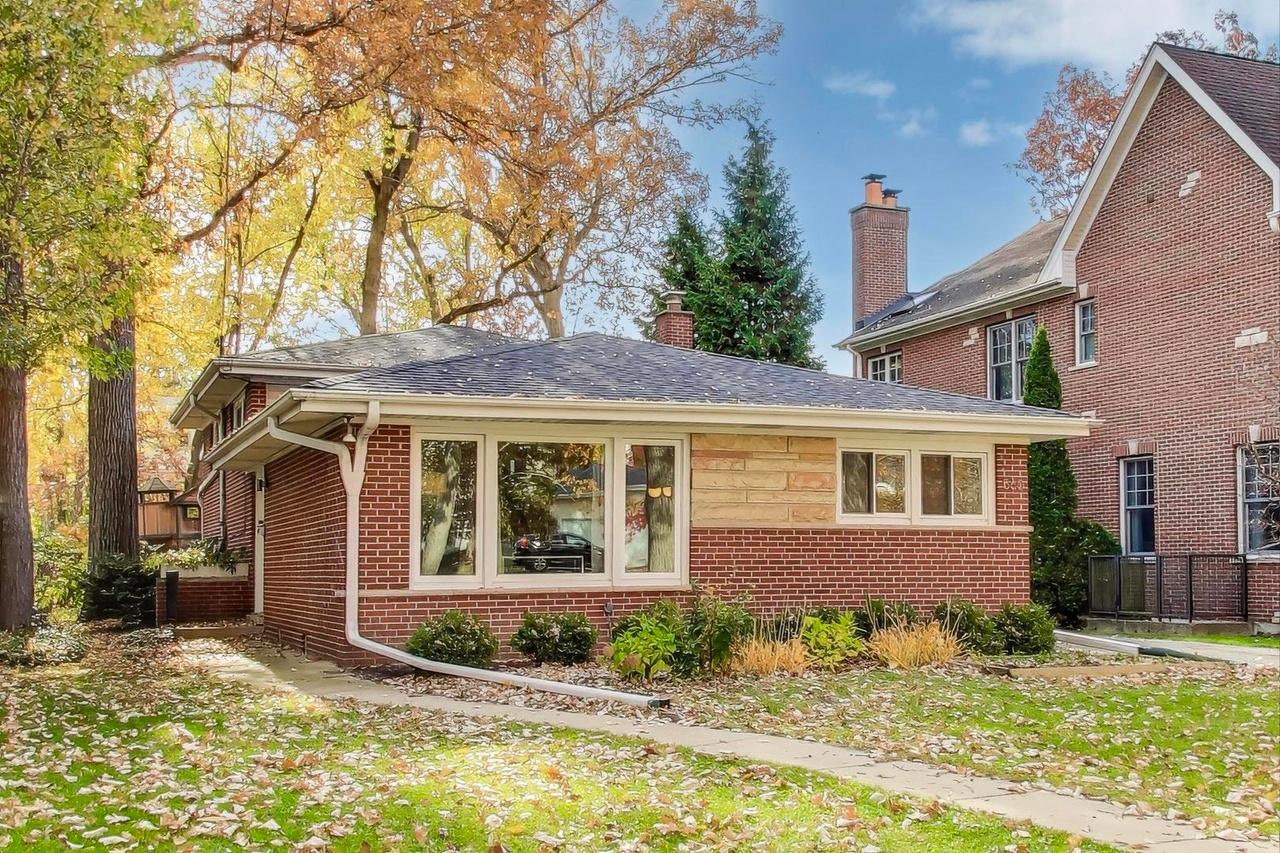
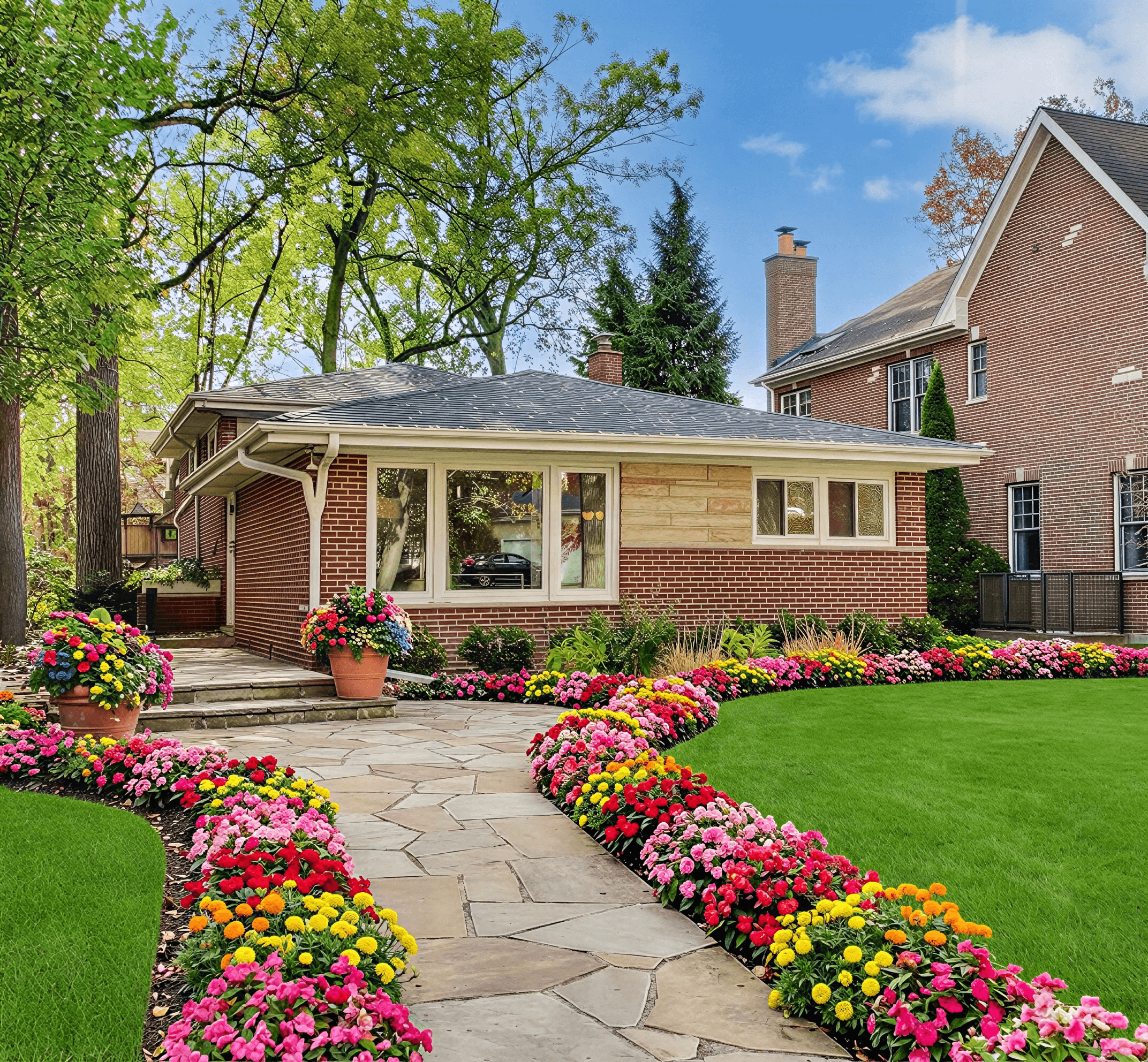
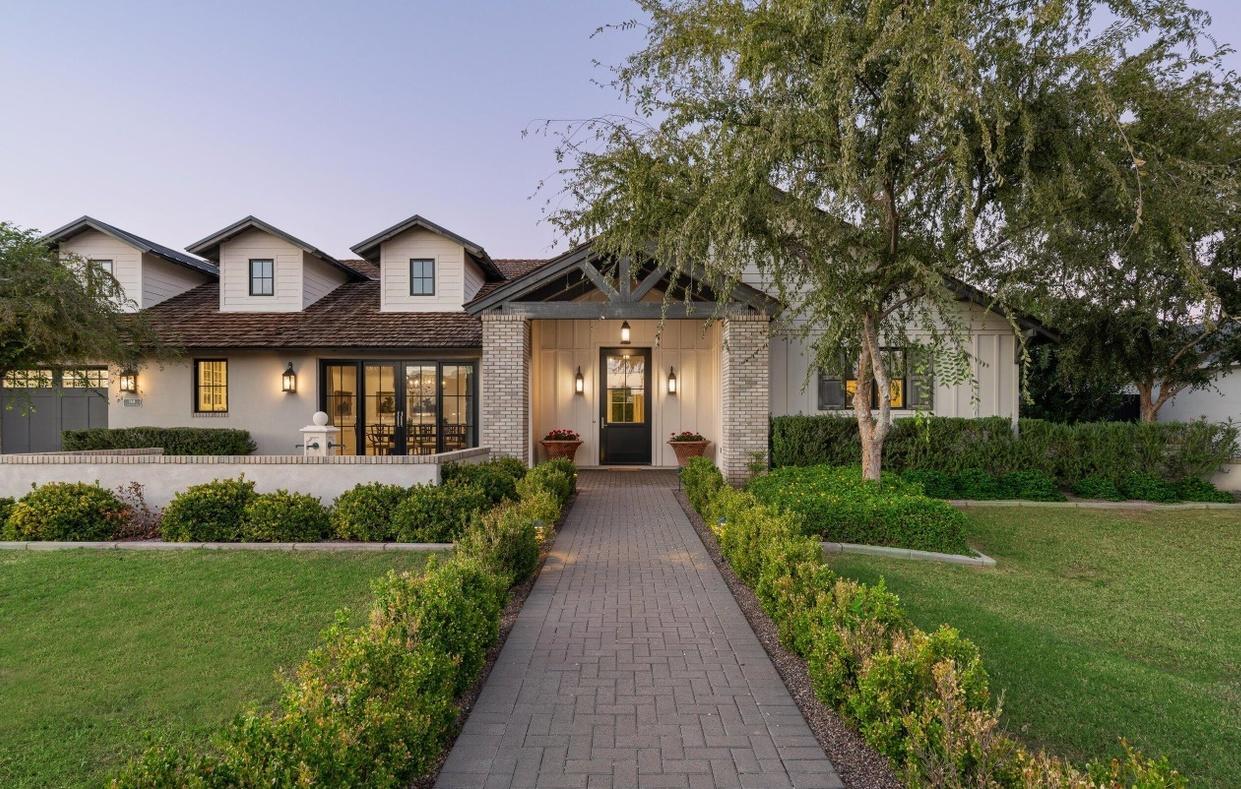
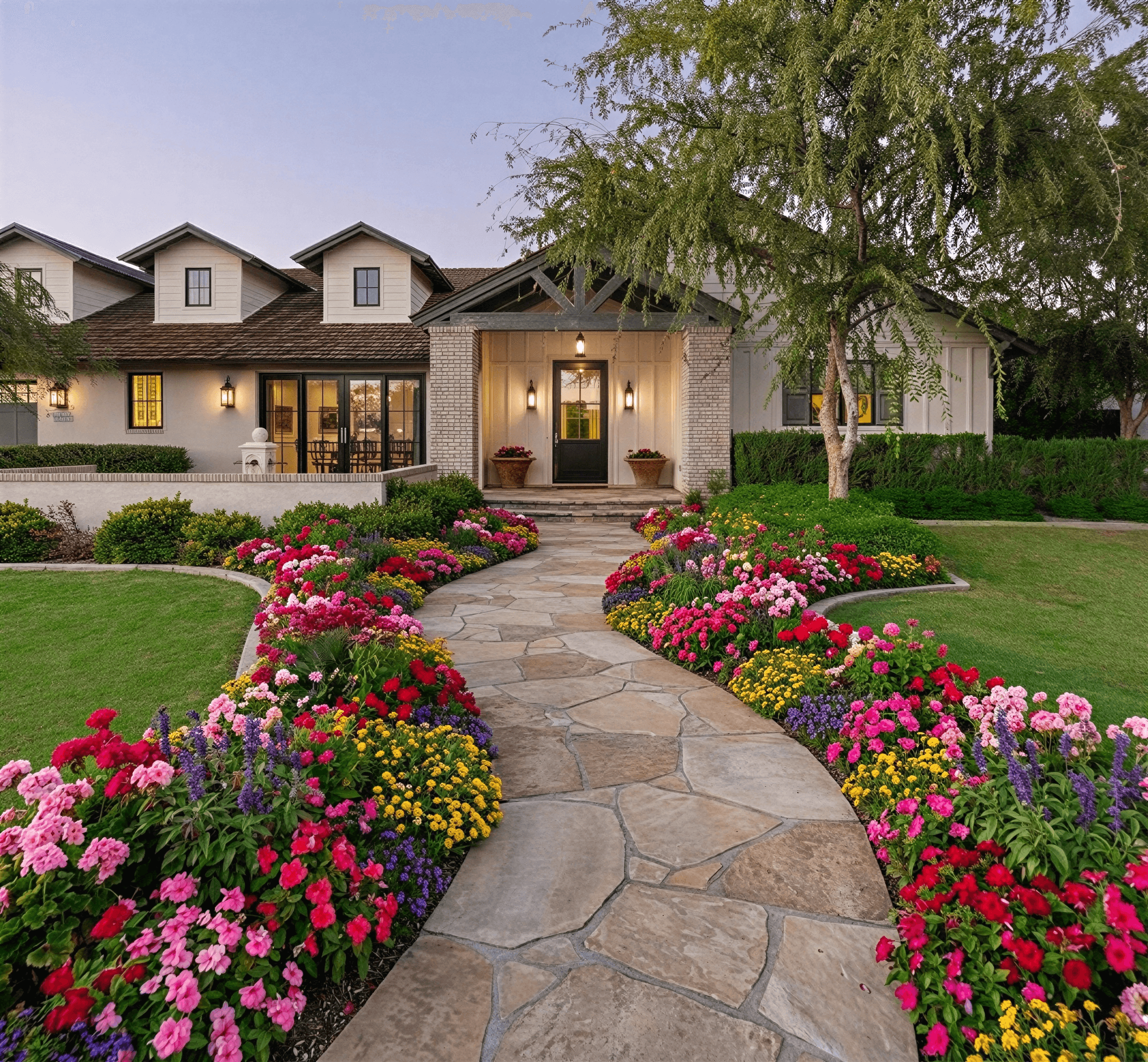
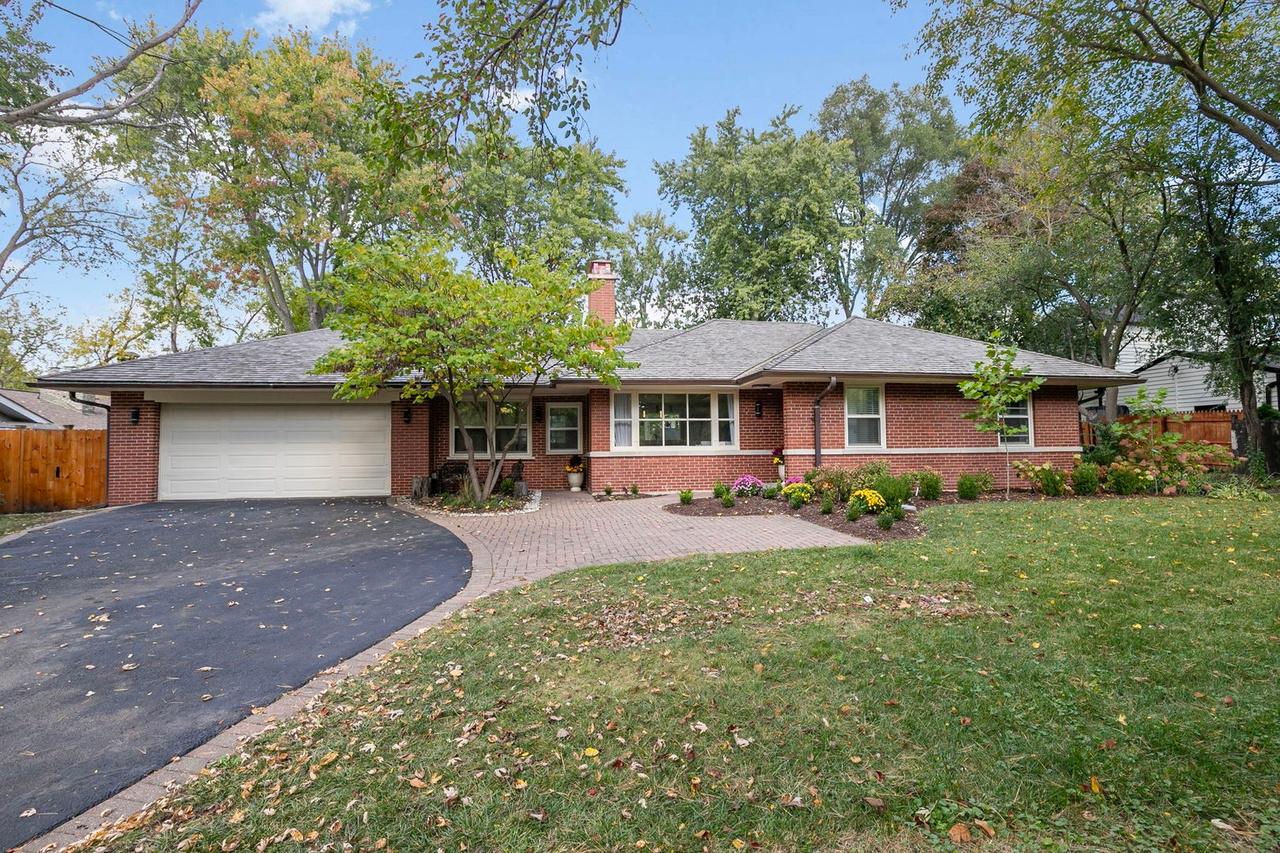
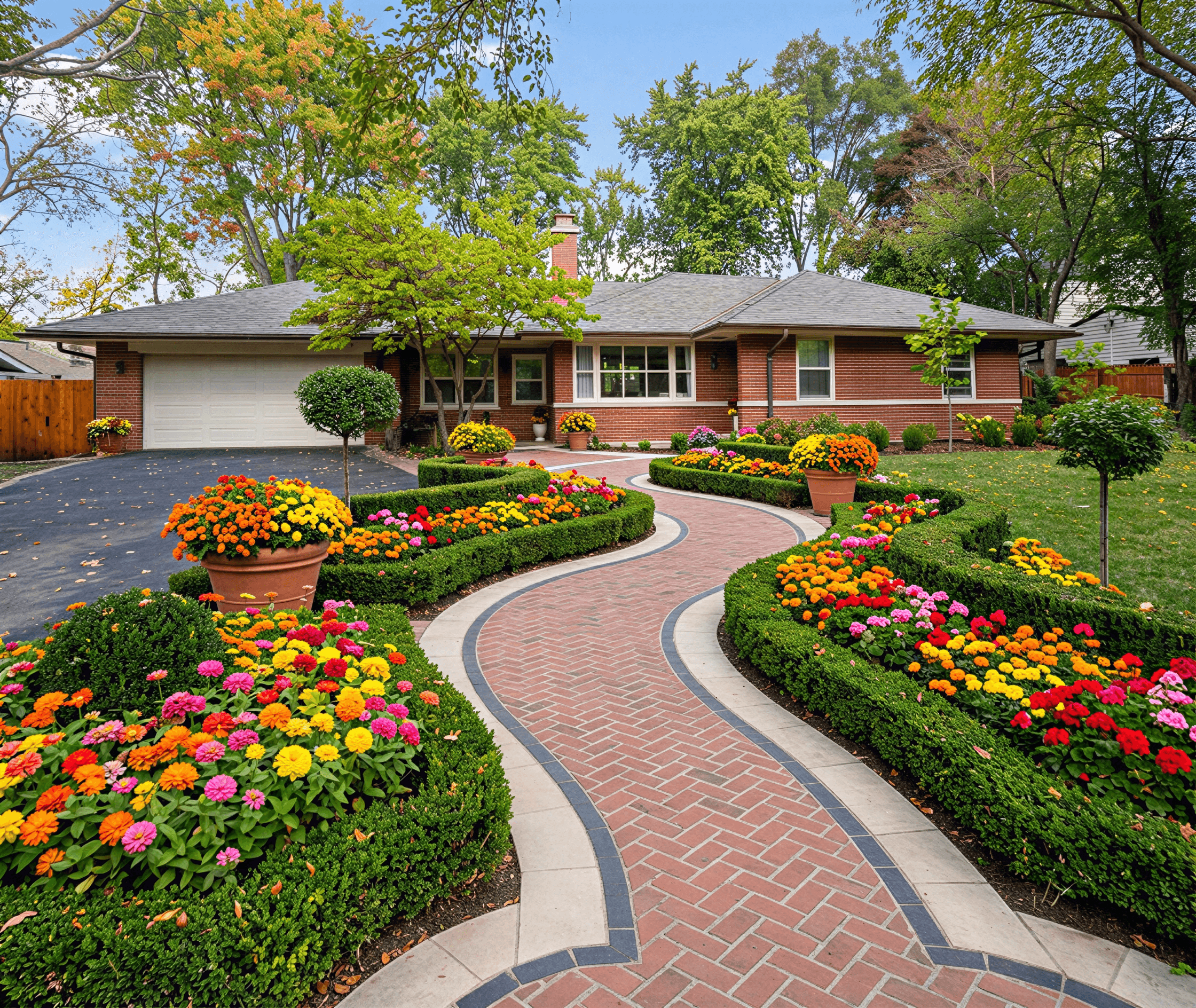
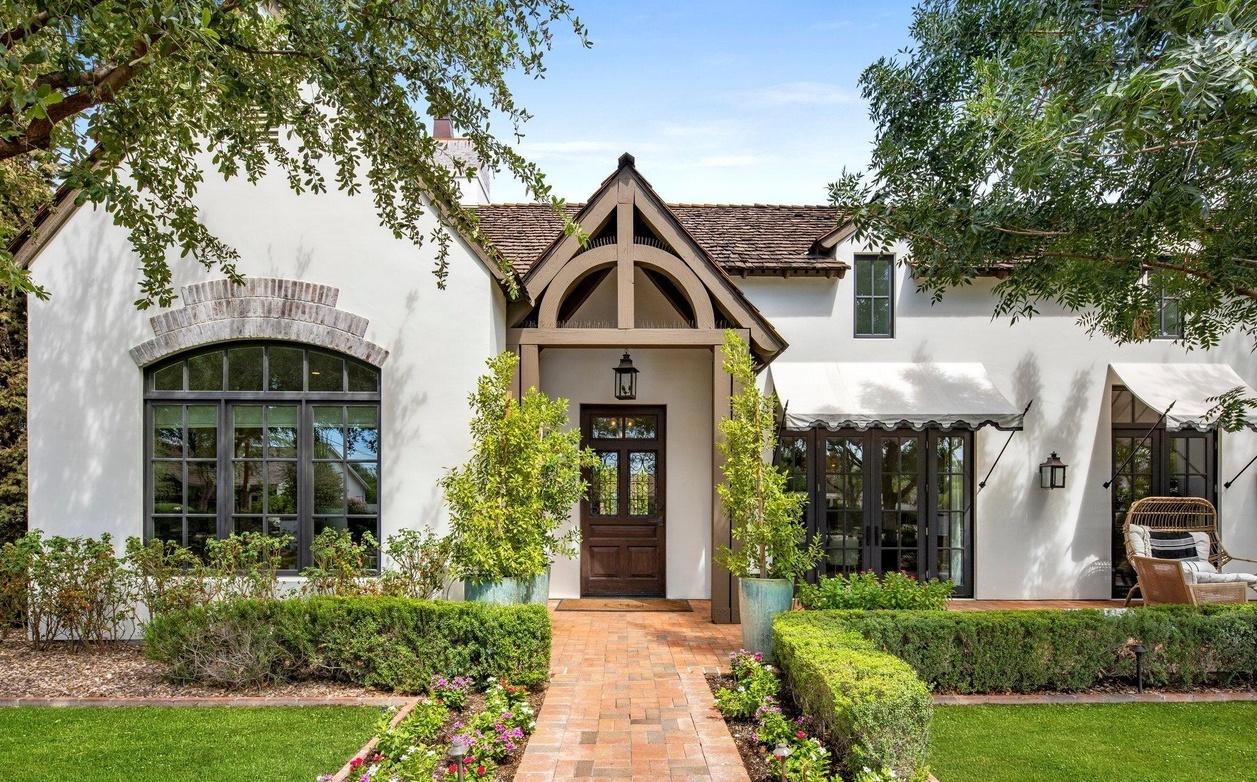
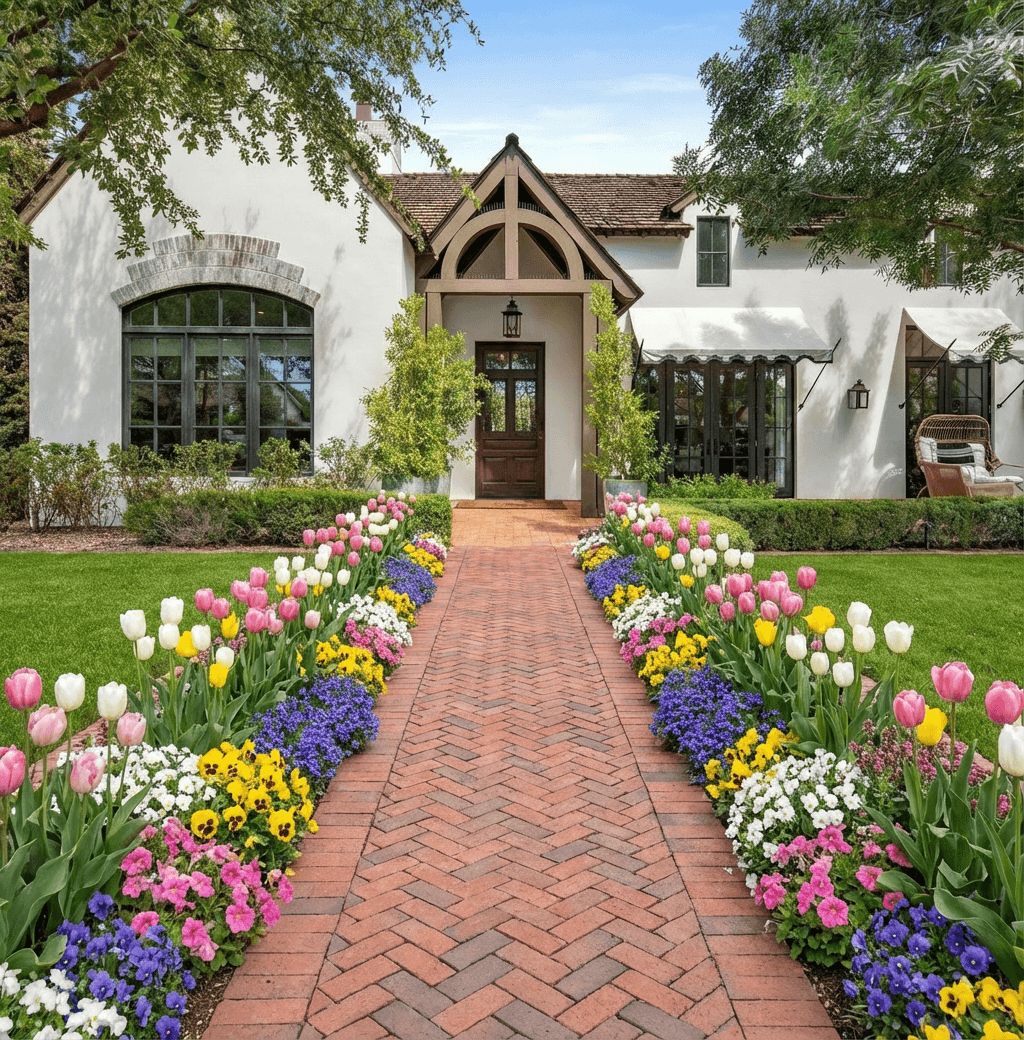
Each idea also gives you a practical next step. Instead of guessing from a photo of someone else’s property, you can test the style on your own home with Curb Appeal AI before you buy materials or remove turf. Upload a photo, compare options, and check whether the proportions work. That step alone can save money and prevent common mistakes, like undersized paths, foundation shrubs that swallow the windows, or plantings that fight the architecture. If you want a stronger handle on layout, proportion, and material choices before you start, this guide to front yard design fundamentals and layout principles is a useful place to start.
1. Modern Minimalist Front Landscape

A modern minimalist front yard works best when the house already has strong lines. Think rectangular paving, tight bed edges, restrained planting, and enough open space for the architecture to breathe. This is one of the best ideas for front of house landscaping when you want the property to look more expensive without packing every inch with plants.
The mistake people make is confusing minimalist with empty. A bare gravel yard with two lonely shrubs rarely looks intentional. It usually looks unfinished. Good minimalist designs repeat a few materials and a few plant forms with discipline.
What makes this style work
Use fewer plant varieties, but repeat them with confidence. Ornamental grasses, clipped evergreens, columnar shrubs, and one specimen tree can do more than a bed full of mismatched plants. Pavers, steel edging, gravel, and crisp mulch lines do heavy lifting here.
If you want a deeper grounding in how layout, proportion, and materials come together, this guide to landscape design fundamentals is a useful starting point.
Practical rule: Pick one focal point near the entry. A specimen tree, large planter, or sculptural boulder is enough. Add more, and the yard starts competing with itself.
Best uses and trade-offs
This style is a strong fit for urban lots, mid-century homes, contemporary builds, and houses with simple facades that need a sharper frame. It’s also easier to maintain than a mixed perennial border, especially if you keep the plant palette tight.
The trade-off is that installation quality matters more. Crooked pavers, thin gravel, cheap edging, or awkward spacing stand out immediately because there’s nowhere to hide. Spend more attention on grade, spacing, and material transitions than you would in a looser planting scheme.
A few reliable moves:
- Repeat in odd groupings: Group the same plant in threes or fives so the composition reads as deliberate.
- Keep sightlines open: Don’t let shrubs block the front door from the street.
- Use foliage over flowers: Texture and shape hold up longer than a brief bloom cycle.
- Match hardscape to the house: Warm stone suits warm exteriors. Cooler gray paving suits sharper, cleaner facades.
Curb Appeal AI is especially useful here because modern schemes depend on proportion. Test different gravel colors, paver widths, and plant spacing on a photo of your own house before you buy anything.
2. Cottage Garden Entryway

A cottage garden entry works well when the front of the house feels hard, flat, or too exposed. The goal is to soften the approach with layers of planting that make the entry feel inhabited and welcoming, not overly formal. This style has real presence, but it only works if the planting is organized.
The best version usually starts with one clear framework. An arbor, gate, porch stair, short fence, or curved walk gives the flowers and shrubs something to relate to. Without that structure, a cottage entry can drift into visual clutter fast.
For visual references that show this layered approach on real homes, browse these cottage garden design ideas.
Where cottage style earns its keep
This is a strong fit for traditional houses, bungalows, cottages, farmhouses, and plain facades that need more depth near the front walk. It can also help smaller homes feel more established because the planting fills the space between the street and the door in a generous way.
It does come with trade-offs. A dense border forgives awkward foundation lines and basic siding, but it asks for more editing through the year. If the bed is too deep, or plants are packed too tightly, routine jobs like weeding, cutting back, and replacing tired perennials become frustrating.
If you cannot reach the back of the bed without stepping into it, the design is too full for real-life maintenance.
A few choices make this style hold up better:
- Layer by height: Put climbers, tall shrubs, or trellised plants closest to the house. Keep medium perennials in front of them and low edging plants near the walk.
- Repeat plants on purpose: Two or three dependable varieties repeated through the bed look calmer than a collector's mix of one of everything.
- Choose by hardiness zone first: Roses, delphinium, salvia, catmint, hydrangea, and hollyhock do not all perform the same way in every climate.
- Leave room for air movement: Humid regions need wider spacing to cut down on mildew, black spot, and rot.
- Keep winter structure: Boxwood, dwarf evergreens, seed heads, or a simple obelisk keep the entry from disappearing in the off-season.
Budget matters here more than homeowners expect. Cottage planting can be installed in phases without looking incomplete, which makes it more forgiving than styles that depend on finished hardscape from day one. Start with the anchor shrubs, the climber, and a few repeating perennials. Fill the gaps over the next season instead of buying everything at once.
Curb Appeal AI is especially useful for this style because cottage planting is easy to overdo. Upload a photo of your own house and test how full the beds should be, whether an arbor helps or crowds the facade, and which plant mix fits your hardiness zone, maintenance tolerance, and budget before you start digging.
3. Mediterranean Landscape Design
A Mediterranean front yard suits homeowners who want the entry to feel warm, settled, and structured without signing up for weekly fuss. The look comes from a tight material palette, strong form, and plants that stay attractive even when they are not in peak bloom. Gravel, stone, terracotta, and gray-green foliage do most of the visual work.
It fits stucco houses and tile roofs naturally, but I have also seen it improve ordinary suburban facades. The key is discipline. A few repeated shapes and warm-toned materials usually read better than a long plant list.
Plant and material choices that matter
Start with drainage. Mediterranean plants struggle in soil that stays wet, especially near the foundation or anywhere downspouts dump water. If the site holds moisture, build the look around raised planting areas, sharper grading, and plants that give a similar effect rather than copying a Southern California photo plant for plant.
The strongest version of this style usually includes:
- A warm base palette: Gravel, decomposed granite, or mulch in tan, buff, or muted rust tones.
- A vertical accent: Italian cypress in suitable climates, or another narrow evergreen that provides the same upright shape.
- Fragrant planting near the walk: Lavender, rosemary, or santolina where the hardiness zone and drainage support them.
- Simple containers: Terracotta or aged stone planters usually read cleaner than ornate glazed pots.
Plant choice needs to follow climate first. Olive trees, rosemary, and lavender can be reliable in the right zones, but they are poor bets in cold, wet regions without a protected microclimate. In those areas, use hardy substitutes with a similar texture and color. Upright junipers, gray foliage perennials, and clipped evergreens can carry the style without constant replacement.
What works and what doesn't
Restraint is what makes this approach convincing. Repetition, open ground plane, and a few bold forms give the house breathing room. Problems start when the yard mixes Mediterranean cues with tropical leaves, bright annual color, and a broad thirsty lawn. The result usually feels disconnected.
I would also avoid forcing a signature plant just because it looks right in a reference photo. If olives defoliate every winter or lavender rots out by midsummer, the design stops looking intentional and starts looking patched together.
Curb Appeal AI is useful here because Mediterranean design depends so much on proportion and color temperature. Upload a photo of your house and test whether warm gravel improves the facade, whether cypress-like verticals help or crowd the front elevation, and which plant mix makes sense for your hardiness zone, maintenance level, and budget before you buy materials.
4. Desert Xeriscaping Front Yard

A dry front yard at 3 p.m. can either look crisp and intentional or bare and overheated. The difference usually comes down to structure. Good xeriscaping uses plant form, spacing, shade, and mineral materials to give the entry a finished look without depending on turf or heavy irrigation.
This approach makes sense in arid climates, drought-prone suburbs, and any neighborhood where water bills or maintenance hours are pushing lawn out of favor. It also suits homeowners who want a front yard that holds its shape through long hot stretches instead of peaking for a few spring weeks.
Why xeriscaping keeps gaining ground
The appeal is practical. Less mowing, fewer seasonal replacements, and better water control are strong reasons to move away from a thirsty front lawn. But the design only works when the yard has a clear composition.
Start with the bones. Place strong forms such as agave, yucca, columnar cactus in suitable climates, or upright drought-tolerant shrubs where they anchor views from the street and the front walk. Then use lower mounds, spreading groundcovers, decomposed granite, or gravel to set up contrast and give each plant room to read clearly.
Boulders can help, but they need restraint. I usually treat them as punctuation, not bulk material. Too many and the front yard starts reading like filler instead of design.
Xeriscaping works best when a few plant shapes repeat across the yard. Empty space is doing part of the visual work, so do not rush to fill every gap.
Common mistakes to avoid
The most common mistake is removing the lawn and stopping at gravel. Gravel is a surface, not a plan. The yard still needs an obvious path to the door, a focal point near the entry, and enough height variation to keep the house from looking flat against the ground plane.
Cold tolerance is the other big issue. Homeowners in transition zones often copy Sonoran or Palm Springs planting too closely, then lose half the palette after one hard freeze. If winter lows are a real concern, swap in tougher plants with a similar silhouette and keep drainage sharp around crowns and roots.
A reliable framework looks like this:
- Group by exposure: Put the toughest dry-climate plants in the hottest reflected-heat areas.
- Water precisely: Drip irrigation keeps moisture at the root zone instead of wasting it across gravel and paving.
- Mix forms on purpose: Spiky, rounded, upright, and trailing plants should each have a role.
- Use shade carefully: A small desert-adapted tree or tall shrub can cool the entry and soften the facade.
- Match plants to your zone: Agave, red yucca, hesperaloe, dasylirion, and certain cacti are strong choices in warm dry regions, while cold-hardy yucca, juniper, and tough ornamental grasses are safer farther north.
Curb Appeal AI is especially useful with xeriscaping because homeowners often overestimate how stark it will look. Upload a photo of your house and test gravel color, plant spacing, shade-tree placement, and hardiness-zone-appropriate substitutes before you buy rock or commit to a plant list. It is one of the few front-of-house design ideas where seeing the proportions in advance can save real money.
5. Tropical Front Landscape
Tropical front landscaping is less about flowers than foliage. Broad leaves, layered canopies, and strong texture do most of the visual work. If your house is in a warm, humid climate, or a coastal zone that supports lush planting, this style can make the property feel established very quickly.
It’s especially effective on homes that need screening or softness. Palms, bird of paradise, hibiscus, gingers, philodendron-type foliage in suitable climates, and bold understory planting create depth fast.
The right way to build a tropical look
Think in vertical layers. Canopy plants or palms go first. Midstory shrubs and flowering accents go next. Then use lower foliage plants at the edge of the path and foundation. Without layers, tropical planting just looks like a collection of large leaves.
This style also needs regular editing. Tropical plants grow with enthusiasm, and that’s part of their appeal. But if you don’t thin, shape, and open air flow, the front entry can feel dark and overgrown.
A few practical decisions improve the odds:
- Choose a lead plant palette: Don’t mix every tropical species the nursery sells.
- Protect windows and paths: Large foliage looks dramatic until it flops into circulation space.
- Feed the soil: Organic matter matters more in tropical planting than decorative topdressing alone.
- Leave visual breathing room near the door: Dense planting is great, but people still need to see the entrance.
Where this style can go wrong
The biggest mistake is copying resort landscaping onto a modest lot. Hotels can absorb oversized palms and huge foundation massing. A small front yard often can’t. Scale matters.
Another issue is trying to fake tropical style in climates that won’t support it long term. You can borrow the look with hardy broadleaf evergreens and lush-textured plants, but if half the bed has to be replaced after each winter, it isn’t a practical front-yard strategy.
Curb Appeal AI can help you test that balance. Tropical planting often looks amazing in inspiration photos and too heavy on a real suburban facade. A quick render lets you see whether the house still feels visible and welcoming once the greenery fills in.
6. Native Plant Pollinator-Friendly Design
A pollinator-friendly front yard succeeds or fails on clarity. If the bed edges are loose, the plant mix is random, and the tallest growers crowd the walk, the result reads neglected even when every plant is ecologically appropriate. Native planting works best in front of a house when the composition is controlled.
This approach fits homeowners who want plants that belong in their region and perform with less coaxing once established. It also makes sense for sites where imported favorites keep struggling because the soil, heat, wind, or drainage never suited them.
Start with site conditions, then choose native plants
Hardiness zone is only the first filter. Sun exposure, moisture swings, soil texture, deer pressure, and slope usually matter just as much. A dry south-facing foundation bed needs a very different plant mix than a shaded entry that stays damp after rain.
Lowe’s notes practical slope solutions such as terracing and low-growing juniper for erosion control in some situations, and that advice is a useful reminder that front-yard grading should shape plant choices from the start, as shown in this front yard design ideas resource from Lowe’s. If your yard has retaining edges, steps, or other built elements, it also helps to understand the difference between landscaping and hardscaping, because many front-yard problems are really layout problems before they are planting problems.
A native scheme should still read as a garden from the curb. Clean lines do that work.
What keeps it looking intentional
Use repetition. Group the same perennial or grass in sweeps, then anchor the bed with a shrub, small tree, boulder, or strong edging detail. I usually advise homeowners to limit the palette more than they expect. Five species repeated well will almost always look better than fifteen species used once each.
A simple structure helps:
- Clear bed lines: Steel edging, brick, or stone gives the eye a boundary.
- Layered height: Taller plants go back or center, with lower growers near walks and drives.
- Seasonal sequence: Choose plants for bloom, foliage, seed heads, and winter form.
- Maintenance access: Leave room to weed, cut back, and reach the porch without trampling plants.
There is also a social trade-off here. Native front gardens often look sparse in year one and fuller, looser, and better balanced by year three. Homeowners who expect an instant, tightly clipped look may need more structure at the start, especially near the entry. That can include a formal walk edge, a defined sitting spot, or even architectural features such as a glass balustrade for garden spaces if the house style supports it.
Curb Appeal AI is especially useful for this category because native planting can be hard to picture on a specific house. A render lets you test whether the drifts are large enough, whether the entry stays visible, and whether the mix looks suited to your facade instead of borrowed from a meadow photo. It turns a good intention into a plan you can price, plant by zone, and maintain.
7. Hardscape-Forward Entry Garden
Some homes don’t need more planting. They need better bones. If the walk to the front door feels awkward, if parking dominates the facade, or if the planting pockets are too small and fussy to carry the whole design, a hardscape-forward plan often solves more than another round of shrubs.
That usually means widening or straightening the entry walk, adding a small landing, using retaining edges to define beds, and letting plantings play a supporting role. The yard feels finished sooner because the structure reads immediately.
A quick primer on the difference between landscaping and hardscaping helps if you’re trying to decide whether your front yard problem is really about plants or about layout.
Where hardscape first makes sense
This approach works well for modern homes, narrow lots, side-oriented entries, and front yards with difficult conditions like poor soil, heavy foot traffic, or a lot of pavement. It also suits homeowners who want low maintenance without going full gravel yard.
Use plants as accents. One tree, a vine, clipped shrubs, or repeated ornamental grasses can soften stone and pavers without taking over the design. Architectural elements such as walls, steps, planters, and even a glass balustrade for garden spaces can support a clean, contemporary look when they match the house.
Here’s a useful visual example of how hardscape can lead the composition:
Hardscape needs softness
The common failure point is overcorrecting and making the front yard feel cold. Stone, concrete, and pavers need some planting to absorb light, soften edges, and connect the house to the ground.
Keep these points in mind:
- Prioritize drainage: Water has to move away from the house and off the path.
- Match materials carefully: Too many stone or paver types create visual noise.
- Leave room for growth: If you add a specimen shrub or vine, make sure the hardscape still functions at mature size.
- Light the route, not everything: Entry lighting should guide people, not flatten the whole yard.
Curb Appeal AI’s Modern style is useful for hardscape-heavy concepts because material changes are expensive to reverse. It’s easier to test warm versus cool paving, larger versus smaller pads, and sparse versus moderate planting before the crew starts demolition.
8. Seasonal Color Garden with Succession Planting
A front bed can look excellent in April and tired by July. Succession planting fixes that problem by giving each season a job.
The goal is not nonstop bloom. The goal is a yard that always looks intentional from the street. Early bulbs and flowering shrubs carry spring. Summer perennials and annual pockets handle the warm months. Fall relies on grasses, berries, and foliage color. Winter depends on evergreen mass, branch structure, and clean bed lines.
This approach suits homeowners who like to garden a little throughout the year, not just plant once and walk away. It also rewards discipline. The best results come from limiting the palette, repeating plants in groups, and leaving room for each layer to mature. A crowded four-season plan usually turns into a maintenance problem by year two.
Plan bloom timing before you buy
Garden centers make seasonal color easy to buy and hard to organize. I see the same mistake often. Homeowners shop in peak spring, fill every open space with what looks good that day, then end up with a front yard that peaks all at once and goes flat for the rest of the year.
A better planting calendar looks like this:
- Spring: bulbs, hellebores, creeping phlox, azaleas, or viburnum, depending on climate
- Summer: salvias, coneflowers, daylilies, catmint, hydrangeas, and selective annual color near the entry
- Fall: asters, sedum, switchgrass, fountain grass, berries, and strong leaf color from shrubs
- Winter: boxwood, inkberry, dwarf conifers, red-twig dogwood, seed heads, and plants with good branching form
Hardiness zone matters here. In Zones 3 to 5, build around cold-tolerant shrubs, bulbs, and perennials with dependable summer and fall performance. In Zones 6 to 8, the plant list opens up, but heat and fungal pressure still affect bloom duration. In Zones 9 to 10, long seasons allow more color, though irrigation and pruning usually increase.
Budget matters too. The lowest-cost version uses a shrub backbone, a few drifts of reliable perennials, and seasonal bulbs. The higher-cost version adds annual swaps near the porch or walk where guests will notice them. That is usually the smarter place to spend.
The strongest seasonal front gardens mix bloom, foliage, texture, and evergreen structure so the yard keeps its shape even when flowers are between cycles.
Curb Appeal AI is useful for this style because succession planting is hard to picture on paper. Use it to test one scheme with heavier spring bloom, another with stronger summer color, and a third with more winter structure. That makes the trade-off clear before you buy plants. More color usually means more editing, more deadheading, and more seasonal replacement. A calmer four-season framework often looks better longer and costs less to maintain.
8-Option Front-of-House Landscaping Comparison
| Style | 🔄 Implementation Complexity | ⚡ Resource Requirements | 📊 Expected Outcomes | 💡 Ideal Use Cases | ⭐ Key Advantages |
|---|---|---|---|---|---|
| Modern Minimalist Front Landscape | Medium, precise layout and quality hardscape | Moderate upfront cost, low ongoing maintenance | High-impact, polished curb appeal | Contemporary/urban homes, busy owners, staging | Low maintenance; sophisticated, timeless look |
| Cottage Garden Entryway | Moderate, planning for dense layers and bloom timing | Moderate plant quantity, regular upkeep | Warm, abundant charm; high photographic value | Traditional homes, B&Bs, pollinator-friendly yards | Highly personalizable; supports pollinators; affordable starts |
| Mediterranean Landscape Design | Moderate, soil/drainage prep and plant grouping | Low water after establishment; some hardscape cost | Elegant, drought-tolerant, fragrant aesthetic | Warm/dry climates, stucco/stone architecture, resorts | Very water-efficient; timeless, sensory appeal |
| Desert/Xeriscaping Front Yard | Low–Moderate, grouping succulents and irrigation setup | Very low water use; minimal long-term upkeep | Striking, water-wise look; reduced utility costs | Arid/drought-prone regions, water-restricted properties | Maximum water savings; unique textural forms |
| Tropical Front Landscape | High, intensive layering, pruning, pest management | High water and labor; climate-specific plant needs | Lush, resort-like impact; high visual drama | Tropical/subtropical/coastal homes, resort properties | Dramatic, year-round lushness and privacy |
| Native Plant / Pollinator-Friendly Design | Moderate, research and staged establishment | Low long-term inputs; initial time to mature | Thriving ecosystem, biodiversity, lower costs | Ecological yards, conservation-minded homeowners | Resilient, low-maintenance, strong ecological benefits |
| Hardscape-Forward Entry Garden | High, technical installation, drainage, material choices | High upfront cost; very low ongoing maintenance | Durable, functional spaces with strong architectural statement | Modern entries, challenging soils, low-maintenance goals | Long-lasting, usable outdoor areas; modern appeal |
| Seasonal Color Garden (Succession Planting) | High, detailed planning, scheduling, record-keeping | Higher plant quantities and ongoing management | Continuous year-round color; strong staging potential | High-end homes, botanical displays, owners wanting constant interest | 365-day curb appeal; dynamic seasonal transitions |
Ready to See Your New Front Yard?
You stand at the curb, look at your house, and can already tell the entry needs work. The hard part is not finding ideas. It is choosing a direction that fits the house, the climate, and the amount of upkeep you will practically handle in July.
Start there.
Pick the overall look first. Modern minimalist, cottage, Mediterranean, xeriscape, tropical, native planting, hardscape-forward, or four-season color. Then test that choice against site conditions: sun exposure, drainage, winter hardiness, irrigation access, foot traffic, and the time you want to spend maintaining it. Good front yard design comes from that match, not from copying a photo that looked great on a different house in a different region.
Trade-offs matter. A cottage-style entry can feel warm and welcoming, but it usually asks for more pruning, deadheading, and editing than homeowners expect. A gravel-heavy xeriscape cuts water use and upkeep, but it can read too stark on a traditional facade unless you soften it with layered planting. A hardscape-led plan solves muddy paths and weak circulation, yet the materials have to relate to the house or the entry can feel cold and overbuilt.
Return on investment matters too, but only when the work is done with some discipline. As noted earlier, exterior improvements can support resale appeal. In practice, the yards that perform best are the ones that look intentional, fit the region, and do not create a maintenance burden the next owner can spot from the driveway. A polished front yard usually beats an expensive one that feels forced.
This is the useful part of AI visualization. Upload a photo of your house into Curb Appeal AI and test these styles on your actual facade before you buy a single plant or call in a crew. You can compare bed lines, walkway shapes, mulch versus gravel, plant density, and screening height in a way inspiration galleries cannot provide. That is especially helpful if you are torn between two very different directions, like a restrained modern entry or a fuller layered planting plan.
Use the tool like a designer would. Run a few versions, then narrow them by hardiness zone, maintenance level, and budget. If a concept only works with plants outside your zone, too much irrigation, or weekly trimming, drop it early. That saves money and keeps the project grounded in reality.
Start with the big decisions. Fix circulation. Clarify the front door approach. Decide whether the yard should feel crisp, relaxed, lush, dry, structured, or seasonal. Then choose plants and materials that support that goal. That is how front yard design stops feeling overwhelming and starts feeling manageable.
Upload a photo of your house to Curb Appeal AI and test front yard styles before you dig, plant, or demo. It is a practical way to compare ideas for front of house landscaping on your actual home, narrow down materials and plant palettes, and give your contractor or installer a clearer visual direction.