Easy Landscaping Drawings: Design Your Dream Yard
You’re probably standing at a window, looking out at a front bed, side yard, or blank backyard and thinking some version of the same thing most homeowners think. “I know this space could look better. I just don’t know how to get what’s in my head onto paper.”
That hesitation stops a lot of good projects before they start. People assume landscaping drawings need to look like architect plans, with polished lettering, exact curves, and professional symbols. They don’t. For early planning, a useful drawing is just a thinking tool. It helps you place things on purpose instead of guessing in the garden center or changing your mind halfway through installation.
That matters because yard work isn’t cheap to ignore. American homeowners spend about $300 per month, or roughly $3,600 per year, on landscaping and lawn care services according to Workyard’s landscaping statistics roundup. If you’re already putting real money into maintenance, it makes sense to slow down and sketch before adding new beds, trees, edging, or hardscape.
From Dream to Drawing Board Without the Drama
A common starting point looks like this. The lawn feels too plain. The walkway is boring. The beds by the porch are either overgrown or empty. You’ve saved photos, maybe even circled ideas on screenshots, but when it’s time to make decisions, everything gets fuzzy.
That’s where easy landscaping drawings help. Not because they’re fancy, but because they force clarity. A quick sketch answers practical questions. Where does the path go? How wide should the bed be? Will that tree block the window? Is there enough room for a patio and a planting border, or are you trying to squeeze too much into one area?
A pencil sketch also lowers the stakes. You’re not committing to stone, shrubs, or irrigation. You’re just testing ideas in a cheap, reversible way. That’s a much better place to make mistakes.
Practical rule: Your first landscape drawing should be clear, not pretty.
Homeowners with new builds often run into this even faster because the yard looks like a blank slate but has hidden constraints. Grade changes, builder sod, runoff paths, and downspout discharge all shape what can work. If that sounds familiar, this guide to drainage and sod for new properties is worth reading before you start sketching beds and walkways.
Here’s the mindset shift that makes the process easier:
- Think in zones: entry, sitting area, play space, screening, planting bed.
- Draw relationships: house to path, path to bed, patio to lawn.
- Delay plant obsession: layout comes first. Specific plants come later.
- Expect revisions: the first draft is supposed to be rough.
Most bad outdoor projects don’t fail because the homeowner couldn’t draw. They fail because no one paused long enough to think through the site and the layout.
Gathering Your Tools and Taking Stock of Your Yard
The supplies for a solid first draft are simple. You don’t need design software, vellum, or a drafting table. For most homes, this short list is enough.
What to gather
- Tape measure: for the big dimensions that keep your drawing honest.
- Graph paper: it makes scale easier and cleaner.
- Pencil and eraser: use something you can revise quickly.
- Clipboard or notebook: helpful when you’re walking the site.
- Camera phone: take wide shots and detail photos.
- Optional tracing paper: useful later when you start testing ideas.

Professional outdoor design practice treats site analysis as the part that determines whether a design works. The University of Georgia’s guidance on drawing a landscape plan through site analysis makes the point plainly. Good design can’t overcome bad growing conditions or ignored site constraints.
What to record before you draw
Start with the things that won’t move:
-
House footprint Measure the main wall lengths and note doors, steps, porches, and major windows.
-
Property edges and fixed surfaces Driveway, existing walkways, fences, utility boxes, AC units, meters, and permanent structures all belong on your notes.
-
Existing trees and major shrubs Don’t try to record every small plant. Focus on anything mature, structural, or expensive to remove.
Then observe the conditions that shape success:
- Sun and shade: note what gets morning sun, hot afternoon sun, or deep shade.
- Water flow: watch where water collects and where it exits after rain.
- Wind exposure: open corners and side yards often dry out faster than people expect.
- Microclimates: spots against masonry walls or near pavement usually behave differently than open lawn.
The fastest way to waste money in a yard is to design for the photo in your head instead of the conditions on the ground.
A quick yard walk that tells you a lot
Do one slow pass in the morning and another later in the day. You’re looking for patterns, not perfection. Which bed bakes in the sun? Which corner stays damp? Which view from the front door needs help first?
Pay close attention to roof runoff and clogged gutter effects. They can gradually ruin planting beds and create foundation-side messes that people mistake for bad soil or bad plant choices. This article on drainage siding and landscaping problems is a useful reminder that water issues often start above the ground.
If you’re tempted to skip this step, don’t. Site notes are what make a simple sketch useful instead of decorative.
Drafting Your Base Map The Foundation of Your Design
A base map is the plain, accurate drawing of what already exists. It’s the part of the process homeowners most often skip, then regret. Without it, every idea floats. With it, each change has context.

Pick a scale you can live with
Keep the math simple. If one square on graph paper equals a set amount of real space, you can draw faster and make fewer mistakes. The exact scale matters less than consistency. Choose one that lets the whole yard fit on the page while still giving you room to show beds, paths, and structures clearly.
Write the scale at the top of the sheet. Later, when you revisit the drawing after a few days, you won’t have to guess.
Draw the bones first
Start with the outer shape of the area you’re designing. Then add the house footprint. After that, place the fixed elements one by one.
A reliable order looks like this:
- Property outline
- House walls and corners
- Driveway and existing walkways
- Porch, steps, deck, or patio
- Large trees and trunks
- Utilities and service areas
- Windows and doors that affect views or access
Keep each line light at first. You can darken the final version once placement looks right.
What accuracy matters most
You do not need survey-level precision for an early homeowner plan. You do need relative accuracy. If the side yard is narrow, show it narrow. If the front walk sits off center, draw it off center. If a maple dominates one corner, don’t shrink it to make the page look tidy.
That’s why I tell homeowners to focus on three things:
| Priority | What to get right | Why it matters |
|---|---|---|
| First | Distances between house, walks, and major edges | These control circulation and layout |
| Second | Size and position of large existing elements | Mature trees and structures shape every later decision |
| Third | Entries, windows, and service points | These affect views, access, and screening |
A simple base map is enough to start testing layout ideas. If you want more detail on organizing beds and circulation before you sketch options, this guide on how to plan a garden layout is a good companion.
Make copies before you design on top
Once the base map is clean, stop. Don’t start doodling patios and shrubs on the only version. Make photocopies, print duplicates, or trace over it. Your original becomes the master.
That’s how professionals keep design thinking flexible. One clean base. Several iterations.
A quick visual walkthrough can help if you’re more comfortable seeing the process than reading about it.
A good base map saves you from redesigning the same yard three times because you forgot where the space actually goes.
Layering Your Vision Hardscapes and Planting Zones
Once the base map is done, the fun part starts. At this point, easy landscaping drawings become flexible instead of fragile. You’re no longer trying to solve everything on one sheet. You’re building the plan in layers.
That one change makes homeowners much braver. A path can move. A bed can widen. A patio can become a sitting circle, then go back to a rectangle if the first idea feels forced.

Use tracing paper like a designer
Put tracing paper over the base map, or use a copy of the map for each idea. One sheet for hardscape. One sheet for planting. One for alternate versions.
This is how you stay loose. If you try to solve paving, bed lines, tree placement, and furniture spacing all at once, the drawing gets muddy fast.
Start with hardscape
Hardscape means the built pieces. Patio, deck, path, edging, retaining wall, gravel area, fence, steps. These elements usually set circulation and structure, so they deserve first attention.
Sketch them broadly at the beginning. Don’t get hung up on paver patterns or material names.
Ask practical questions instead:
- Where do people enter and exit?
- What path feels natural from driveway to door?
- Where would someone sit?
- Is there enough room to walk past furniture or planting beds?
- Will this shape be easy to build, edge, and maintain?
A lot of homeowners draw curves because curves seem softer and more “finished.” Sometimes that works. Often, a curve gets added with no purpose and makes mowing, edging, and material layout harder. Straight lines and clean arcs usually age better than random wiggles.
If your project includes outdoor living space, pool zones, or a larger rear-yard layout, it helps to study examples where house and outdoor elements were planned together. These custom home designs featuring pools are useful for seeing how circulation, views, and paved space can support each other.
For homeowners sorting out what belongs in the built layer versus the planted layer, this explanation of the difference between landscaping and hardscaping helps keep the sketch organized.
Add planting zones after the structure works
Once the hardscape feels believable, lay another sheet on top. Now draw the planting areas as masses, not individual plants.
Often, many DIY plans go wrong because people start with “I want hydrangeas here and lavender there” before they know the shape of the bed or whether the location supports those plants. A more reliable method is to draw the bed edge first, then divide that area into layers such as backdrop planting, filler shrubs, seasonal color, and groundcover.
A common failure point in DIY garden work is the gap between a nice-looking layout and plant choices that can survive local climate and soil conditions, as noted in Garden Design’s landscape design guidance. A drawing can look balanced on paper and still fail in the ground if the plant selection ignores conditions.
Field note: Draw masses first. Name plants later.
Simple Symbols for Your Planting Plan
| Plant Type | Symbol Description | Example Symbol |
|---|---|---|
| Tree | Large circle with trunk mark in center | ○ |
| Shrub | Medium rounded cluster or cloud shape | ◯◯ |
| Perennial | Small grouped circles or scallops | o o o |
| Groundcover | Light shaded area or repeated dots | .... |
| Ornamental grass | Upright fountain-like strokes | //// |
These symbols don’t need to impress anyone. They just need to stay consistent. If you use circles for shrubs on one corner of the plan, don’t switch to squares later.
What works better than detailed doodling
Use these habits instead of trying to render every leaf:
- Keep bed edges bold: they define the plan more than plant symbols do.
- Group similar plant types: masses read better than scattered singles.
- Leave maintenance room: beds packed too tightly on paper usually become a headache in real life.
- Mark special constraints: wet spot, utility line, low branch, poor view.
Homeowners often discover that the drawing gets them only halfway. They can place the bed, shape the patio, and sketch the tree canopy, but then they hit the hard question. What should go in that space, and what will survive?
That’s a normal point to pause. It’s also where digital visualization starts earning its keep.
From Simple Sketch to Photorealistic Concept
A hand-drawn plan does one job very well. It organizes space. It shows where things go, how areas connect, and whether your layout makes sense.
What it doesn’t do well is show mood. Paper can’t easily tell you whether the front entry will feel crisp and modern or soft and layered. It doesn’t show how stone color changes the look of the house, how dense shrubs will feel under the windows, or how a cottage-style planting scheme differs from a cleaner architectural one.

Where digital tools change the process
Outdoor space designers have long used CAD and 3D visualization to help clients understand proposed work. That broader professional workflow is described in this Wiley excerpt on landscape graphics and rendering. What used to require specialized software and design time is now more accessible to homeowners and contractors during concepting.
The smart way to use digital tools is not to replace the sketch. It’s to build on it.
Your drawing has already answered the foundational questions:
- where the path belongs
- how deep the bed should be
- whether you want lawn, gravel, or planting in a given zone
- how formal or relaxed the layout should feel
Now you can test appearance.
A practical workflow that keeps things grounded
Take a photo of the actual area you’re changing. Keep your sketch nearby. Use the drawing as the control document and the photo as the visual canvas.
Then test styles against the decisions you already made. If your drawing shows a straightened walk and restrained bed lines, preview a more modern look. If you sketched softer borders and layered planting, test a cottage or lush garden direction. If the site is dry and exposed, a lower-water visual direction may make more sense than a thirsty one.
That’s also where a tool like landscape design software for homeowners becomes useful. It helps translate rough planning into something you can react to quickly.
One way to bridge sketch and image
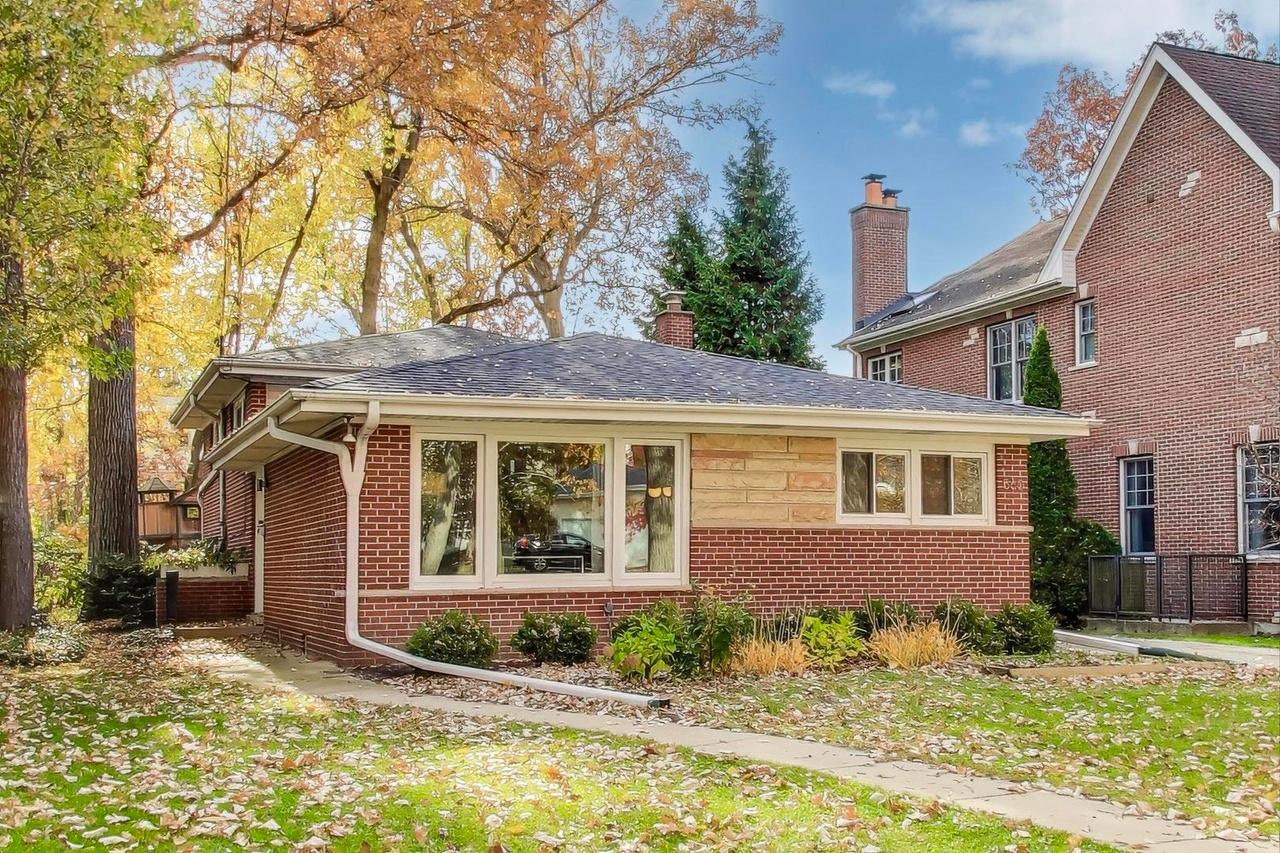
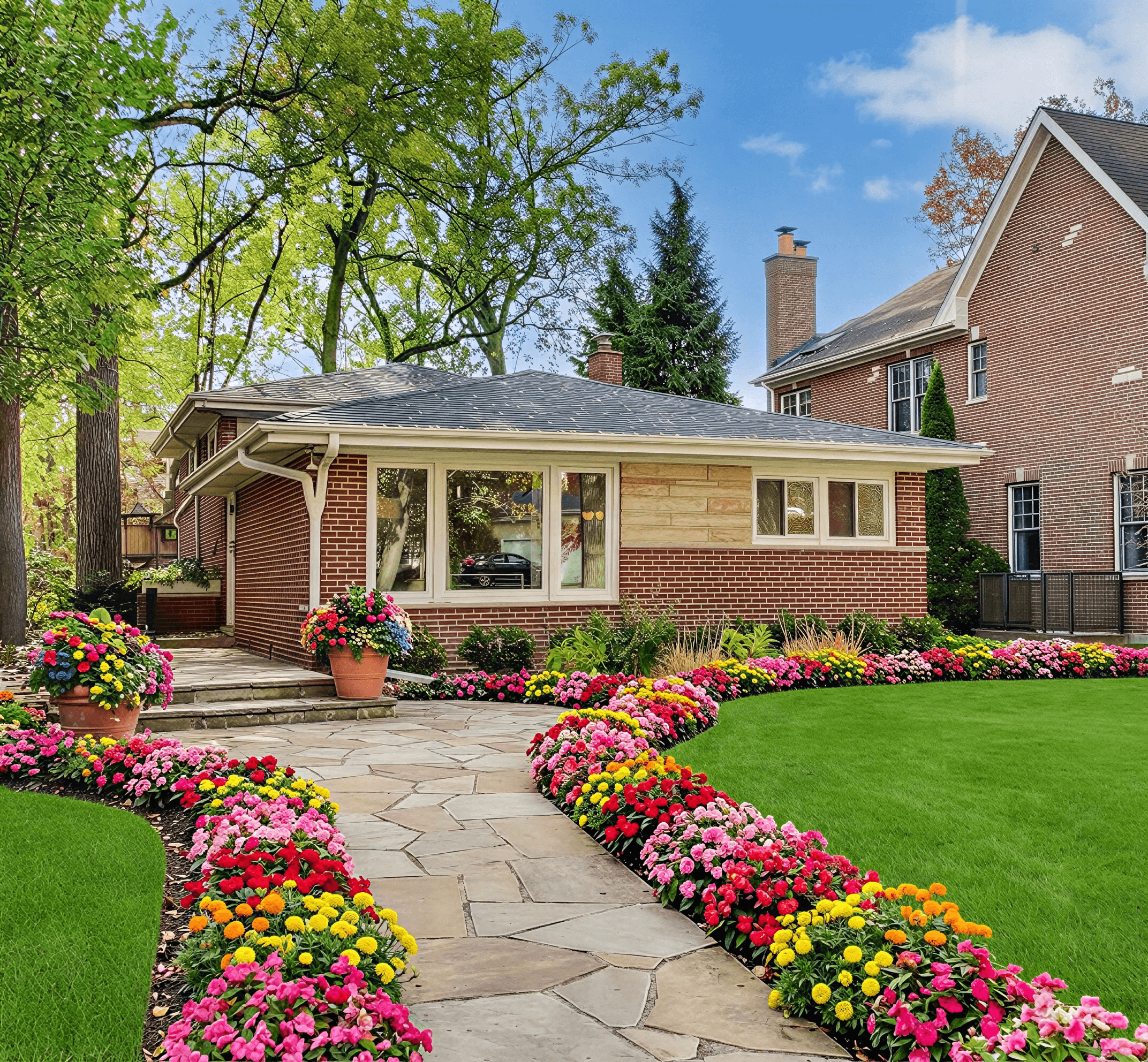
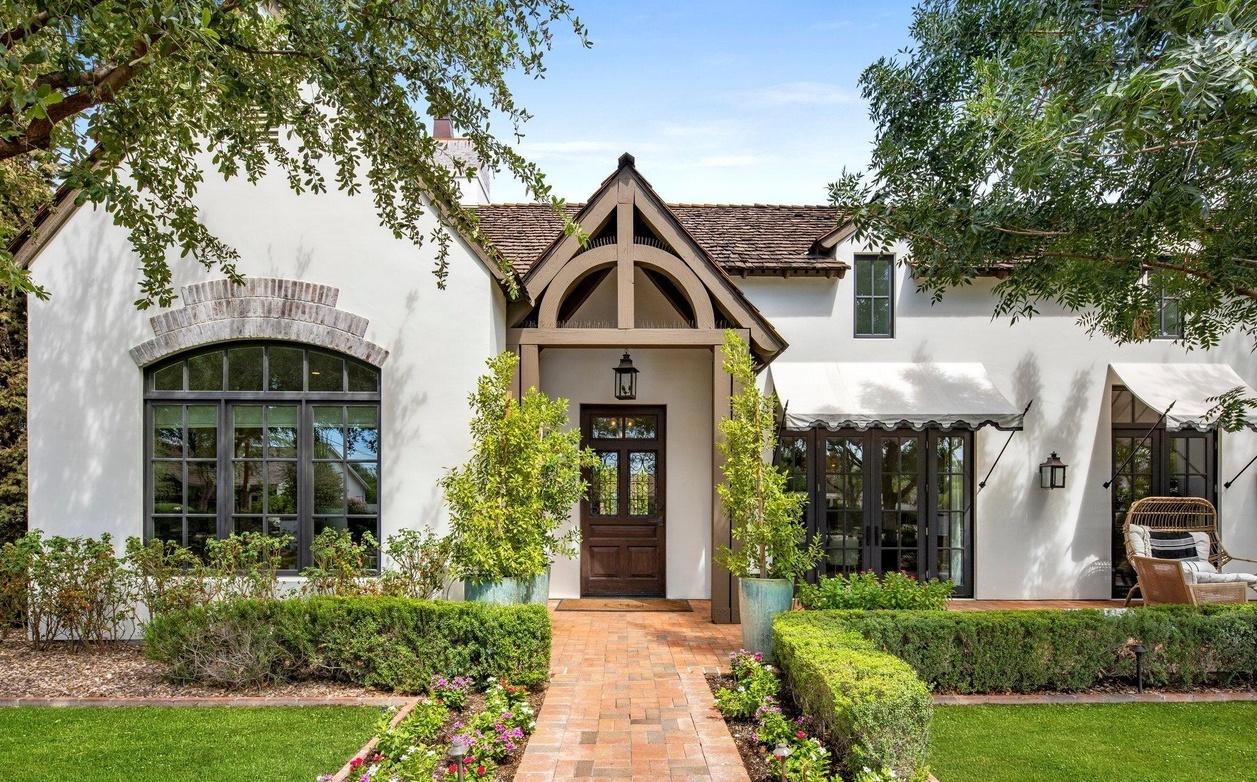
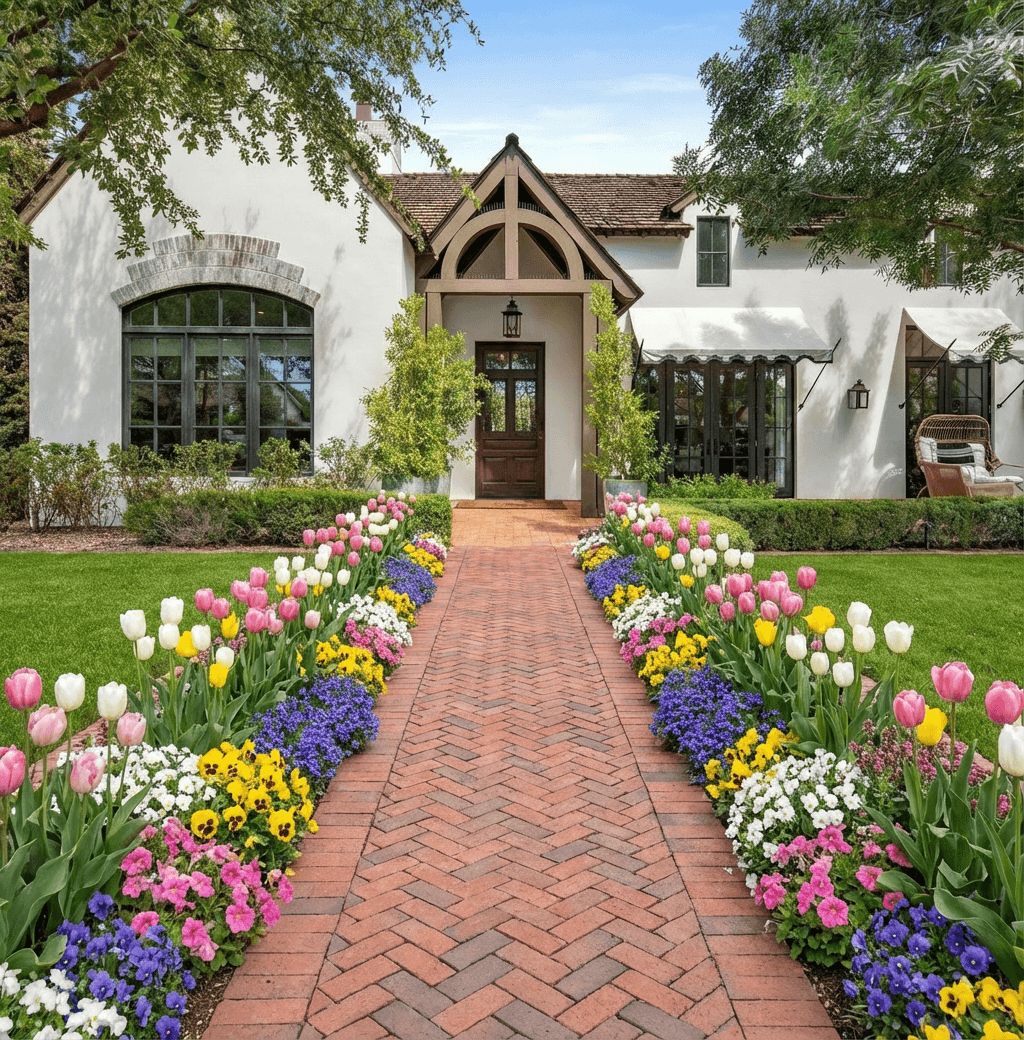
This is the point where Curb Appeal AI fits into the workflow. You upload a photo of the home exterior, use your sketch to guide what should change, and generate photorealistic concepts in different styles. The practical value isn’t that it replaces the thinking you already did. It helps you compare looks, materials, and planting character against the existing house, rather than trying to imagine everything from linework alone.
If a sketch settles layout, a render settles hesitation.
That matters when you’re choosing between two good ideas. A pencil line can suggest a front bed extension. A render shows whether that bed improves the facade or just makes the entry look crowded.
The strongest homeowners I’ve seen use both formats together. They sketch to solve space. They visualize to judge feel. That combination tends to prevent expensive second-guessing.
Pro Tips for Better Landscaping Drawings
The homeowners who get the most from easy landscaping drawings usually do a few simple things consistently. None of them require artistic skill. They just reduce confusion.
Small habits that make a big difference
-
Start with bubble diagrams
Before you draw exact shapes, draw loose bubbles labeled “sitting,” “screening,” “entry planting,” or “play area.” This keeps you focused on function before style.
-
Make a legend
If you invent symbols, write them down in a small corner box. Trees, shrubs, ornamental grasses, gravel, and lawn should all read clearly.
-
Check the view from inside
Stand at the front door, kitchen sink, living room, or main picture window. A planting bed that looks balanced from the sidewalk can feel too tall or too busy from indoors.
-
Leave room for maintenance
Narrow passages, over-tight foundation beds, and fussy bed edges often look better on paper than they work in practice.
-
Use one clean “presentation copy”
Keep your rough sheets messy. Then redraw one clean version that combines the good decisions. That’s the version you hand to a contractor, nursery, or spouse.
-
Pair the plan with visual options
This is especially useful for agents, contractors, and homeowners comparing approaches. Rapid concept variation helps people decide faster, and that kind of quick iteration fills a real need in proposal and listing workflows, as discussed in this guide to landscape design plans and consultation workflows.
-
Bring both the sketch and the render to conversations
The sketch explains placement. The visual explains character. Together, they reduce miscommunication better than either one alone.
The goal isn’t to draw like a designer. The goal is to think clearly enough that your yard gets built the way you intended.
A simple drawing gets you farther than most homeowners expect. Add a realistic visual after that, and you’re no longer guessing. You’re making decisions.
If you’ve already sketched your layout and want to see how it could look on your actual home, Curb Appeal AI can help you turn that rough plan into photorealistic exterior concepts you can compare, refine, and share with confidence.