What is Xeriscaping Landscaping: 2026 Guide
You look out at your front yard and see a lawn that asks for everything. Water. Weekend time. Fertilizer. Edging. Brown-patch troubleshooting. Then the water bill arrives, and suddenly that patch of grass feels less like curb appeal and more like a monthly subscription you didn’t mean to renew.
That’s where a lot of homeowners start asking the same question: what is xeriscaping landscaping, really? Is it all gravel and cactus? Is it only for desert homes? Does it mean giving up a beautiful yard?
It doesn’t. Xeriscaping is a practical way to design a yard that fits your climate instead of fighting it. It operates much like a financial budget, but for water. Instead of spending water everywhere and hoping for the best, you decide where it matters most, match plants to conditions, and build a yard that looks intentional all year.
What Xeriscaping Is and Where It Came From
A common homeowner story goes like this. The front lawn looked great in spring. By midsummer, parts of it turned dull and patchy. The sprinklers ran longer. A few replacement plants went in. Then weeds showed up where the grass thinned out. What looked simple from the street started becoming a constant cycle of maintenance.
Xeriscaping offers a different path. It isn’t one fixed look. It’s a method for creating an outdoor area that uses water carefully, relies on climate-appropriate plants, and still feels designed. You can build a xeriscape that looks modern, cottage-like, Mediterranean, southwestern, or clean and minimal. The key is not the style. The key is the strategy.
It’s not a style. It’s a system.
The easiest way to understand xeriscaping is to separate it from the stereotype.
A xeriscape is not automatically:
- A yard full of rocks: Stone can play a role, but plants still matter.
- A no-water yard: New plants need establishment, and every climate behaves differently.
- A desert-only idea: The principles work anywhere. The plant list changes by region.
What makes an area “xeriscaped” is the way it’s planned. You group plants by water needs, improve the soil appropriately, reduce thirsty turf, mulch exposed soil, and irrigate efficiently.
Practical rule: Xeriscaping means designing for the conditions you actually have, not the conditions you wish you had.
The origin gives the idea credibility
Xeriscaping wasn’t invented as a trend word. It was formalized in 1981 by the Denver Water Department in response to the severe 1980 to 1981 drought in Colorado, and the term combines “xero,” meaning dry, with “scape” for terrain, as described in this history of xeriscaping and Denver Water’s role.
That origin matters because it tells you what xeriscaping was built to do. It came from a real water problem and a practical need for outdoor areas that could still look good without heavy irrigation.
For homeowners, that makes xeriscaping less abstract. It’s not about stripping personality out of a yard. It’s about making smarter choices. If you’re already exploring drought-resistant landscaping ideas, xeriscaping is one of the clearest frameworks for turning those ideas into a yard that feels beautiful and manageable.
The Powerful Benefits of a Water-Wise Yard
You get home in July, glance at the front yard, and see the same frustrating pattern again. The grass near the sidewalk looks tired, one bed is drying out, another is staying too wet, and the water bill does not match how the yard looks. A water-wise yard solves that mismatch.
The biggest benefit is not just using less water. It is getting a front yard that looks more intentional because it is designed around the conditions your home already has. Xeriscaping works like a household budget for water. Instead of spending it evenly everywhere, you direct it where it creates the most visual value.

Significant water savings
Outdoor watering takes a large share of household water use. The U.S. Environmental Protection Agency explains that landscaping accounts for about one-third of residential water use, with much of it going to irrigation outdoors in its WaterSense information on outdoor water use.
For a homeowner, that matters because the front yard is often where water gets wasted most easily. Spraying a whole lawn on a fixed schedule is a little like cooling every room in your house with the windows open. Xeriscaping reduces that waste by matching plants to the site, shrinking high-water turf to the areas where you will use it, and holding moisture in the soil with mulch.
The result is a yard that asks for less from your hose, sprinklers, and monthly budget.
Less upkeep, with fewer repetitive chores
A conventional front yard often creates maintenance work that repeats every single week:
- Mowing: Even when only part of the lawn is growing fast
- Edging and trimming: Around walks, curbs, and beds
- Lawn repair: Reseeding bare spots and correcting patchy color
- Irrigation troubleshooting: Adjusting for dry corners, runoff, or overspray
A well-planned xeriscape shifts that workload. You usually trade constant correction for occasional care. Beds with the right mulch stay cleaner. Plants chosen for your climate need less coaxing. Irrigation zones are easier to manage because they are built around similar water needs instead of forcing every plant into one schedule.
If your water-wise plan includes stored irrigation water, basic upkeep matters there too. Homeowners who use tanks for watering outdoor areas may find this guide on maintaining poly water tanks helpful for keeping a system reliable over time.
Stronger curb appeal because the yard looks purposeful
Many homeowners worry that a low-water yard will look bare. In practice, the opposite is often true when the design is done well. A xeriscaped front yard tends to look composed because every part has a job. A small tree gives height. Grasses or shrubs add movement. Groundcovers soften the edges. Gravel, mulch, and stone create clean shapes that read well from the street.
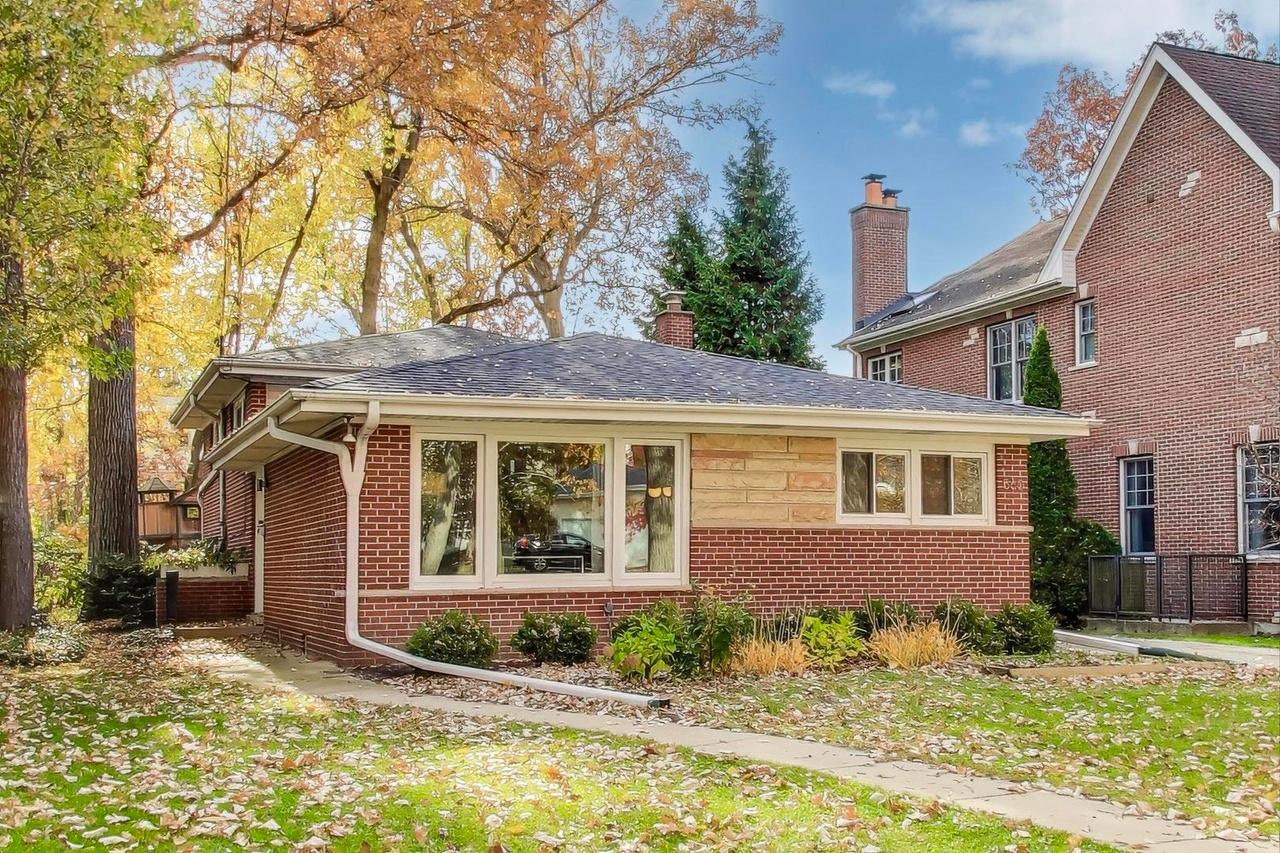
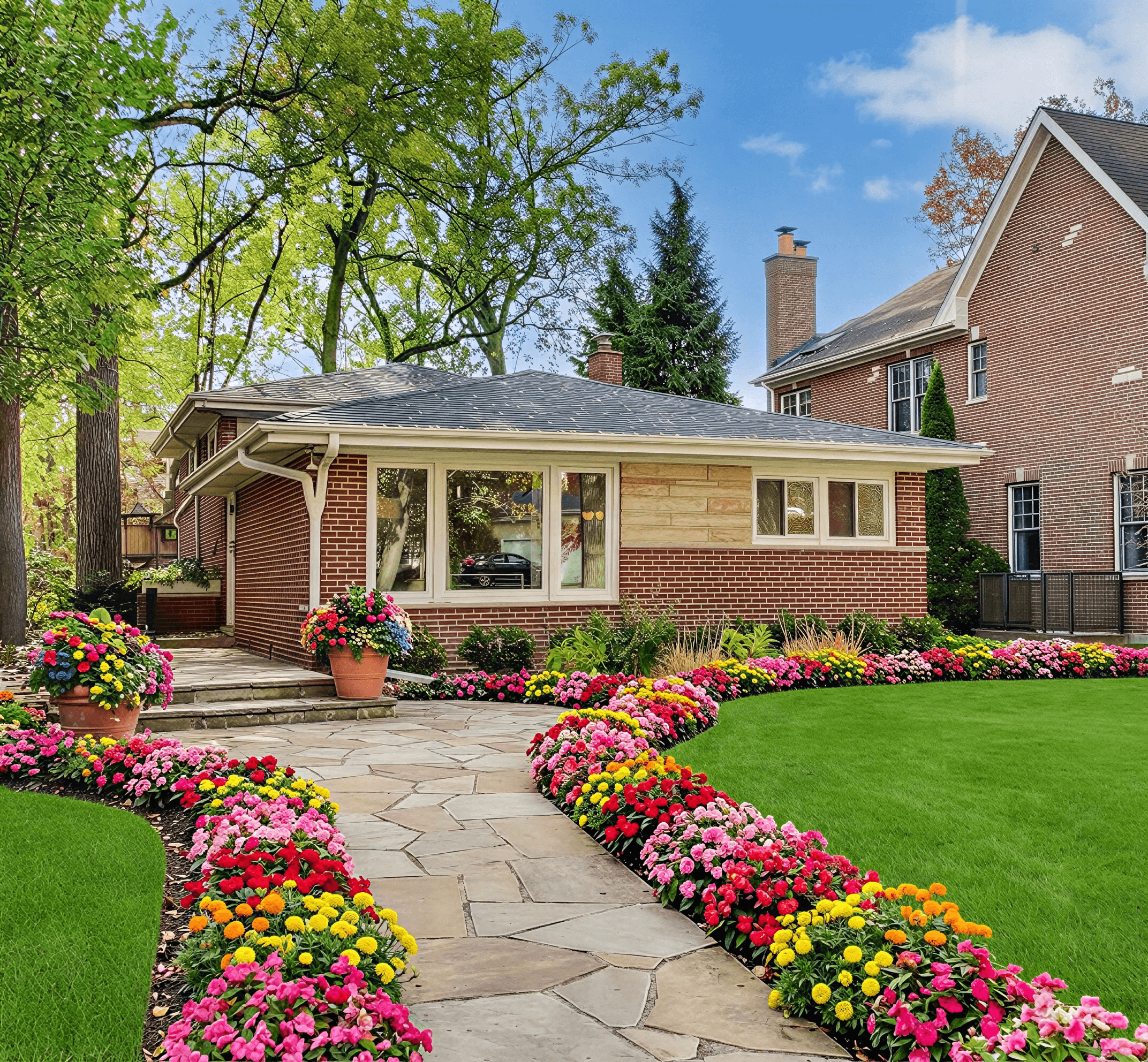
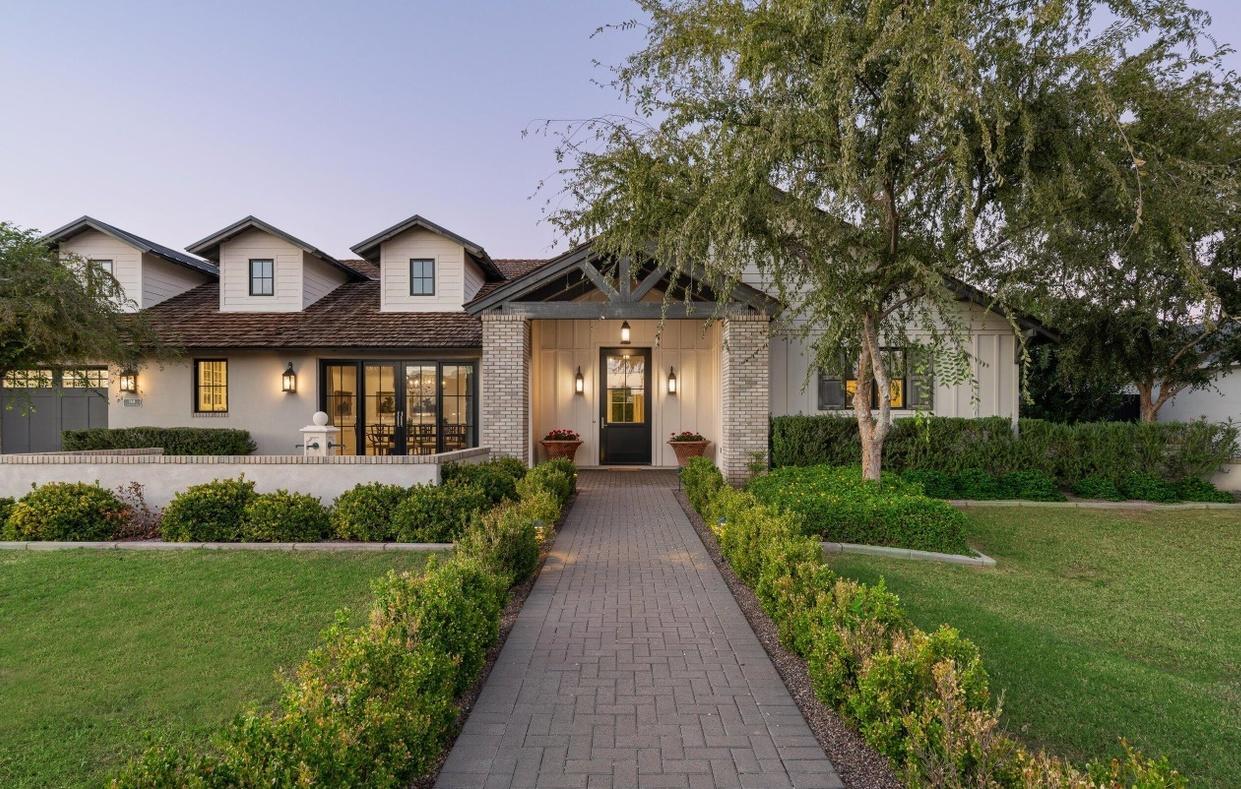
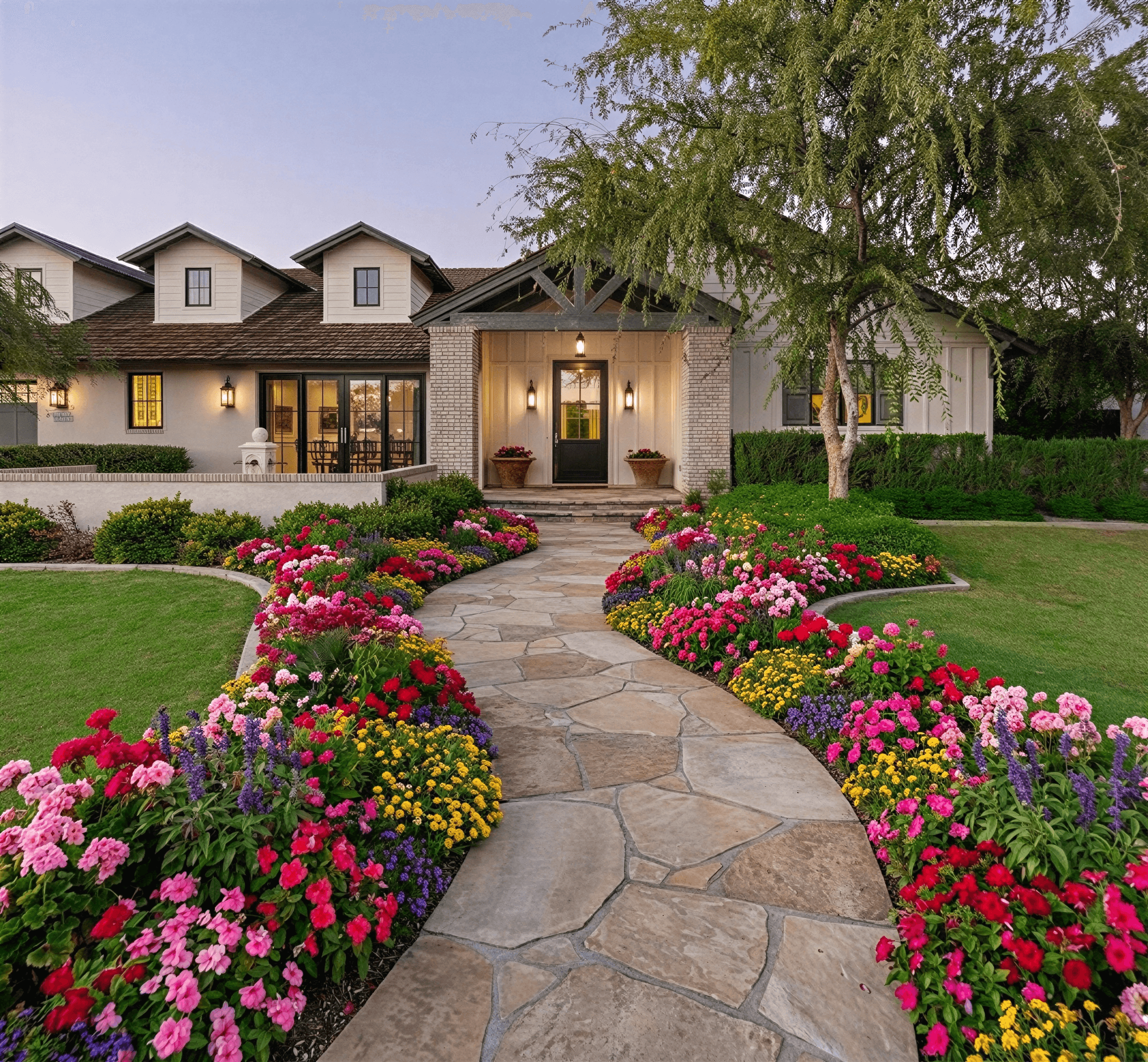
That is the bridge between theory and the result you can picture. Xeriscaping is not only about conservation. It is about creating a front yard that still feels finished, welcoming, and attractive in your climate. That is also why visual planning matters so much. Tools such as Curb Appeal AI can help you see how drought-tolerant plants, hardscape, and reduced turf could look on your actual home before you start digging.
A water-wise yard often feels more polished because it was designed with limits in mind, not in spite of them.
The 7 Core Principles of Xeriscaping Landscaping
The best way to understand xeriscaping is to see it as a recipe. Skip one ingredient, and the final result gets weaker. Follow the full method, and the pieces support each other.
According to Wikipedia’s overview of xeriscaping principles, the seven principles can produce water savings of 50 to 70% compared to traditional turf lawns, and two of the biggest drivers are hydrozoning and efficient irrigation. It also notes that overhead sprinkler setups can lose more than 30% of water to evaporation, which helps explain why plant placement and irrigation method matter so much.

Plan and design
Start with observation, not shopping. Watch where the sun hits, where water collects, where foot traffic happens, and what you use.
A good front-yard plan usually separates the space into practical zones:
- Entry zone: Near the walkway and porch, where you want the strongest visual welcome
- Feature zone: A bed, boulder grouping, specimen shrub, or small tree that gives the yard identity
- Low-input zone: Areas farther from the house that can stay simple and durable
Hydrozoning fits here. You place plants with similar water needs together so one thirsty plant doesn’t force extra irrigation for everything around it.
Improve the soil
Many homeowners often trip up here. They hear “improve the soil” and assume that means adding as much compost as possible. That can backfire with drought-adapted plants that prefer fast drainage.
The smarter move is to understand your existing soil first. Clay, sandy, and loamy soils all behave differently. Xeriscaping doesn’t ask you to make every bed rich and fluffy. It asks you to create the right root environment for the plants you’ve chosen.
Soil work in xeriscaping is about balance. Too little improvement causes establishment problems. Too much can hold more moisture than xeric plants want.
Use practical turf areas
Turf isn’t forbidden. It just needs a job.
If you want a patch of grass where kids play, where the dog runs, or where the view needs visual relief, keep it. But avoid narrow strips, awkward corners, and random lawn islands that are hard to irrigate efficiently and hard to mow cleanly.
A smaller, purposeful lawn almost always performs better than a large lawn that’s included by default.
A quick visual explanation can help if you want to see these principles in action:
Choose the right plants
This is often the first consideration, but it works best after the layout is set.
Look for plants that suit your region, your sun exposure, and your maintenance tolerance. “Drought tolerant” doesn’t mean every plant belongs in blazing afternoon sun. Some low-water plants still want part shade. Some need sharp drainage. Some look tidy naturally, while others need periodic shaping.
In a front yard, plant selection also affects how the home feels. Spiky forms like agave create drama. Grasses soften edges. Mounded shrubs add order. Flowering perennials keep the design from feeling static.
Irrigate efficiently
A xeriscape still needs water. The goal is to deliver it with precision.
Drip irrigation is useful because it puts water close to the root zone instead of spraying it into hot air. That’s one reason it outperforms many overhead setups. Smart controllers and thoughtful scheduling also help, but the biggest improvement often comes from not watering the wrong area in the first place.
Mulch exposed soil
Mulch is one of the quiet heroes of xeriscaping. It reduces moisture loss, suppresses weeds, and gives beds a finished look.
In dry-style settings, gravel mulch is common because it stays in place, complements arid plants, and reinforces a clean visual structure. Organic mulch can still work in some climates and planting areas, especially where a softer woodland look fits the home better.
Maintain with intention
Low maintenance isn’t no maintenance. New plants need monitoring while they establish. Drip emitters need occasional checks. Weeds still need to be removed before they seed.
The difference is that xeriscape maintenance is usually lighter and more targeted. You spend less time forcing growth and more time guiding a stable outdoor space.
Common Xeriscaping Myths and Mistakes to Avoid
The biggest barrier to xeriscaping usually isn’t technical. It’s visual. People hear the word and immediately picture a yard covered in gravel with three cacti and no shade.
That image leaves out most of what xeriscaping can be.

Myth one: it’s just rocks and cactus
Some xeriscapes do use cactus, agave, and gravel beautifully. But that’s one expression of the idea, not the whole category.
A xeriscape can include flowering salvias, ornamental grasses, evergreen shrubs, groundcovers, and even a small lawn area if it serves a purpose. In cooler regions, it might look lush and layered rather than stark. The common thread is water-smart design, not a desert stereotype.
Myth two: it means zero water and zero work
This misunderstanding causes poor results. New plants need regular care while roots establish. Beds still need seasonal cleanup. Irrigation still needs monitoring.
What changes is the amount and type of effort. You’re no longer trying to keep every square foot equally thirsty and equally green. That usually makes the area easier to manage, but it doesn’t make it self-running.
A good xeriscape asks for attention in the beginning and much less correction later.
Myth three: it only works in desert climates
The principles work broadly. What changes is the plant palette and material balance.
In a dry hot climate, you may lean into gravel mulch, succulents, and sun-loving shrubs. In a milder region with dry summers, you might use lavender, rosemary, festuca, and structural evergreens. In a cooler place, xeriscaping can still mean reducing turf, grouping plants by water needs, and avoiding wasteful irrigation.
Mistakes that quietly ruin the result
A few design errors show up again and again:
- Overusing rock without plants: This can make the yard feel harsh and unfinished.
- Keeping too much random turf: Small leftover lawn patches create maintenance headaches.
- Ignoring mature plant size: A clean plan turns crowded fast when spacing is too tight.
- Mixing opposite water needs together: One overwatered plant can drag the whole bed into trouble.
Front-Yard Xeriscape Designs and Plant Palettes
Front yards need to do two jobs at once. They have to function for your home, and they have to read well from the street. That’s why xeriscaping in the front yard works best when the design feels intentional, not improvised.
A strong xeriscape front yard usually has three layers: structure, softness, and open space. Structure comes from boulders, shrubs, edging, or a small tree. Softness comes from grasses, perennials, and groundcovers. Open space gives the eye a place to rest.
Design moves that make a front yard feel polished
Try these ideas when you sketch your layout:
- Use curved planting beds: Curves often look more natural than rigid strips along the foundation.
- Create one focal point: A specimen agave, a sculptural shrub, or a boulder grouping can anchor the whole yard.
- Repeat plant groups: Repetition makes an outdoor space look designed, even with a small plant list.
- Limit lawn to useful space: Colorado State guidance notes that keeping turf under 20% of the overall area is a key xeriscaping strategy, and that gravel mulch at 4 to 10 cm can reduce evapotranspiration by 40 to 60% versus bare soil, as explained in this Colorado State horticulture guide to xeriscaping principles.
If you’re mixing planting with walls, edging, steps, or stone paths, it helps to understand how those hardscape choices shape water flow and visual balance. This guide to advanced hardscaping techniques is useful for seeing how paving, retaining elements, and transitions can support a xeriscape instead of competing with it.
Sample Xeriscape Plants by Climate Zone
Use this table as a starting point, not a universal plant prescription. Local nurseries and extension guidance can help you narrow choices for your exact site.
| Climate Type (Example Zones) | Perennials & Flowers | Grasses & Groundcovers | Shrubs & Structural Plants |
|---|---|---|---|
| Hot and dry (example USDA 8 to 10) | Salvia, penstemon, yarrow, gaillardia | Bermudagrass for limited turf areas, blue grama, trailing lantana | Agave, yucca, Texas sage, red yucca |
| Moderate with dry summer (example USDA 7 to 9) | Lavender, catmint, coreopsis, echinacea | Festuca, creeping thyme, sedum | Rosemary, rockrose, dwarf olive, juniper |
| Cooler and water-wise (example USDA 4 to 7) | Russian sage, nepeta, black-eyed Susan, allium | Fine fescue, creeping phlox, hardy sedum | Potentilla, serviceberry, dwarf pine, sumac |
| Mediterranean-style front yard (mild winters, dry summers) | Verbena, santolina, salvia, verbascum | Carex, thyme, low-water bunch grasses | Lavender hedge, olive, cistus, artemisia |
| Southwestern look (sunny and exposed) | Desert marigold, penstemon, globe mallow | Buffalo grass in small use zones, native grama grasses | Agave, sotol, ocotillo-style accents where appropriate |
How to make it look like a real yard, not a plant collection
The difference between a beautiful xeriscape and a random one often comes down to composition.
Group plants in drifts instead of planting one of everything. Use fewer species, repeated more confidently. Let taller forms sit behind lower ones. Keep the area near the walkway tidy and legible. Then allow more texture and looseness farther from the entry.
For visual inspiration tied specifically to curb-facing layouts, these front-yard xeriscaping ideas can help you compare different styles and decide what fits your house.
Your Simple Xeriscaping Planning Checklist
If xeriscaping has felt like a big concept up to this point, shrink it down to a site checklist. That makes the project easier to start and much easier to discuss with a contractor or nursery.
Start with what your yard is already telling you
Walk the front yard at different times of day and note:
- Sun exposure: Full sun, part shade, and hot reflected areas near pavement
- Drainage: Spots that stay wet, dry out fast, or shed water downhill
- Traffic patterns: Where people walk, park, or cut across the yard
- Views: What you want to highlight from the street and from the front windows
Then build a simple first draft
You don’t need a formal site plan to begin. A rough sketch works.
- Draw the house, driveway, walk, and porch
- Mark your high-use lawn area, if any
- Create hydrozones based on likely water needs
- Choose a few structural plants first
- Fill around them with perennials, grasses, or groundcovers
- Decide where mulch and hardscape belong
- Select an irrigation approach that matches the layout
Keep your first plan simple enough that you can explain it in one minute. If you can’t, it’s probably trying to do too many things.
One more tip matters here. Buy fewer plants than your impulse tells you to. Leave room for mature size. New xeriscapes often look sparse for a season, then settle into a much stronger composition than an overcrowded planting ever will.
Visualize Your Perfect Xeriscape with Curb Appeal AI
The hardest part of a xeriscape project usually isn’t understanding the principles. It’s picturing the finished yard before you spend money.
That’s where visualization helps. Instead of trying to imagine gravel color, plant massing, turf reduction, and foundation beds from a hand sketch alone, you can start with a photo of your house and test ideas visually. If you want to see how AI fits into that process, this overview of AI for landscape design explains the broader workflow.
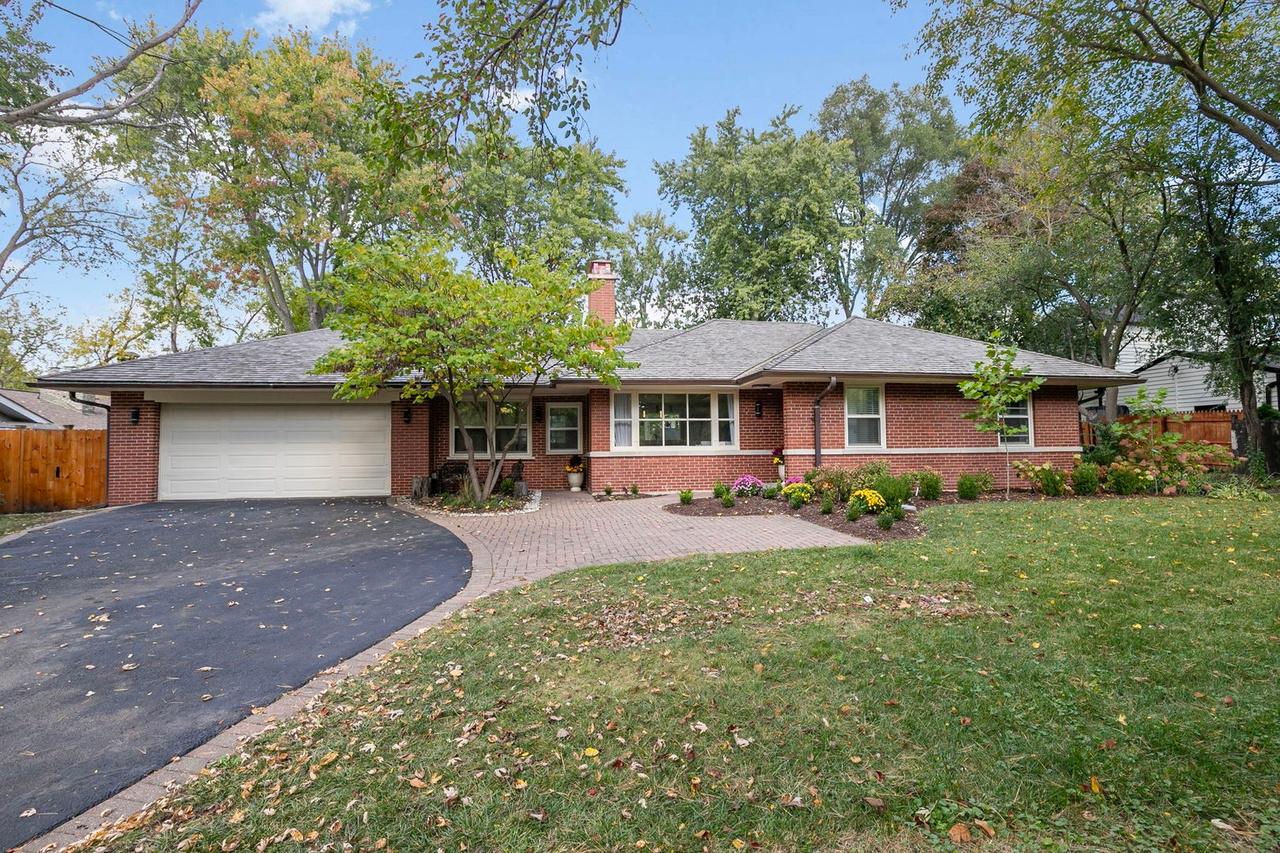
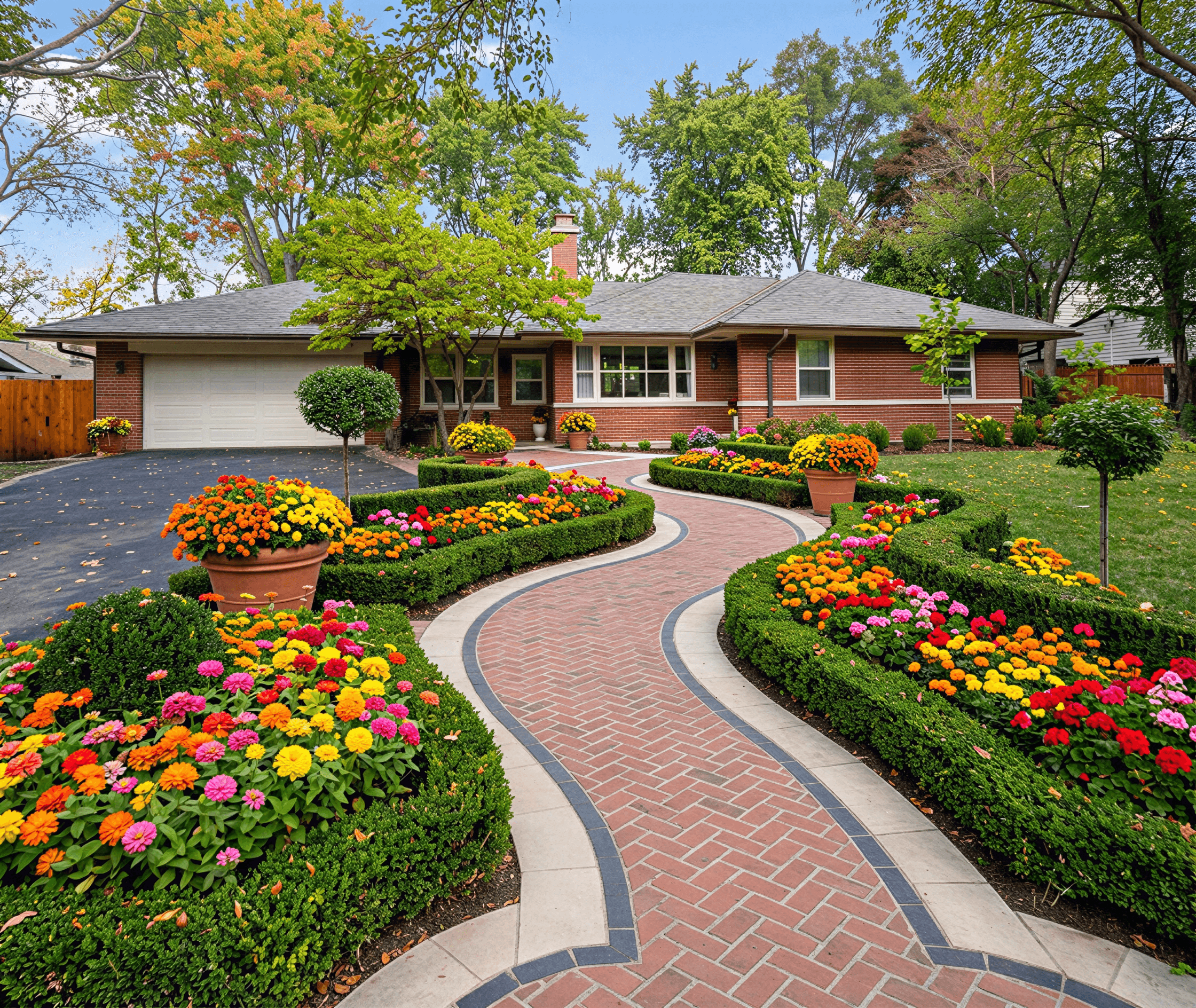
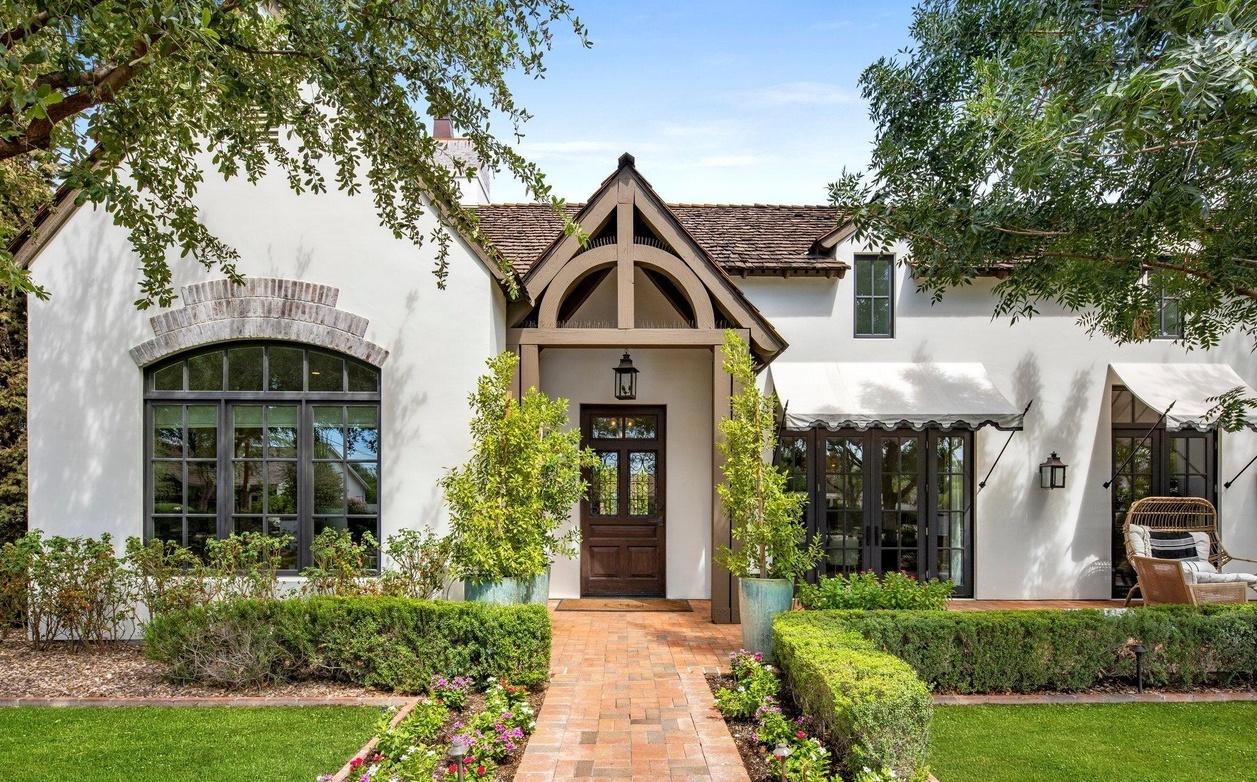
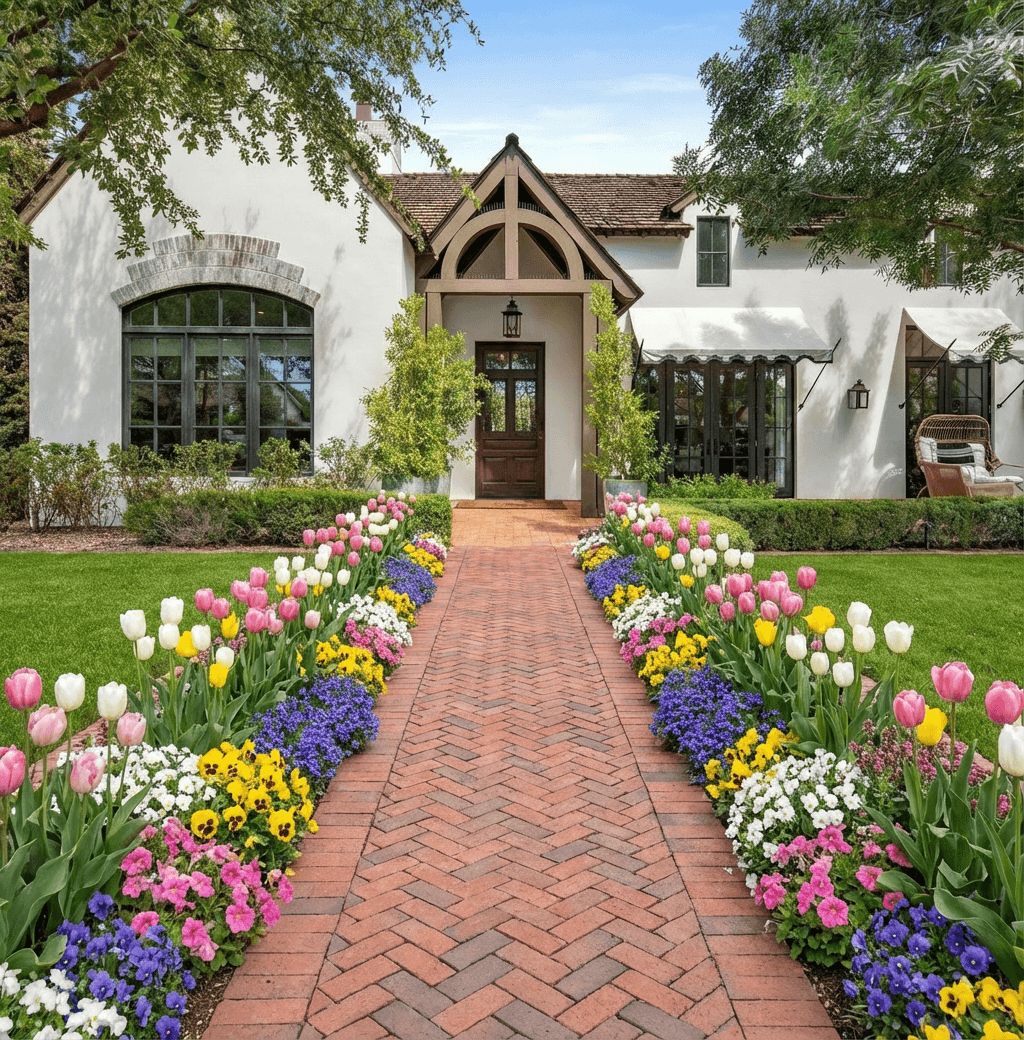
One practical option is Curb Appeal AI. It lets users upload a home photo, choose a Desert/Xeriscaping style, and generate photorealistic exterior concepts designed for the architecture and local climate. For homeowners, that makes it easier to compare whether a yard should lean more modern, more naturalistic, or more structured before calling a contractor or buying materials.
That kind of preview is especially helpful with xeriscaping because the final result depends so much on composition. The same principles can produce a clean contemporary front yard, a soft pollinator-friendly entry, or a southwestern look with strong sculptural forms. Seeing those directions side by side can prevent expensive guesswork.
Use the technology as a planning tool, not a replacement for judgment. You still need to confirm plant suitability, spacing, drainage, and installation details. But a realistic visual can turn a vague idea into a plan you can act on.
If you're ready to see how a water-wise front yard could look on your actual home, try Curb Appeal AI. Upload a photo, test a xeriscaping style, and compare design directions before you commit to plants, stone, or irrigation changes.