Desert Potted Plants Landscape Design — Austin, TX
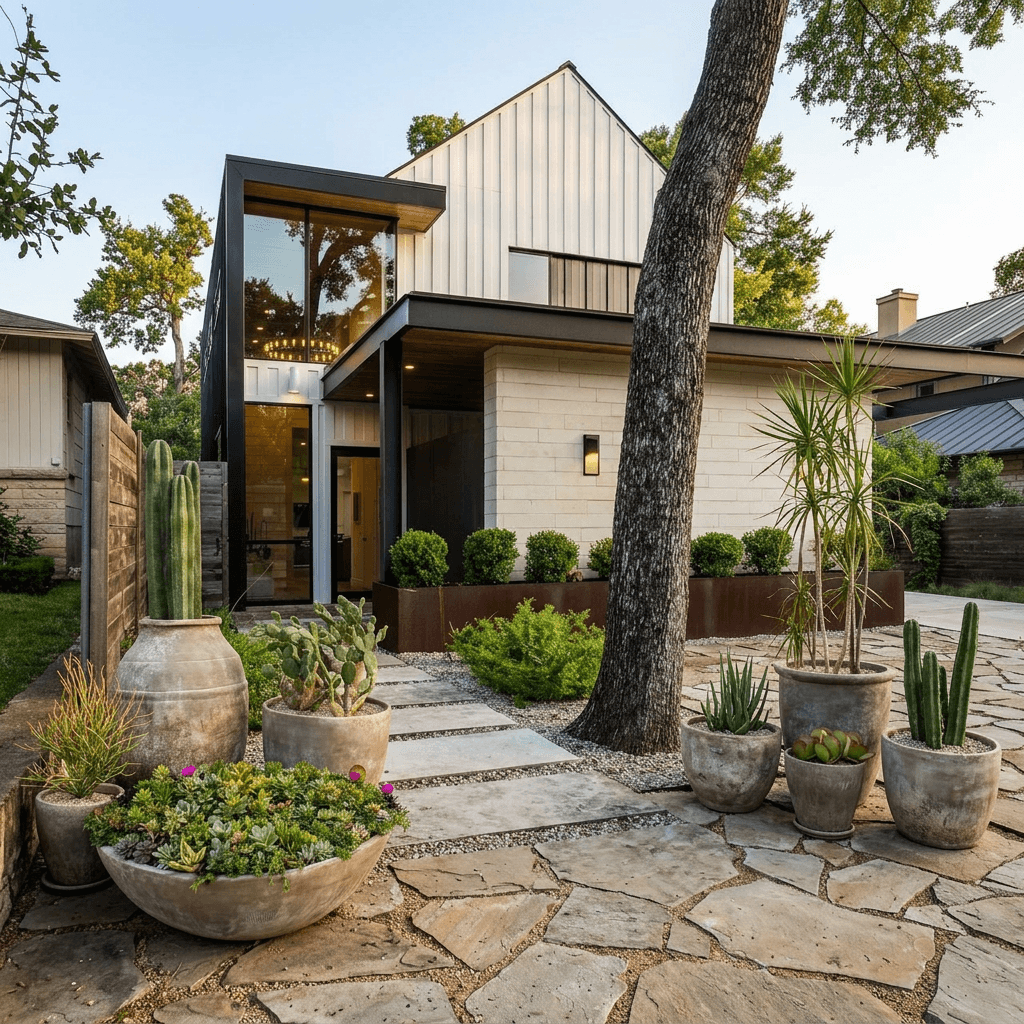
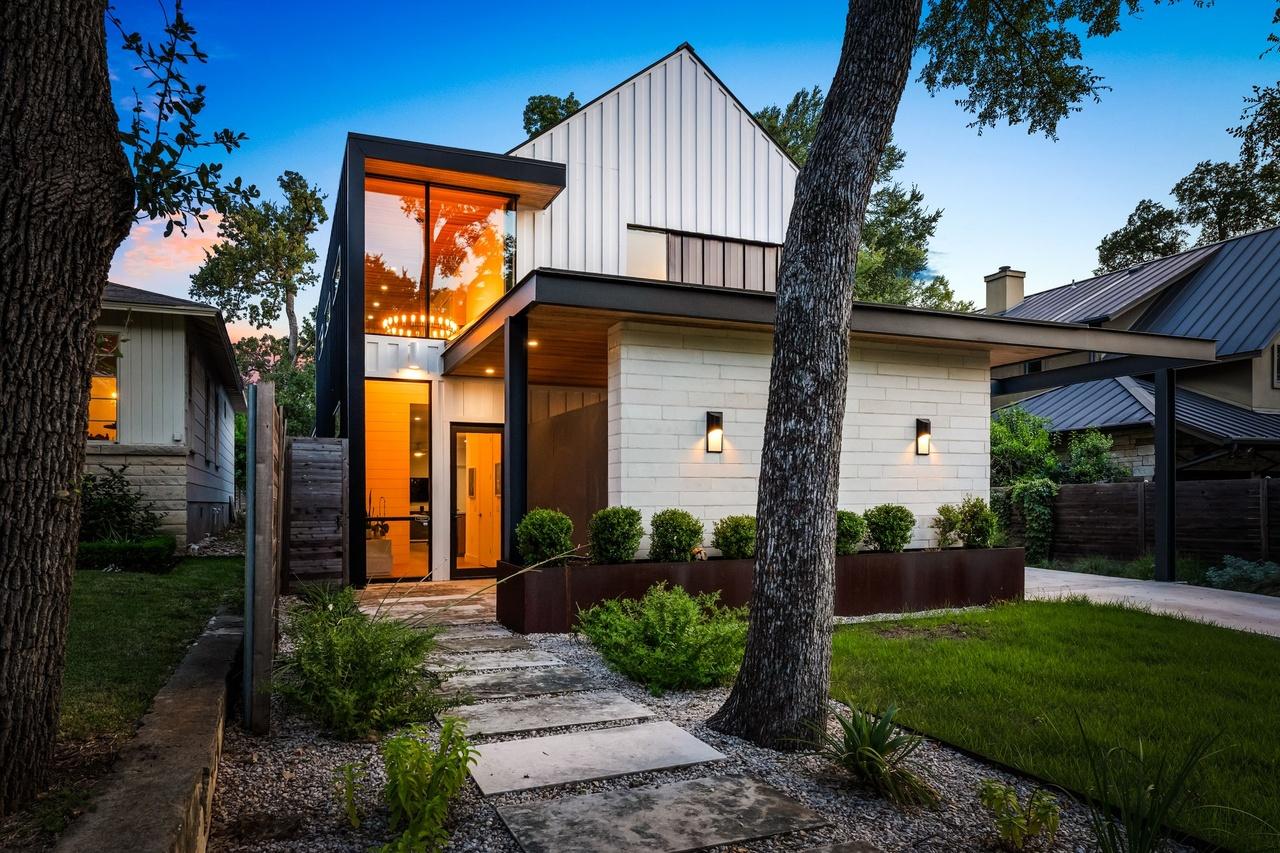
Before
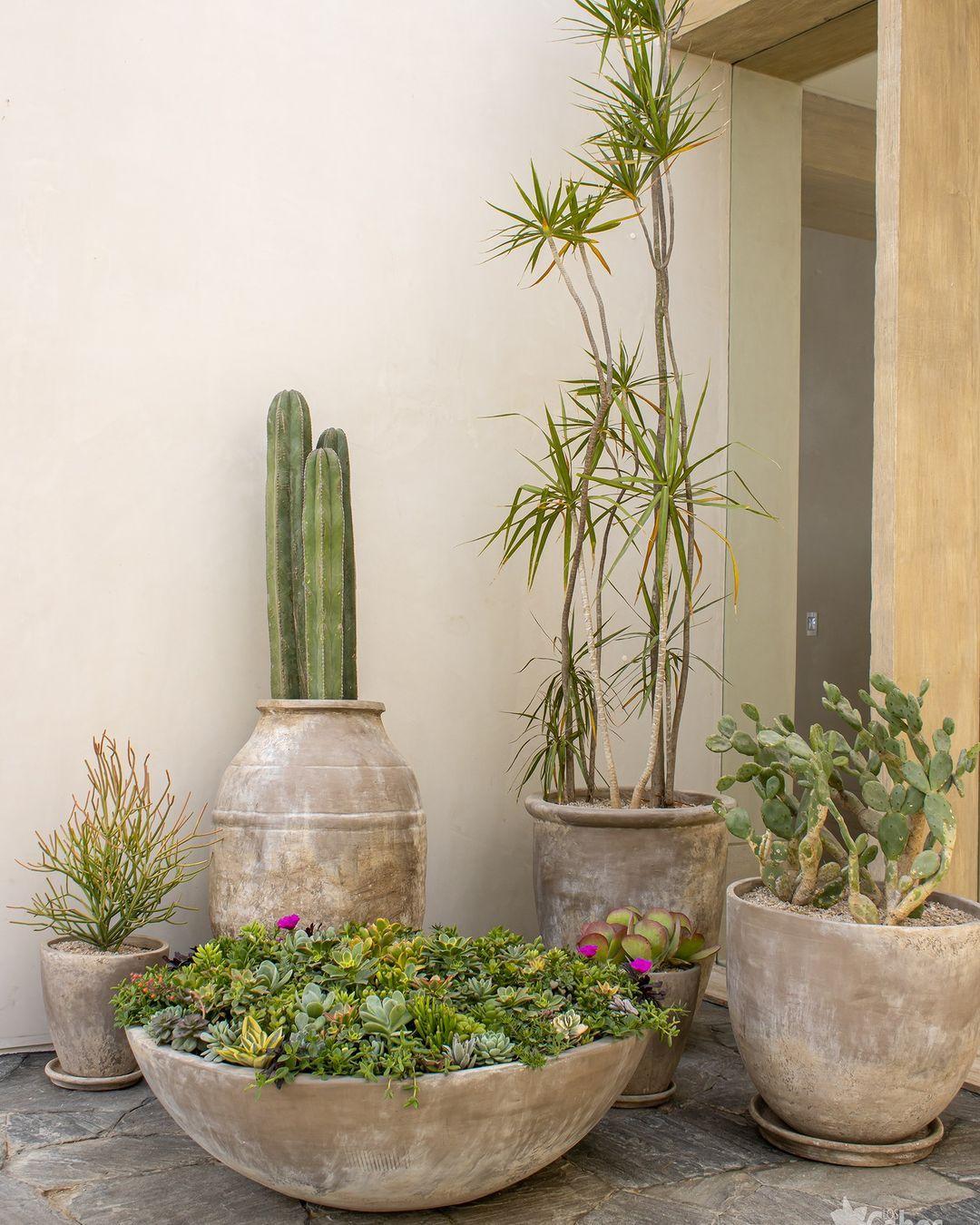
Inspiration
Remove Existing Materials
Clear the area of any old materials where the new stone path and patio will be installed.
1-2 daysInstall Stone Pathway and Patio
Lay down the stone tiles and flagstone to create a cohesive pathway and patio area.
2-4 daysPlace and Arrange Potted Plants
Position the ceramic pots with new plants around the entryway to enhance the aesthetic.
1-2 daysApply Mulch and Decorative Gravel
Refresh and apply new mulch and gravel around existing and new plants.
1 dayThe home exterior has undergone a transformation focusing on enhancing its landscaping and hardscape elements.
The home exterior has undergone a transformation focusing on enhancing its landscaping and hardscape elements. The addition of diverse potted plants and upgraded stonework creates a welcoming entryway, significantly improving curb appeal.
$5,000 - $9,500
Why this desert style suits Austin
Austin’s hot, late-spring to summer climate favors low-water plantings and heat-tolerant materials. The design uses succulents, prickly pear, and columnar cacti in large ceramic pots to reduce irrigation needs while keeping a predominantly green palette with magenta and pink bloom accents. Replacing or refreshing mulch and decorative gravel around pots and existing plantings minimizes evapotranspiration, and a new flagstone patio and stone pathway provide durable, heat-reflective hardscape. These choices match Austin’s climate and municipal water concerns while preserving the original driveway and yard layout described in the build plan.
Plants and materials used on the project
This build focused on potted specimens and natural stonework: large ceramic pots holding a layered planting of dense low-growing succulent groundcover in broad shallow bowls, taller columnar cacti and prickly pear in individual pots, plus a single dragon tree for vertical contrast. Hardscape materials include irregular flagstone for the patio and natural stone tiles to extend the pathway. Mulch and decorative gravel top-dress container soil and surrounding beds. Professional installation placed and arranged pots for balanced groupings. Curb Appeal AI was used to visualize pot placement and flagstone patterns before installation so the layout matched the homeowner’s eye-level viewpoint.
Typical cost breakdown for this transformation
The project budget range was $5,000 - $9,500. Expect hardscaping (flagstone patio and stone pathway) to consume a significant portion — roughly 40–60% — of that budget. Plant materials (large ceramic pots, succulents, columnar cacti, prickly pear, dragon tree) and top-dress gravel plus mulch are typically 20–30%. Professional installation labor and site prep account for the remainder. Specific costs depend on pot size, flagstone type, and labor rates; for Austin projects like this the build plan summary lists professional installation and stonework as primary cost drivers within the stated $5,000 - $9,500 range.
DIY versus hiring professionals
Some homeowners can handle placing pots, applying decorative gravel, and arranging succulents over 1–2 days, but installing a flagstone patio and extending a stone pathway generally requires pro skill and equipment and takes 2–4 days plus site prep. The project’s build steps list removing existing materials (1–2 days), installing stonework (2–4 days), placing and arranging potted plants (1–2 days), and applying mulch/gravel (1 day). Hiring professionals covers grading, stable flagstone placement, and pot drainage details; that professional installation is included in the build plan and budget range.
Frequently Asked Questions
How much does desert landscaping cost in Austin?
For a potted-plant focused desert transformation with a new flagstone patio and stone pathway, expect roughly $5,000 - $9,500. Costs vary by flagstone type, number and size of ceramic pots, and labor for professional installation.
Is desert landscaping worth it for curb appeal?
Yes — well-composed groupings of ceramic pots with succulents, columnar cacti, and a focal dragon tree plus a flagstone patio can greatly improve curb appeal while reducing water use. The build plan shows the upgrade to stonework and potted plants is an effective visual and functional update.
What maintenance does this desert style require?
Maintenance is relatively low: occasional deep watering for potted succulents, seasonal removal of spent blooms, periodic top-dress refresh of coarse gravel, and light pruning of columnar cacti or dragon tree as needed. Check pot drainage and adjust watering in winter or extreme heat.
Can I install this project myself or should I hire a pro?
You can DIY simpler tasks like pot placement and gravel top-dress, but the flagstone patio and stable stone pathway usually need professional installation for proper base, leveling, and drainage. The build steps estimate 6–9 total days including pro work.
Related Transformations
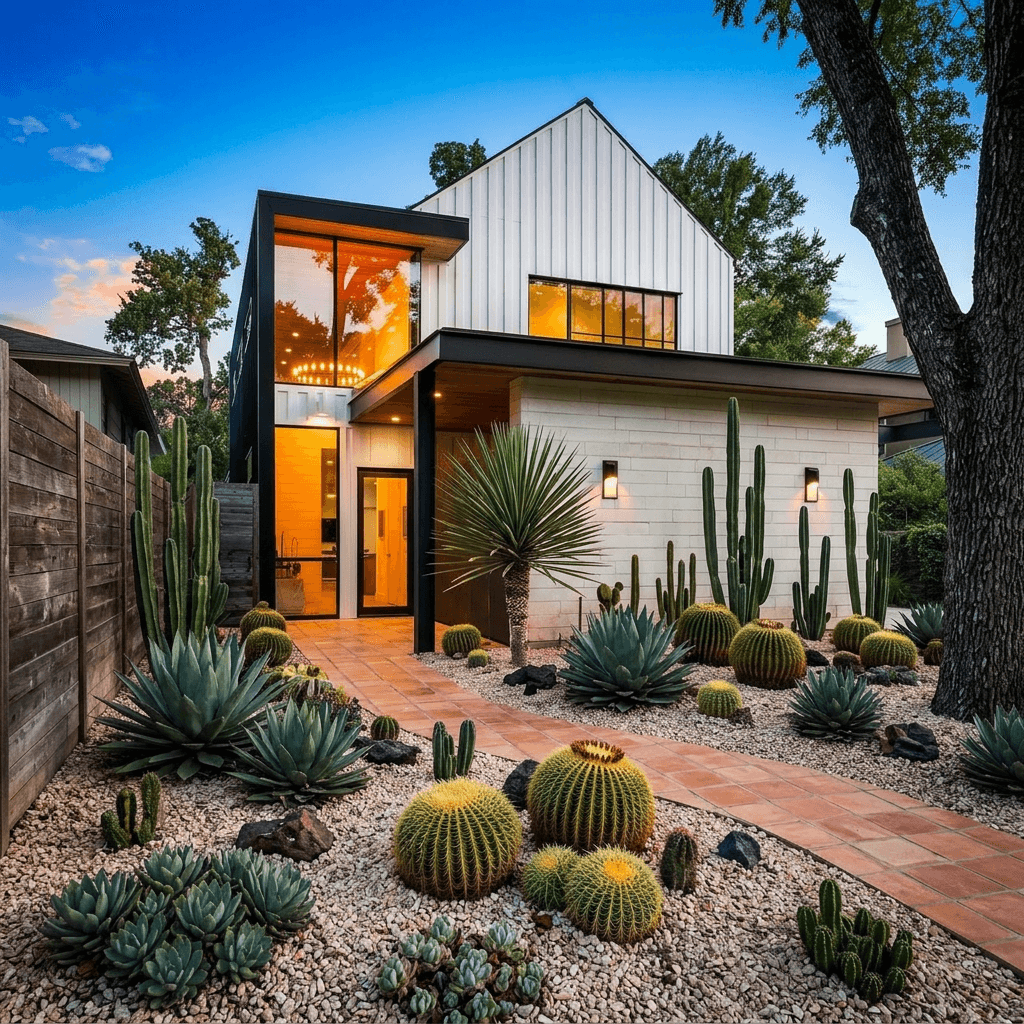
The transformation involves a shift to a desert-themed landscape with the replacement of grass and small shrubs by cacti and succulents, along with gravel and stone ground cover replacing sod.
$17,500 - $27,000
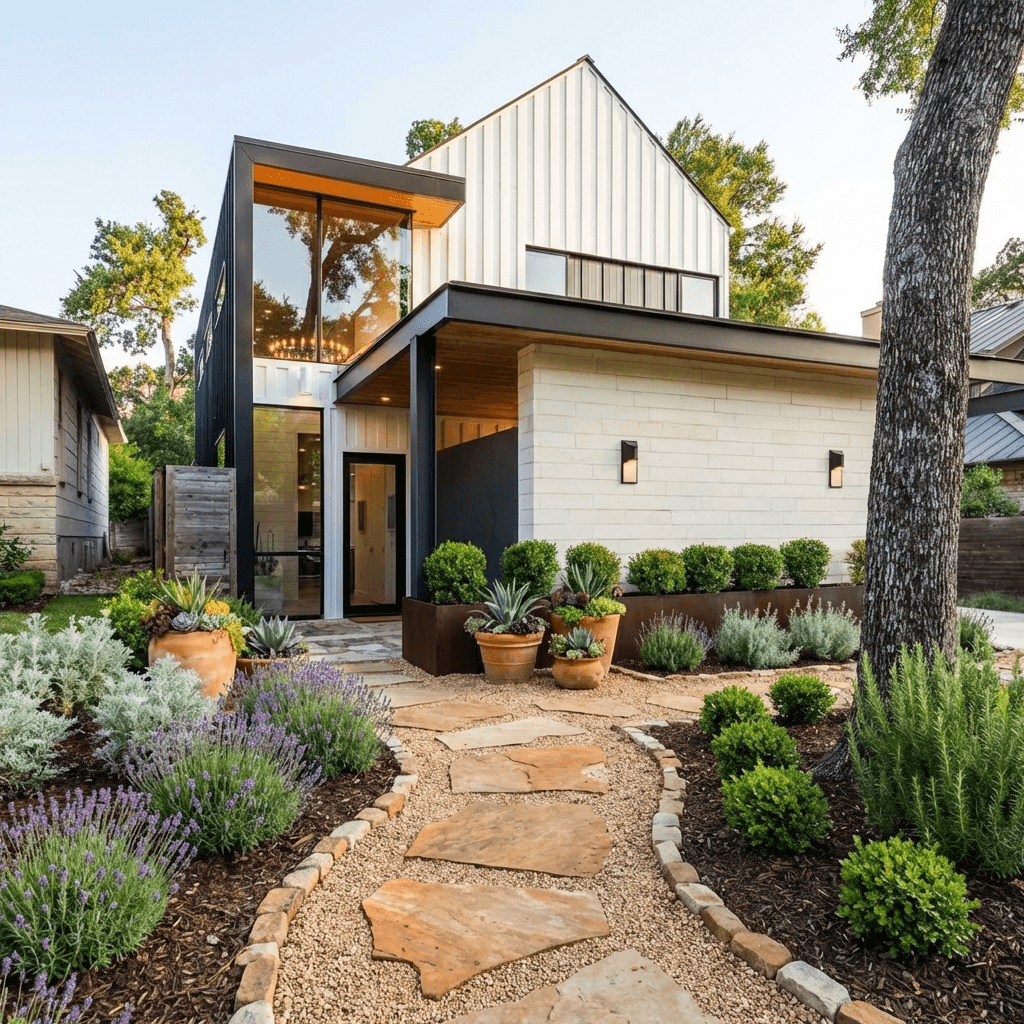
The home exterior underwent a transformation focused on enhancing the landscape and hardscape design.
$11,500 - $17,200
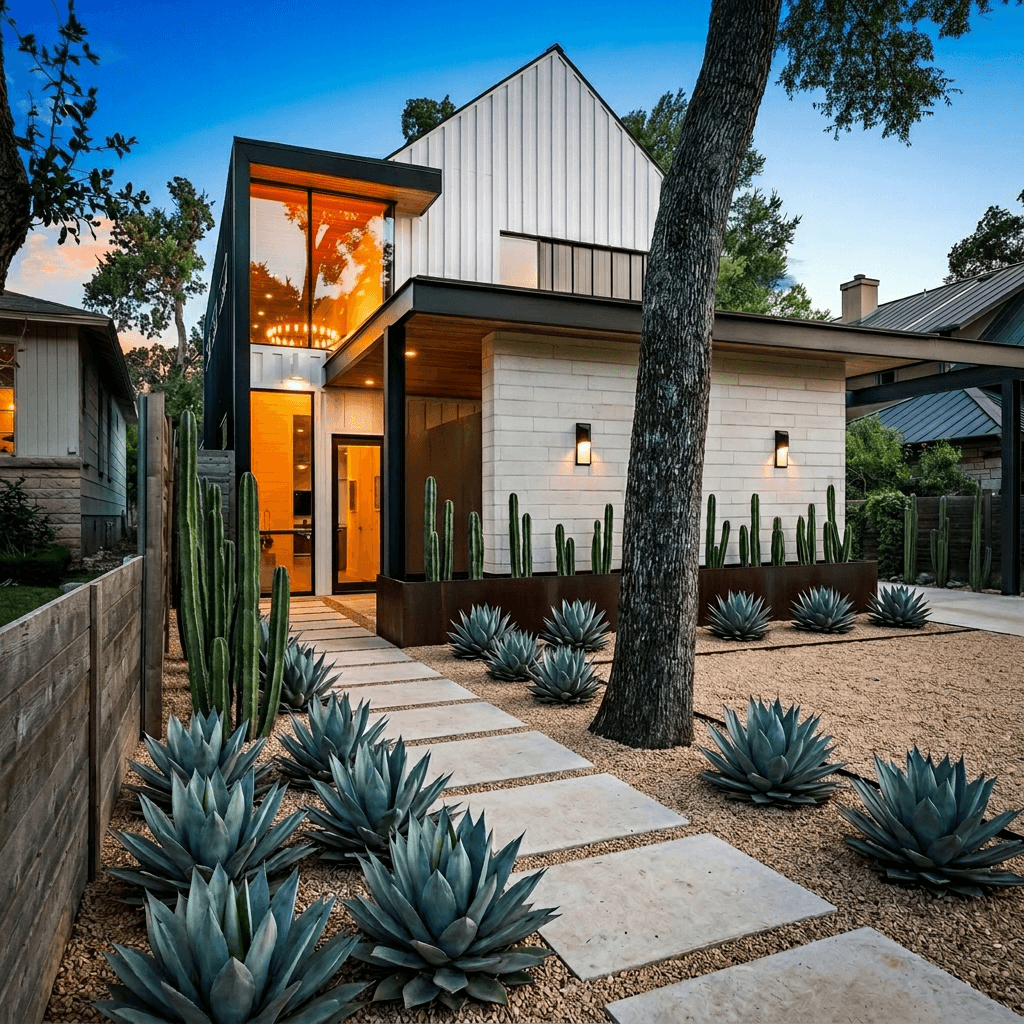
The home exterior has undergone a transformation featuring a shift to a more arid and contemporary landscaping design.
$12,000 - $17,000
More Transformations
The home exterior underwent a transformation focused on enhancing the landscape and hardscape design.
$11,500 - $17,200
The transformation involves a shift to a desert-themed landscape with the replacement of grass and small shrubs by cacti and succulents, along with gravel and stone ground cover replacing sod.
$17,500 - $27,000
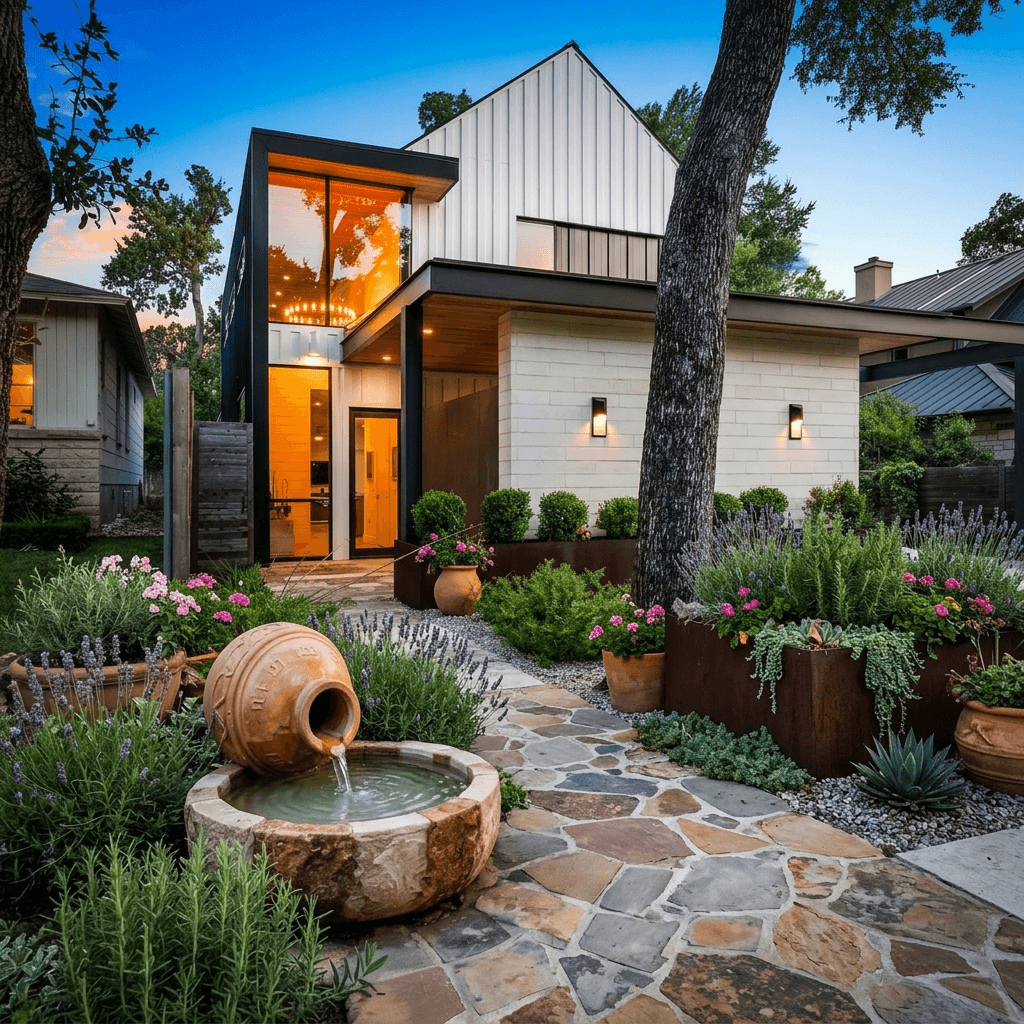
The home's exterior transformation includes extensive landscaping with added plants and flowers, a stone fountain feature, and a new stone walkway replacing the previous path.
$10,500 - $15,200
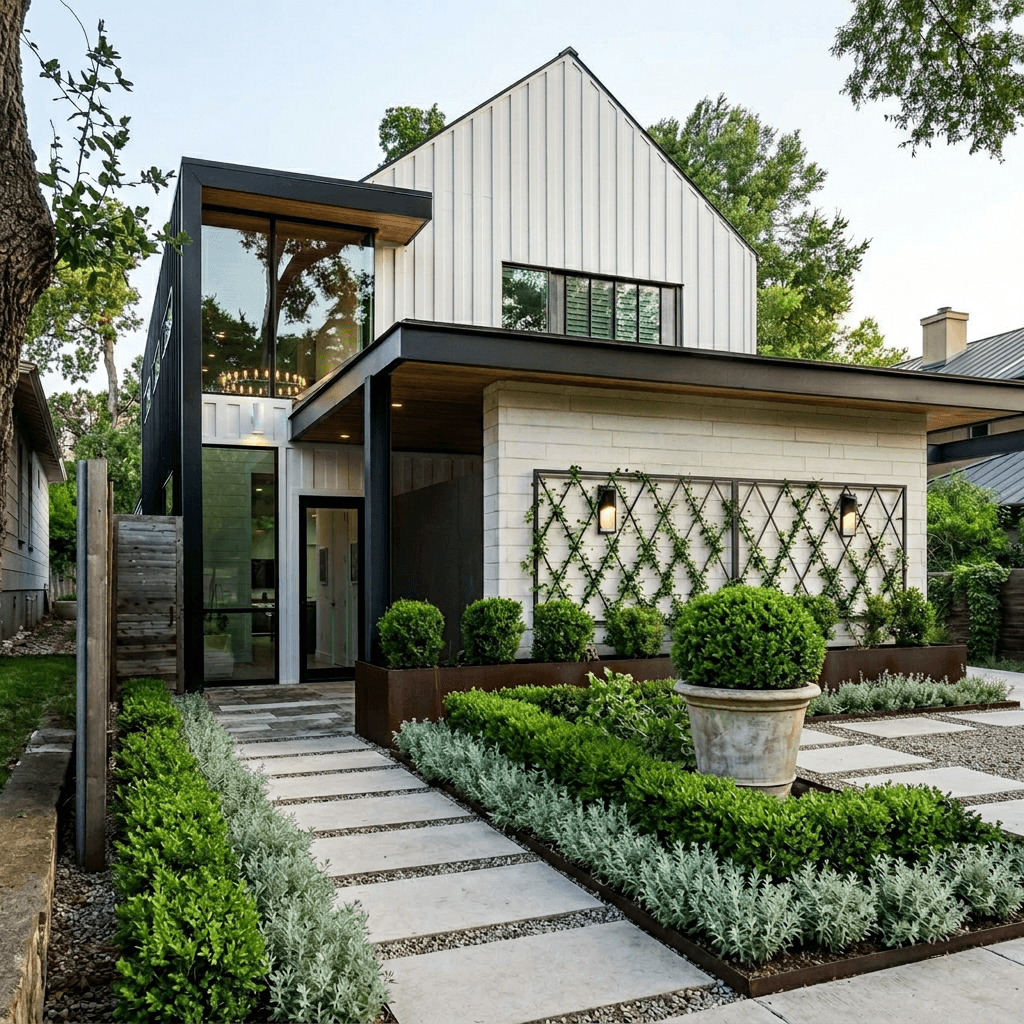
The transformation includes enhanced landscaping with new plants and planters, additional trellis work on the facade, and an upgraded pathway.
$10,000 - $15,000
The home exterior has undergone a transformation featuring a shift to a more arid and contemporary landscaping design.
$12,000 - $17,000