Desert Cacti & Succulents Front Yard Design — Austin, TX
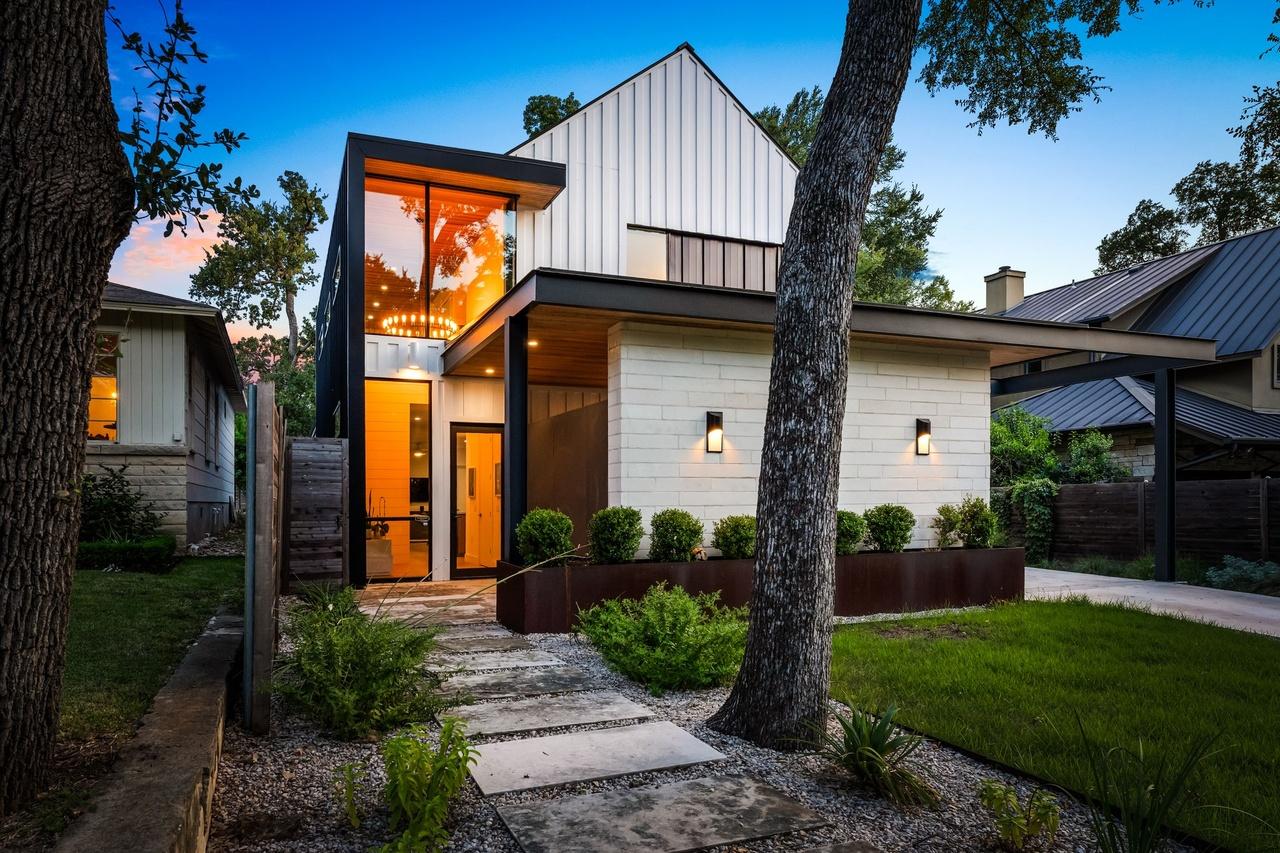
Before
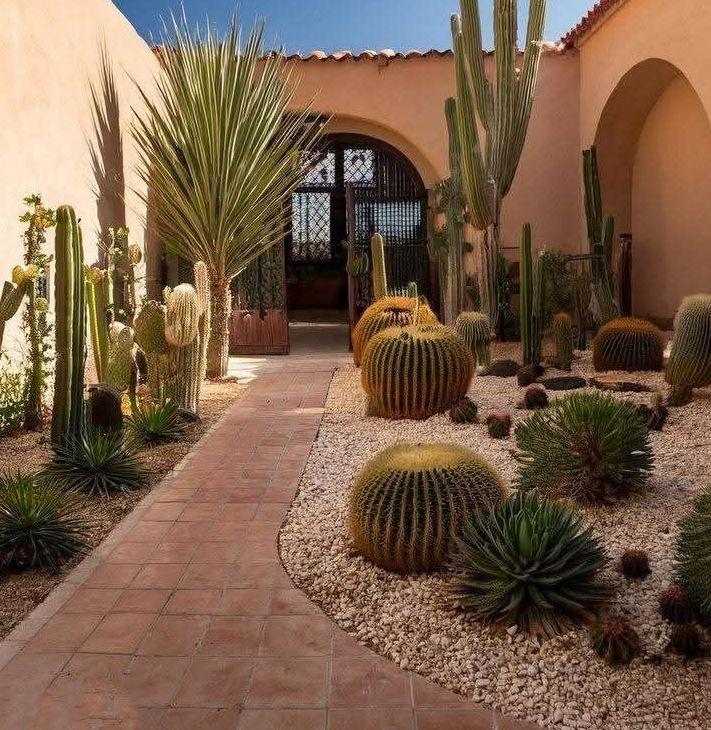
Inspiration
Remove Existing Landscape
Clear existing sod, plants, and walkway stones.
2-3 daysInstall Gravel and Stone
Lay down gravel and stones for the ground cover.
2 daysInstall Cacti and Succulents
Plant new cacti and succulents at designated spots.
1-2 daysConstruct New Walkway
Install terracotta tile walkway.
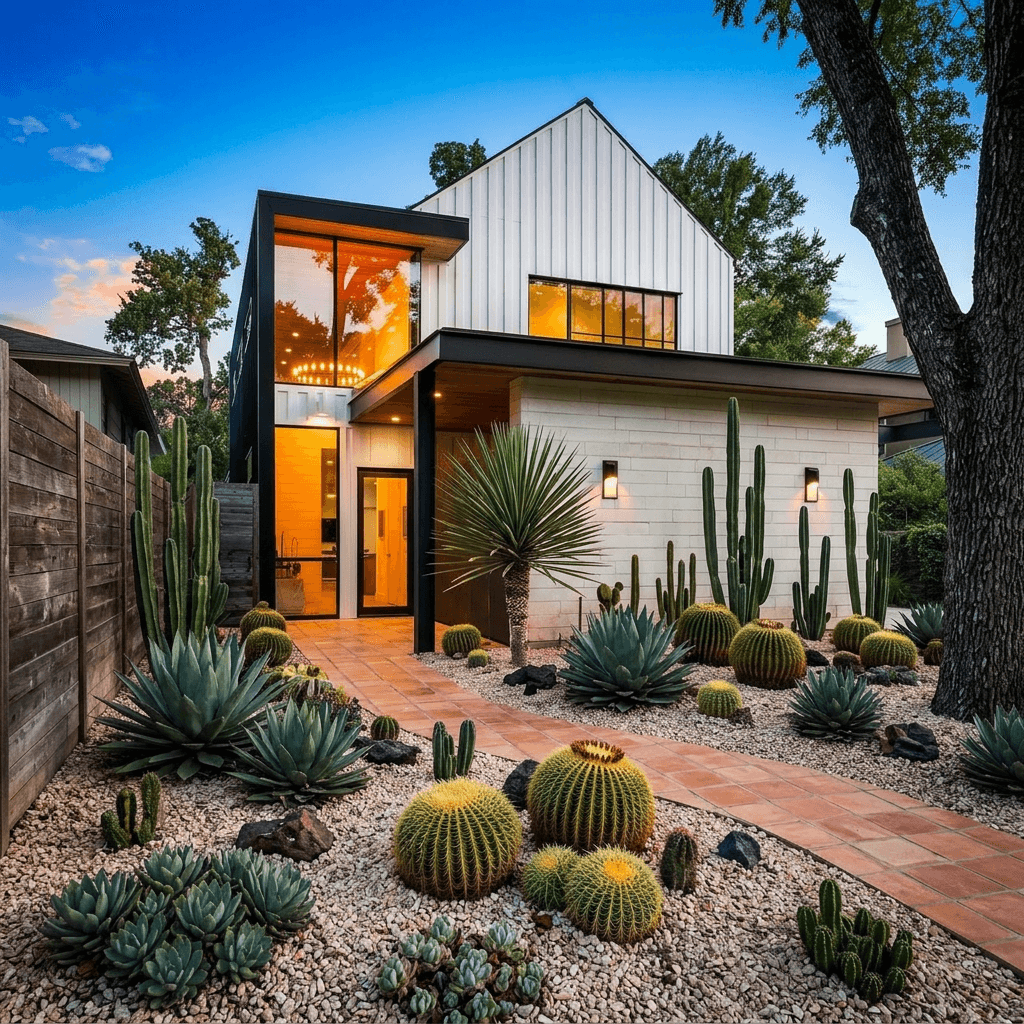
3-4 daysThe transformation involves a shift to a desert-themed landscape with the replacement of grass and small shrubs by cacti and succulents, along with gravel and stone ground cover replacing sod.
The transformation involves a shift to a desert-themed landscape with the replacement of grass and small shrubs by cacti and succulents, along with gravel and stone ground cover replacing sod. The walkway has been updated to terracotta tiles, enhancing the hardscape with a new aesthetic.
$17,500 - $27,000
Why this desert style fits Austin
Austin's hot summers and periodic droughts make a desert palette practical and low-water. Replacing turf with gravel and stone ground cover reduces irrigation needs compared with sod, while using drought-tolerant plants like columnar cacti, barrel cacti and agave rosettes suits Central Texas heat. The terracotta tile walkway also complements the warm palette and holds up well with minimal maintenance. Choosing crushed-rock groundcover with scattered dark rock accents lowers long-term water and mowing costs, and the overall approach aligns with local climate realities while preserving the house architecture and driveway structure.
Plants and materials used in the plan
This build swaps grass and small shrubs for a layered xeriscape: tall columnar cacti at the rear, mid-height barrel and agave rosettes, and low succulents and small cactus clumps in the foreground. Groundcover is pale crushed-rock with scattered dark rock accents to mimic the inspiration. The walkway is updated to terracotta tile to match the southwestern palette. Materials and items listed in the plan include cacti and succulents installation, gravel and stone ground cover, a terracotta tile walkway, and professional installation labor to place plants and set hardscape properly.
Cost breakdown for the desert landscape
The project budget range is $17,500–$27,000. Typical allocation: materials (gravel, crushed rock, dark accent stone) and terracotta tile walkway often account for $5,000–$9,000; plants (columnar cacti, barrel cacti, agaves, succulents) can range $2,500–$6,000 depending on sizes; professional installation and labor for soil prep, plant installation, and hardscape construction often represent $7,000–$10,000. Final cost depends on plant sizes, terracotta tile complexity, and any grading or irrigation adjustments. This estimate reflects the build plan’s scope and listed materials.
DIY vs professional installation considerations
The build steps show removing the existing landscape (2–3 days), installing gravel and stone (2 days), planting cacti and succulents (1–2 days), and constructing the new terracotta walkway (3–4 days). Installing large agave rosettes, columnar cacti, and a level terracotta path is labor- and equipment-intensive; professionals manage grading, proper drainage, and safe cactus handling. For homeowners wanting to test layouts, use Curb Appeal AI to visualize plant placement and the terracotta walkway before committing. Smaller DIY tasks like placing low succulents and dark rock accents are possible, but full installs usually benefit from pros.
Long-term upkeep and maintenance notes
Desert landscapes are lower-maintenance but not no-maintenance. Expect seasonal checks on gravel and stone ground cover, occasional weeding of annuals, and limited pruning for agave rosettes and barrel cacti. Terracotta tile walkways may need joint resetting or occasional cleaning to remove debris. Irrigation is reduced but should be maintained for new plant establishment—especially for larger columnar cacti and agaves during the first year. The plan’s use of gravel, crushed-rock groundcover, terracotta walkway, and drought-tolerant plants keeps ongoing costs lower than turf once established.
Frequently Asked Questions
How much does desert landscaping cost in Austin?
For this front-yard conversion the estimated range is $17,500–$27,000. Final cost depends on plant sizes (larger columnar cacti and agaves cost more), the extent of the terracotta tile walkway, amount of crushed-rock groundcover, and professional labor.
Is desert landscaping worth it for water savings?
Yes. Replacing sod with gravel and drought-tolerant plants like succulents, barrel cacti, and agave typically reduces irrigation and mowing expenses. Upfront costs for materials and installation can be recouped over several years through lower water and maintenance bills.
What maintenance does a desert landscape require?
Maintenance is modest: annual weeding, seasonal checks on irrigation for the first year, occasional pruning of agave rosettes and removal of spent cactus pads, and infrequent topping up of crushed-rock or dark rock accents to maintain clean edges.
How long does installation take?
According to the build steps, plan for about 8–11 total working days: removing existing landscape (2–3 days), installing gravel and stone (2 days), planting cacti and succulents (1–2 days), and constructing the terracotta walkway (3–4 days). Weather and site access can affect timing.
Related Transformations
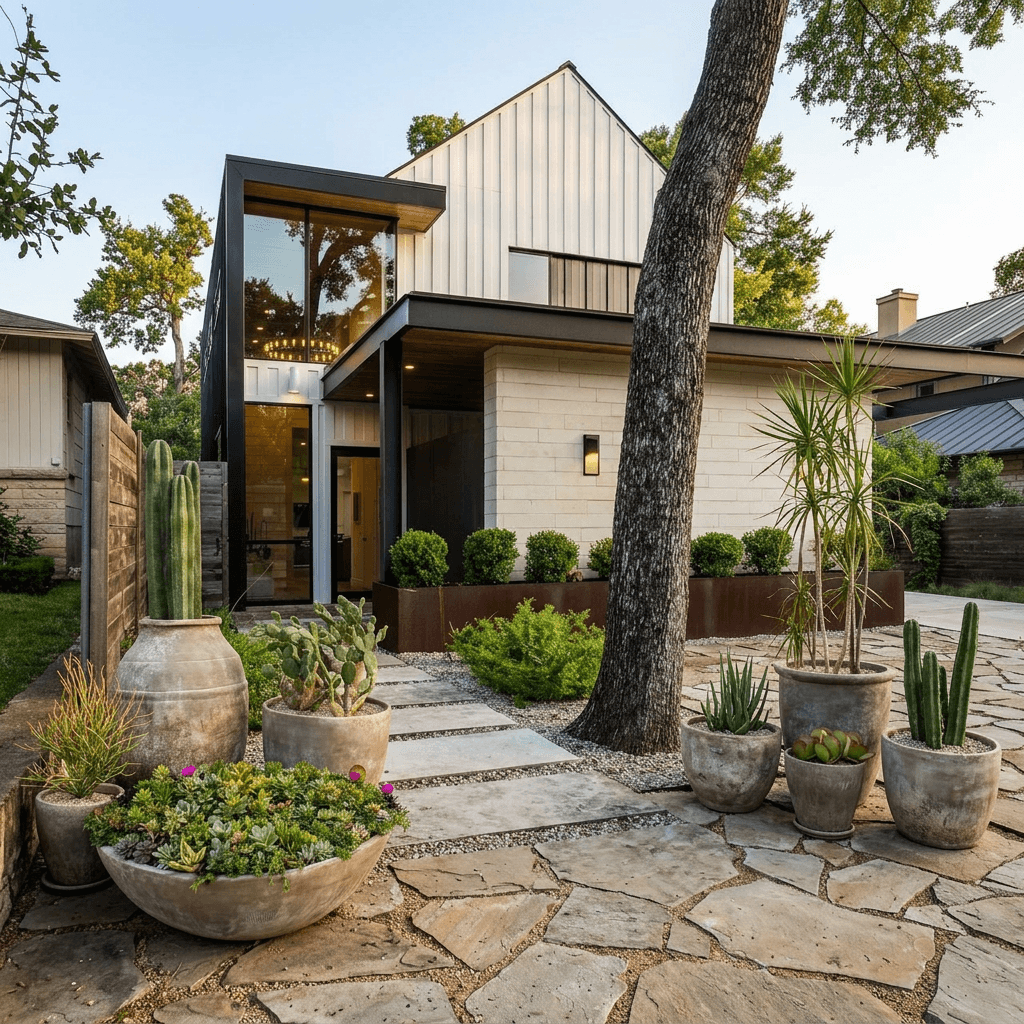
The home exterior has undergone a transformation focusing on enhancing its landscaping and hardscape elements.
$5,000 - $9,500
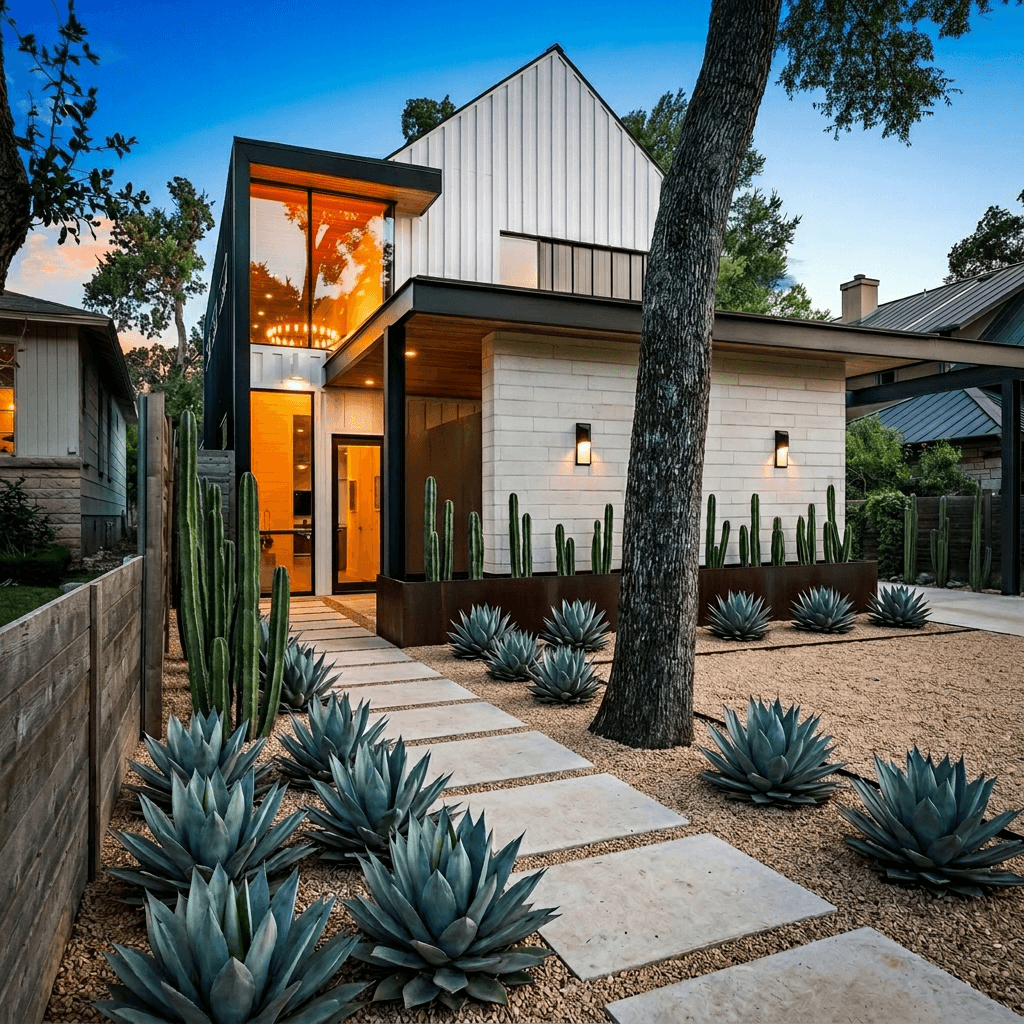
The home exterior has undergone a transformation featuring a shift to a more arid and contemporary landscaping design.
$12,000 - $17,000
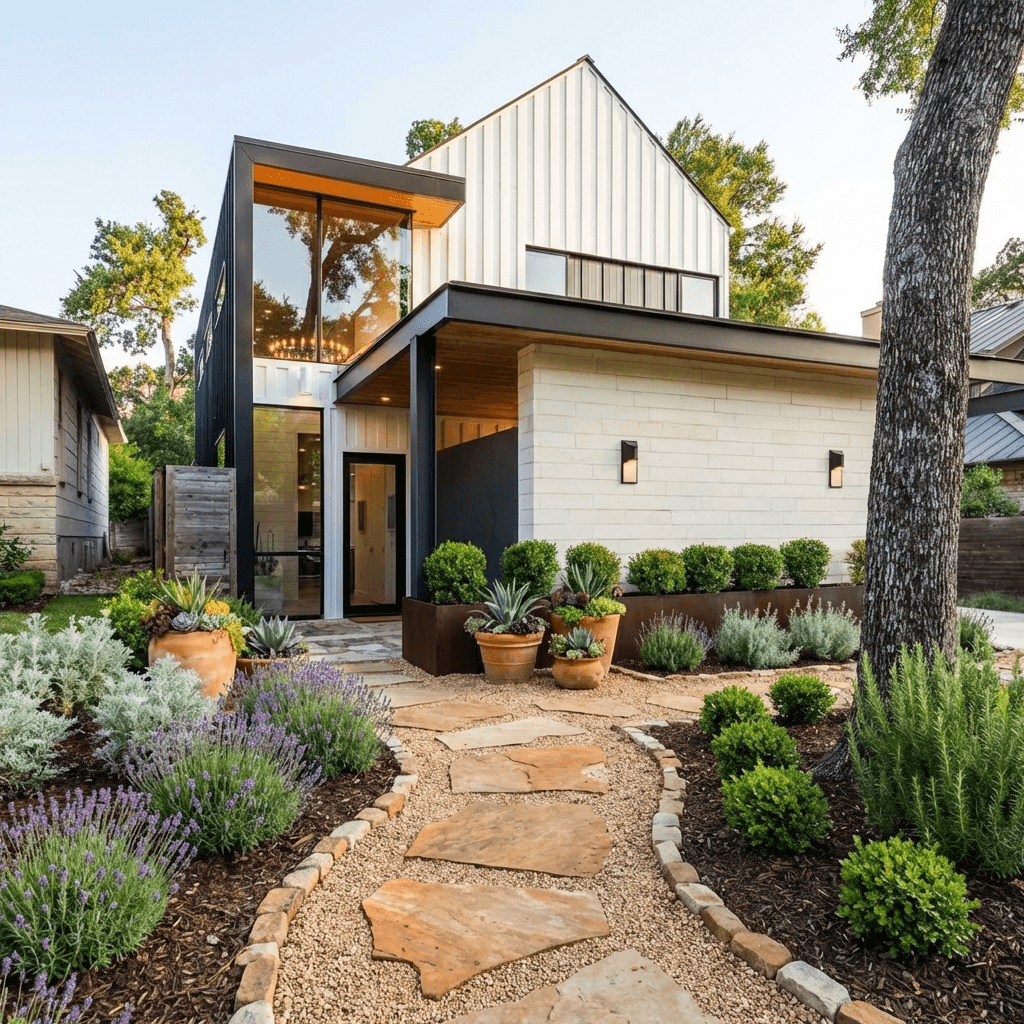
The home exterior underwent a transformation focused on enhancing the landscape and hardscape design.
$11,500 - $17,200
More Transformations
The home exterior underwent a transformation focused on enhancing the landscape and hardscape design.
$11,500 - $17,200
The home exterior has undergone a transformation focusing on enhancing its landscaping and hardscape elements.
$5,000 - $9,500
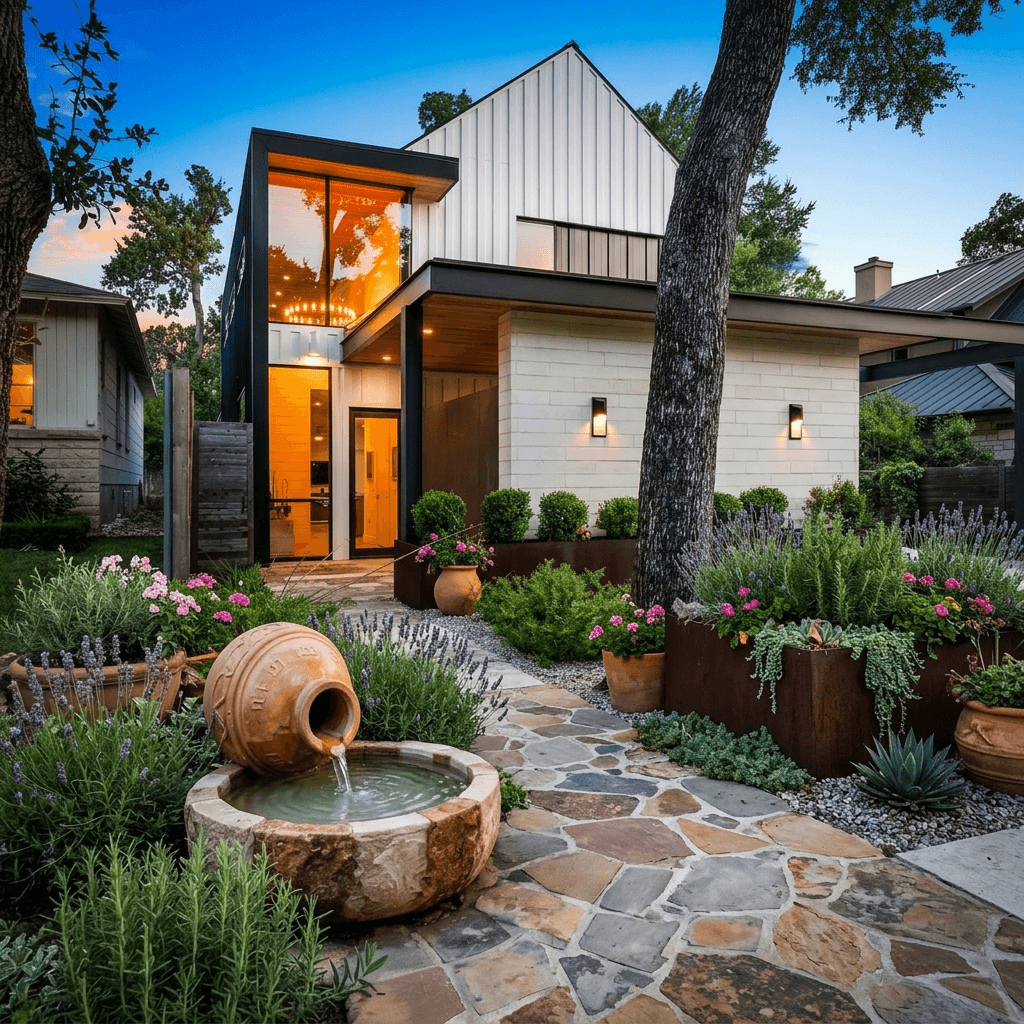
The home's exterior transformation includes extensive landscaping with added plants and flowers, a stone fountain feature, and a new stone walkway replacing the previous path.
$10,500 - $15,200
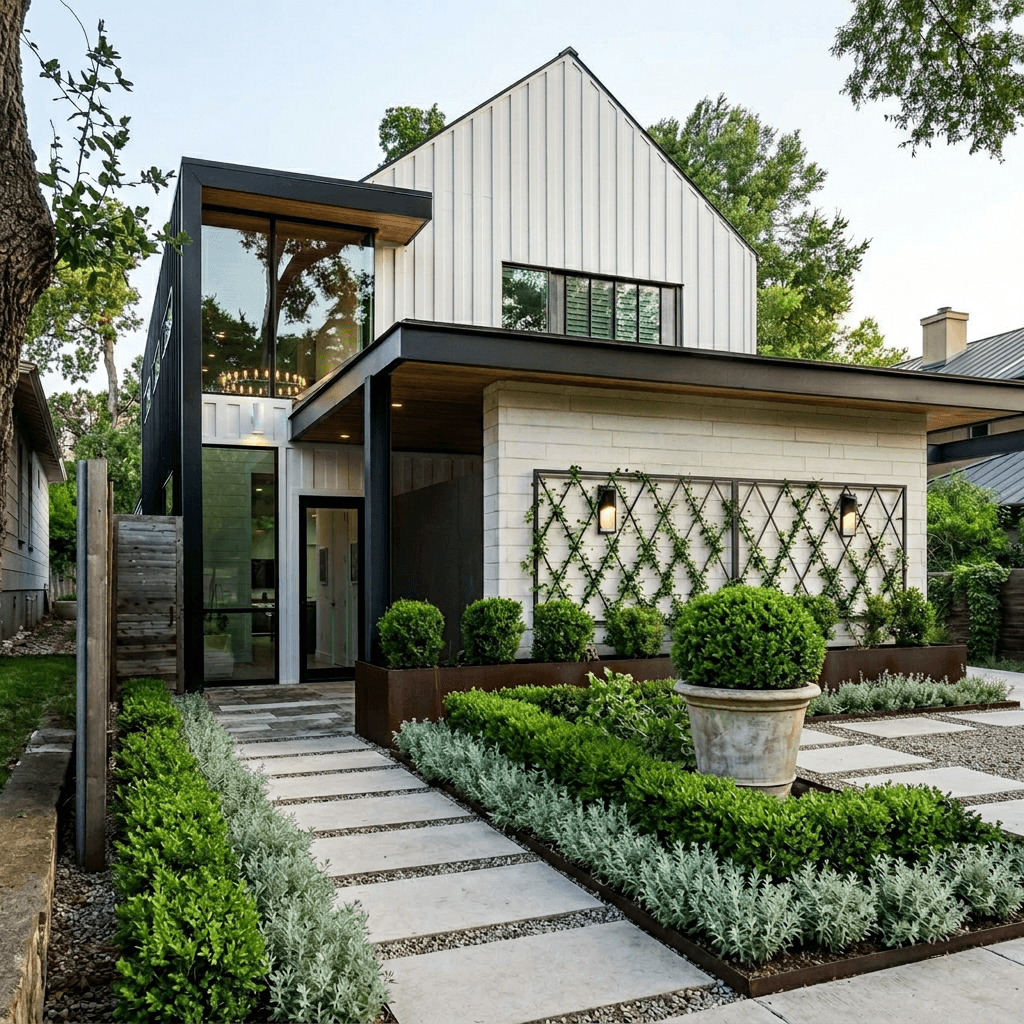
The transformation includes enhanced landscaping with new plants and planters, additional trellis work on the facade, and an upgraded pathway.
$10,000 - $15,000
The home exterior has undergone a transformation featuring a shift to a more arid and contemporary landscaping design.
$12,000 - $17,000