10 Front Yard Edging Ideas for 2026
You finish the mowing, freshen the beds, swap out a few overgrown shrubs, and the front yard still looks unfinished. In my experience, that usually comes down to the edge. Without a clear border, even good planting work can read as loose and underplanned.
Edging does more than tidy the perimeter. It separates lawn from beds, keeps mulch and gravel in place, slows grass creep, and gives the yard a shape that reads clearly from the street. It is one of the few upgrades that affects both appearance and maintenance at the same time.
That visual clarity also carries real resale value. Buyers notice clean lines and defined planting areas because they make the whole property look cared for. If your goal is to increase property value and curb appeal, edging is one of the lower-cost changes that can make the front yard look more intentional.
The catch is fit. A material that looks great in a catalog photo can feel wrong once it meets your actual house, slope, soil, and budget. Steel can look sharp on a modern facade and too harsh on a cottage-style home. Stone can age beautifully, but the material and labor cost rise fast. Plastic is affordable and easy to bend, though it rarely gives the same long-term finish as brick, concrete, or metal.
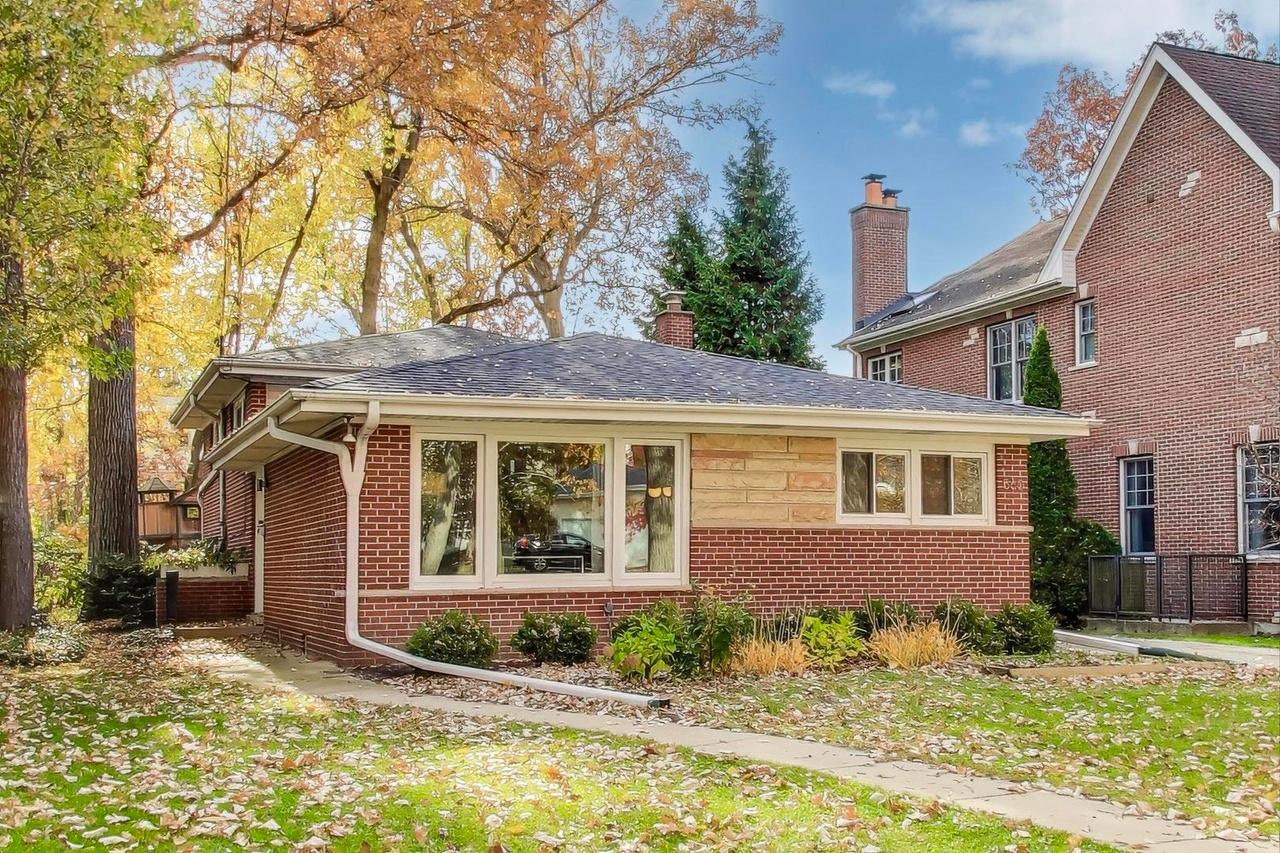
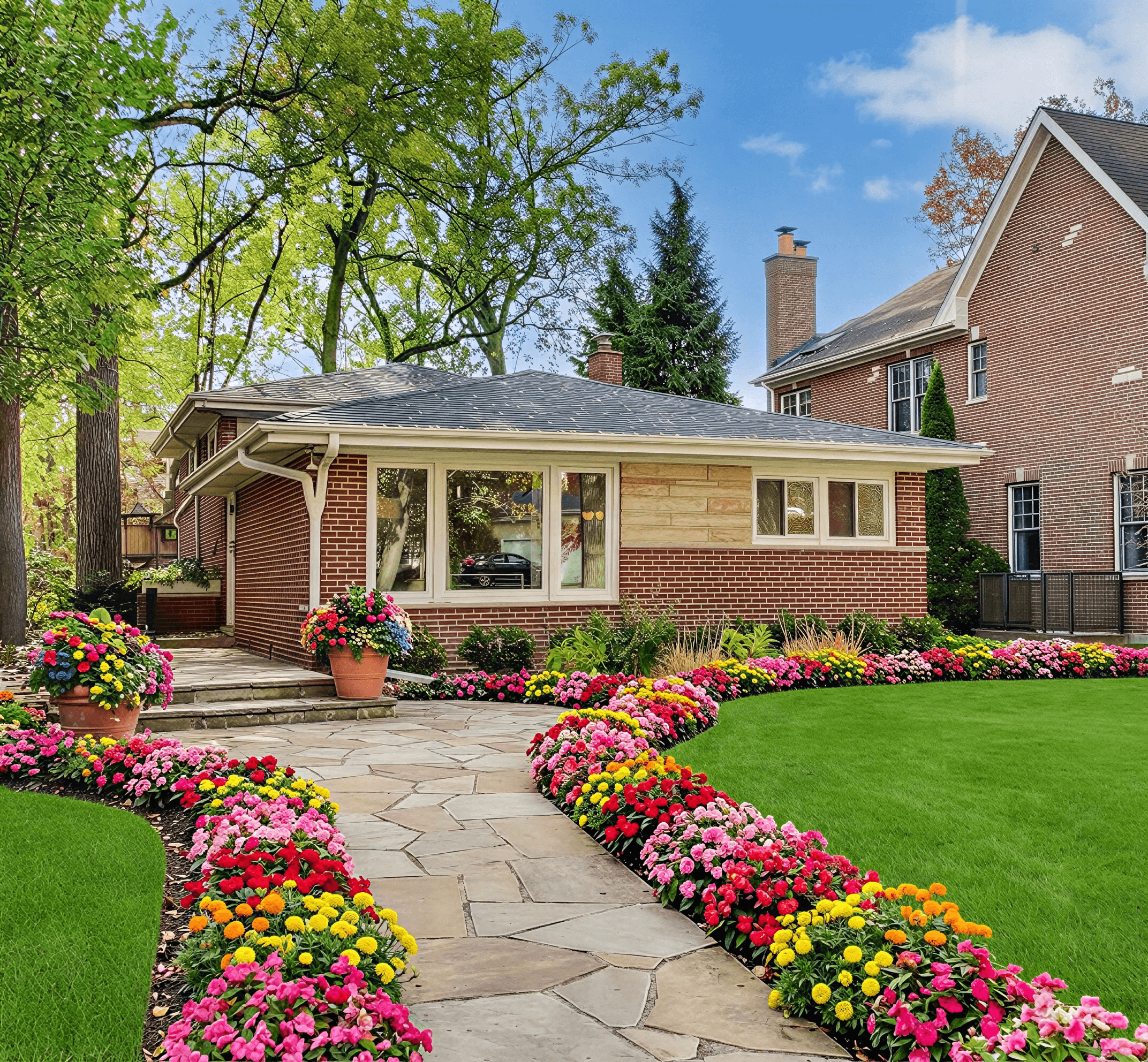
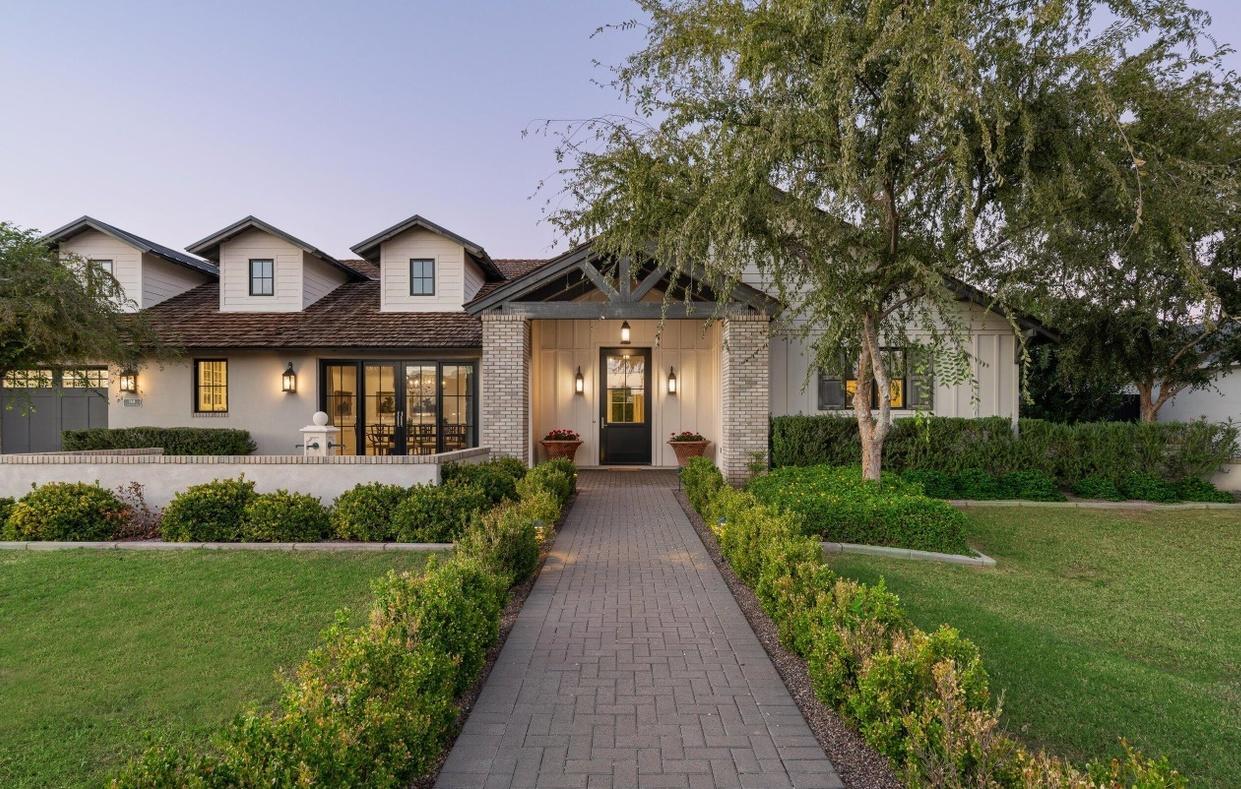
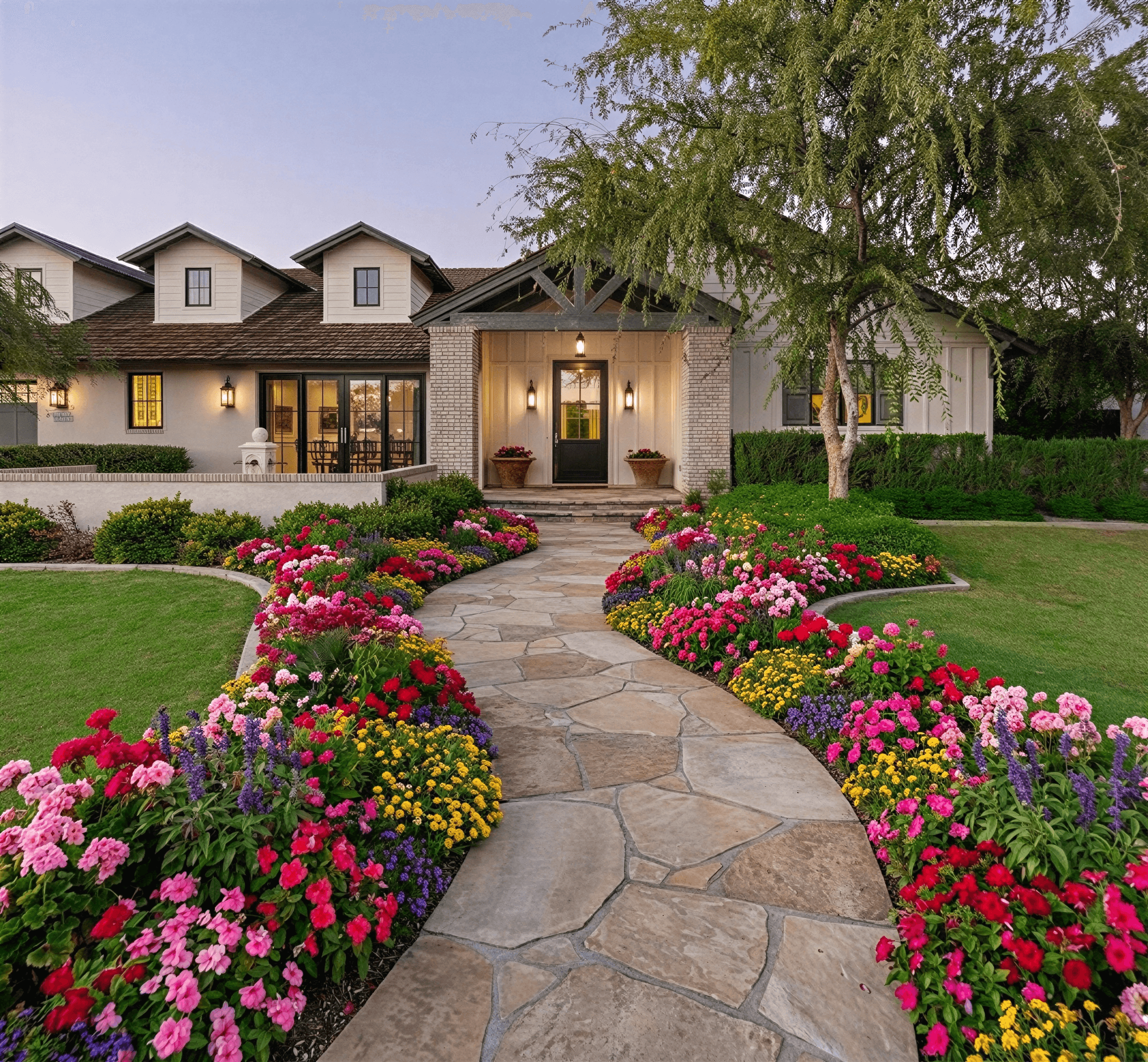
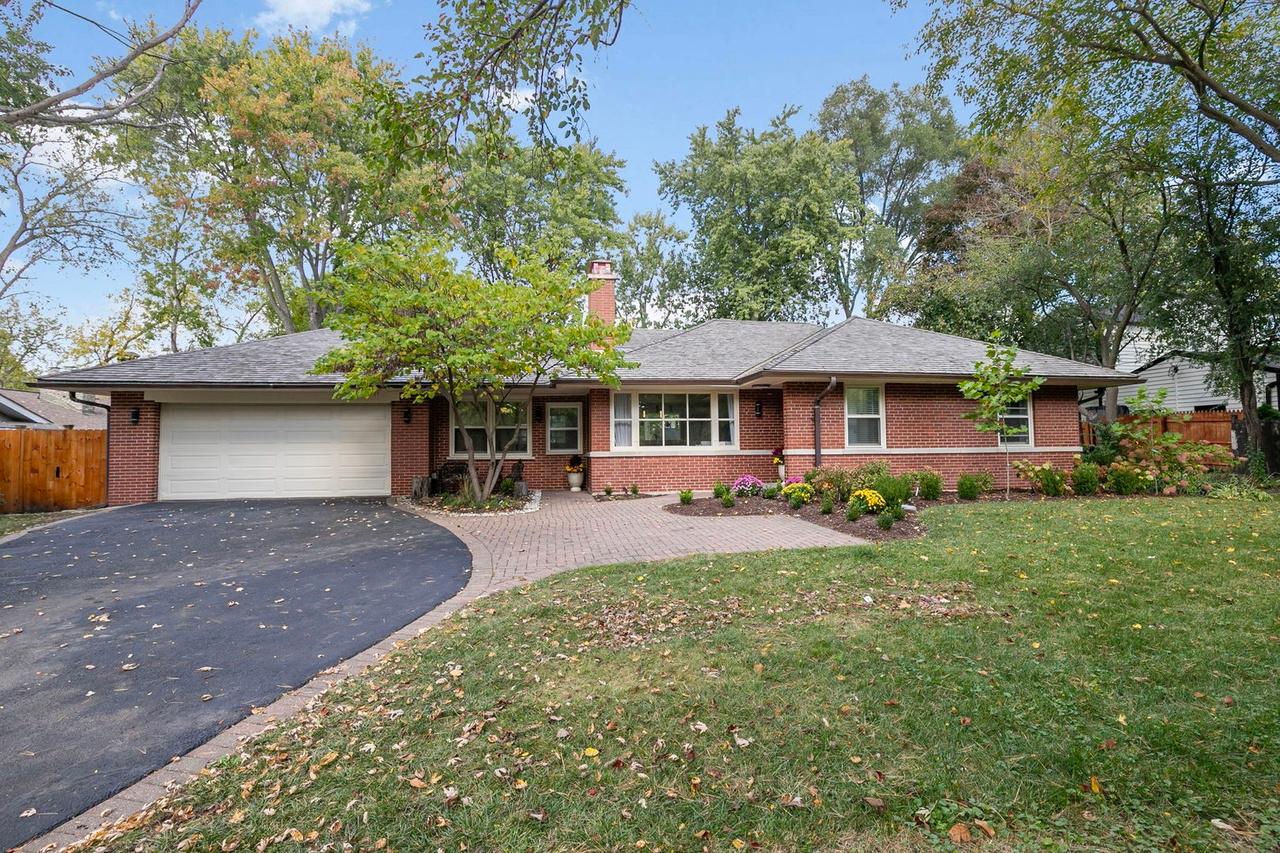
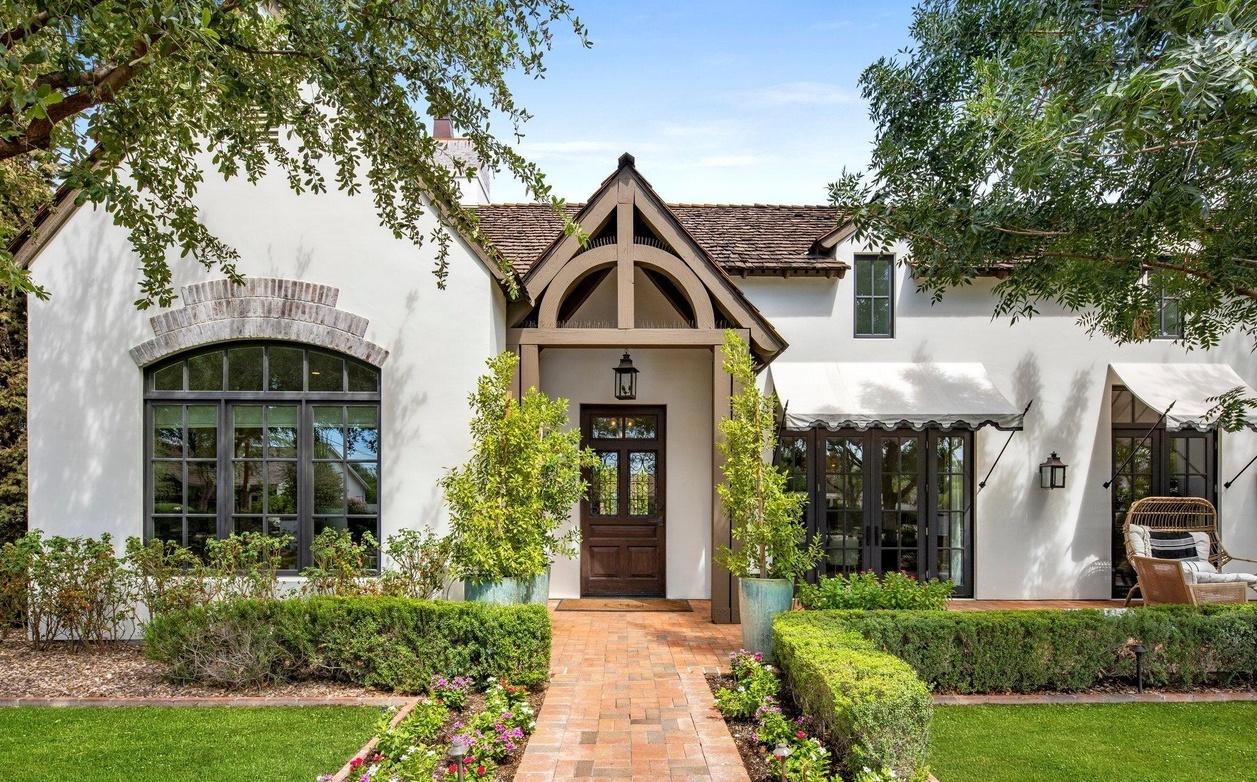
This guide is built to close that gap between inspiration and a real install. Instead of guessing from generic examples, you can test these ideas on a photo of your own home with a tool like Curb Appeal AI. If you want a local example of that process, this Austin front yard design service using Curb Appeal AI shows how quickly material choices start to make sense once you see them on the actual property.
That is the difference between browsing and choosing well. You stop buying edging because it looked good in someone else’s yard, and start picking the option that fits your house, maintenance tolerance, and budget.
1. Metal and Corten Steel Edging
Metal edging is what I reach for when the goal is control. It gives you a crisp line, handles curves cleanly, and disappears visually if you want it to. For modern homes, that restraint is often exactly right.
Galvanized steel and aluminum are the quieter options. Corten is the statement piece. It develops that warm rusted finish people want in contemporary outdoor designs, especially with gravel, native grasses, agaves, and simple architectural planting.

Where metal works best
Metal belongs in front yards that already have strong geometry. Think rectilinear walkways, decomposed granite, poured concrete, black window frames, or clean stucco facades. In that setting, a loose stone edge or scalloped brick border usually looks out of place.
For humid climates, galvanized steel edging with a 0.08-inch thickness is positioned for 10+ year lifespans in market benchmarks covered by Market Intelo’s garden edging report. That doesn’t mean every product will perform the same, but it tells you what to look for when comparing specs.
A practical example is a xeriscape front yard with a straight sidewalk, pale gravel mulch, and grouped ornamental grasses. A low steel edge keeps gravel from bleeding into turf and preserves the design lines. If you want to test that look before committing, a local Austin landscape design visualization workflow makes that decision much easier.
Metal edging looks best when the rest of the landscape is disciplined. If the planting is informal and shaggy, the edge can feel too sharp.
Real trade-offs
The upside is durability and appearance. The downside is that bad installation shows immediately. If the line waves, the whole front yard looks amateur. Drainage matters too. Standing water around steel shortens the life of the install and makes the detail feel sloppy.
Corten also needs patience. Early on, some homeowners think it looks unfinished because the patina hasn’t matured yet. If you want instant polish, use powder-coated or galvanized edging instead.
A few practical rules help:
- Use true weathering steel: Not every rust-finish product ages the same way.
- Keep reveals low: Too much exposed height can look harsh from the street.
- Pair it intentionally: Steel works with gravel, concrete, and native plant palettes better than with soft cottage borders.
2. Natural Stone and Slate Edging
A common front yard problem is a bed that has good plants and bad definition. The shrubs are healthy, the mulch is fresh, but the edge still looks loose from the street. Natural stone is one of the few materials that can fix that without making the yard feel overly manufactured.
Stone works best where the house already has some age, texture, or architectural weight. Brick colonials, cottages, craftsman homes, and stucco houses usually take to it well. Slate gives a flatter, cleaner line than fieldstone or chopped limestone, so it suits narrower beds and more controlled designs.
The appeal is simple. Stone looks permanent.
That permanence is also the main trade-off. Stone costs more than plastic or basic metal edging, and the labor matters just as much as the material. A poorly set stone edge will shift, lean, and collect weeds in the gaps. A well-built one can hold its line for years with very little attention.
Material choice changes the look more than many homeowners expect. Bluestone feels cooler and more precise. Limestone reads warmer and softer. Granite has a formal, upscale character. Tumbled stone relaxes the edge and fits better with informal planting. Slate is useful when you want definition without the chunkier profile of heavier stone.
I usually tell clients to match stone to the house first, then the planting. Color alone is not enough. A stone that looks beautiful in the yard supply lot can look disconnected once it sits against warm brick, painted trim, or tan stucco. Texture matters too. Rough stone beside a heavily textured facade often feels natural. Smooth-cut pieces pair better with cleaner architecture.
Installation decides whether stone looks expensive or just costly. The base needs to be compacted, the line needs to be intentional, and water needs somewhere to go. Beds near downspouts, sidewalks, or sloped lawns need more attention because runoff will expose shortcuts fast.
A practical use case is a curved foundation bed with mature hydrangeas, boxwoods, and a shade tree. Metal edging can look too sharp there. Plastic usually disappears in the wrong way. A low limestone or slate edge gives the bed a finished boundary and still feels consistent with an established front yard. If you want to test that before spending on material and labor, use a visualization tool like Curb Appeal AI on a photo of your own house. It is a faster way to compare slate versus limestone, or stacked versus flush-set stone, than guessing from inspiration photos that were taken on someone else’s property.
Maintenance is usually light after installation, but stone is not zero-maintenance. Freeze-thaw cycles can move pieces. Mowers can clip exposed corners. Mortared stone can crack if the base was not prepared properly. Dry-set stone is easier to repair, while mortared stone gives a cleaner, more rigid look.
Stone is a strong choice if you want curb appeal that still makes sense five years from now. The higher upfront cost buys a material that rarely looks dated, but only if the stone suits the house and the base work is done right.
3. Plastic and Composite Edging
A common front-yard scenario goes like this. The planting bed needs a cleaner line before the weekend is over, the budget is limited, and the shape includes curves that stone, brick, or steel would make slower and more expensive to install. Plastic edging exists for that job.
It works best when the goal is control, not status. I use it for simple bed separation, quick refreshes before listing a house, and layouts that may change in a year or two. It gives mulch and lawn a defined boundary without asking for a big material bill or specialized labor.
Composite edging sits a step above basic plastic. The upfront cost is higher, but the material usually holds its shape better, resists cracking, and looks less flimsy at the top edge. In wet climates, that matters. Composite also makes sense where wood would stay damp and break down too quickly.
The main trade-off is visual weight. Plastic and composite can solve a practical problem, but they rarely add much architectural character. On modest beds, that is fine. On a formal front elevation or a house with expensive masonry, the edge can read as an afterthought if too much of it stays visible.
Installation quality makes or breaks this category. Cheap stakes, shallow anchoring, and loose soil are what cause the wavy lines and sections that pop up after winter. A restrained reveal looks better than a tall exposed lip, and darker colors usually disappear into mulch more convincingly than bright black or green plastic with a glossy finish.
This is also one of the easiest categories to preview before buying. If you use Curb Appeal AI on a photo of your own front yard, you can test whether a low-profile black composite edge disappears the way you want, or whether the bed needs a material with more presence. That saves people from copying a nice inspiration photo that does not match their house, lawn grade, or planting style.
A few practical guidelines:
- Use plastic for short-term value: It is a sensible choice for tight budgets, rentals, and fast cosmetic cleanup.
- Use composite for longer-term beds: The added cost usually buys better rigidity and a cleaner appearance over time.
- Keep the edge low: The more edging you see, the cheaper the result tends to look.
- Check it after freeze-thaw weather: Early movement is easier to correct before the whole line starts wandering.
Plastic and composite edging are useful materials when properly assessed. They are affordable, flexible, and fast to install. They are not the appropriate choice for imitating a premium finish.
4. Wood and Cedar Edging
Wood edging gives a front yard warmth that harder materials can’t. It softens the boundary and feels approachable. On cottage gardens, farmhouse settings, and informal entries, that can be a real advantage.
The trade-off is obvious. Wood is not a forever material. Even when it looks great on day one, it’s still in a slow argument with moisture, insects, and soil contact.
When wood looks right
Cedar is the strongest choice in this category for most homeowners because it has natural decay resistance and ages better than cheap pine. It works well framing perennial beds, kitchen-garden style front planting areas, or simple rectangular borders near porches and paths.
A cedar edge also suits transitional homes that need a softer detail than steel or concrete. If the facade includes painted lap siding, natural wood accents, or a relaxed planting style, wood usually feels coherent.
I’ve seen wood edging work best when it’s treated as a design accent rather than a structural system. Short runs around smaller beds hold up visually and physically better than long retaining-style applications.
The maintenance reality
Wood edging asks for follow-through. If you don’t seal or stain it promptly, weather starts making decisions for you. Once boards twist, split, or darken unevenly, the front yard starts to look neglected even if the plants are healthy.
There’s also a style risk. Wood can read charming or cheap depending on thickness, finish, and installation quality. Rough timbers around a refined front entry often feel out of scale. Cleaner milled cedar usually looks more intentional.
Wood edging works best when you already like the idea of seasonal upkeep. If you want to install it once and forget it, pick another material.
Use weed barrier fabric below the edge if you want to slow weed pressure and reduce direct soil contact. Keep expectations realistic. Wood is attractive because it feels natural. It also ages like a natural material.
5. Brick and Paver Edging
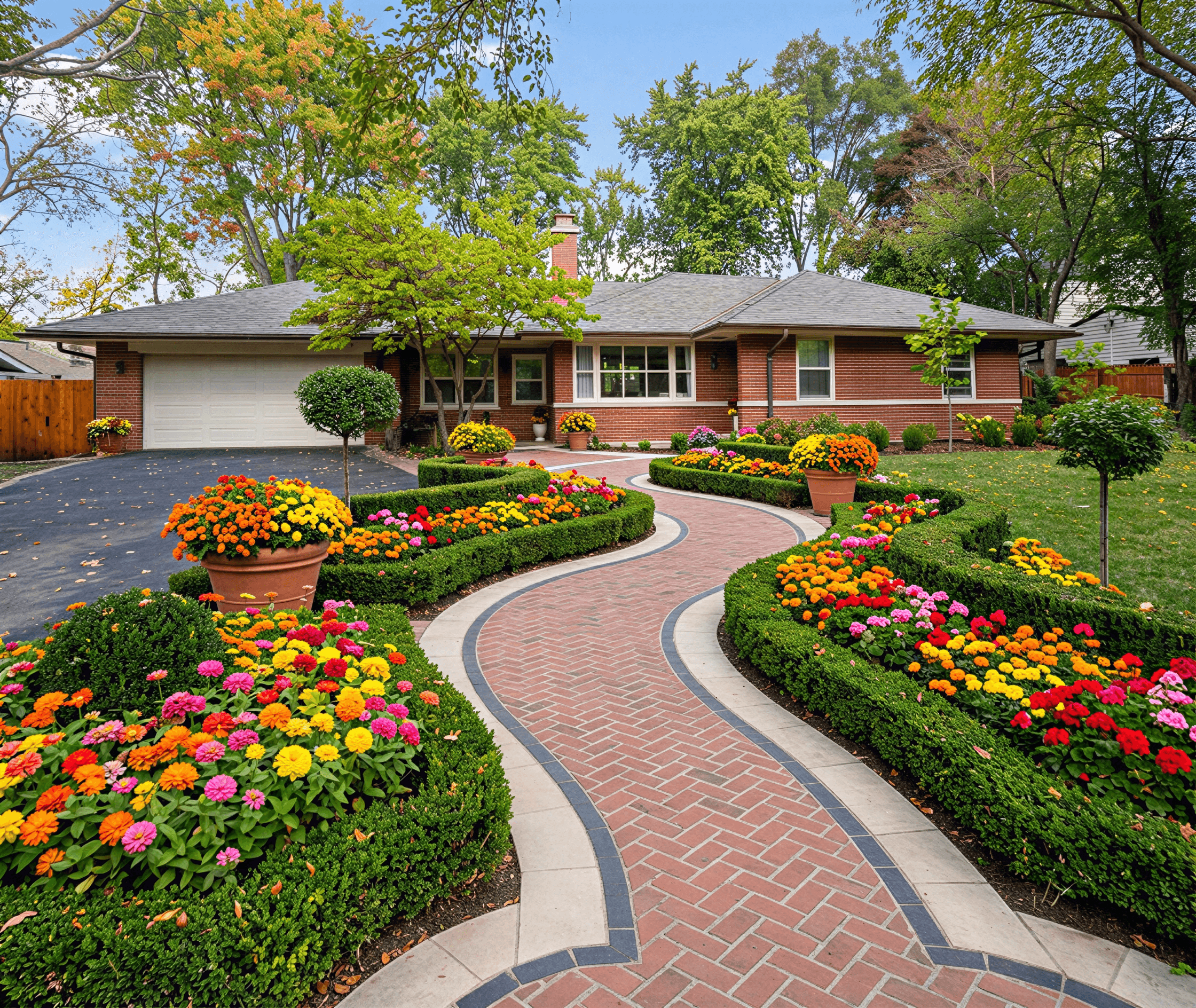
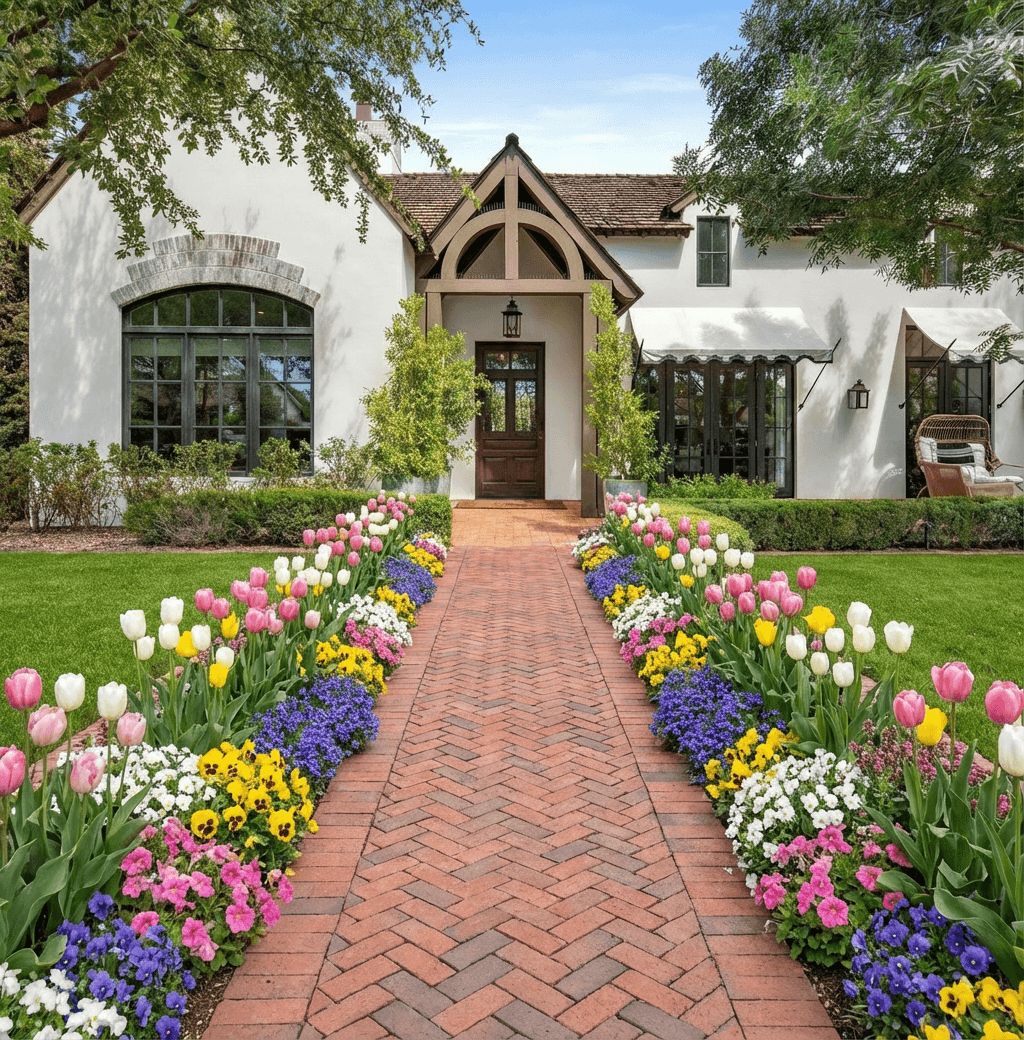
You pull into the driveway, look at a plain mulch bed along the walk, and know it needs a cleaner edge. Brick and paver edging often solve that problem better than softer materials because they give the bed a finished line that can relate directly to the house, the front path, or the porch steps.
This option works best when the front yard already includes masonry details. On Colonials, Tudor revivals, traditional brick homes, and many cottage-style facades, brick edging can read as part of the architecture instead of an afterthought. That connection is the main reason to choose it.
Where brick earns its keep
Brick is one of the more approachable masonry edges for homeowners who want a defined border without pouring concrete. Standard pavers are easier to source than specialty stone, repairs are usually straightforward, and the look can swing formal or relaxed depending on the layout.
Pattern choice matters more than people expect. A soldier course gives a sharper, more upright profile. Flat-set brick is easier to mow against and usually feels quieter. Curves can look excellent, but they require careful spacing and more cuts, which means more labor and more waste.
Before choosing it over poured concrete or stone, it helps to understand the difference between landscaping and hardscaping. Brick edging sits in both categories. It shapes planting beds visually, but it also behaves like a small hardscape element that needs base prep and layout discipline.
If you're unsure whether brick will complement your facade or compete with it, test it on a photo of your own house first. That is where a tool like Curb Appeal AI helps. Instead of relying on generic inspiration photos, you can mock up a soldier-course border, a flat paver band, or a curved edge against your actual walkway and planting beds before you buy materials.
What to watch for
Brick is less forgiving than it looks. If the base is shallow or poorly compacted, pieces start to rock, spread, or settle unevenly. That problem shows up fast near downspouts, driveway edges, and any bed line that gets regular foot traffic.
There is also a visual trade-off. Brick can tie a house together, or it can create too much repetition. A brick facade, brick walk, brick porch skirting, and brick edging can look cohesive if the colors are controlled. If the tones clash or the patterns compete, the yard starts to feel busy.
Cold climates need extra caution. Freeze-thaw cycles punish weak installs, especially with salvaged brick or thin pavers that were never meant for ground contact. In those regions, I prefer a properly compacted base and restraint on fancy curves. Simple layouts hold up better.
A few practical guidelines help:
- Match the house before the bed. Start with the brick tone and texture already on the facade or walkway.
- Use flat-set brick where mowing access matters. It is usually easier to maintain than upright courses.
- Budget for extra material on curves. Cuts, breakage, and layout adjustments add up quickly.
- Keep the design clean if the house already has a lot of masonry. Sometimes one brick element is enough.
Brick and paver edging are worth the cost when you want the border to feel built in, not just placed around a bed. The trade-off is installation quality. Done well, it looks established for years. Done cheaply, it starts looking uneven long before the plants fill in.
6. Recycled Rubber and Reinforced Fabric Edge Strips
This category doesn’t get much design attention, but it solves real problems. Recycled rubber and reinforced fabric edge strips are useful when you need separation, weed suppression, and a low-profile install without spending for masonry or metal.
They’re especially handy in practical settings. Think rental homes, community gardens, utility-side beds that wrap into the front yard, or native planting zones where the plants are the visual star and the edging should disappear.
Where these materials make sense
Rubber edging is flexible, forgiving, and relatively simple to work with on uneven lines. Fabric-reinforced systems work best when the bed edge is more about containment than display. They’re not glamorous, but they can clean up a bed perimeter quickly.
I like them most in front yards where the design language is ecological rather than formal. A native pollinator bed, for example, often benefits from a restrained edge that keeps mulch and soil in place without fighting for attention.
These products also fit owners who care about reusing materials. That matters for some projects, especially when the outdoor design brief includes low-waste choices or a softer environmental footprint.
Their limits are visual
Rubber rarely adds prestige. It’s a support material, not a design centerpiece. If your front entry needs a strong architectural border, this won’t get you there. It can also soften over time or become more visible than intended if mulch thins out.
Reinforced fabric strips are even more utilitarian. They’re useful, but if they’re exposed, the job looks unfinished. That means installation detail matters. Tuck the edge correctly, keep the reveal minimal, and maintain the mulch line.
Use darker tones. They blend better with soil and bark, and they don’t announce themselves from the street. If your priority is sustainable function on a modest budget, this category deserves consideration. If your priority is a high-end visual statement, move on.
7. Concrete and Stamped Concrete Edging
You walk the front yard after the install and the line is finally crisp. The beds read clearly from the street, the mower tracks cleanly along the edge, and the whole facade feels more settled. Concrete does that well. It gives a front yard a fixed outline.
That permanence is also the risk. A good layout looks intentional for years. A rushed curve or oversized curb can lock in a mistake that is expensive to remove.
In yards with a driveway, entry walk, porch steps, or retaining walls already doing visual heavy lifting, concrete edging usually feels at home. Plain concrete suits simple, modern facades. Stamped concrete works better when you need a softer transition to brick, stone, or more traditional architecture.
A quick look at installation helps show what goes into a clean result:
Why concrete appeals to pros
Concrete earns its keep in high-traffic front yards. It stands up to string trimmers, mower wheels, blown mulch, and repeated foot traffic better than many lighter materials. If you want a mower-friendly border that keeps a bed edge readable with minimal seasonal touch-up, it is one of the stronger options.
Stamped and colored finishes widen the design range, but they also raise the stakes on workmanship. A plain curb can look sharp with solid forming and finishing. A bad stamp pattern or artificial-looking color blend is harder to forgive because it draws attention to itself.
Cost is where homeowners need a clear-eyed view. Small runs of basic edging can be affordable by hardscape standards, especially if the shapes are simple. Decorative work, tight curves, site prep, reinforcement, and color all add labor fast. DIY is possible on short sections, but clean forms, consistent height, and proper finishing separate a professional-looking job from one that reads homemade from the street.
I usually tell clients to test the shape before anyone pours. Stakes, marking paint, and a hose on the ground will tell you a lot. If you want more confidence, use a tool that lets you preview edging on a photo of your own house instead of guessing from generic inspiration shots. That is where visualization becomes practical. It helps you judge thickness, curve radius, and whether stamped concrete fits the architecture before the truck arrives.
Where concrete goes wrong
Concrete edging fails visually more often than structurally. The common mistakes are easy to spot. The curb is too tall, too wide, too busy, or too bright for the house. Once that happens, the edge stops framing the planting bed and starts competing with it.
Water management matters too. If the edging traps runoff or blocks water from leaving a bed, plants suffer and the installation can heave or crack over time. Freeze-thaw climates are less forgiving, so base prep and placement matter more than the decorative finish. Homeowners in wetter regions should also study regional examples before choosing a profile or finish. These landscaping ideas for the Pacific Northwest show why drainage and material restraint often matter as much as style.
One more detail is worth getting right. If you want color, integral color usually ages better than a surface treatment because chips and wear show less contrast.
A permanent edge should follow a permanent plan.
Concrete can look polished, durable, and appropriate for years. It can also feel heavy-handed if the design is off by even a little. Preview it first, then pour once.
8. Living Plant Borders and Hedge Edging
A living edge does something hard materials can’t. It softens the front yard while still giving it definition. That’s useful when you want the outdoor area to feel garden-like, not hardscaped.
Low boxwood, lavender, dwarf grasses, sedges, and clipped mounding plants all work as border elements if they match the climate and maintenance style. The right plant border looks elegant. The wrong one looks blurry and overgrown.

Why climate matters more here
Most edging guides barely address hardiness and climate, which is a mistake. A 2025 ASLA report cited in background material notes that 68% of homeowners in variable climates face edging failure within 2 years due to poor material-climate matching, and only 12% of online guides mention hardiness. That gap is one reason living borders disappoint so often. The plant choice looked good in a photo but didn’t suit the site.
That’s where climate-aware visualization earns its keep. If you’re planning a softer edge and need region-specific inspiration, it helps to study examples like these landscaping ideas for the Pacific Northwest, then test similar planting styles on your own facade before buying.
What works and what fails
Living borders work best where the owner accepts pruning, spacing discipline, and establishment time. They’re not instant. Young plant edges can look thin for a while, which is why some projects use a temporary hard edge until the plants fill in.
They also need the right scale. Tiny edging plants can disappear against a large front elevation. Oversized shrubs can crowd paths and windows fast. Lavender may be perfect in a dry sunny entry court and miserable in a wet shaded one.
A few practical pairings tend to hold up:
- Boxwood or similar clipped forms: Best for formal and traditional homes.
- Lavender and santolina: Better for dry, sunny, Mediterranean-leaning fronts.
- Sedges and low grasses: Useful for naturalistic or modern planting schemes.
If you want softness without losing structure, this is one of the strongest front yard edging ideas available. You just have to choose plants like a designer, not like a catalog shopper.
9. Colored and Decorative Mulch Borders
Mulch isn’t edging by itself, but it can act like a visual border when paired with a clean bed line or hidden containment edge. For fast curb appeal, few upgrades are as immediate.
Black mulch sharpens modern plantings. Brown reads natural and forgiving. Red or burgundy can work, but they clash more often than people admit. I usually tell homeowners to treat dyed mulch like a strong paint color. A little can help. Too much can hijack the yard.
When mulch borders do the job well
Mulch is useful when the bed shape is already good and the issue is contrast. Fresh mulch defines the planting zone, makes shrubs read more clearly, and creates a finished look fast. This is why agents and flippers rely on it so often before listing photos.
It also supports low-maintenance plans when paired with the right bed structure. If you’re considering simple combinations of rock and mulch for a cleaner front yard, these low-maintenance front yard landscaping ideas with rocks and mulch show how that contrast can work.
Where people go wrong
Mulch migrates. Without a defined edge, the border gets fuzzy after rain, mowing, and foot traffic. That’s why decorative mulch works best when another edging system is doing the containment work.
Depth matters too. Too shallow and it looks patchy. Too deep and it can smother roots or pile against trunks. Color choice matters just as much. Black mulch against a dark house can flatten the whole composition. Red mulch beside pinkish brick often fights the facade.
A few practical reminders:
- Match the house palette: Mulch should support the architecture, not compete with it.
- Keep it off trunks and stems: Crowning mulch around plants causes problems.
- Refresh as needed: Mulch is a maintenance finish, not a one-time install.
Done well, decorative mulch gives you one of the quickest visual upgrades in the yard. Done badly, it looks like makeup over poor structure.
10. Decomposed Granite and Loose Hardscape Borders
Loose hardscape borders are ideal when drainage, permeability, and a relaxed modern look all matter. Decomposed granite, pea gravel, crushed stone, and river rock each bring a different character, but they share the same core advantage. They handle water better than many rigid edges and work naturally in dry-climate or minimalist designs.
These materials are also useful where a front yard needs texture rather than height. A gravel band between lawn and planting can feel cleaner and more contemporary than a visible curb.
Why this approach has grown
Loose-fill edging fits a lot of current front yard priorities. It supports xeriscapes, works with native plant palettes, and can bridge modern architecture with softer planting. It’s also forgiving visually. Small settling or subtle movement usually doesn’t ruin the look the way it would with a rigid masonry edge.
That said, containment still matters. Gravel without a border tends to wander, especially near sidewalks and driveways. Hidden steel, stone, or composite often performs the essential work in these installs even when the visible finish is all rock.
This category also deserves more attention for sloped sites. Research notes that sloped or uneven front yards are underserved in edging content, even though many homes deal with grade changes and drainage problems. On those sites, loose hardscape can help slow runoff when it’s built with proper containment and grade.
On a slope, the prettiest edging idea is worthless if mulch and soil keep moving downhill. Stability comes first.
Best and worst uses
Decomposed granite looks excellent with desert planting, succulents, ornamental grasses, and simple modern entries. Pea gravel feels softer and more casual. River rock can work, but oversized decorative stone is often overused and can look disconnected from the house.
This isn’t a zero-maintenance system. Loose materials need occasional raking, topping up, and cleanup where they scatter. Weed barrier choices matter too. Cheap fabric often causes headaches later.
Use local material when possible so the color fits the region. A front yard in the Southwest can carry warm decomposed granite naturally. The same palette may feel forced elsewhere. Render the material against your house first, because stone color shifts the whole look.
10 Front Yard Edging Options Compared
| Edge Type | 🔄 Implementation Complexity | ⚡ Resource Requirements & Cost | 📊 Expected Outcomes | ⭐ Key Advantages | 💡 Ideal Use Cases / Tips |
|---|---|---|---|---|---|
| Metal & Corten Steel Edging | Moderate–High; precision cutting, drainage and possible pro install; 6–12 wk lead for Corten | High material/fab cost; metal $15–30/lf, Corten raised $40–100+/lf; very long lifespan | Clean contemporary lines, durable, Corten develops rust patina; effective turf control | Low maintenance (metal), extremely durable (Corten), sculptural raised beds | Modern/industrial homes, xeriscapes; specify true Corten, ensure drainage, consider heat/safety |
| Natural Stone & Slate Edging | High; heavy, skilled install and stable base required | High cost $25–60+/lf; source & labor intensive; very long-lived | Timeless, elegant borders that boost curb appeal and blend with plantings | Exceptional longevity and natural aesthetics; perceived value uplift | Luxury/traditional homes; source local stone, allow 6–8 wk lead, seal periodically |
| Plastic & Composite Edging | Low; simple DIY-friendly installation, flexible for curves | Very low cost $1–5/lf DIY; lightweight, recycled options | Quick visual separation with short–medium lifespan; easy adjustments | Most affordable, rot/insect-resistant, easy to install and replace | Budget or temporary projects; choose darker colors, install on level ground, inspect for cracks |
| Wood & Cedar Edging | Low–Moderate; straightforward but requires finishing and periodic work | Moderate cost $3–8/lf installed; needs stain/seal every 2–3 yrs | Warm, organic appearance with moderate longevity and repairability | Affordable, flexible for curves, easy section replacement | Cottage/farmhouse styles; use cedar/redwood, apply sealant after install, use fabric underneath |
| Brick & Paver Edging | Moderate–High; skilled labor, heavy lifting and proper base | Moderate–High cost $12–25/lf; labor intensive but repairable | Classic, durable borders with strong curb appeal and pattern options | Elegant, matches hardscapes, individual units replaceable | Traditional/transitional homes; match existing materials, consider sand vs mortar set |
| Recycled Rubber & Fabric Edge Strips | Low; simple DIY install, flexible | Low cost $2–6/lf; recycled materials, lightweight | Sustainable, functional edging with modest aesthetic impact; ~10–15 yr life | Eco-friendly, affordable, durable and DIY-friendly | Eco-conscious/naturalistic gardens; pair with natives, expect replacement in 10–15 yrs |
| Concrete & Stamped Concrete | High; pro pour, curing and precise finishing required | High cost $20–50+/lf; professional labor and curing time | Seamless, highly customizable permanent edge; very durable | Exceptionally durable and highly customizable (color/texture) | Modern/high-end properties; use integral color, plan drainage, allow 2–3 wk cure |
| Living Plant Borders & Hedge Edging | Moderate; design, planting and establishment time (1–3 yrs) | Variable cost; ongoing maintenance (moderate–high) for pruning/health | Soft, seasonal living edge that supports pollinators and evolves over time | Natural aesthetic, habitat value, visual continuity | Cottage/Mediterranean/naturalistic designs; choose zone-appropriate plants, use temporary edging while establishing |
| Colored & Decorative Mulch Borders | Low; quick DIY refreshes | Very low cost $0.50–$2/sq ft; needs top-ups every 12–18 months | Immediate color contrast and moisture/weed suppression; short-term visual impact | Very affordable, easy to refresh, improves soil moisture | Budget updates and seasonal staging; match colors to home, maintain 2–4" depth, keep mulch off trunks |
| Decomposed Granite & Loose Hardscape Borders | Low–Moderate; needs containment edging and fabric for clean lines | Low cost $0.50–$3/sq ft; natural materials, easy to source | Permeable, water-wise borders with contemporary look; requires periodic raking | Excellent drainage, low maintenance, natural appearance | Xeriscapes/modern/desert climates; install fabric & containment, rake and refresh twice yearly |
From Idea to Installation Visualize Your Perfect Edge
The right edging choice usually comes down to three questions. How permanent do you want this to be. How much upkeep will you tolerate. And does the material belong with your house. Those questions matter more than trend lists.
If you want the cleanest modern line, metal is hard to beat. If you want timelessness and broad architectural compatibility, stone stays near the top of the list. If your budget is tight or the project is temporary, plastic, composite, or rubber can still improve the yard if you install them neatly and keep expectations realistic.
Brick works best when it connects back to the house. Concrete works best when the layout is settled and you’re confident in the shape. Wood works best when warmth matters more than permanence. Living borders work best when you choose plants for climate and maintenance, not just for looks. Loose hardscape works best when drainage and a relaxed, architectural finish matter more than rigid definition.
That’s the practical side. The harder part is visual judgment. A material can be good in theory and wrong on your actual house. As a result, most homeowners waste money. They buy based on a showroom sample, a social post, or a neighbor’s yard, then realize the scale, color, or style doesn’t translate to their own front elevation.
Curb Appeal AI solves that specific problem well. Instead of trying to imagine how Corten steel will look against your stucco, or whether brick edging will complement your colonial facade, you can upload a photo of your home and test the options directly. That matters because edging isn’t an isolated product choice. It affects mulch color, bed shape, walkway definition, plant selection, and the overall tone of the front yard.
For homeowners, that means fewer expensive misfires. For real estate agents and stagers, it means faster concepting before a listing goes live. For contractors, it means clearer client communication and fewer vague conversations about “something clean but not too modern.” A photorealistic render gives everyone the same target.
I’d use that process in a simple sequence. First, decide whether you want the edge to disappear or stand out. Metal and hidden composite tend to disappear. Stone, brick, and Corten stand out more. Second, test two or three materials that fit the architecture of your home. Third, compare them with the planting and mulch style you want, not just the edging alone. A brick edge with the wrong mulch can still miss. A steel edge with the wrong plant palette can feel cold.
This is also the easiest way to work through site-specific constraints. If your yard slopes, you can preview a stepped stone edge versus a gravel-based solution. If your climate is harsh, you can compare softer plant borders against more durable hardscape options. If the house is visually busy, you can see whether a decorative edge adds character or just adds noise.
The best front yard edging ideas don’t just make the border cleaner. They make the whole property feel composed. They support the house instead of competing with it. They reduce maintenance instead of creating more of it. And they look right from the street, not just in a product photo.
Before you dig, pour, or order materials, look at the options on your own home. That step turns edging from a guess into a plan. Once you’ve seen the right edge in context, the rest of the project gets much easier.
If you’re deciding between stone, brick, steel, mulch, or a living border, Curb Appeal AI helps you stop guessing and start seeing. Upload a photo of your home, try multiple front yard edging ideas in photorealistic renders, and compare styles that fit your architecture and climate before you spend money on materials or labor.