10 Inspiring Foundation Planting Ideas to Boost Your Curb Appeal in 2026

The space where your home meets the ground, the foundation, is one of the most critical yet often overlooked areas for creating stunning curb appeal. A well-designed foundation planting does more than just hide concrete; it frames your home, softens harsh architectural lines, and creates a welcoming transition from the street to your front door. It’s an opportunity to craft a cohesive look that complements your home’s style and expresses your personal aesthetic.
Moving beyond a monotonous row of shrubs can dramatically elevate your property’s entire look and feel. The right combination of plants provides texture, color, and structure that anchors your house to the landscape. Whether you envision a romantic, overflowing cottage garden or a sleek, modern minimalist design, the perfect foundation planting ideas can significantly boost your home’s value and your daily enjoyment.
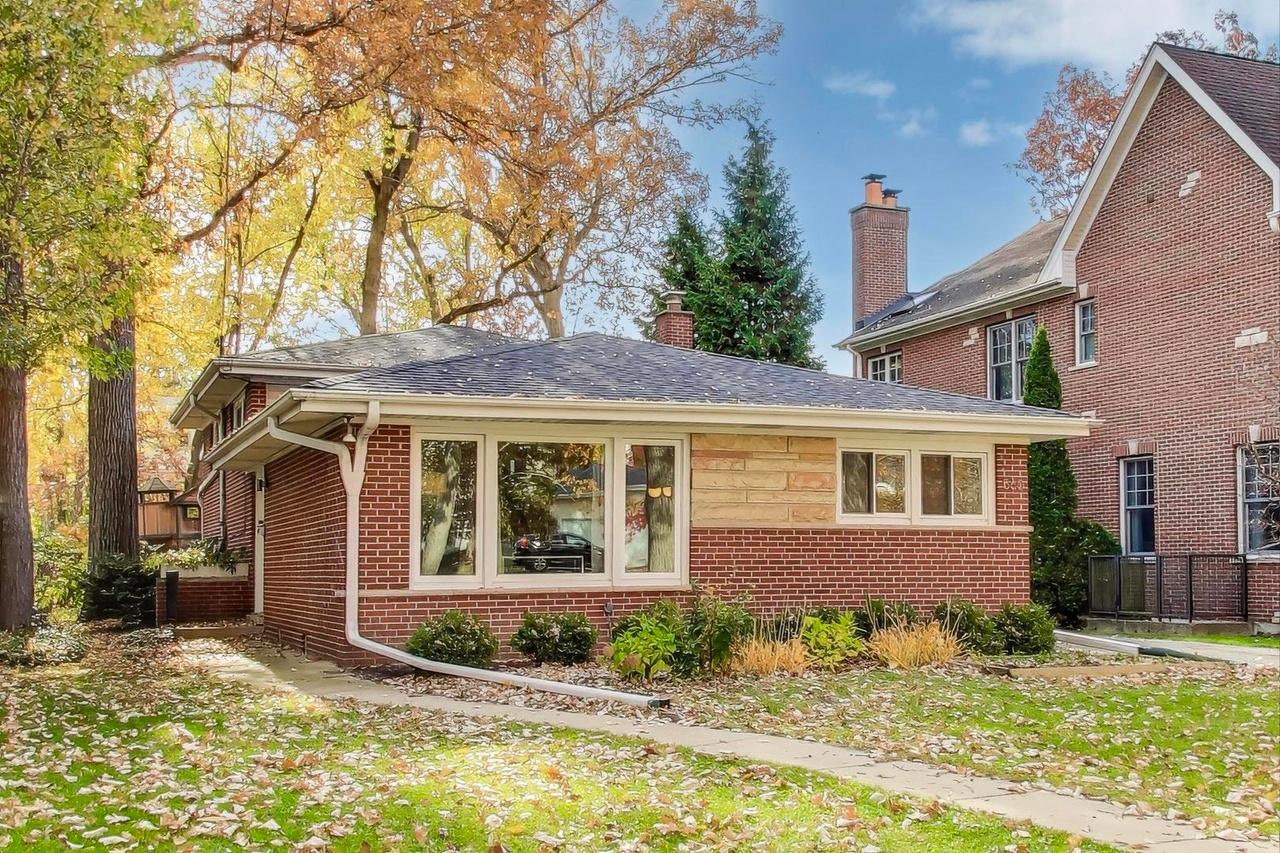
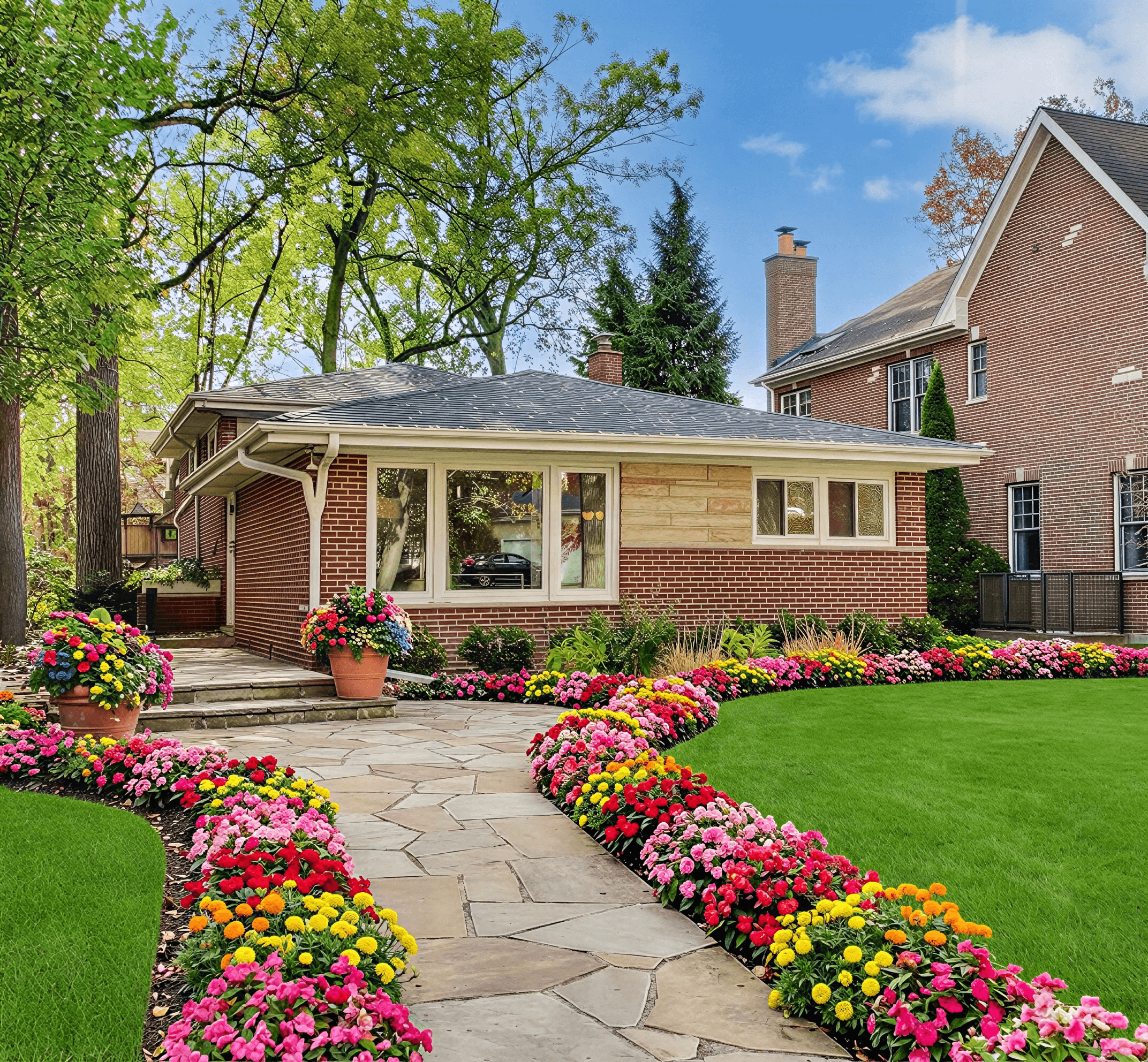
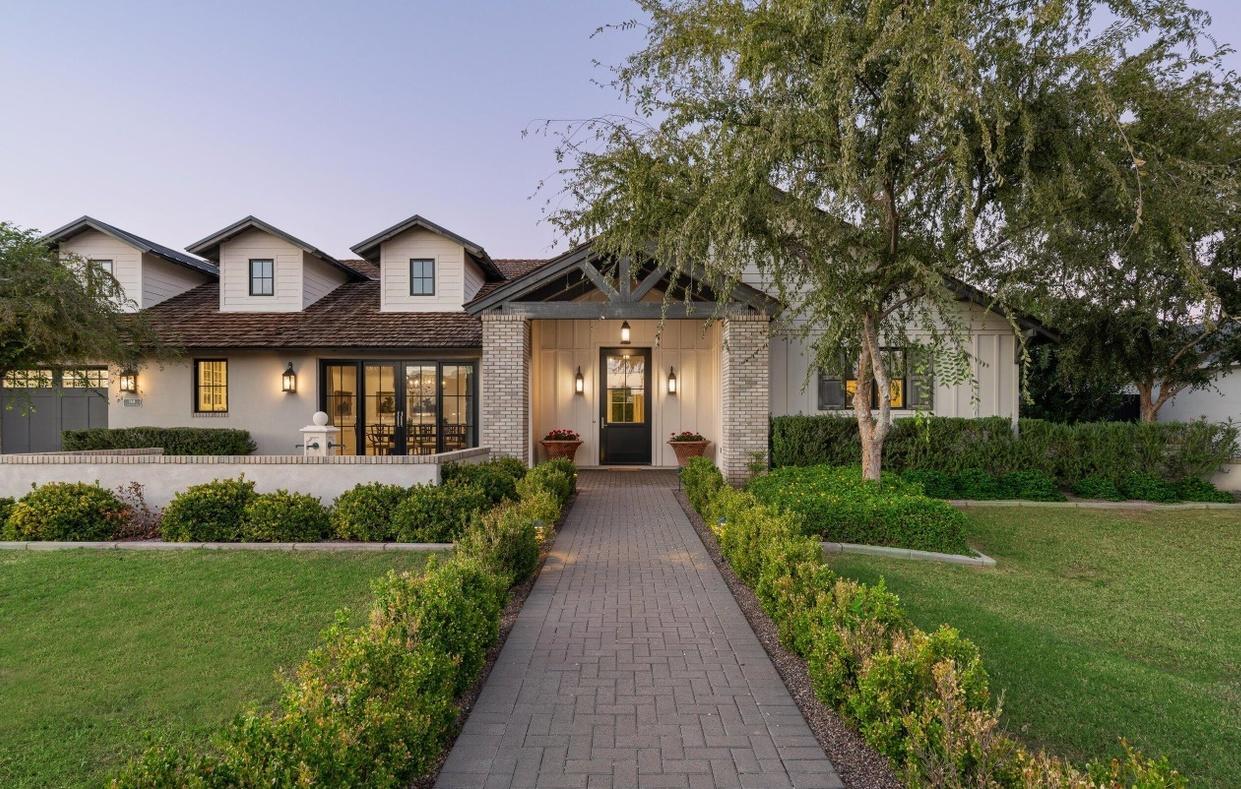
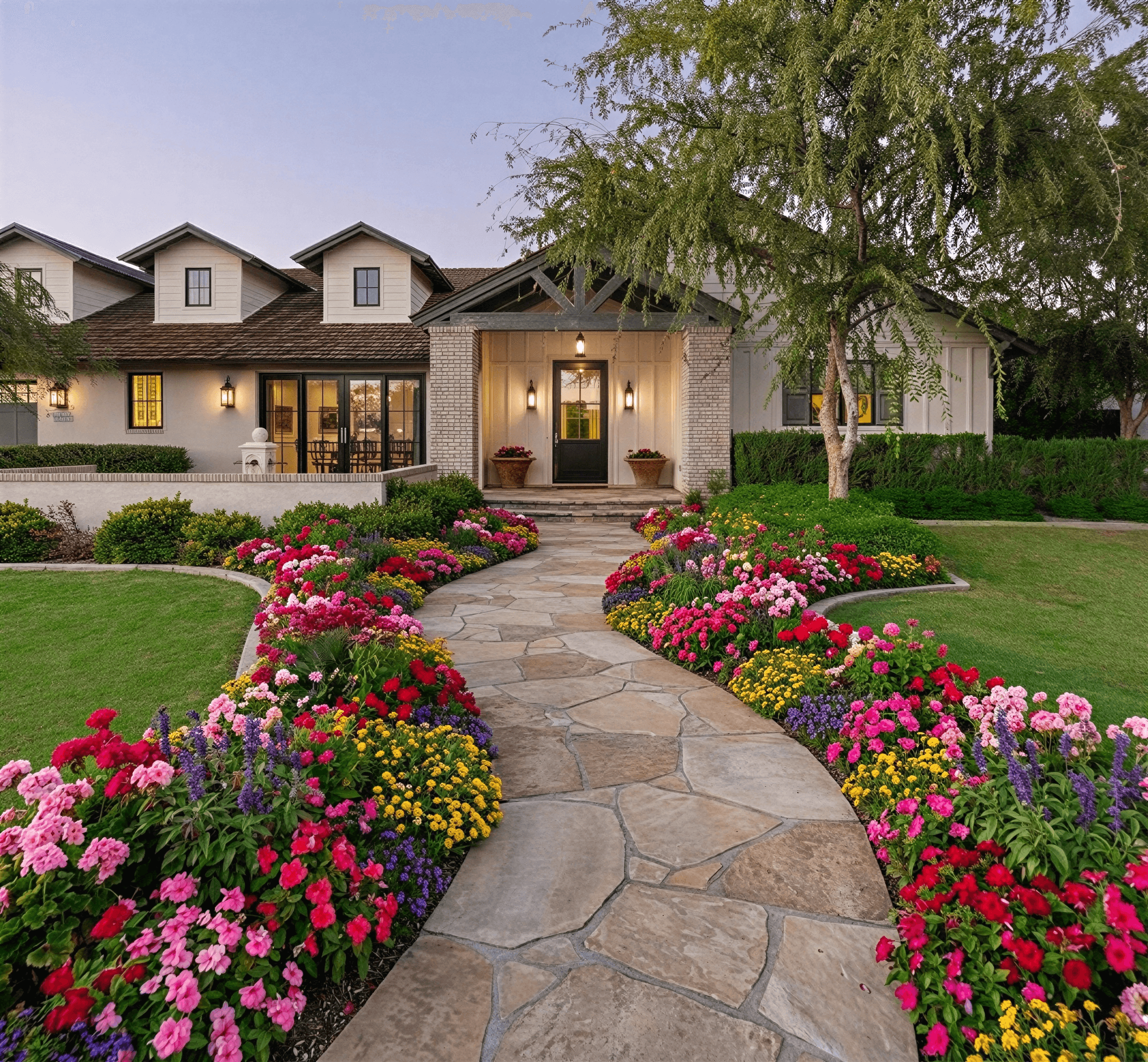
This guide moves beyond generic advice to provide a comprehensive collection of actionable concepts. We will explore 10 distinct approaches, from layered designs with mixed heights to low-maintenance native plant installations and vibrant pollinator-friendly gardens. Each idea includes specific plant palettes, layout notes, and maintenance tips tailored to different architectural styles, climates, and lifestyles. This curated list is designed to give you the confidence and inspiration to transform your home’s first impression. For those who want to see these concepts on their own property before committing, we will also show how a tool like Curb Appeal AI can bring your vision to life instantly.
1. Layered Foundation Planting with Mixed Heights
Layered foundation planting is a timeless technique that uses plants of varying mature heights to create a lush, tiered effect against your home. This approach adds significant depth and visual interest, preventing the flat, one-dimensional look that can occur when all plants are the same size. By placing taller plants in the back, medium-sized shrubs in the middle, and low-growing perennials or groundcovers in the front, you create a seamless and professional-looking landscape that guides the eye naturally toward your home's entrance.
This classic method is one of the most effective foundation planting ideas because it makes a home appear more grounded and established. The layers soften the hard transition from the vertical wall of the house to the flat plane of the lawn, integrating the structure beautifully into its surroundings.
Key Elements of a Layered Design
- Back Layer (Tallest): This layer is planted closest to the foundation. Use taller, narrow evergreens like ‘Sky Pencil’ Holly or columnar Junipers to add vertical structure without blocking windows. For wider spaces, consider climbing roses on a trellis or a graceful Japanese Maple.
- Middle Layer (Medium): This is the workhorse layer, often featuring flowering shrubs or broadleaf evergreens. Plants like Boxwood, Hydrangea, or Azaleas fill out the space, adding color, texture, and mass.
- Front Layer (Shortest): The front row defines the edge of the garden bed. Low-mounding plants, spreading groundcovers, or seasonal annuals work perfectly here. Think Hostas, Creeping Phlox, or Liriope for a clean, finished border.
Pro Tips for Implementation
To execute this design successfully, always plan for the mature size of each plant to avoid overcrowding down the road. Use a mix of textures-the fine needles of a conifer next to the broad leaves of a Hosta, for example-to create a richer composition. Incorporating evergreens ensures your foundation looks great year-round, not just during the growing season. For a deeper dive into the principles behind creating a balanced front yard, you can learn more about how to design a front yard landscape.
2. Symmetrical Foundation Plantings for Traditional Architecture
Symmetrical foundation planting is a formal design approach that creates a balanced, mirror-image landscape on either side of a central point, typically the front door. This classic technique reinforces the architectural lines of traditional homes like Colonial, Federal, and Georgian styles, producing a look of order, stability, and timeless elegance. The core principle is simple: whatever is planted on the left side of the entrance is mirrored on the right, from shrubs and perennials to container arrangements.
This method is one of the most powerful foundation planting ideas for homes with symmetrical facades because it complements the architecture rather than competing with it. The resulting harmony between the house and the landscape creates a powerful and sophisticated curb appeal, guiding the eye directly to the home's entrance.
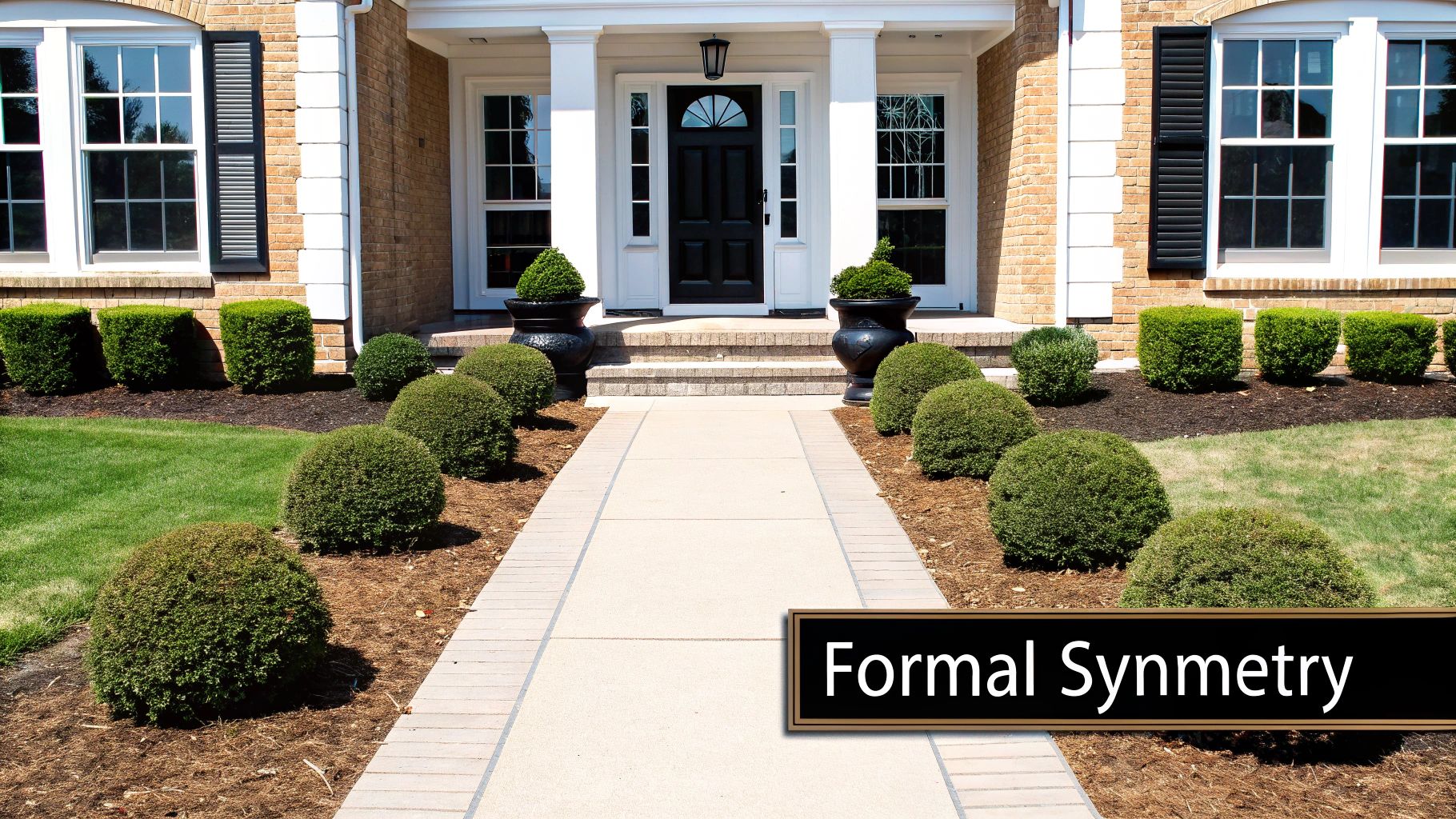
Key Elements of a Symmetrical Design
- Anchor Plants: These are identical plants placed on each side of the doorway to create the primary focal points. Think paired topiaries, conical evergreens like Dwarf Alberta Spruce, or large flowering shrubs such as Limelight Hydrangeas.
- Repeating Mid-Layer: In the space between the anchor plants and the corners of the house, use repeating groups of mid-sized plants. A row of neatly clipped Boxwoods or a mass planting of Azaleas on each side reinforces the mirror-image effect.
- Formal Edging: A clean, crisp border defines the beds and enhances the design's formality. Low-growing, uniform plants like Dwarf Mondo Grass or Liriope, or even a manicured boxwood hedge, work perfectly to frame the entire composition.
Pro Tips for Implementation
To achieve a true symmetrical look, choose plants with predictable, uniform growth habits. Irregular or wild-growing plants can quickly disrupt the balance. Regular pruning and maintenance are crucial to keep both sides looking identical in size and shape. You can also use hardscaping elements like identical urns, garden statues, or symmetrical walkways to further strengthen the design's formal structure. Using a landscape design tool can help you visualize the layout and ensure perfect balance before you plant.
3. Low-Maintenance Native Plant Foundation Designs
Embracing native plants for your foundation beds is a sustainable and intelligent approach that creates a garden perfectly attuned to your local environment. This method involves using plants indigenous to your region, which are naturally adapted to the climate, soil, and rainfall. The result is a resilient, low-maintenance landscape that supports local wildlife, requires less water and fertilizer, and offers an authentic sense of place.
This strategy is one of the most practical foundation planting ideas because it works with nature, not against it. By choosing species that have thrived in your area for centuries, you reduce the constant upkeep associated with non-native ornamentals. These plantings connect your home to the surrounding ecosystem, providing food and shelter for pollinators like bees and butterflies, and creating a truly harmonious design.
Key Elements of a Native Design
- Regional Anchors (Back Layer): Select taller native shrubs or small trees that provide structure. In the Pacific Northwest, consider Oregon Grape (Mahonia aquifolium), while the Southeast might feature an Oakleaf Hydrangea (Hydrangea quercifolia). These plants serve as the backbone of the design.
- Pollinator Powerhouses (Middle Layer): This layer should be filled with flowering perennials that attract beneficial insects. Midwest gardens shine with Coneflowers (Echinacea purpurea) and Black-Eyed Susans (Rudbeckia hirta), while California landscapes can use vibrant Ceanothus.
- Textural Groundcovers (Front Layer): Use low-growing native grasses or spreading perennials to soften edges and suppress weeds. Little Bluestem (Schizachyrium scoparium) is a great choice for prairie-style gardens, and native sedges or wild ginger work well in shadier spots.
Pro Tips for Implementation
To ensure success, consult a local native plant society or nursery to find the species best suited for your specific conditions. Group plants with similar water needs together, a practice known as hydrozoning, to make watering more efficient during the establishment period. Mulch generously after planting to retain soil moisture and give your native garden a strong start. Be patient, as it may take a couple of seasons for native plants to fully establish and reveal their mature beauty. For more on this topic, the Lady Bird Johnson Wildflower Center is an excellent resource.
4. Cottage Garden Foundation Plantings
A cottage garden foundation planting trades formal structure for romantic charm and abundant, overflowing beauty. This style uses a dense mix of perennials, flowering shrubs, and self-seeding annuals to create a layered, textured, and seemingly informal look that softens the hard lines of a home’s foundation. The goal is a lush, welcoming, and slightly wild appearance that celebrates color, fragrance, and seasonal change.
This approach is one of the most expressive foundation planting ideas for homes with traditional, farmhouse, or Victorian architecture. It creates an enchanting, garden-forward aesthetic that makes a property feel both lived-in and timeless, wrapping the base of the home in a tapestry of flowers and foliage.
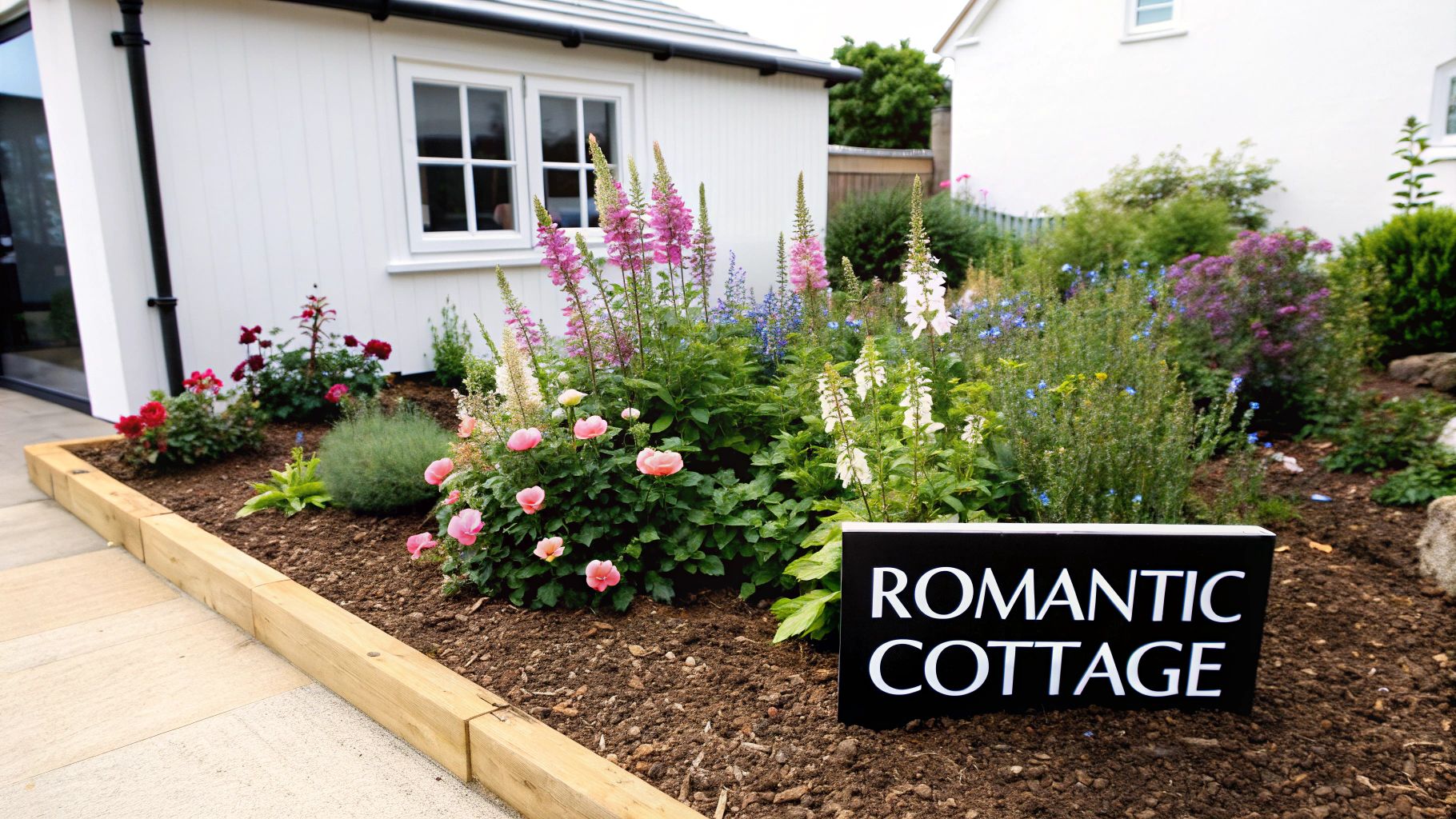
Key Elements of a Cottage Design
- Romantic Anchor Plants: Start with classic shrubs like climbing roses on a trellis, billowing hydrangeas, or fragrant lavender. These provide structure and serve as the backbone of the design.
- Perennial Profusion: Fill the middle ground with a mix of classic cottage perennials. Delphiniums and foxgloves add vertical drama, while peonies, coneflowers, and shasta daisies provide classic floral forms and reliable color.
- Charming Fillers: Use self-seeding annuals and low-growing perennials to fill every gap. Plants like sweet alyssum, catmint, and lady's mantle will spill over bed edges, creating a soft, full appearance that integrates the garden with paths and lawns.
Pro Tips for Implementation
To achieve the signature cottage look without it becoming chaotic, repeat specific colors or plant groupings throughout the bed to create a sense of rhythm and cohesion. Plan for successive blooms by including spring bulbs, summer perennials, and fall-blooming asters to ensure your garden is vibrant from spring through autumn. Deadheading spent flowers regularly will encourage new blooms and keep the garden looking tidy. For a deeper exploration of this style, explore these cottage garden landscaping ideas.
5. Modern Minimalist Foundation Plantings
Modern minimalist foundation planting embraces the "less is more" philosophy, using clean lines, bold architectural shapes, and significant negative space to create a sophisticated, uncluttered look. This contemporary approach focuses on a limited plant palette, geometric forms, and a restrained color scheme to complement modern, mid-century, or Scandinavian-inspired home architecture. Rather than filling every inch of space, this design emphasizes the form and texture of individual plants.
This style is one of the most impactful foundation planting ideas for homes with strong architectural features, as it enhances rather than distracts from the building's design. The intentional use of space and carefully selected plants creates a calming, high-end aesthetic that feels both deliberate and effortlessly chic, highlighting the home's modern character.
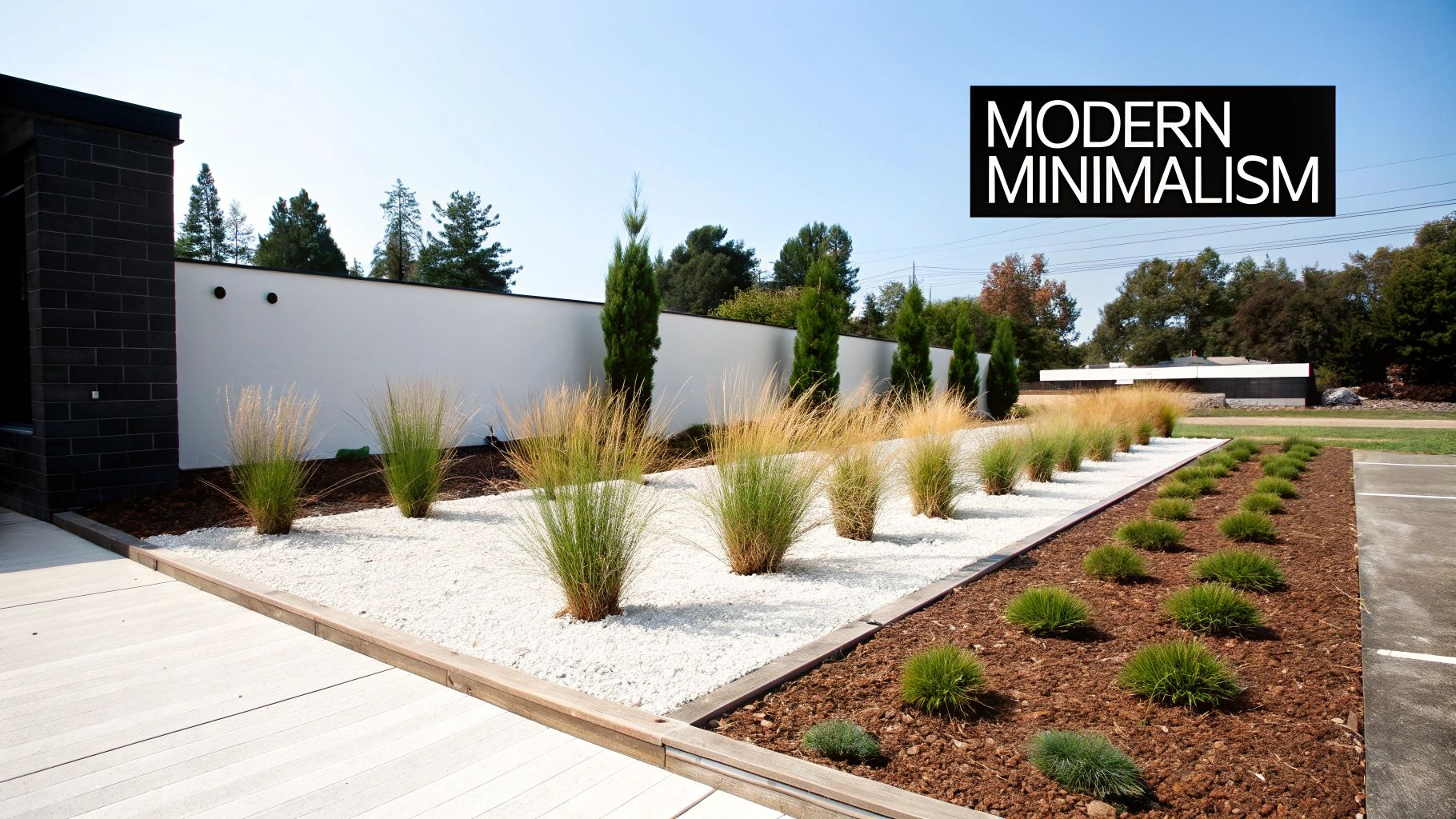
Key Elements of a Modern Minimalist Design
- Architectural Plants: Select plants for their strong, year-round form. Think sculptural like Agave, vertical like Horsetail Reed, or textural like Ornamental Grasses. Dwarf conifers and tightly clipped spheres of Boxwood also provide excellent structure.
- Limited Palette: Restraint is key. Choose just two or three plant varieties and repeat them in organized groups or linear arrangements. A simple color scheme, often monochromatic with shades of green, silver, or deep burgundy, enhances the minimalist feel.
- High-Quality Hardscape: The materials around the plants are just as important as the plants themselves. Use decomposed granite, large format pavers, polished river rocks, or steel edging to define clean, geometric beds and pathways.
Pro Tips for Implementation
To successfully create a modern minimalist look, prioritize negative space. Don't be afraid to leave areas of the bed open with just a mulch or stone groundcover; this allows each plant to be appreciated as a sculptural element. Use repetition to create rhythm and cohesion, planting a single species in a straight line or a grid pattern for maximum impact. Maintain sharp, clean lines by pruning ruthlessly and keeping edges crisp. This design style is less about dense greenery and more about creating a powerful visual statement through simplicity and structure.
6. Mediterranean and Coastal Foundation Plantings
Mediterranean and coastal foundation plantings bring a sun-drenched, European villa aesthetic to your home's exterior. This style relies on drought-tolerant plants with silvery foliage, sculptural forms, and aromatic qualities to create a relaxed yet elegant landscape. It’s perfect for homes in warm, arid, or seaside locations, as the plant palette is naturally adapted to heat, sun, and even salty air.
These types of foundation planting ideas are exceptionally water-wise and low-maintenance once established. The design uses gravel, stone, and a curated selection of plants to evoke the rugged beauty of a seaside cliff or a Tuscan hillside, beautifully complementing stucco, stone, or light-colored home exteriors.
Key Elements of a Mediterranean Design
- Structural Plants: These form the backbone of the design. Use small Olive trees, Italian Cypress for verticality, or large Rosemary shrubs pruned into architectural shapes. These plants provide year-round structure and a classic Mediterranean feel.
- Aromatic Mid-Layers: Fill the middle ground with fragrant herbs and flowering shrubs. Lavender, Santolina (Cotton Lavender), and Sage offer beautiful silver or grey-green foliage and seasonal color, releasing a pleasant aroma when brushed against.
- Textural Groundcovers and Accents: The front of the bed can feature low-growing, textural plants. Thyme, ornamental grasses like Blue Fescue, or succulents such as Agave provide interesting shapes and require minimal water.
Pro Tips for Implementation
Success with a Mediterranean design hinges on providing excellent drainage. Amend your soil with sand or fine gravel to prevent root rot. Mulch with pebbles or decomposed granite instead of organic bark to keep the plant crowns dry and reflect heat. Once established, these plants thrive on deep, infrequent watering. For more inspiration on creating a water-efficient landscape, explore these drought-tolerant landscaping ideas. This approach not only conserves water but also reduces garden chores, giving you more time to enjoy the view.
7. Tropical and Lush Foundation Plantings
Tropical and lush foundation plantings transform a home's exterior into an exotic, resort-like oasis. This style utilizes plants with bold, oversized leaves, vibrant and unusual flowers, and a dense, layered growth habit to create a feeling of abundance and escape. It’s particularly suited for homes in warm, humid climates (USDA zones 9-11), where these species thrive year-round, offering constant color and dramatic texture.
This approach is one of the most transformative foundation planting ideas because it completely redefines a home’s atmosphere. The exuberant foliage softens architectural lines with a wild, naturalistic feel, making the property seem like a private, secluded retreat. It’s an ideal choice for creating a strong sense of place in regions like Florida, Southern California, or Hawaii.
Key Elements of a Tropical Design
- Architectural Foliage (Back Layer): Use plants with large, structural leaves as the backdrop. Elephant Ears (Alocasia, Colocasia), Tree Ferns, or graceful palms like the Areca Palm create a dramatic, verdant canvas against the house.
- Vibrant Color (Middle Layer): This layer is for show-stopping blooms and colorful foliage. Incorporate Hibiscus, Bird of Paradise, and Crotons for a riot of hot colors. Flowering vines like Bougainvillea trained on a trellis can add spectacular vertical interest.
- Lush Fillers (Front Layer): The front of the bed should be filled with dense, lower-growing plants that tie the composition together. Ti Plants (Cordyline fruticosa) with their colorful leaves, Coleus, and spreading groundcovers like Sweet Potato Vine add texture and complete the lush look.
Pro Tips for Implementation
Success with a tropical theme hinges on meeting the plants' needs for water and nutrients. Install a drip irrigation system to provide consistent moisture directly to the roots. A thick layer of mulch is crucial for retaining soil moisture and suppressing weeds. During the active growing season, fertilize regularly to support vigorous growth and continuous flowering. To see how these bold textures and colors might look against your own home, you can visualize different tropical styles with a design tool.
8. Japanese-Inspired Foundation Plantings
A Japanese-inspired foundation planting design brings a sense of tranquility, balance, and intentionality to your home's exterior. This approach moves beyond simply filling space with plants and instead focuses on a carefully curated composition that emphasizes natural forms, texture, and the artful use of negative space. The goal is to create a serene, meditative scene that complements the architecture and evokes a feeling of calm.
This style is one of the most thoughtful foundation planting ideas because it creates a powerful sense of place and artistry. By incorporating principles like wabi-sabi (finding beauty in imperfection) and asymmetry, the design feels both natural and deliberate, transforming your foundation into a living sculpture that connects your home to the landscape.
Key Elements of a Japanese-Inspired Design
- Structural Plants: These are the focal points and bones of the garden. A gracefully weeping Japanese Maple, a sculptural Mugo Pine, or slender Bamboo (clumping varieties are recommended) provide year-round structure and form.
- Textural Fillers: Softer textures contrast with the structural elements. Think lush carpets of Moss, finely textured Mondo Grass, or the broad, elegant fronds of Japanese Forest Grass and various Ferns.
- Hardscape Elements: Natural materials are essential to this style. Incorporate carefully placed river stones, a stone lantern, a small water feature, or a bamboo screen to add authenticity and create a harmonious balance between living and non-living elements.
Pro Tips for Implementation
To achieve a successful Japanese-inspired look, prioritize restraint; less is often more. Rather than perfect symmetry, aim for an asymmetrical balance that feels natural and dynamic. Prune trees and shrubs thoughtfully, not just to control size, but to reveal their unique branch structure and character. Most importantly, treat empty space as a crucial design element, allowing plants and stones room to breathe and be appreciated individually.
9. Pollinator-Friendly Foundation Plantings
Creating a pollinator-friendly foundation planting transforms your home's exterior into a vibrant, living ecosystem. This approach prioritizes native flowering plants that provide essential food and habitat for bees, butterflies, hummingbirds, and other beneficial insects. By selecting plants with staggered bloom times, you can create a beautiful, ever-changing garden that supports local wildlife from spring through fall while boosting your home's curb appeal.
This method is one of the most rewarding foundation planting ideas because it marries aesthetic beauty with ecological function. A well-designed pollinator garden softens the lines of your home with dynamic color and movement, creating a landscape that is both visually engaging and environmentally responsible. It connects your property to the greater local ecosystem, contributing to biodiversity right outside your front door.
Key Elements of a Pollinator-Friendly Design
- Host Plants: These are crucial for the lifecycle of specific pollinators, like native milkweed for monarch butterfly caterpillars. Integrating host plants ensures you are supporting the next generation of pollinators.
- Nectar Sources: Plant a diverse array of flowers to provide a continuous food supply. Coneflowers, Black-eyed Susans, Bee Balm, and native Salvias offer rich nectar that attracts a wide variety of visitors.
- Structural Elements: Include plants that offer shelter and nesting opportunities. Leaving seed heads of plants like coneflower or ornamental grasses standing through winter provides food for birds and cover for hibernating insects.
Pro Tips for Implementation
To create an effective pollinator habitat, plant in dense drifts or clusters of 3-5 of the same species rather than dotting single plants around. This creates a larger, more visible target for pollinators and makes a stronger visual impact. Avoid using pesticides, as they can harm the very creatures you are trying to attract. Instead, focus on building healthy soil and choosing pest-resistant native plants. For regional plant lists, consult resources like the Xerces Society or your local native plant society to ensure you are selecting species best suited for your area.
10. Seasonal Color Foundation Plantings with Year-Round Interest
Designing for seasonal color ensures your home's foundation is a dynamic and captivating feature all year, not just for a few months. This approach involves strategically selecting plants that offer peak interest in different seasons, from the first spring bulbs to the stark beauty of winter branches and berries. The goal is to create a landscape that continuously evolves, providing a sequence of colors, textures, and forms.
This is one of the most rewarding foundation planting ideas because it celebrates the full cycle of nature against the backdrop of your home. A four-season garden offers constant curb appeal, preventing the bare, dormant look that can dominate in colder months and keeping the landscape vibrant and alive through every change.
Key Elements of a Four-Season Design
- Winter Structure (The "Bones"): Start with a backbone of evergreens like Boxwood, Holly, or Dwarf Spruce to provide permanent green structure. Add plants with interesting bark or branching, such as Red Twig Dogwood or a Paperbark Maple.
- Spring Awakening (Early Color): Layer in early-blooming perennials and bulbs. Plant Daffodils, Tulips, and Crocuses in the fall for a burst of color as the weather warms. Shrubs like Forsythia or Azaleas also provide a spectacular spring show.
- Summer Brilliance (Peak Bloom): This is the time for lush foliage and vibrant flowers. Use long-blooming perennials like Coneflower and Black-Eyed Susan, and flowering shrubs such as Hydrangeas or Roses to create a full, colorful display.
- Autumn Finale (Rich Hues): Incorporate plants known for their fall color. Ornamental grasses like Switchgrass turn brilliant shades of gold and red, while shrubs like Burning Bush or Oakleaf Hydrangea provide fiery foliage. Asters and Sedum offer late-season blooms.
Pro Tips for Implementation
To achieve a successful four-season design, think in layers both in space and time. Plant spring bulbs around the base of perennials; by the time the perennials leaf out, the bulb foliage will be dying back. Always include a strong evergreen presence to ground the design when deciduous plants are bare. Finally, choose at least one plant for each season that you consider a "star" to ensure there is always a focal point.
10 Foundation Planting Styles Comparison
| Style | 🔄 Implementation Complexity | ⚡ Resource Requirements | ⭐📊 Expected Outcomes | 💡 Ideal Use Cases | Key Advantages |
|---|---|---|---|---|---|
| Layered Foundation Planting with Mixed Heights | 🔄 Medium — planning for tiers; ongoing pruning | ⚡ Medium — multiple species, space for mature sizes | ⭐ High visual depth; 📊 strong year‑round structure | Entryways, homes needing architectural framing | Frames architecture; versatile across styles; year‑round interest |
| Symmetrical Foundation Plantings for Traditional Architecture | 🔄 Medium — precise spacing & maintenance | ⚡ Low–Medium — matched plants, regular pruning | ⭐ High formality & curb appeal; 📊 excellent for photos/listings | Colonial, Federal, formal homes; grand entrances | Conveys order and sophistication; easy to reproduce visually |
| Low‑Maintenance Native Plant Foundation Designs | 🔄 Low — site‑appropriate planning; minimal ongoing care | ⚡ Low — reduced water/fertilizer; initial sourcing of natives | ⭐ Durable & resilient; 📊 strong ecological benefits | Eco‑minded homeowners; low‑care landscapes | Low long‑term cost/time; supports local wildlife and resilience |
| Cottage Garden Foundation Plantings | 🔄 Medium–High — dense composition and bloom succession | ⚡ Medium–High — many varieties, regular deadheading | ⭐ High seasonal color & charm; 📊 very garden‑forward curb appeal | Cottage, historic, and informal homes | Rich texture/color; pollinator‑friendly; forgiving aesthetic |
| Modern Minimalist Foundation Plantings | 🔄 Low–Medium — precise selection and maintenance | ⚡ Low — limited palette, quality hardscape | ⭐ High sophistication; 📊 low maintenance when executed well | Modern/mid‑century homes, minimalist architecture | Clean lines; cost‑effective; emphasizes home architecture |
| Mediterranean and Coastal Foundation Plantings | 🔄 Medium — soil/drainage prep and siting | ⚡ Low — drought‑tolerant species; specific soil amendments | ⭐ High drought resilience & scent; 📊 year‑round foliage interest | Coastal, warm, and arid climates | Low water use; fragrant plants; salt and heat tolerant |
| Tropical and Lush Foundation Plantings | 🔄 High — layered canopy, irrigation, pest care | ⚡ High — water, fertilizer, warm‑climate species | ⭐ Very high visual impact; 📊 resort‑like curb appeal | Warm zones (9–11), resort properties, tropical homes | Bold color/texture; abundant flowering; wildlife attractant |
| Japanese‑Inspired Foundation Plantings | 🔄 High — skilled pruning and composition | ⚡ Medium — quality materials, trained specimens | ⭐ High refinement & tranquility; 📊 understated, lasting appeal | Homes seeking serene, contemplative landscapes | Timeless balance; emphasis on form and negative space |
| Pollinator‑Friendly Foundation Plantings | 🔄 Medium — seasonal planning and species selection | ⚡ Medium — native perennials, pesticide‑free care | ⭐ High ecological impact; 📊 attracts bees, butterflies, hummingbirds | Eco‑conscious yards, habitat restoration, community projects | Supports pollinators; colorful succession; environmental value |
| Seasonal Color Foundation Plantings with Year‑Round Interest | 🔄 High — complex planting schedule and pruning | ⚡ High — diverse species, seasonal inputs | ⭐ High continuous interest; 📊 maximum curb appeal across seasons | Sellers, homeowners who want four‑season display | Continuous visual interest; appeals to buyers; wildlife support |
From Inspiration to Installation: Your Next Steps
You've explored a diverse landscape of foundation planting ideas, from the structured elegance of symmetrical designs to the wild, pollinator-friendly charm of a cottage garden. The journey through layered textures, seasonal color palettes, and climate-specific selections reveals a core truth: the space where your home meets the earth is a powerful canvas for expressing style and creating a welcoming first impression. It's not just about hiding a concrete foundation; it’s about crafting a cohesive and beautiful transition from the natural world to your front door.
A successful foundation planting is a thoughtful blend of art and science. It respects your home's architectural lines, adapts to your regional climate, and aligns with the level of maintenance you’re prepared to commit to. As we've seen, a modern home can be elevated by minimalist grasses and sculptural evergreens, while a traditional brick facade finds its perfect match in classic boxwoods and hydrangeas. The key is intentionality in every choice.
Turning Vision into Reality
The most impactful takeaway is that a great design doesn't happen by accident. It requires a plan that considers scale, texture, color, and year-round interest. Before you ever break ground, your goal is to move from abstract inspiration to a concrete, actionable blueprint. This is where many homeowners get stuck, hesitating to commit time and money to a plan they can't fully visualize.
Key principles to remember:
- Architectural Harmony: Your chosen plants and layout should complement, not compete with, your home's style.
- Right Plant, Right Place: Always consider sun exposure, soil type, and your USDA Hardiness Zone to ensure plants thrive.
- Four-Season Interest: A dynamic garden looks good in every season. Blend evergreen structure with seasonal blooms, fall color, and winter texture.
- Scale and Proportion: Use a mix of heights to create layers, but ensure the mature size of your plants won't overwhelm windows, doors, or walkways.
Your Actionable Path Forward
Translating these concepts into a real-world garden is your next great adventure. A clear plan is your most valuable tool, preventing costly mistakes and ensuring the final result matches your vision. Rather than guessing which plants will look best against your home’s specific siding or trim color, you can eliminate uncertainty.
A photorealistic visualization serves as the perfect bridge between the foundation planting ideas in this article and the living landscape you want to create. It acts as a shopping list for the nursery and a precise guide for installation, whether you are tackling the project yourself or hiring a professional landscaper. This step transforms a daunting task into an exciting and manageable process, empowering you to invest in your home's curb appeal with absolute confidence. Embracing this final planning stage is what separates a good garden from a truly spectacular one.
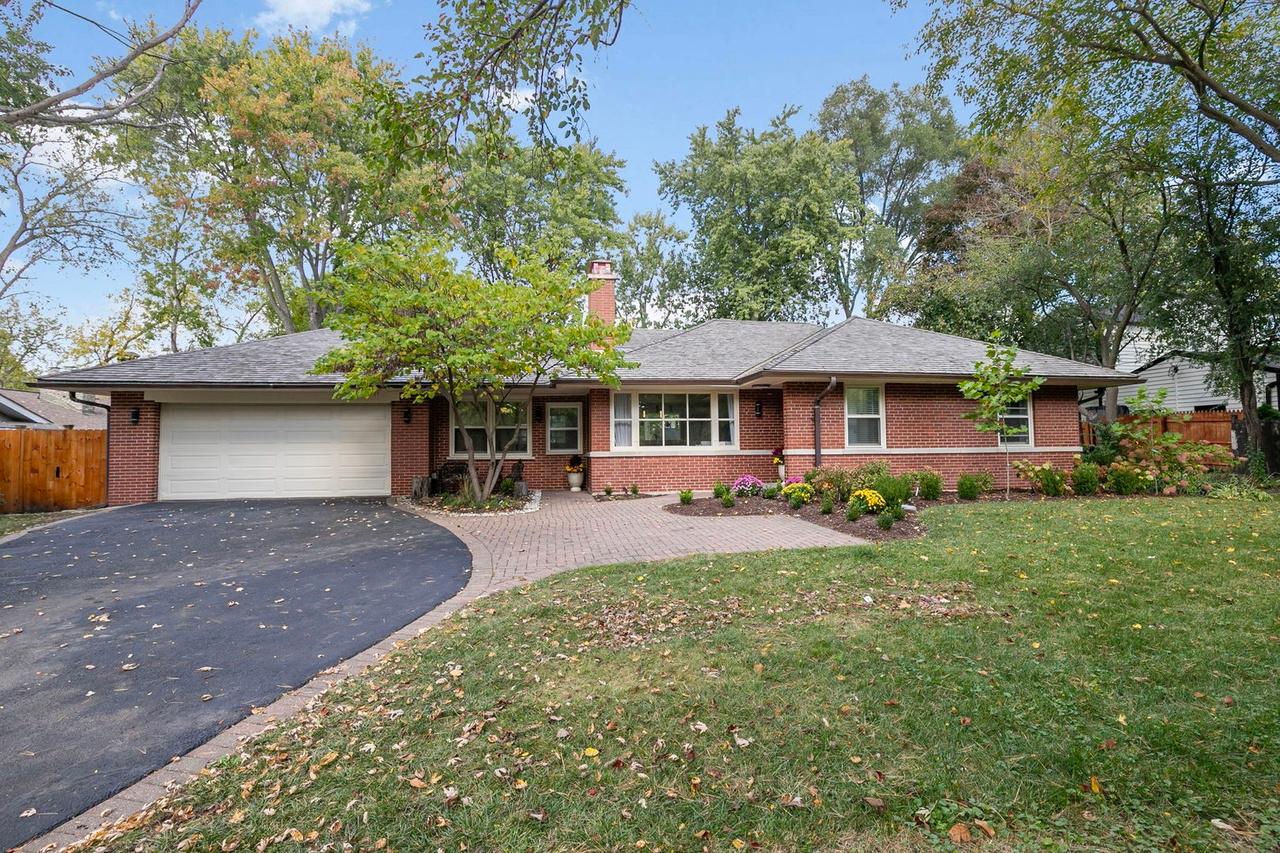
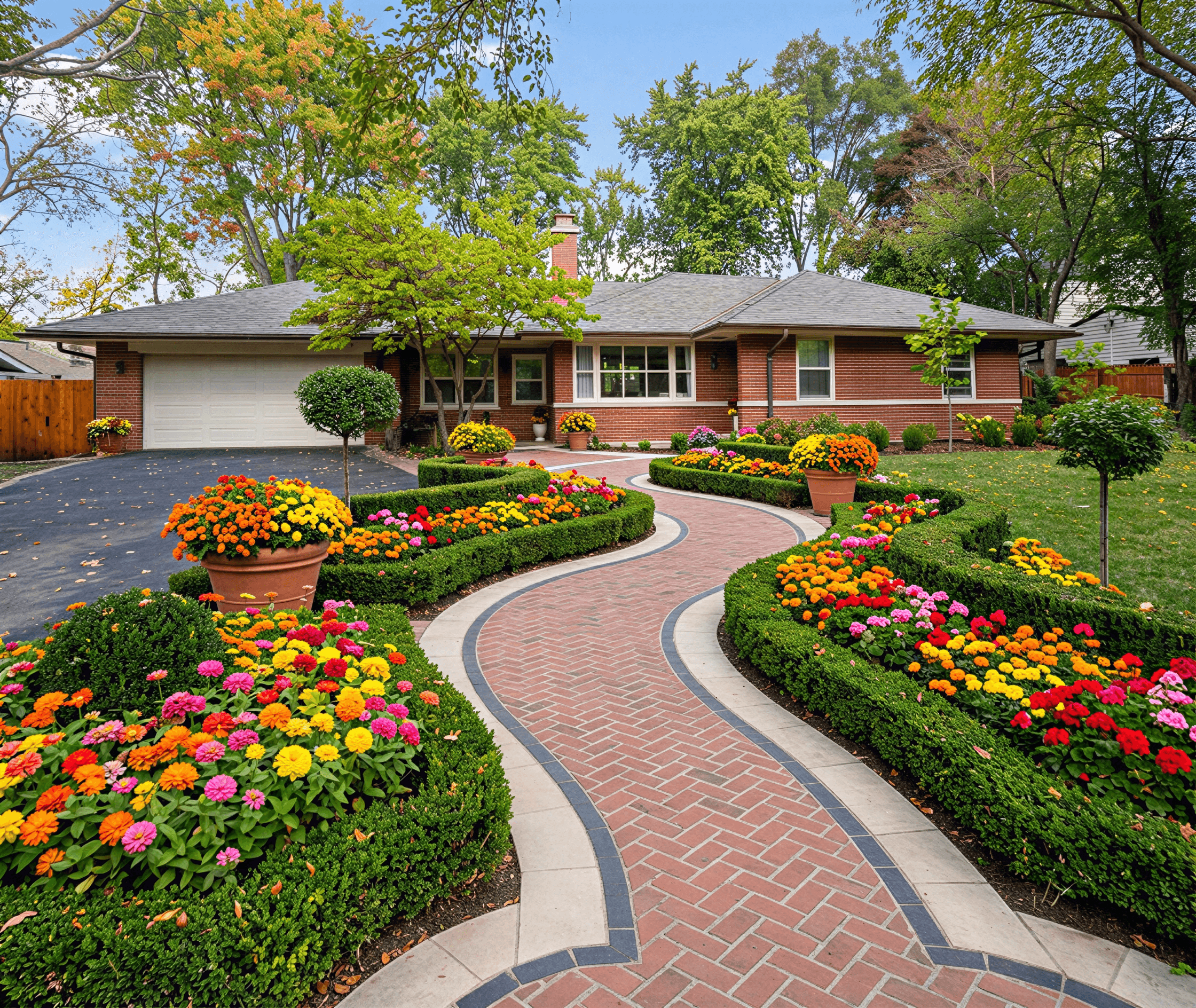
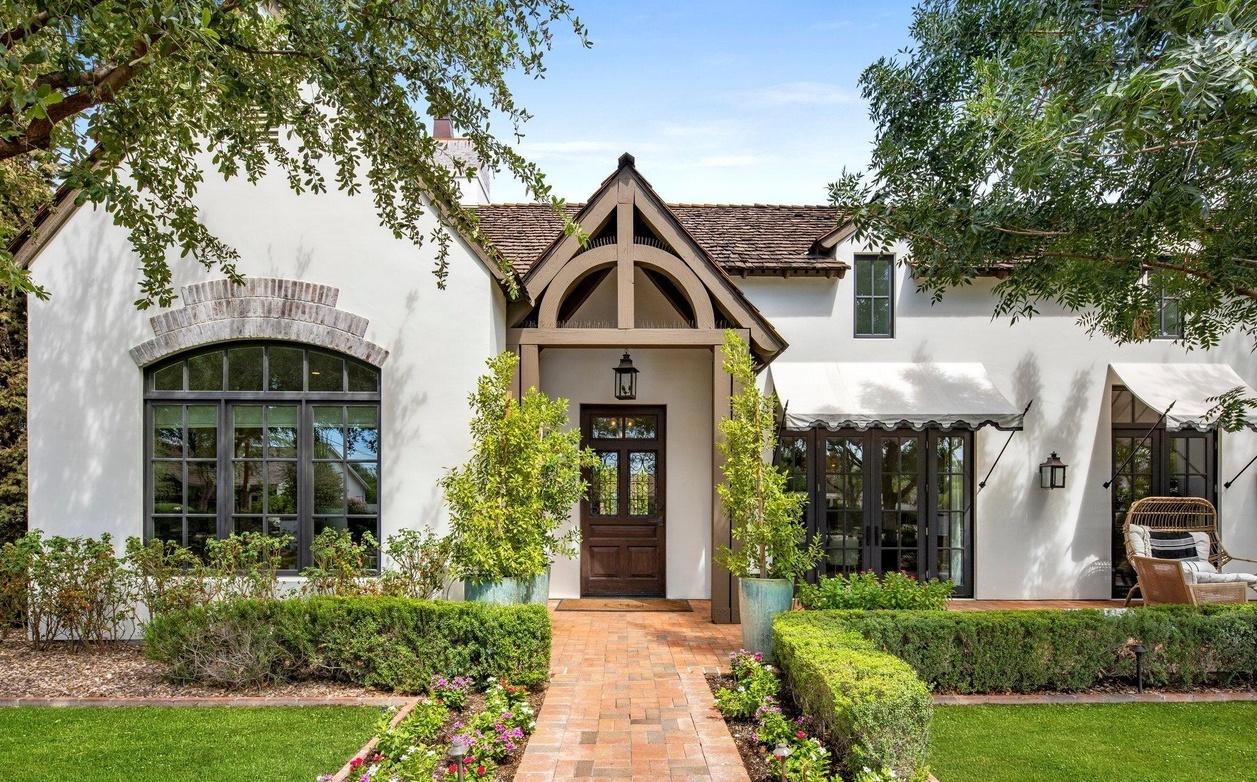
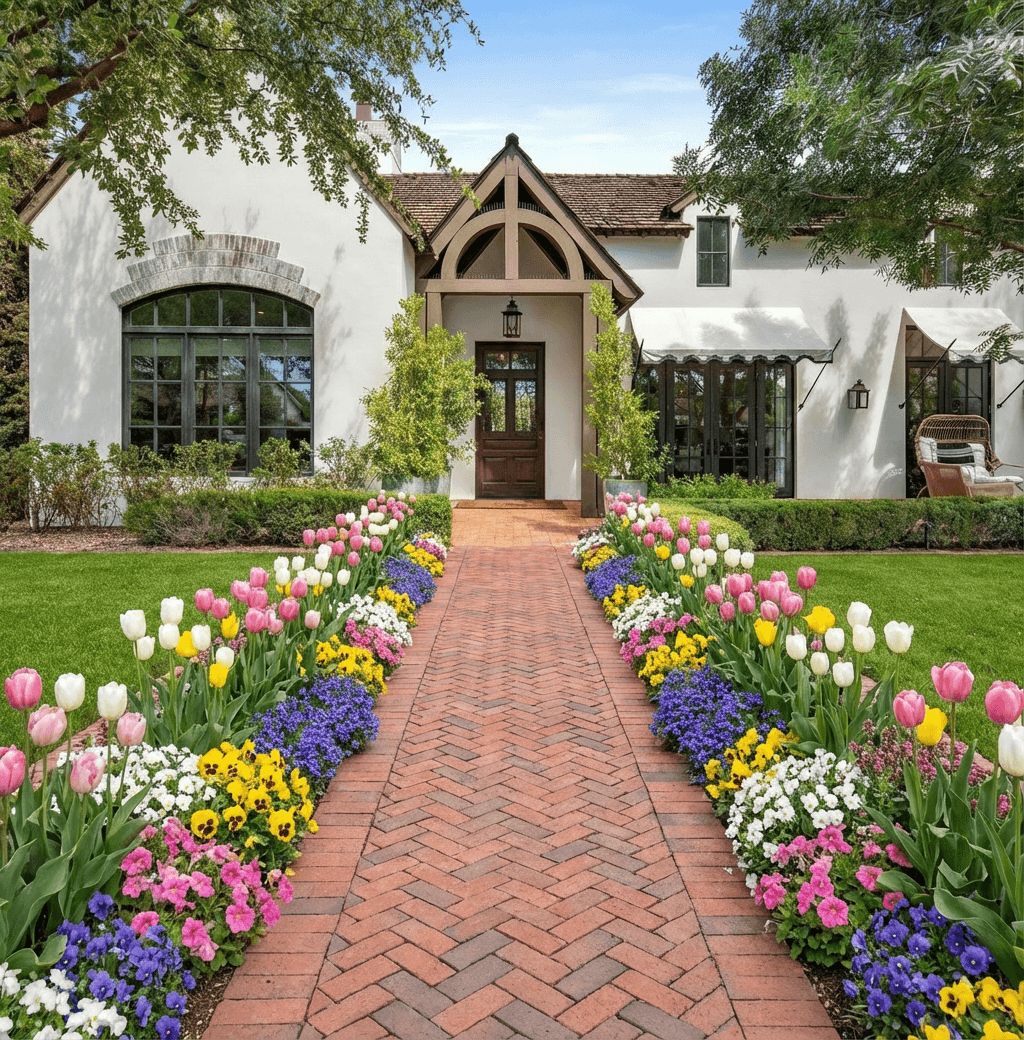
Ready to stop guessing and start visualizing? Upload a photo of your home to Curb Appeal AI and instantly see how these different foundation planting ideas will look in your own yard, complete with climate-appropriate plant lists. Curb Appeal AI transforms your inspiration into a photorealistic design, giving you the confidence to create the stunning front yard you've always wanted.