How to Improve Curb Appeal A Practical Guide for Every Home
Curb appeal isn’t just about having a nice-looking house—it's the first, and often most powerful, statement your home makes. It’s a gut feeling, that instant impression that communicates value, care, and pride. Getting it right involves a smart mix of deep cleaning, targeted maintenance, and thoughtful design. This guide will walk you through exactly how to create a standout first impression that pays off, both emotionally and financially.
The Real Value of a Great First Impression
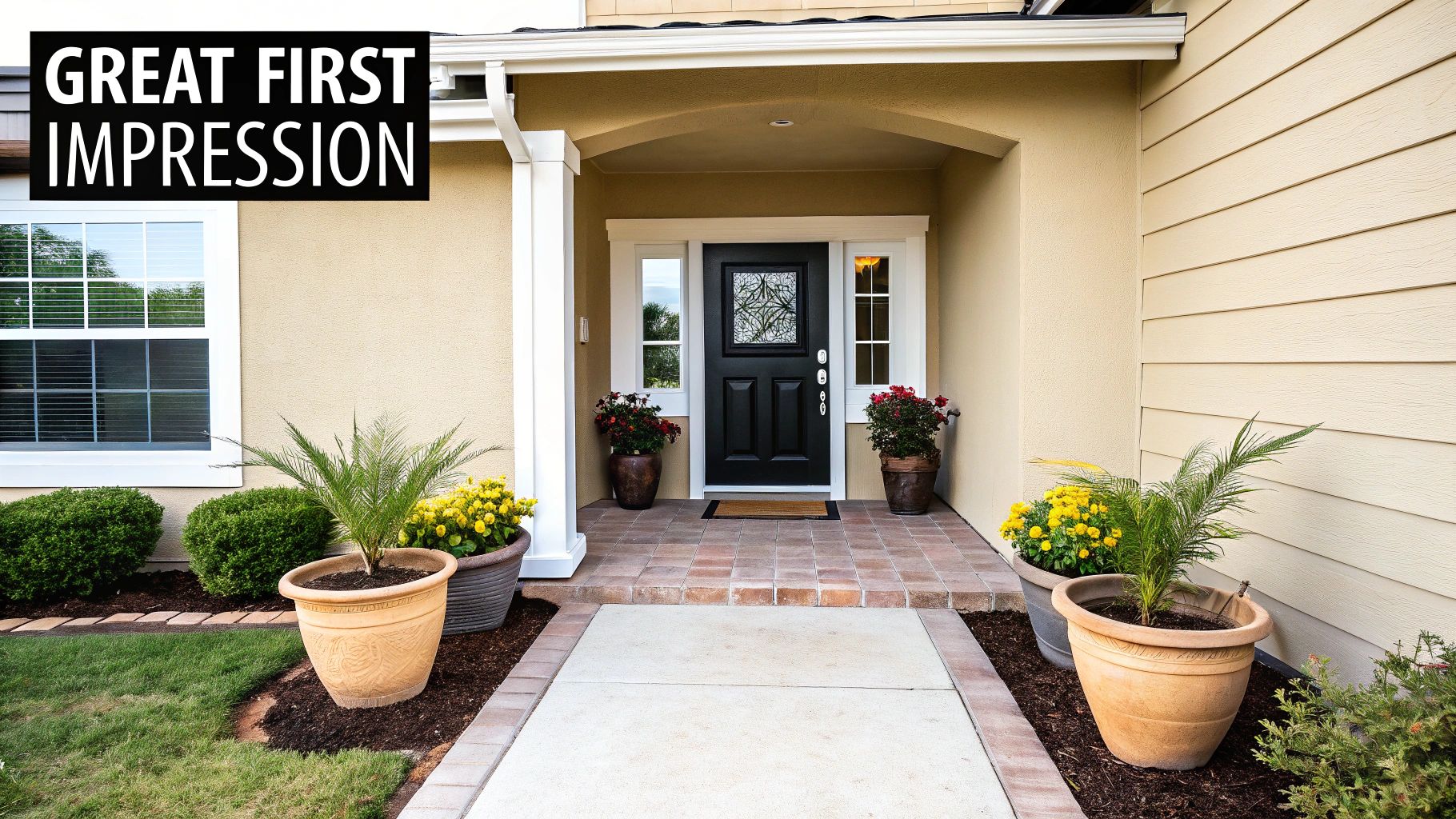
People form an opinion about your home in a matter of seconds. Long before they step inside, the view from the street has already set their expectations. A well-kept exterior instantly signals that the rest of the home is likely just as cared for, building a sense of trust and quality right from the get-go.
This perception has a real, measurable impact on your wallet. A home that looks polished from the outside naturally attracts more attention and can justify a higher price tag. It's often the deciding factor between a property that sits on the market for months and one that sparks a bidding war. Think of it like a book cover—a great one makes you eager to read the story inside.
Translating Looks into Dollars
The link between a beautiful exterior and a home's value isn't just a realtor's talking point; it's a proven financial fact. Research consistently shows that homes with strong curb appeal can sell for up to 7% more than similar homes with drab exteriors. On a $400,000 home, that’s an extra $28,000 in your pocket.
Some of the simplest projects deliver the biggest returns. For instance, new siding or even just a fresh coat of quality paint can boost a home's value by an average of $12,500. That works out to an incredible 67% return on investment, making it one of the most effective upgrades you can tackle. You can dig deeper into how curb appeal impacts market value to see the numbers for yourself.
Your home’s exterior is your single greatest marketing tool. It’s the 24/7 advertisement that tells the world what to expect, shaping opinions long before anyone steps through the front door.
More Than Just a Pretty Picture
Beyond the numbers, improving your home’s curb appeal dramatically enhances your own daily life. There's a real sense of pride and peace that comes from pulling into the driveway of a home you genuinely love to look at.
This guide is designed to move past the generic "plant some flowers" advice. We're getting into the specifics with actionable steps for any budget or timeline, including:
- Quick weekend wins that offer an immediate visual payoff.
- Long-term renovation plans broken down by budget.
- Climate-smart landscaping that's built to last in your specific region.
- Visualizing your project with tools like Curb Appeal AI to eliminate costly guesswork.
Let’s get started on turning your home's exterior into an asset you can be proud of.
High-Impact Projects You Can Tackle This Weekend
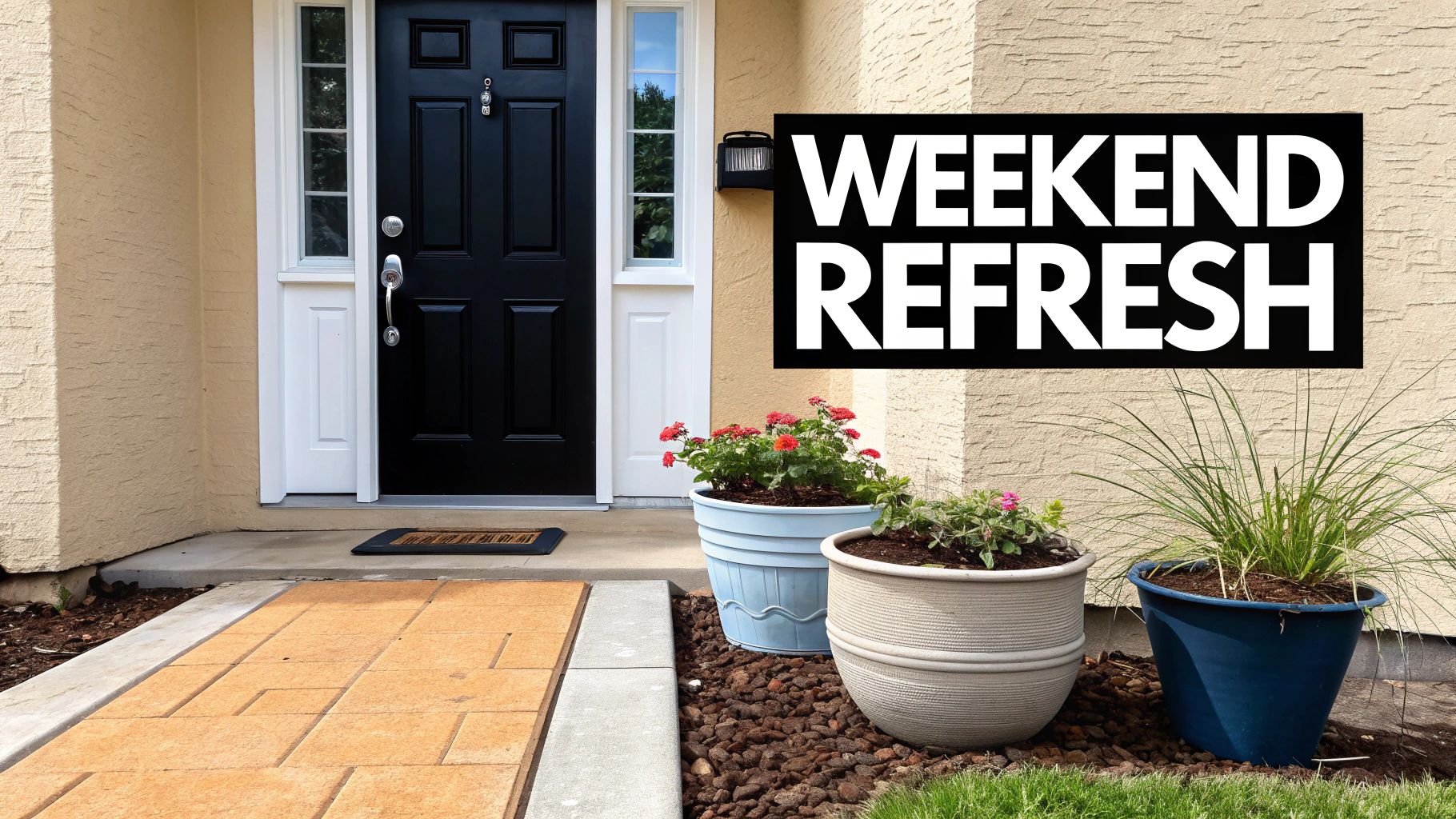
Thinking you need a massive budget or weeks of work to make a real difference in your curb appeal? Think again. Some of the most dramatic transformations I’ve seen happen over a single, productive weekend. These quick wins give you that instant gratification and can build serious momentum for bigger projects down the road.
We’re going to hit three key areas that give you the most bang for your buck: a serious deep clean, a strategic pop of color, and some well-placed greenery. Treat each one as a mini-project, and by Sunday night, you'll be looking at a home that truly stands out.
Start with a Deep Clean
Every house, over time, gets a film of dirt, grime, and even mildew that just makes everything look dull and tired. The absolute fastest way to bring it all back to life is with a power washer. Seriously, it's like an instant facelift for your property.
Don't just stop at the siding. Hit the driveway, walkways, your front porch, and any stone or brick features. You will be shocked at the bright, clean surface hiding underneath. It immediately makes the entire approach to your home feel so much cleaner and more inviting.
Expert Tip: Don't own a power washer? No problem. Most big-box home improvement stores rent them out for a pretty reasonable daily rate. It's a tiny investment for a massive visual payoff. Just make sure you use the right nozzle and pressure for each surface—you don't want to accidentally etch your concrete or strip paint.
In just a few hours, this one task can make your home look years younger. Now you've got a sparkling clean canvas to work with.
Add a Bold Splash of Color
There are very few things that can change the whole vibe of your entrance as quickly as a freshly painted front door. This is a classic designer trick for a reason: it's cheap, you can easily do it yourself in an afternoon, and it makes a huge statement. Pick a color that works with your siding and trim but has enough personality to draw the eye right where you want it.
But why stop at the door? A little paint can go a long way in other spots, too.
- Shutters and Trim: Giving the paint on your shutters and window trim a quick refresh creates those sharp, clean lines that make a home look crisp and well-maintained.
- Mailbox and Light Fixtures: A single can of spray paint formulated for metal can bring a dated mailbox or tired-looking porch lights into the modern era.
- House Numbers: Ditch the old, faded house numbers. A new set in a clean, modern font is a small detail that adds a surprising touch of class.
When you coordinate these little color updates, it creates a cohesive, intentional look that tells everyone you've thought about the details.
Frame Your Entrance with Greenery
Nothing breathes life and energy into a home's exterior like lush, healthy plants. And you don't need a green thumb to make a big impact. It’s all about creating structure and definition.
One of the simplest and most effective tricks in the book is laying down a fresh layer of dark mulch in your garden beds. It makes your plants pop, keeps weeds down, and gives the whole landscape a professionally manicured feel. For more DIY landscaping ideas, we've got a whole guide to help you out.
Next, turn your attention to container gardens. A pair of large, eye-catching planters on either side of your front door creates a beautiful, symmetrical welcome. I love mixing them up with seasonal flowers for a splash of color, some small evergreens for year-round structure, and a few trailing plants to spill over the sides for texture. It's a super flexible way to add personality that you can easily swap out as the seasons change.
Planning Your Long-Term Exterior Renovation
When you’re ready to move beyond the weekend warrior projects, it’s time to start thinking bigger. We're talking about the long-term renovations that fundamentally change your home's character, boost its functionality, and build lasting value. This isn't about slapping on a quick coat of paint; it's about thoughtful, strategic planning that matches your budget to your home's unique architectural soul.
And you're not alone in thinking this way. The global home renovation market is exploding and on track to hit over $3 trillion by 2034. A huge chunk of that is homeowners just like you, focusing on creating exteriors that are beautiful, durable, and more eco-friendly. If you're a data nerd, you can dig into more home renovation market insights on fortunebusinessinsights.com.
Budgeting for a Bigger Impact
A "long-term renovation" doesn’t have to drain your savings. You can make a serious impact at almost any price point, from smart, sub-$1,000 upgrades to more significant five-figure transformations. The real secret is putting your money where it delivers the most bang for your buck on your specific property.
Here’s a realistic look at what you can accomplish at different budget levels:
- Under $1,000: This is all about high-visibility details. It’s the perfect budget to swap out all your dated exterior light fixtures for a cohesive, stylish set. You could also install permanent landscape edging—think steel or stone—for a crisp, manicured look that will last for years. Another great move is upgrading that flimsy mailbox and cheap-looking house numbers to something with real architectural presence.
- $1,000 - $5,000: Now we're getting into projects that can really reshape your front yard. This budget could easily cover a beautiful new stone or paver walkway to your front door, adding immense charm while guiding the eye. Alternatively, you could invest in planting a single, mature tree. It’s an instant upgrade that provides shade, character, and a boost for the environment.
- $5,000+: At this level, you’re making truly transformative changes. A new garage door is one of the single best curb appeal investments out there, often bringing in a 100% or greater return. This budget also opens up the possibility of refreshing or completely replacing your home's siding, a project that can totally redefine its color, texture, and style.
My Advice? Use a Phased Approach. You don't have to finance a massive overhaul all at once. Create a simple three-to-five-year plan. Maybe the new walkway is this year's project. Next year, you tackle the garage door. Breaking it down makes huge goals feel completely manageable.
Matching Projects to Your Home's Style
The best exterior renovations I've ever seen work with a home's architecture, not against it. A slick, modern garage door just looks wrong on a historic Colonial. Ornate Victorian light fixtures? They’ll clash hard with a mid-century ranch. Every single choice, from the material you use for a pathway to the profile of your siding, should feel like it was meant to be there.
Think about it in real-world terms:
- For a Craftsman Bungalow: You’d want to lean into that sturdy, natural aesthetic. A great project would be a new wood-clad front door with art glass panels, a classic bluestone walkway, and maybe even beefing up the porch with robust, tapered columns.
- For a Modern Farmhouse: Here, it's all about clean lines and high contrast. A killer project would be replacing standard windows with bold, black-framed ones. A new garage door with a cross-buck "barn door" design would also be a perfect fit.
- For a Spanish-Style Villa: The focus shifts to earthy textures and materials. Renovations could involve resurfacing a walkway with classic Saltillo tiles, adding a decorative iron gate, or giving the stucco a much-needed refresh. Your landscaping would follow suit with drought-tolerant choices like agave and bougainvillea.
This is exactly where guesswork can lead to very expensive regrets. Before you write a check for thousands of dollars, you absolutely need a way to see how these changes will look on your home.
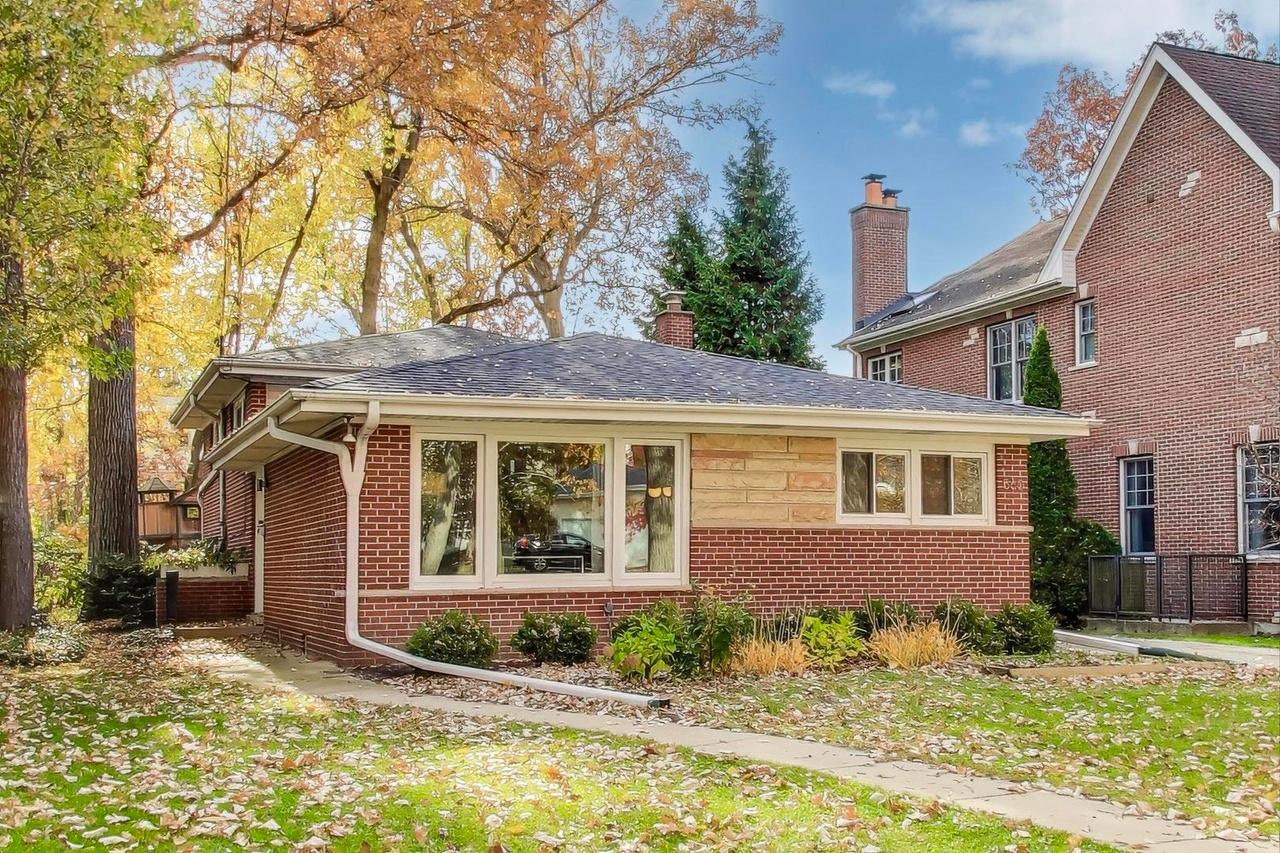
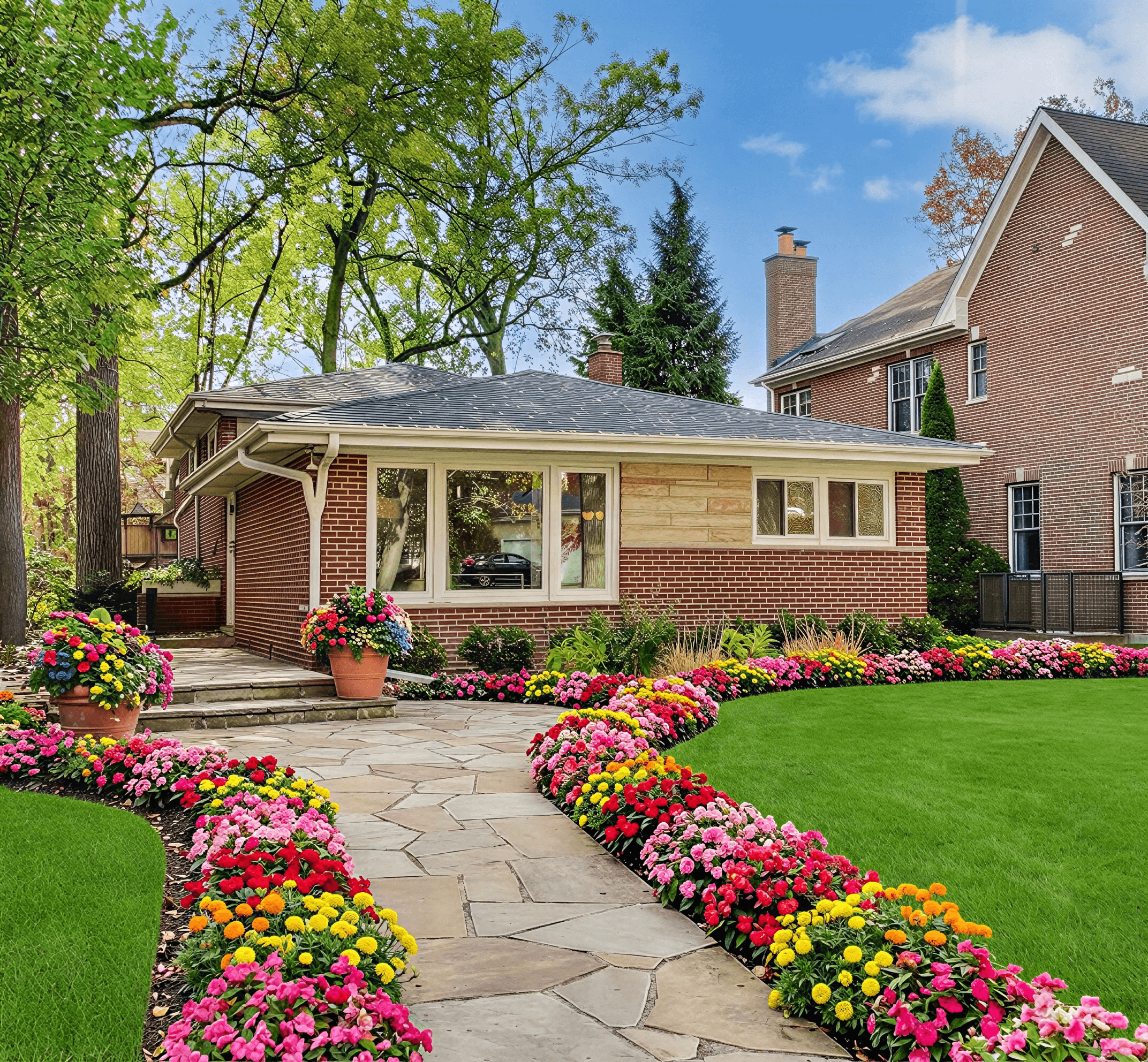
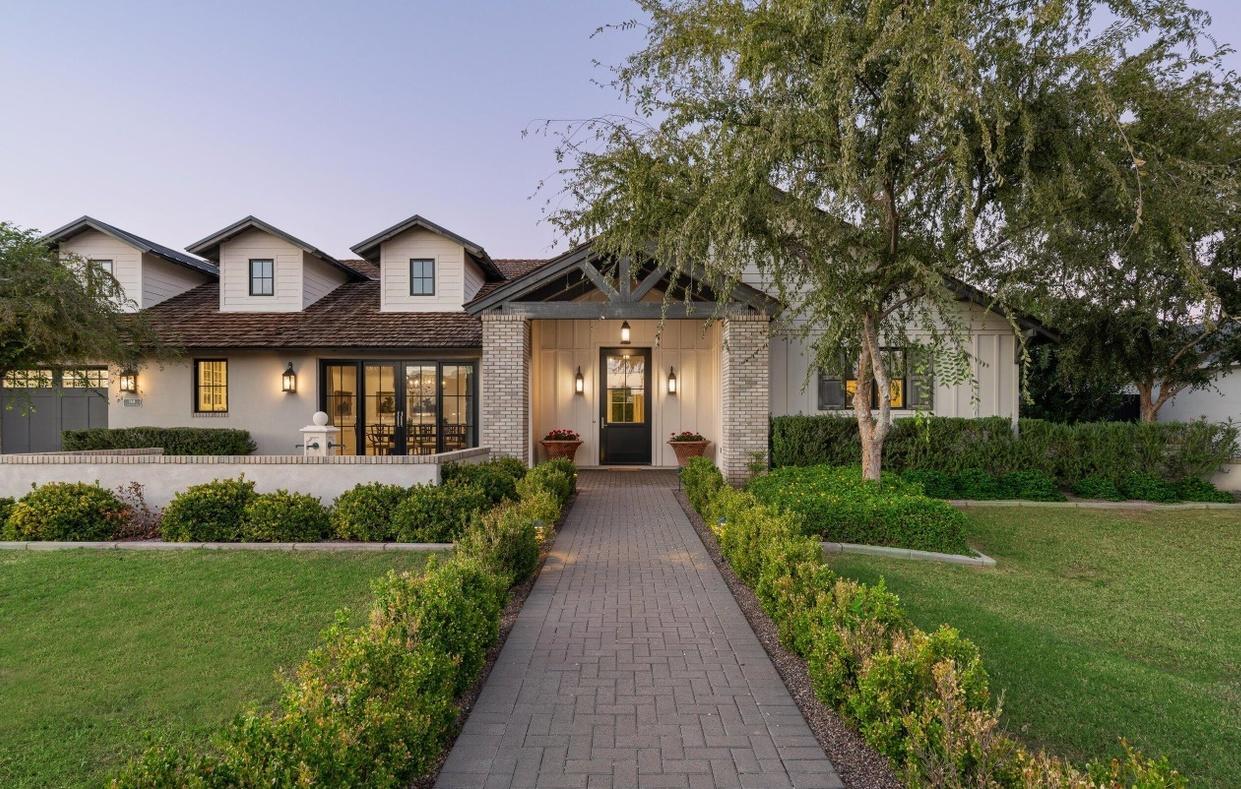
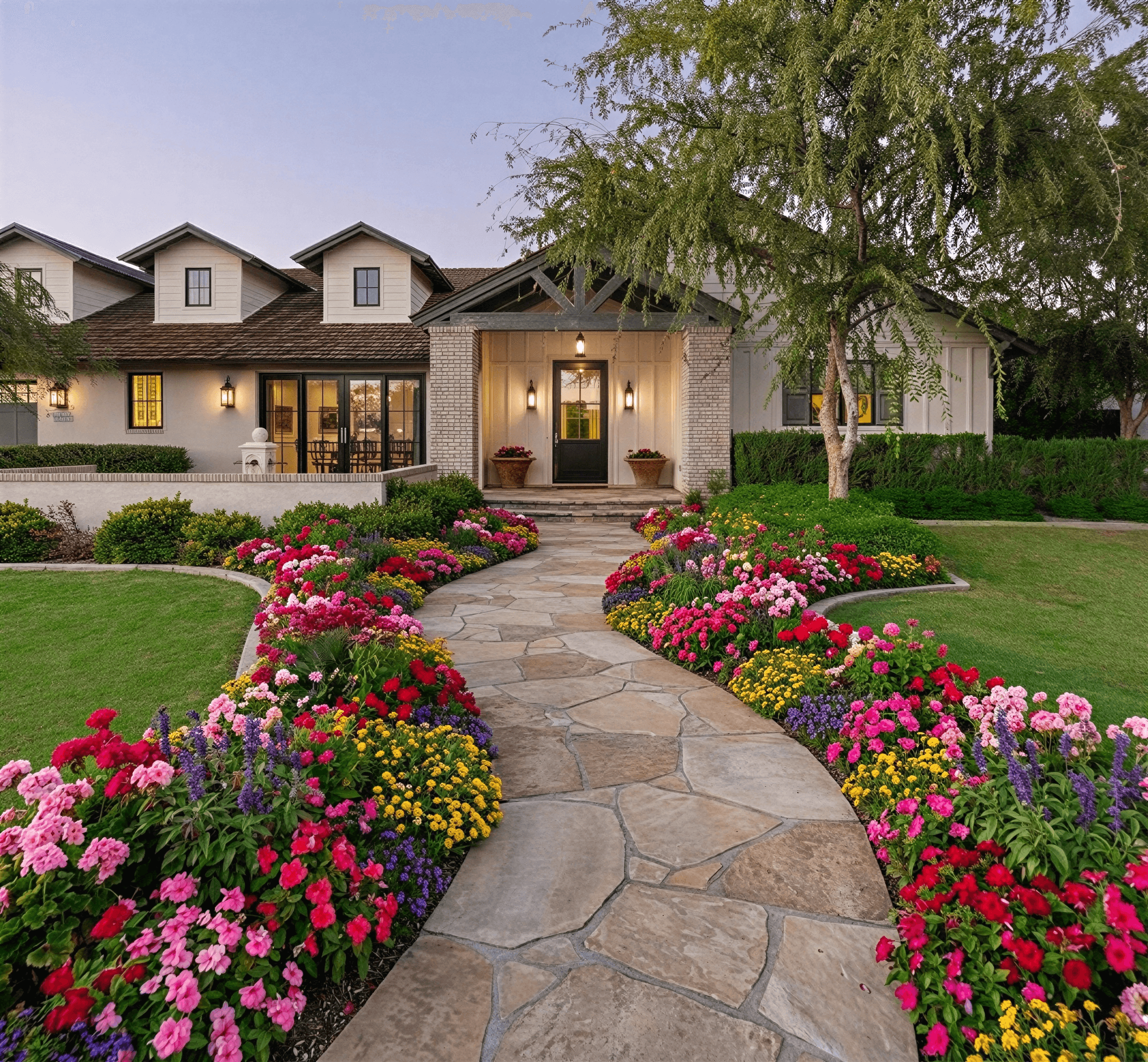
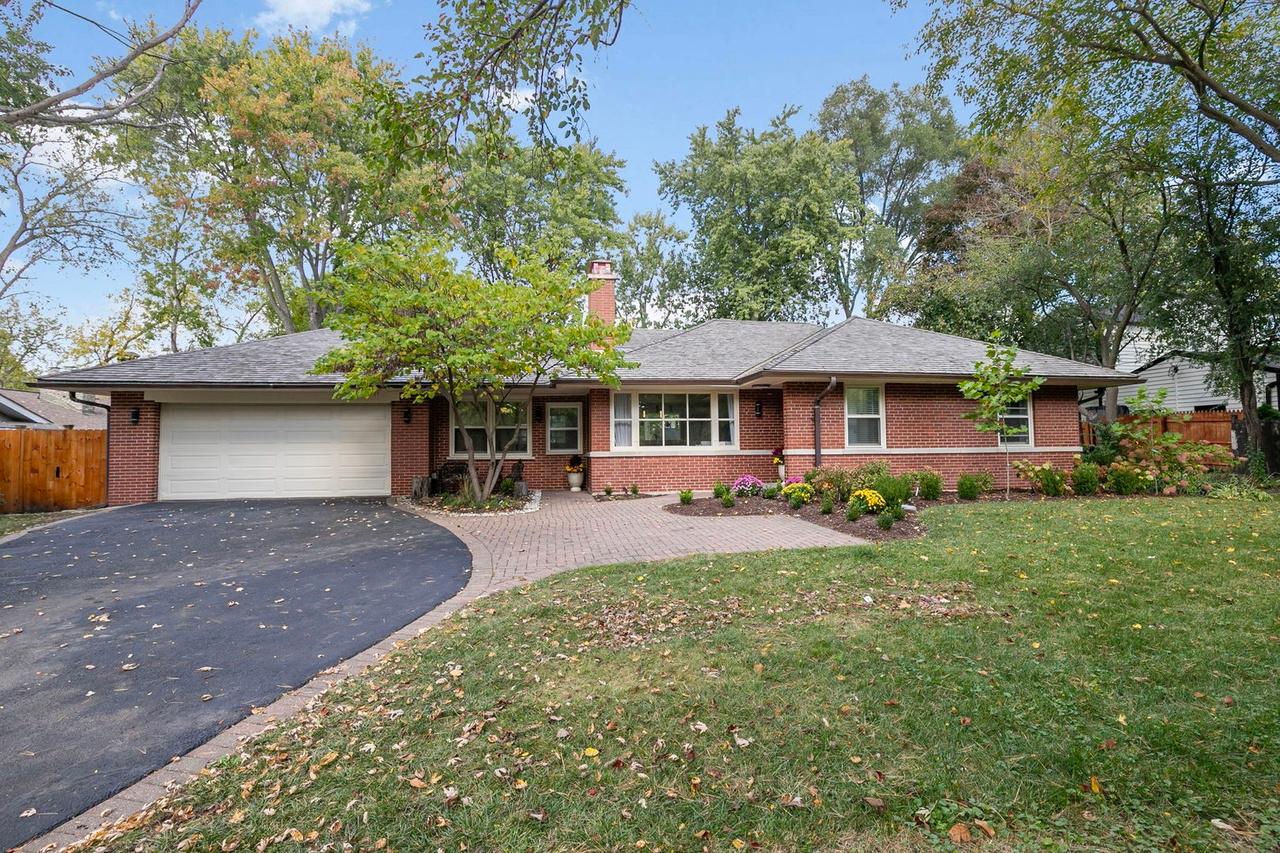
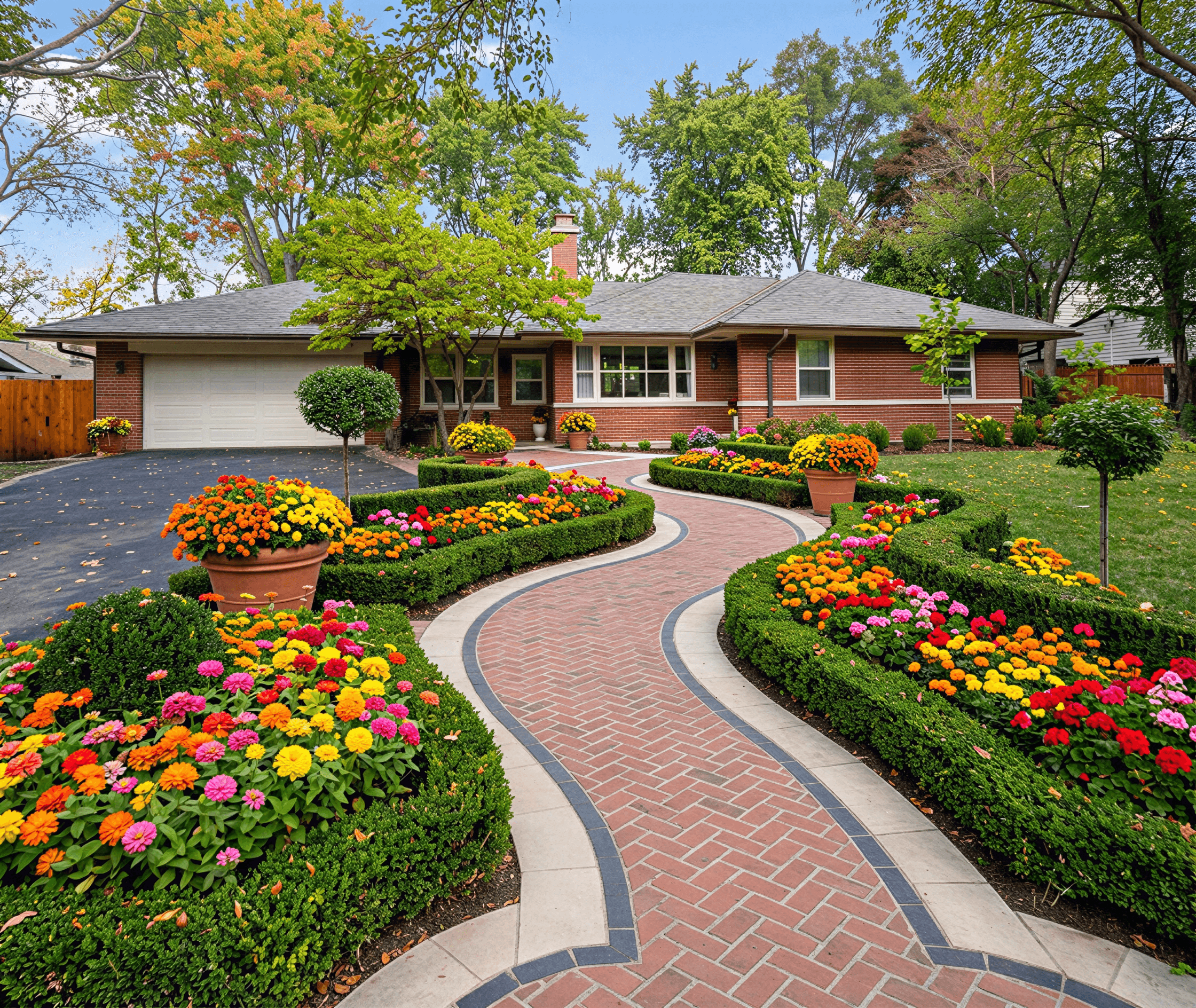
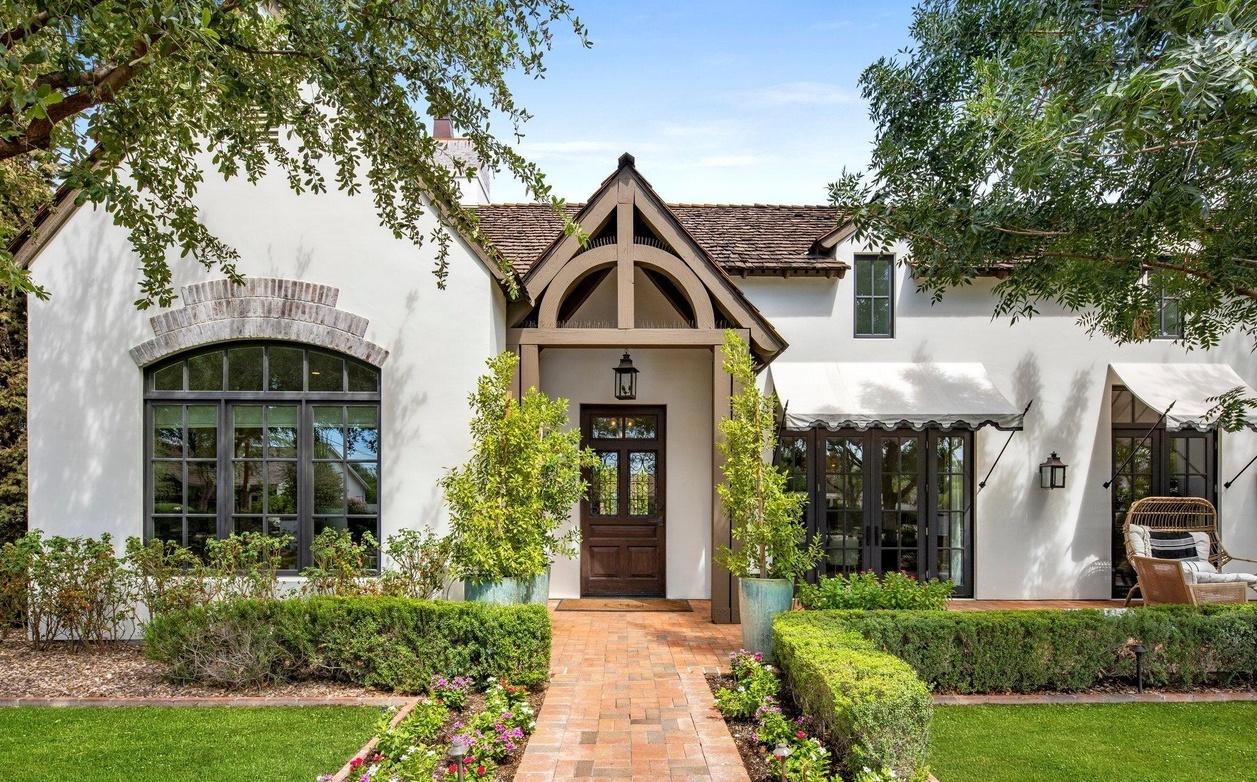
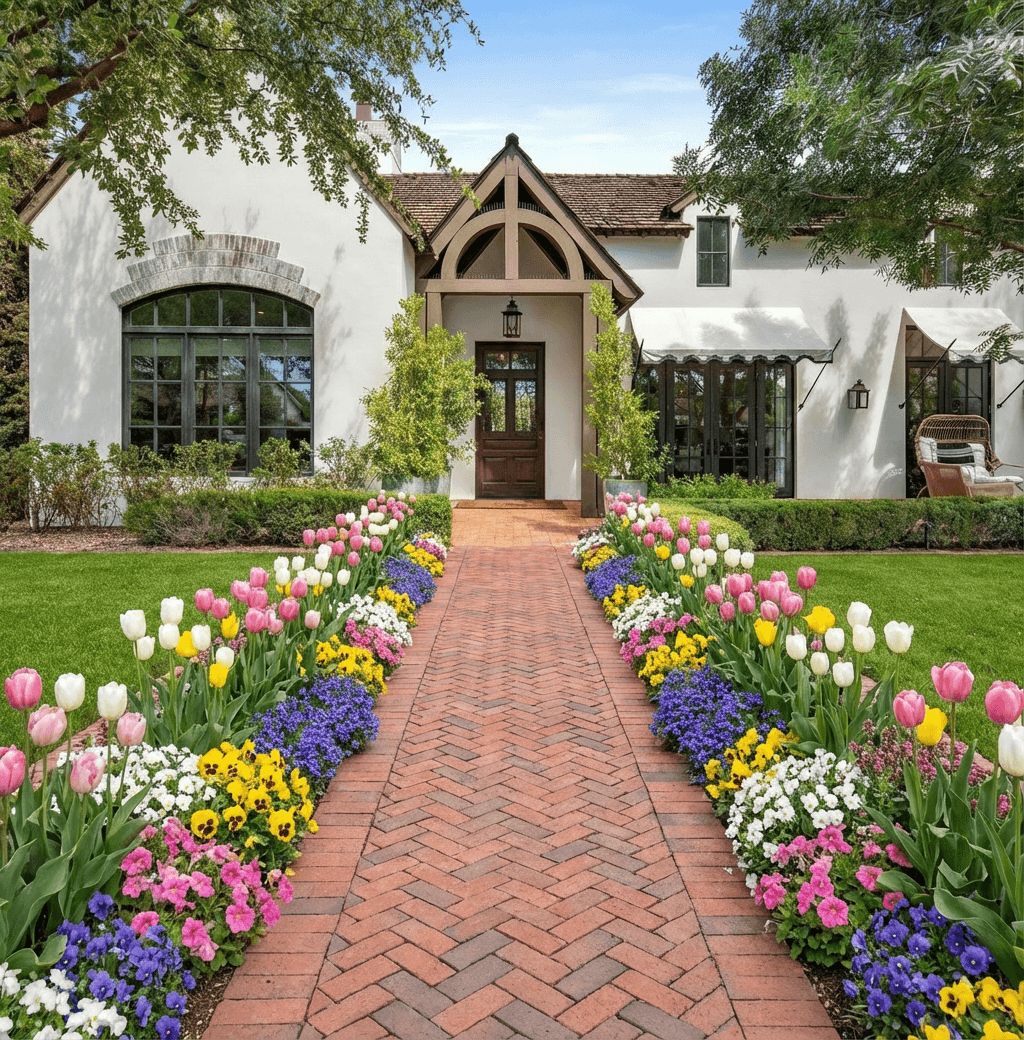
This image says it all. Seeing different designs on your actual house—from a traditional English garden to a clean, modern hardscape—is incredibly powerful. It takes the uncertainty out of the equation and lets you choose a direction with total confidence.
Visualize Before You Build
This is where planning tools like Curb Appeal AI become so essential. Instead of squinting and trying to imagine what a new siding color or landscape plan might look like, you can generate photorealistic visuals in seconds. Just upload a photo of your house, pick a style, and see the future.
It's an invaluable part of making confident decisions. You can play around with dozens of ideas—testing different walkway materials, plant combinations, or fence styles—long before a single contractor sets foot on your property. Our guide on landscape design ideas offers even more inspiration you can try out.
When you finally have that perfect visual blueprint, you can hand it directly to your contractor. Everyone is on the same page from day one, which is the best way to eliminate the risk of costly miscommunications and get the exact result you planned for.
Designing a Landscape That Thrives
A stunning landscape is probably the single biggest needle-mover when it comes to curb appeal. But a truly great design is more than just scattering a few pretty flowers around. It’s about building an outdoor space that looks intentional, feels balanced, and is built to flourish in your specific corner of the world for years to come.
This isn't just a hobbyist's game; it's a huge part of a booming industry. The landscaping services market was valued at USD 330.58 billion in 2024 and is expected to hit USD 484.79 billion by 2030. That growth shows just how much homeowners recognize that a well-designed yard is a powerful investment. You can dig into the numbers yourself with this market growth report from Grandview Research.
Creating Depth with Layers
One of the best-kept secrets to a professional-looking landscape is layering. A flat, one-dimensional yard just feels… dull. By layering plants of different heights and textures, you create depth, visual interest, and a sense of fullness that pulls you in.
Think of it like arranging a group photo. You wouldn't put the tall people in the front, right? Landscaping follows the same logic.
- Up Front (Low-Lying): Start with groundcovers like creeping thyme or low-growing perennials like candytuft. These are fantastic for softening the hard edges of walkways and filling in gaps.
- The Middle Ground (Mid-Height): Next, bring in your workhorses—mid-sized shrubs and ornamental grasses. This layer adds substance and structure. Think classic boxwoods for defined form or fountain grass for soft, flowing texture.
- The Backdrop (Tallest): Finally, anchor the entire design with taller shrubs or small ornamental trees. These create a vertical element that connects the garden to the house itself.
This concept map really helps visualize how your budget, personal style, and a clear plan all have to work together for a successful exterior renovation.
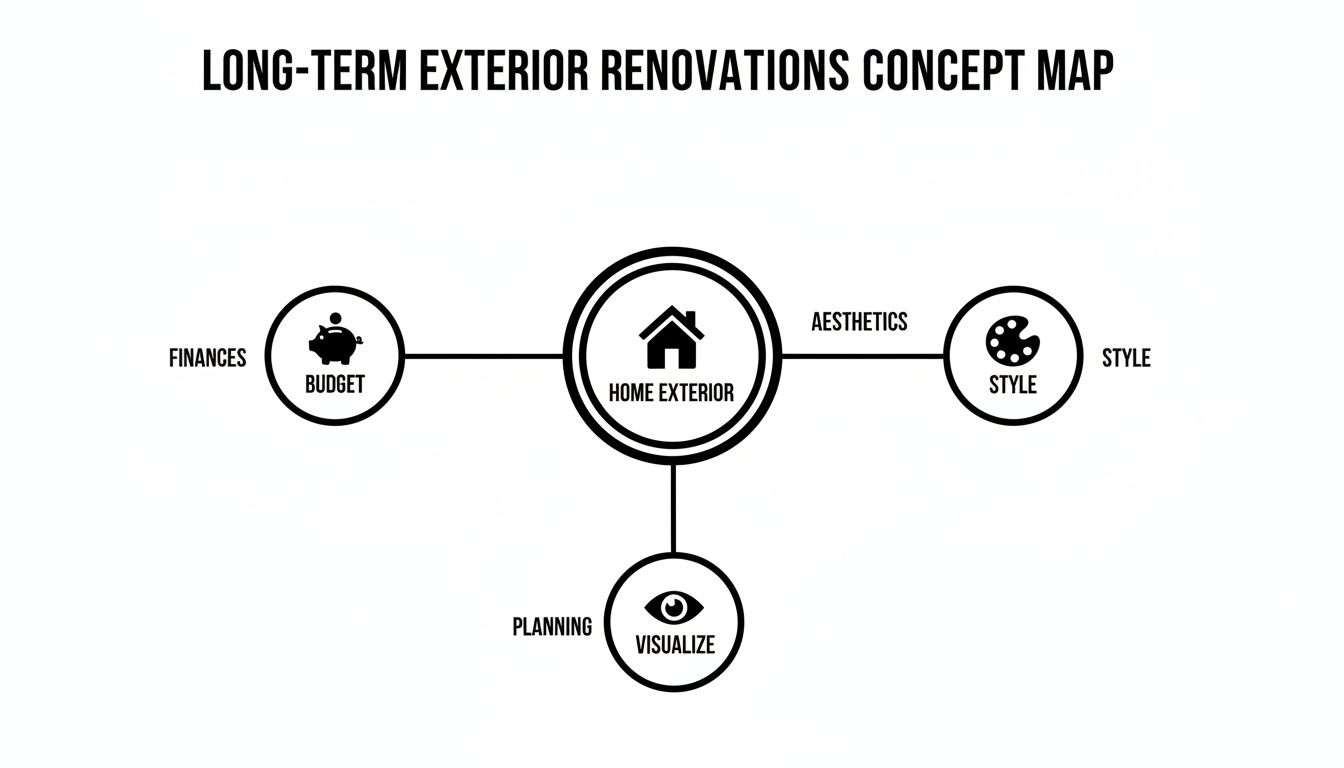
It’s a great reminder that a beautiful result comes from balancing all three of these core elements.
Planning for Four-Season Interest
I see this mistake all the time: homeowners choose plants that look incredible in May, only to have a sad, barren-looking yard by November. A truly thriving landscape needs to offer something interesting all year long, even in the dead of winter. The goal is to choreograph a succession of blooms, textures, and colors.
You could combine spring-blooming bulbs like daffodils with summer-flowering perennials like coneflowers. Then, add an ornamental tree like a Japanese Maple for that knockout fall foliage, and finish with evergreen shrubs like holly that provide structure and color against the snow.
My Personal Tip: Don't forget about bark and branches! A river birch with its peeling, paper-like bark or a red-twig dogwood with its vibrant crimson stems can be the most beautiful thing in your yard on a stark winter day.
Working With Your Climate, Not Against It
This is the golden rule. Forcing a plant to grow where it doesn’t belong is a recipe for frustration, wasted money, and a garden that always looks like it's struggling. Understanding your local climate and soil is the absolute foundation of a successful landscape.
Your best friend here is the USDA Plant Hardiness Zone Map. This map divides the country into zones based on average minimum winter temperatures. When you buy a plant, the tag will tell you which zones it's suited for. Sticking to plants rated for your zone is step one.
Choosing the right plants simply means less work and better results:
- Less Fuss: Native and climate-appropriate plants are naturally more resistant to local pests and diseases.
- Lower Water Bills: Once they're established, plants adapted to your region's rainfall patterns won't need constant watering.
- Healthier Growth: They are literally programmed to thrive in your soil and weather, which means more robust, beautiful plants.
To help you match plants to your environment, this guide pairs popular landscape styles with climate-friendly plant and material choices.
Landscape Style and Plant Pairing Guide
| Landscape Style | Key Plant Types | Hardscape Materials | Best Suited Climates |
|---|---|---|---|
| Modern/Minimalist | Ornamental grasses, succulents, boxwoods, single specimen trees (e.g., Japanese Maple) | Smooth concrete, large pavers, dark mulch, steel or corten edging | Adaptable to most, shines in arid and temperate zones |
| English Cottage | Roses, lavender, delphiniums, foxgloves, climbing vines, herbs | Flagstone or brick paths, white picket fences, stone walls | Temperate and cooler climates with moderate rainfall |
| Mediterranean/Tuscan | Olive trees, lavender, rosemary, bougainvillea, cypress trees | Terracotta pots, gravel walkways, stucco walls, wrought iron | Hot, dry summers and mild, wet winters (Zones 8-10) |
| Xeriscape (Low-Water) | Agave, yucca, sedum, cacti, native grasses, desert marigold | Decomposed granite, river rock, boulders, flagstone patios | Arid, semi-arid, and drought-prone regions |
This is just a starting point, of course, but it shows how your home’s style and your region’s climate can guide your choices for a cohesive look.
This is also where modern tools can be a game-changer. Instead of spending hours cross-referencing plant lists with your hardiness zone, a platform like Curb Appeal AI can do the heavy lifting. It uses your address to automatically suggest plants that will actually flourish, taking all the guesswork out of building a resilient, gorgeous landscape.
Integrating Hardscaping for Structure
Finally, don't forget that plants are only half the story. Hardscaping—the non-living elements like pathways, stone walls, and patios—provides the "bones" of your landscape. It defines spaces, directs foot traffic, and creates the structure that allows your plants to truly shine.
A gracefully curving flagstone path does more than just get you to the front door; it’s a design element that guides the eye through the garden. A low stone retaining wall can transform a tricky slope into a stunning terraced flower bed. These elements provide year-round structure that holds its own even when the plants are dormant. When you balance soft, living plants with strong, permanent hardscaping, you create a dynamic and complete landscape that sends your curb appeal through the roof.
Visualize Your New Look with Curb Appeal AI
All the planning and inspiration in the world can still leave you feeling stuck. It’s one thing to browse photos of beautiful homes, but it's another thing entirely to know how those ideas will translate to your specific house, with its unique architecture, colors, and lighting. This is the critical moment where a great idea can turn into a costly mistake.
What if you could see the finished project before you ever picked up a shovel or a paintbrush? This is exactly where technology can bridge that frustrating gap between your imagination and reality. Instead of guessing, you can see how new landscaping, paint colors, or hardscaping will actually look, letting you make confident decisions from the very start.
Turning Ideas into a Concrete Plan
The process is refreshingly straightforward. Tools like Curb Appeal AI are designed to take the technical confusion out of design, putting the creative power directly into your hands. You can generate stunning, photorealistic mockups of your home’s exterior in just a few minutes.
It all starts with a single photo. Just snap a clear, straight-on picture of your house from the street and upload it. From there, the fun begins.
You can start exploring different design styles instantly. Have you always wondered what your home would look like with a lush, green English cottage garden? Or maybe a clean, minimalist modern design with sleek hardscaping? Instead of just wondering, you can apply these styles and see the results right away.
Intelligent Design That Works for You
This isn't just slapping a simple filter on a photo; it’s more like having a smart design assistant. The technology actually analyzes your home's architecture to make sure the suggestions feel cohesive and appropriate. More importantly, it uses your location to recommend plants and materials that will genuinely thrive in your specific climate.
Let’s walk through a real-world scenario. Say you live in a drought-prone area and are torn between a water-wise xeriscape design and a more traditional, green lawn.
- Option A: You apply the "Desert" style. The AI generates a beautiful render with native grasses, agave, and decomposed granite pathways—all things that will look great with minimal water.
- Option B: You select the "Traditional" style. You’ll see a version with a classic lawn and flower beds, which immediately helps you visualize the kind of maintenance and water commitment you'd be signing up for.
Within minutes, you can compare two completely different futures for your front yard, side-by-side. This visual comparison makes the decision-making process incredibly clear, removing the risk and potential regret before you spend a single dollar.
By visualizing multiple options, you move from hoping a design will work to knowing it will. It’s the single most effective way to guarantee you'll love the final result.
A Blueprint for Success
Once you’ve landed on a design you love, you have more than just a pretty picture. You have a functional blueprint that can guide the entire project, whether you’re a dedicated DIYer or hiring professionals.
For the homeowner tackling the project themselves, that visual render becomes your north star. It provides a clear reference for plant placement, material choices, and the overall layout, keeping you on track from start to finish.
If you’re hiring a contractor, this blueprint is even more valuable. Handing a photorealistic image to a landscaping or construction crew eliminates the guesswork and potential for miscommunication. There's no room for interpretation when they can see exactly what you’re envisioning. This alignment saves time, prevents costly rework, and ensures everyone is working toward the same goal.
This whole process really changes how you approach an exterior project. It shifts the focus from guesswork to guided, visual planning, giving you the confidence to invest in your home's exterior and create a first impression that truly reflects your vision.
Common Questions About Improving Curb Appeal
As you start dreaming up your home's exterior makeover, some practical questions are bound to pop up. It's totally normal. You're probably wondering where to put your money for the biggest bang for your buck, or how to make sure your design choices actually fit your home's style. Let's walk through some of the most common questions I hear from homeowners.
What Curb Appeal Improvements Have the Highest Return on Investment?
Everyone wants to know where their money goes furthest, and I get it. While a full landscape overhaul is amazing, the projects that consistently top the charts for ROI are the ones that marry good looks with solid function.
A new garage door is almost always a surefire winner. I've seen it time and again—it often recoups over 100% of its cost when you sell. Think about it: the garage door takes up a massive amount of visual real estate on most homes. Upgrading it makes an immediate, powerful statement.
Another great bet is replacing your front door with a modern steel or fiberglass model. You can expect a return somewhere in the 70-90% range. This isn't just about looks; a new door boosts security and energy efficiency, which are huge draws for potential buyers. In the yard, don't underestimate the power of well-placed, mature trees. They can literally add thousands to your property value by offering shade, privacy, and a sense of permanence.
How Can I Improve My Home's Curb Appeal on a Tight Budget?
You absolutely don't need a massive budget to make a huge difference. In fact, you can create a pretty stunning transformation for under $200 if you're willing to put in a little work. The trick is to focus on the little details that scream "well-cared-for."
First things first: give it a good, deep clean. Renting a power washer for an afternoon can strip years of grime off your siding, driveway, and walkways, making everything look fresh and new. A little paint is your next best friend. A fresh coat is a game-changer on:
- The front door: A bold, new color creates an instant focal point.
- The mailbox: It's a small detail, but a rusty, dented mailbox can drag down the whole look.
- Faded trim: Crisp, clean lines around windows and doors make the whole house look sharper.
Finally, swap out the small stuff. New, modern house numbers and an updated porch light are inexpensive but have a surprisingly big impact. These little hardware upgrades signal that you care about the details.
How Do I Choose a Style That Matches My Home's Architecture?
The secret to a truly beautiful exterior is to work with your home's built-in character, not against it. I've seen homeowners try to force a modern, minimalist landscape onto a historic Victorian, and it just... feels wrong. The same goes for putting a rustic cottage garden in front of a sleek, contemporary house.
Let the architecture be your guide. A classic Colonial, for instance, looks incredible with symmetrical plantings like boxwood hedges and timeless hydrangeas. On the other hand, a mid-century modern ranch is the perfect backdrop for strong, structural plants, clean lines, and simple hardscaping.
The best way to figure this out without making a costly mistake is to see it first. Visualizing how different styles actually look on your property is the key to finding a design that feels like it truly belongs.
Is Professional Landscaping Worth the Cost?
Hiring a professional landscape designer is a serious investment, no question. But it's an investment that often pays for itself by boosting your property value and helping you sidestep expensive do-overs. A well-executed, professional design can add anywhere from 5% to 15% to your home's final sale price.
But you don't have to go all-or-nothing. A hybrid approach can give you the best of both worlds. You can use a tool to generate your ideal design—complete with photorealistic pictures—based on your home's specific look and climate. Once you have that perfect blueprint in hand, you have options. You can tackle the project yourself in stages to manage the cost, or you can simply hand the professional-grade design to a local contractor for the installation. This strategy can save you thousands on the initial design fees while still getting you that incredible, expert-level result.
Ready to stop guessing and start seeing what's possible? With Curb Appeal AI, you can see exactly how different styles will look on your home in just a few minutes. Upload a photo, browse dozens of designs, and get photorealistic images tailored to your specific climate.
Start your free trial and reimagine your home’s exterior today!
Refined using Outrank